Banking
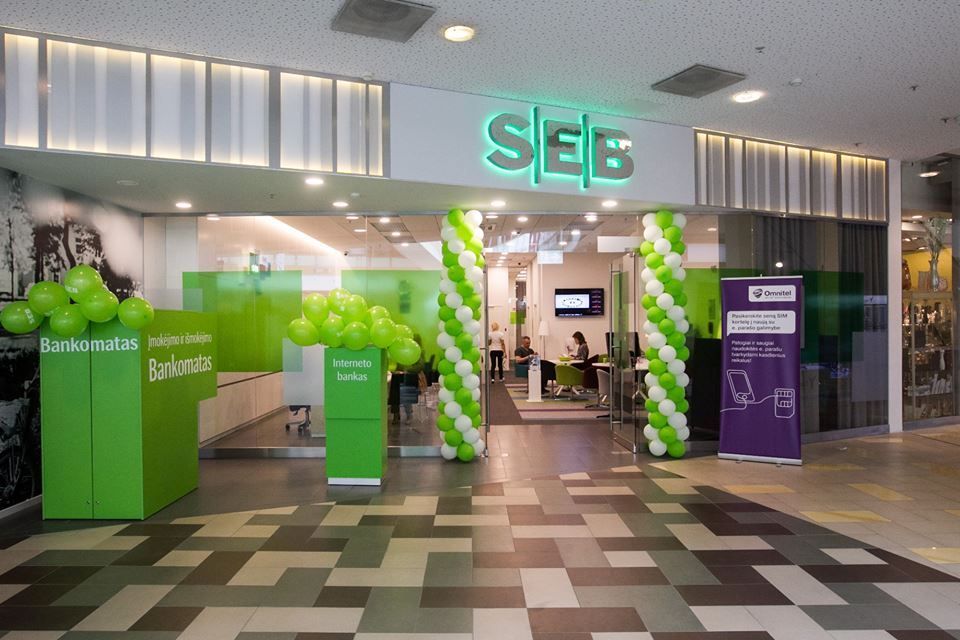
SEB Partners Google Cloud for New Product Development
By Ahmed Rahma
A Swedish financial group, SEB AB, has partnered with Alphabet’s Google Cloud to save costly future investments in technology upgrades.
SEB is the latest European lender to link up with cloud service providers to help speed up new product development and analyse the vast troves of data that banking generates.
Deutsche Bank AG and HSBC Holdings Plc signed deals with Google and Amazon Web Services last year, and the industry earlier this year formed a user coalition, Bloomberg revealed.
Speaking on the agreement in an interview, the chief information officer of the bank, Nicolas Moch, said the agreement will enable the bank to ratchet up cloud computing so that more than half of its technology will be in a cloud environment within five years.
The Stockholm-based bank information officer also stated that the agreement will help SEB improve advisory services for retail customers and investment banking services.
According to him, using Google scalability would make it easier for the bank to expand into other countries if they decide to.
For SEB, the deal with Google doesn’t mean cost cuts, Moch said. Instead, the bank will do “cost-avoidance, where we will work with Google Cloud rather than building things ourselves.”
Moch disclosed that the first products from the collaboration are likely to be launched in 2022 and then increase “during the next decade.”
On the part of the managing director for Google Cloud’s Nordic operations, Eva Fors, she said it’s “by far the broadest and deepest financial services partnership” in Scandinavia, and will entail Google training SEB employees.
However, the duo declined to provide the terms of the agreement.
In recent times, such partnerships are becoming more common as the pandemic accelerates a shift to the web- and app-based services, challenging traditional banking models.
Klarna Bank AB, a Swedish payments firm, is an example of a startup that became a global player, thanks to its use of technologies that others in the finance industry were slower to adopt.
The agreement allows SEB to avoid the kind of costly investments that bigger rivals like Nordea Bank AB have had to make.
The largest Nordic bank has spent heavily in recent years to replace its stitched-together core banking systems into a single, streamlined platform.
Banking
Standard Bank Hosts 2nd African Markets Conference
By Modupe Gbadeyanka
The second African Markets Conference (AMC) will take place in Cape Town, South Africa, from Sunday, February to Tuesday, February 24, 2026.
The event, hosted by Standard Bank, will bring together global institutional investors, sovereign wealth funds, and African policymakers to catalyse the flow of capital into the continent’s most critical sectors.
The theme for this year’s edition is Mobilising Global Capital at Scale for Africa’s Growth and Development.
AMC 2026 will host a high-level delegation of decision-makers, ensuring that the dialogue leads to tangible commitments.
The conference will be structured around five high-impact pillars designed to move the needle on investment, including prioritising infrastructure as an asset class, accelerating the energy transition, deepening African capital markets and mobilising private capital, enabling intra-African trade and flows of capital, and addressing Africa’s sovereign debt and cost sustainability.
It is estimated that by 2050, Africa will add one billion people, more than half in cities, yet it invests only $75 billion of the $150 billion it needs annually for infrastructure. Standard Bank aims to use AMC 2026 to ensure that African priorities remain at the centre of the global financial discourse.
“This year’s engagement bridges the gap between policy ambitions and market realities. Africa urgently needs practical measures to deepen capital pools, improve market liquidity, and strengthen regulatory frameworks that give investors the confidence to deploy capital at scale.
“Mobilising capital is not just about funding projects; it is about building the foundation of a more balanced and inclusive global economy,” the chief executive of Corporate and Investment Banking at Standard Bank Group, Luvuyo Masinda, stated.
Banking
Fidelity Bank Shows Love to Ikoyi Correctional Centre Inmates
By Aduragbemi Omiyale
Inmates at the Ikoyi Correctional Centre in Lagos were recently full of joy when Fidelity Bank Plc donated some relief items to them.
The financial institution, through its Corporate Social Responsibility (CSR) initiative known as Fidelity Helping Hands Programme (FHHP), handed over various household tools and gift items to the leadership of the correctional facility as part of its efforts to support the rehabilitation and development of indigent persons in society.
The Chief Human Resources Officer of Fidelity Bank, Mr Charles Nwachukwu, reaffirmed the bank’s deep commitment to transforming lives and restoring hope, emphasising that true progress lies not only in financial growth but in extending compassion and opportunity to those that society often overlooks.
“At Fidelity Bank, we believe that every individual deserves a second chance. Our approach to Corporate Social Responsibility is rooted in empathy, standing with communities, uplifting the vulnerable, and opening doors for brighter futures.
“By supporting inmates today, we are setting them on the true path of rehabilitation, empowering them to return tomorrow as productive and confident members of society,” the banker said.
The Deputy Controller of Corrections at Ikoyi Custodial Centre, Mr Julius Ogueri, who could not hide his excitement over the gesture, appealed to Nigerians to avoid cybercrimes and stigmatisation of ex-inmates.
Highlighting the challenges faced by correctional facilities in Nigeria, Mr Ogueri noted that Ikoyi correctional center initially designed for 800 inmates, now houses over 3,000 inmates, with 396 convicted persons and 3,604 awaiting trial.
Whilst thanking the bank, the Deputy Controller also emphasised the importance of rehabilitation, citing examples of inmates who have pursued education and skills acquisition, including 72 inmates studying with the National Open University of Nigeria and 120 inmates who have benefited from WAEC and GCE support.
Business Post reports that through the FHHP, staff across Fidelity Bank branches nationwide identify crucial interventions needed in their immediate community and raise funds to execute them. The bank’s management then matches this contribution with an equal amount and disburses it for the selected project.
The visit to the Ikoyi Correctional Centre reinforces the lender’s unwavering commitment to meaningful community impact and demonstrates its strong dedication to advancing social responsibility and rehabilitation efforts across the society.
Banking
Ecobank Nigeria Introduces Business App for SMEs to Accelerate Growth
By Dipo Olowookere
A new digital banking platform created to help business owners in the country to eliminate delays, queues, and operational inefficiencies has been introduced by Ecobank Nigeria.
This mobile application is to strengthen the growth and sustainability of Small and Medium Enterprises (SMEs) across Nigeria, allowing them to manage payments, monitor transactions, oversee cash flow, and run day‑to‑day financial operations directly from their mobile devices.
The Ecobank Business app, now available on the Google Play Store and Apple App Store, cements the bank’s position as a dependable growth partner to SMEs across all sectors, delivering tools that help businesses manage better, grow faster, and operate more competitively in a digital economy. – Ecobank Business — Your Growth Partner.
The introduction of this initiative further reinforces Ecobank’s broader commitment to empowering SMEs through digital innovation, sector‑specific value propositions, and financial solutions like structured loans, trade support, guarantees, and equipment financing.
It also aligns with the lender’s push to re-energise dormant SME accounts, deepen market penetration, promote digital adoption, and scale value‑chain financing through partnerships with corporate anchors.
According to the Executive Director for Consumer and Commercial Bank at Ecobank Nigeria, Mr Kola Adeleke, the Ecobank Business App was developed to address the unique challenges faced by Nigeria’s diverse SME landscape.
Speaking at the unveiling in Lagos, he explained that the platform caters to traders, retailers, tech start-ups, online businesses, hospitality operators, farmers, agro‑processors, manufacturers, construction firms, professionals, social commerce entrepreneurs, schools, associations, and organisations that require transparent and efficient financial management.
Mr Adeleke noted that the app delivers faster payment collection for merchants and retailers, seamless digital transactions for online businesses, efficient vendor and staff management for hospitality players, timely payment solutions for agriculture value chains, and secure handling of bulk and high‑value transactions for manufacturers and construction firms.
He added that professionals such as lawyers and consultants can issue invoices and receive payments easily, while schools and associations can streamline fees, dues, and reporting from a single platform.
-
Feature/OPED6 years agoDavos was Different this year
-
Travel/Tourism10 years ago
Lagos Seals Western Lodge Hotel In Ikorodu
-
Showbiz3 years agoEstranged Lover Releases Videos of Empress Njamah Bathing
-
Banking8 years agoSort Codes of GTBank Branches in Nigeria
-
Economy3 years agoSubsidy Removal: CNG at N130 Per Litre Cheaper Than Petrol—IPMAN
-
Banking3 years agoSort Codes of UBA Branches in Nigeria
-
Banking3 years agoFirst Bank Announces Planned Downtime
-
Sports3 years agoHighest Paid Nigerian Footballer – How Much Do Nigerian Footballers Earn