Banking
Gbajabiamila Urges Banks to Set Realistic Targets for Marketers
By Dipo Olowookere
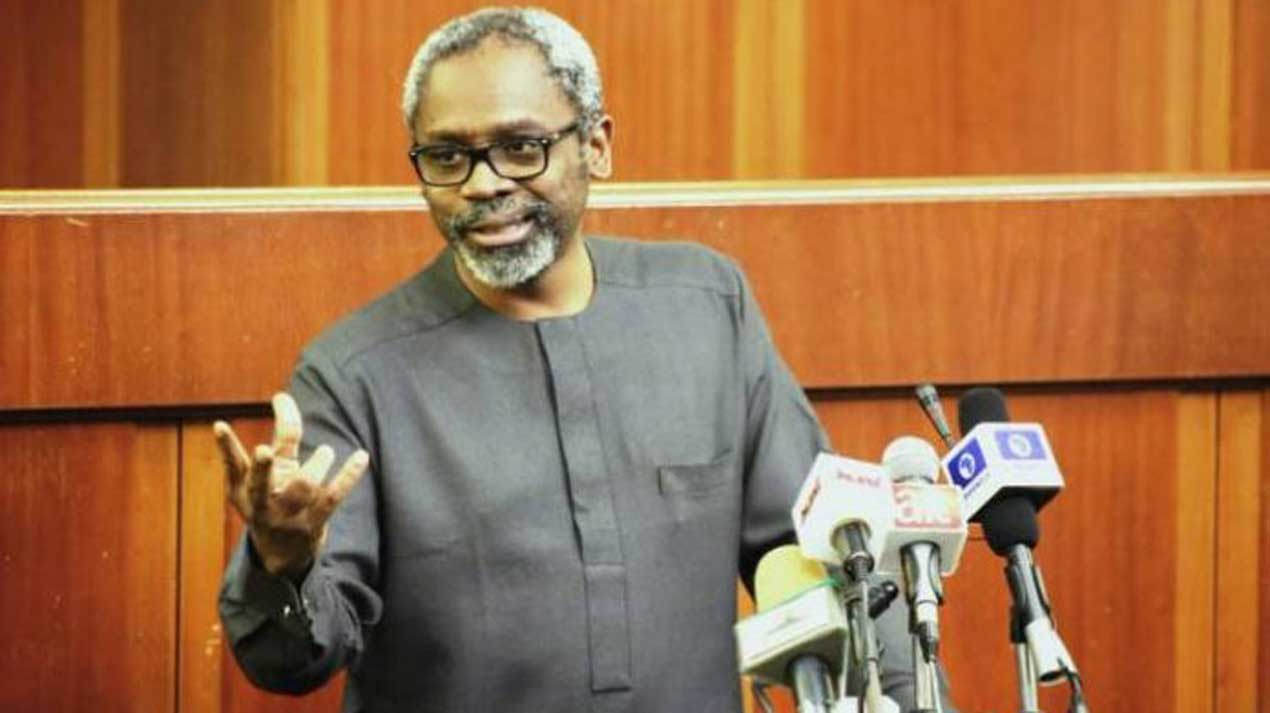
Deposit Money Banks (DMBs) operating in Nigeria have been advised by the Speaker of the House of Representatives, Mr Femi Gbajabiamila, to set realistic targets for their marketers.
The number four citizen of the country gave this advice when he received the board and management of Standard Chartered Bank, led by the Chief Executive Officer, Mr Lamin Manjang, in his office in Abuja recently.
The lawmaker from Lagos State lamented the current situation where commercial banks send out their employees to get new customers who must deposit a huge among of money within a specific period of time.
In some cases, these banks workers, especially the females, end up having romantic affairs with potential customers in order to meet their targets. This has made several people view female bankers, especially marketers, as corporate prostitutes.
Business Post recalls that some years ago, Mr Gbajabiamila sponsored a bill to put an end to corporate prostitution but it did not see the light of the day.
So, when he received the executives of Standard Chartered Bank in his office a few days ago, he used the opportunity to appeal to the lender and others in the sector to come up with creative ways of selling their products and services and not be exploitative with their marketing styles.
“You have corporations in the UK and other parts of the world. What is obtained here in banking, in terms of marketing, sending people to go and knock at people’s offices and all that; does it obtain in those places?
“If it doesn’t obtain in those countries, it is not international best practice; why should it obtain here?” the Speaker queried.
He advised that, “We have to set realistic targets for the marketers. We have the responsibility to protect Nigerians and we also have the responsibility not to kill your business. So, it is a delicate situation. We need to know the kind of marketing that takes place. Is it digital marketing?”
Also, Mr Gbajabiamila pointed out another issue in the banking sector in Nigeria, bank charges, noting that there have been allegations of hidden charges.
“We have issues that come up in your industry, so this visit is a welcome development.
“One of the issues at stake is the rate at which banks charge customers.
“There are claims that banks have hidden charges. This has come up a couple of times on the floor of the House. This is something that we should look into,” he said.
According to him, this situation has made many bank customers helpless, urging players in the industry to quickly address the issue.
“We are here to support you. Whatever we need to do, we should do it to support you,” he assured.
In his remarks, Mr Manjang assured that the issues raised by the Speaker would be looked into, noting that for the marketing point, “It is not peculiar to Nigeria, but it has to be ethical.”
“Teams usually go round, but the ethical conduct has to be there. You need to market your products for people to know what you offer. If there are any abuses or conducts that are not ideal, they should be called out and addressed,” he noted.
He stated that Standard Chartered Bank operates in Nigeria in line with international best practices, noting that the bank will also carry out its operations to make all stakeholders happy.
Banking
Moniepoint Processes N412trn Transactions, Disburses N1trn Loans in 2025
By Adedapo Adesanya
Nigerian financial services firm, Moniepoint Incorporated, processed N412 trillion in transaction value and disbursed more than N1 trillion in loans to small businesses in 2025, as the company continues to grow Nigeria’s expanding retail payments and credit structure.
The company said it handled more than 14 billion transactions during the year and now powers about 80 per cent of in-person payments nationwide, underscoring the increasing concentration of payment flows through a small number of fintech platforms.
Moniepoint also averaged 1.67 billion monthly transactions in 2025 and grew its card user base by 200 per cent, with its cards being used 1.7 million times daily.
The organisation also processed over 500,000 data renewals daily, while customers spent N90 million ($64,264) daily at gyms.

Moniepoint’s scale reflects a broader shift in Nigeria’s payments landscape, where point-of-sale terminals and digital transfers have become central to everyday commerce, from neighbourhood shops to open-air markets.
Founded in 2015, Moniepoint has evolved from a backend technology provider into Nigeria’s largest merchant acquirer, offering payments, banking, credit, foreign exchange and business management tools to more than 6 million active businesses.
The company said it expanded lending to small businesses that are often excluded from bank credit, disbursing more than N1 trillion in loans through its microfinance banking unit in the year under review.
“Our focus has been on building infrastructure that works for how businesses actually operate,” said Mr Tosin Eniolorunda, Moniepoint’s founder and chief executive, pointing to the prevalence of informal trade in Africa’s largest economy.
In 2025, Moniepoint became a unicorn after it raised more than $200 million in a Series C funding round backed by investors including Development Partners International, Google’s Africa Investment Fund, Visa, the International Finance Corporation and Verod Capital, providing capital to scale its payments and financial services operations.
Beyond acquiring, the company said its switching and processing subsidiary, TeamApt Ltd, secured licences from Mastercard and Visa to operate as a processor and acquirer, enabling it to handle international card payments and provide switching services to other businesses across Africa. Its web payments gateway, Monnify, processed N25 trillion in transactions during the year.
Recently, the Central Bank of Nigeria (CBN) upgraded Moniepoint’s microfinance bank to a national microfinance bank licence, allowing it to expand its footprint across the country and broaden the range of products that it can offer.

Banking
Standard Bank Helps Aradel Energy With $250m Financing Facility
By Aduragbemi Omiyale
A $250 million financing facility to support the acquisition of about 40 per cent equity in ND Western Limited from Petrolin Trading Limited has been secured by Aradel Energy Limited, a wholly owned subsidiary of Aradel Holdings Plc.
The funding package was facility for the energy firm by Standard Bank, which comprises Stanbic IBTC Capital Limited, Stanbic IBTC Bank Limited, and the Standard Bank of South Africa Limited.
The facility, Business Post gathered, was structured to support Aradel Energy’s strategic growth agenda, the refinancing of existing loan facilities, and the funding of increased production from the company’s existing asset base.
Aradel Energy is the operator of the Ogbele and Omerelu onshore marginal fields, as well as OPL 227 in shallow water terrain.
Prior to the transaction, Aradel Energy held a 41.67 per cent equity interest in ND Western, and following the completion of the acquisition, its shareholding in ND Western has increased to 81.67 per cent.
ND Western holds a 45 per cent participating interest in OML 34 and a 50 per cent equity interest in Renaissance Africa Energy Company Limited, the operator of the Renaissance Joint Venture and a 30 per cent owner of one of Nigeria’s largest and most strategic energy portfolios.
As a result of the transaction, Aradel Energy’s indirect equity interest in Renaissance has increased to 53.3 per cent, significantly strengthening the company’s upstream position and long-term value creation potential.
Standard Bank acted as Global Coordinator and Bookrunner, leading the structuring, execution, and funding of the facility, affirming its deep sectoral expertise and reinforces its position as a leading financier in Africa’s energy industry.
This transaction reinforces Standard Bank Group’s commitment to providing strategic capital to clients as they execute on their transformative growth objectives.
By delivering tailored financing solutions that enable sustainable value creation, the Bank remains a trusted partner to leading corporations across Africa’s evolving energy landscape.
“As Aradel Energy consolidates its position as one of Nigeria’s leading oil and gas companies, Stanbic IBTC Bank is proud to serve as a trusted long-term partner supporting the company’s growth ambitions,” the Executive Director for Corporate and Transaction Banking at Stanbic IBTC Bank, Mr Eric Fajemisin, stated.
Also commenting, the Regional Head of Energy and Infrastructure Finance for West Africa at Standard Bank, Mr Cody Aduloju, said, “The transaction illustrates Standard Bank’s ability to deliver large-scale, tailored funding solutions and further demonstrates our support to the fast-growing indigenous companies of Nigeria’s oil and gas sector.”
The chief executive of Aradel Holdings, Mr Adegbite Falade, said, “The acquisition bolsters Aradel Energy’s competitive positioning across Nigeria’s oil and gas value chain and supports our commitment to strategic growth, asset optimisation, and enduring value creation. We are pleased to have partnered with Standard Bank, who supported us and delivered a fully funded solution under very tight timelines.”
Banking
CBN Upgrades Operating Licences of OPay, Moniepoint, Others to National
By Modupe Gbadeyanka
The operating licences of major financial technology (fintech) platforms like OPay and Moniepoint, have been upgraded to national by the Central Bank of Nigeria (CBN).
Also upgraded by the banking sector regulator were PalmPay, Kuda Bank, and Paga after compliance with some regulatory requirements, allowing them to operate across Nigeria.
Speaking at annual conference of the Committee of Heads of Banks’ Operations in Lagos recently, the Director of the Other Financial Institutions Supervision Department of the CBN, Mr Yemi Solaja, said the licences were upwardly reviewed after the financial institutions met some requirements, including the Know-Your-Customer (KYC) policy.
“Institutions like Moniepoint MFB, Opay, Kuda Bank, and others have now been upgraded. In practice, their operations are already nationwide,” he said at the event.
The upgrade also reinforces financial inclusion, as fintechs and agent networks continue to play a pivotal role in providing access to banking and payments services, especially in rural and underserved areas.
The central bank executive stressed the importance of physical presence for customer support.
According to him, “Most of their customers operate in the informal sector. They need a clear point of contact if any issues arise,” to strengthen internal controls, and enhance customer service, particularly around KYC and anti-money laundering (AML) processes.
-
Feature/OPED6 years agoDavos was Different this year
-
Travel/Tourism9 years ago
Lagos Seals Western Lodge Hotel In Ikorodu
-
Showbiz3 years agoEstranged Lover Releases Videos of Empress Njamah Bathing
-
Banking8 years agoSort Codes of GTBank Branches in Nigeria
-
Economy3 years agoSubsidy Removal: CNG at N130 Per Litre Cheaper Than Petrol—IPMAN
-
Banking3 years agoSort Codes of UBA Branches in Nigeria
-
Banking3 years agoFirst Bank Announces Planned Downtime
-
Sports3 years agoHighest Paid Nigerian Footballer – How Much Do Nigerian Footballers Earn