Economy
Cheap NPK Fertilizers: Minister Claps for Indorama
By Aduragbemi Omiyale
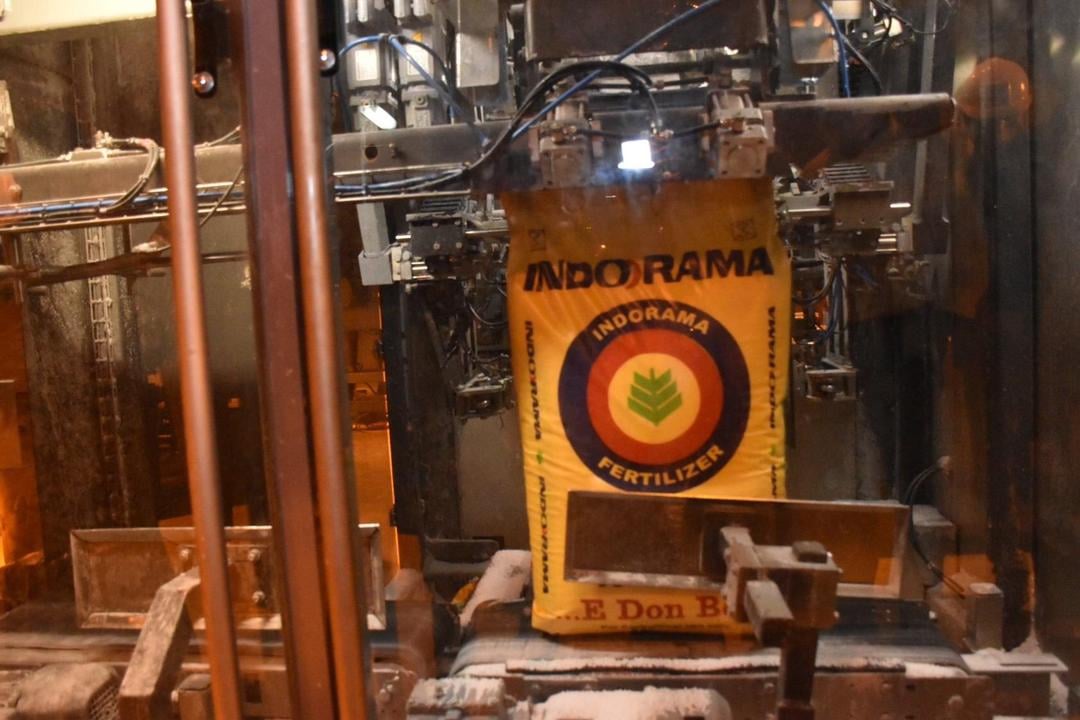
Indorama Eleme Fertilizer and Chemicals Limited (IEFCL), located at Eleme in Port Harcourt, Rivers State, has won the admiration of the Minister of Agriculture and Rural Development, Mr Muhammad Sabo Nanono.
Mr Nanono, who was at the company’s factory last Thursday, said he was impressed with the decision of the management to use its blending plants for the production of NPK fertilizers at a subsidized price to smallholder farmers.
He also expressed satisfaction with the massive supply of Urea fertilizers to over 70 per cent of farmers in Nigeria, saying this will increase food production in the country.
During the facility tour, the Minister commended Indorama for its environment, production capacity, employment creation and the provision of business opportunities for Nigerian graduates, artisans, farmers, and entrepreneurs.
The Minister used the occasion to advocate more strategic partnerships and robust collaborations with stakeholders in the fertilizer industry to boost production and develop the sector.
He said the effort would ensure its affordability, increased production, self–sufficiency, easy access to products by the farmers, and achieve food and nutrition security.
Mr Nanono acknowledged the company for being a strategic partner in the development of the agricultural sector, especially in the supply of fertilizer products like NPK, Urea, and DAP to farmers across the country.
“Indorama is deeply embedded in the agricultural transformation agenda of President Mohammed Buhari’s administration and the nation’s economic development in general,” the Minister said.
In his remarks, the Chief Executive Officer of Indorama, Mr Munish Jindal, stated that the vision of the company is to build the largest petrochemicals and fertilizer hub of Africa in Nigeria and to empower the Nigerian farmers by ensuring the production of quality fertilizers.
Business Post reports that Indorama boasts of two fertilizer plants with a production capacity of 3 million metric tons of Urea fertilizer per annum.
The factory has different sections of the Trains 1 and 2 fertilizer plants, including the state-of-the-art control rooms, the ammonia plants, urea plants, power plants and gagging section.
Economy
South Korea Commits $12bn to SMEDAN’s Entrepreneurship Drive
By Adedapo Adesanya
The Small and Medium Enterprises Development Agency of Nigeria (SMEDAN) has secured a $12 billion commitment from South Korea to establish a Skills Acquisition Centre in Abuja, as part of efforts to strengthen entrepreneurship and boost small businesses across Nigeria.
The chief executive of SMEDAN, Mr Charles Odii, disclosed this over the weekend during a road walk and sensitisation campaign at Utako Market in Abuja to commemorate the 2026 World MSME Day.
According to Mr Odii, the proposed facility will provide vocational and entrepreneurial training to young Nigerians and enhance the capacity of Micro, Small and Medium Enterprises (MSMEs).
He said the agency is awaiting the allocation of land by the Federal Capital Territory (FCT) Administration for the project.
“We need land in the FCT to build the Skills Acquisition Centre. If the FCT Administration is unable to provide one, we will use our office premises in Idu, Abuja, because we do not want Nigeria to miss this opportunity offered by the Korean Government to support skills and vocational training,” he said.
As part of activities marking the World MSME Day, Mr Odii also announced the launch of SMEDAN’s N500 million GROW Fund, a zero-interest financing intervention designed to support small businesses across the country.
He explained that the fund would be disbursed to members of registered cooperative societies and business associations to strengthen their enterprises.
According to him, beneficiaries are expected to utilise the funds strictly for business purposes, including expanding working capital, acquiring workspaces and purchasing equipment.
“The funding is meant to support and improve their businesses. It should be used for working capital, workspaces, tools and other productive business needs. Any use outside these objectives will not be encouraged,” he said.
Mr Odii further disclosed that entrepreneurs trained by SMEDAN in Abuja would receive vocational equipment, including washing machines, barbing kits, shoemaking tools and sewing machines, to enable them to become self-reliant.
“We have identified these tools as essential to the businesses of our trainees based on the skills programmes they have undergone,” he added.
The SMEDAN boss stressed that the agency’s interventions are driven by the critical role MSMEs play in Nigeria’s economy.
“Small businesses are the heartbeat of Nigeria’s economy. By providing infrastructure, skills and financing, we are creating an enabling environment for them to grow, thrive and contribute meaningfully to national development,” he said.
Odii also revealed that the National MSME Policy would be reviewed and relaunched in November 2026 to strengthen the sector and improve its contribution to economic growth.
He called on state governments to collaborate with SMEDAN in expanding skills acquisition programmes, creating jobs, reducing poverty and supporting the economic development agenda of President Bola Tinubu’s administration.
Economy
Dangote Refinery Broadens Feedstock Base With UAE Crude Purchase
By Adedapo Adesanya
The Dangote Petroleum Refinery has purchased two cargoes of crude oil from the United Arab Emirates (UAE), marking its first-ever procurement of Middle Eastern crude as it diversifies its feedstock sources ahead of continuous expansion.
According to a report by S&P Global Commodity Insights, the two cargoes will be the first sourced by the 700,000-barrels-per-day refinery from any Middle Eastern supplier, signalling a shift from its traditional reliance on Nigerian, African, and United States crude grades.
The report said the purchases followed the resumption of oil exports from the Middle East after the United States and Iran reached an interim peace agreement that restored confidence in shipping through the Strait of Hormuz.
The refinery, designed primarily to process Nigeria’s light sweet crude, has increasingly diversified its crude slate as operations ramp up. The company sources crude from Brazil, Equatorial Guinea, Angola, Algeria, and the US, among others.
The refinery and the Nigerian National Petroleum Company (NNPC) Plc had agreed on the supply of between 13 and 15 cargoes of Nigerian crude monthly in Naira, but the volumes often fluctuate. In May, the state oil company allocated seven cargoes to the plant, up from five in previous months.
The chief executive of the Dangote Refinery, Mr David Bird, had previously disclosed that these constraints had compelled the company to seek additional crude sources outside Nigeria.
According to S&P Global, the refinery has been broadening the range of crude grades it processes as part of its ambition to operate as a fully merchant refinery. The report noted that in 2025, about 70 per cent of the refinery’s crude imports came from Nigeria, while 24 per cent originated from the United States.
The report added that the refinery’s expansion plans would further increase its crude requirements. Dangote plans to double the refinery’s processing capacity to 1.4 million barrels per day by the end of 2028, a level that would enable it to process about 80 per cent of Nigeria’s recent crude oil production in a single day.
Business Post understands that since NNPC cargoes are cheaper for the refinery because of lower shipping costs, importation of crude could translate to higher fuel prices, with Nigerians possibly buying as high as N1,300 – N1,400 at the pump.
Economy
FCCPC Laments Lack of Price Relief Despite Falling Global Oil Prices
By Adedapo Adesanya
The Federal Competition and Consumer Protection Commission (FCCPC) has expressed concern that Nigerian consumers have yet to benefit from lower prices despite the recent sharp decline in global crude oil prices.
Business Post reports that crude prices currently trade around $69 and $71 per barrel in the international market.
The commission stated on Sunday that following a market surveillance exercise, the review of gantry prices from local refiners, marketers, depot operators and retail outlets showed only token reductions, not aligned with the steep drop in international crude prices.
The chief executive of the agency, Mr Tunji Bello, said that though the FCCPC does not set petroleum prices in a deregulated market, it is mandated by the Federal Competition and Consumer Protection Act, 2018, to promote competition and protect consumers from unfair business practices.
“To be clear, the commission does not regulate or approve petroleum prices in a deregulated downstream market. Our responsibility under the Federal Competition and Consumer Protection Act, 2018, is to promote competitive markets, prevent anti-competitive conduct, and protect consumers from unfair, deceptive and exploitative business practices,” Mr Bello said.
“We are concerned that while dealers often respond swiftly by hiking pump prices whenever crude prices rise, it is curious that it is taking forever for consumers to benefit significantly when crude prices fall. Competitive markets must work fairly in both directions,” he added.
The organisation noted that crude prices fell to about $73 per barrel after a recent ceasefire between the United States and Iran and the reopening of the Strait of Hormuz, down from a peak near $120 per barrel in April.
During the April–May price spike, petrol prices rose to between N1,350 and N1,500 while diesel traded around N2,000. In February, PMS averaged between N800 and N900. Presently, average retail PMS nationwide is about N1,200, with some local refiners listing gantry prices between N1,025 and N1,075.
The FCCPC acknowledged that domestic fuel prices are affected by multiple commercial factors, including refining costs, foreign-exchange movements, logistics, financing and distribution expenses, but said competitive market dynamics should have passed more of the recent international cost declines to consumers.
“Market liberalisation does not diminish businesses’ obligations to compete fairly or consumers’ right to fair treatment,” Mr Bello added. “Where credible evidence indicates conduct that undermines competition, exploits consumers or otherwise contravenes the Federal Competition and Consumer Protection Act, the Commission will investigate and take appropriate enforcement action,” urging consumers to report suspected anti-competitive conduct, misleading pricing or other unfair market behaviour via its established complaint channels.
-
Feature/OPED6 years agoDavos was Different this year
-
Travel/Tourism10 years ago
Lagos Seals Western Lodge Hotel In Ikorodu
-
Showbiz3 years agoEstranged Lover Releases Videos of Empress Njamah Bathing
-
Banking8 years agoSort Codes of GTBank Branches in Nigeria
-
Economy3 years agoSubsidy Removal: CNG at N130 Per Litre Cheaper Than Petrol—IPMAN
-
Banking3 years agoSort Codes of UBA Branches in Nigeria
-
Banking3 years agoFirst Bank Announces Planned Downtime
-
Sports3 years agoHighest Paid Nigerian Footballer – How Much Do Nigerian Footballers Earn