Jobs/Appointments
Kaduna Government Affirms Decision to Sack Workers
By Adedapo Adesanya
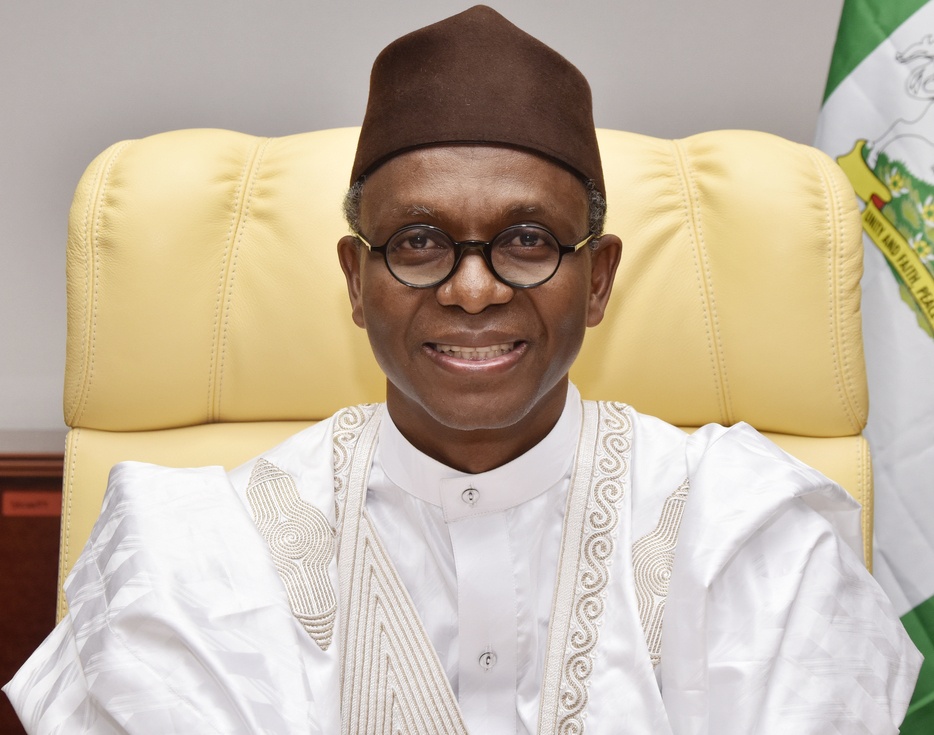
The Governor of Kaduna State, Mr Nasir El-Rufai, has said there is no going back on the sack of civil servants.
This followed his comprehensive briefing to President Muhammadu Buhari on the rightsizing policy of the state government and the steps taken so far to implement it.
The governor said that Kaduna State will seek accountability for the actions of the Nigeria Labour Congress (NLC) in the state by setting up a judicial commission of inquiry into the NLC strike and protest of May 2021.
In a statement issued by his Special Adviser on Media and Communication, Mr Muyiwa Adekeye, Mr El-Rufai explained that the Kaduna State government is hiring over 10,000 staff because rightsizing obliges the government to further recruit teachers, doctors, nurses and other qualified staff to provide vital services.
The Governor said he assured President Buhari that the Kaduna State government was determined not to allow a repeat of the pains, economic losses and the restraints of freedom that the NLC inflicted on the people of the state.
Mr El-Rufai explained that the state executive council has already communicated to the Minister of Labour of its decision not to approve the agreements reached at the meeting between the state government and the NLC pertaining to its rightsizing policy.
Alluding to the NLC’s renewed threat of strike action, the statement said that the labour union has demonstrated that it does not even believe in equality among its own members by describing the transfer of one Kaduna State employee to a place where other civil servants are serving as victimisation.
“It is trite that an MoU is not a legally binding document. The content of the MoU shows that there is no congruence between the progressive aspirations of the Kaduna State Government and the misguided sense of entitlement of the NLC which does not even believe in equality amongst its own members.
“KDSG employees are serving with dedication in Birnin-Gwari Local Government Area, amidst all the challenges. Yet, the NLC describes the transfer of one KDSG employee to Birnin-Gwari LGA as victimisation, as if other staff who have been loyally serving in the same area are lesser humans or permanent victims. KDSG rejects this unfair denigration of the very people that the transferred employee claims to lead,” the state government said.
KDSG stated that “it is improper to describe the routine application of public service rules and labour regulations by a government as victimisation” and asked the Federal Ministry of Labour to reconsider permitting such slurs in documents prepared under its auspices.
“Union membership or accession to a leadership position in a union does not grant immunity to an employee for his/her actions and conduct or exempt them from compliance with the laws that govern everyone else.
“There are procedures that need to be followed to make a strike action legal, and the kind of conduct permissible during legitimate strike action is also bound by law. Lawful strike action still subjects strikers to the no-work, no-pay rule. How then can unlawful strike action be expected to be without consequences, as spelt out in the relevant laws and regulations?”
The statement said that the dominant theme in the KDSG statement at the conciliation meeting was the state government’s rejection of the criminal actions that defined the NLC’s actions.
“It was notable that the NLC delegation was eager for the discourse not to dwell on their violations of laws prohibiting the disruption of essential services and their recourse to coercion and restraints to the freedom of citizens. But these are matters that cannot be ignored or swept under the carpet since unlawful actions that have come to be accepted as part and parcel of strike action remain unlawful.’’
The statement reiterated that “Kaduna State Government has not yet disengaged any state civil servant but has dispensed with the services of 99 political appointees so far.” Only the 23 local government councils and the agencies associated with the local government system such as SUBEB and the Primary Health Care Board have released staff.
It noted that “rightsizing is about getting the optimal number of persons with the requisite skills to staff the public service,” adding that as it is releasing lesser skilled staff, the KDSG is engaged in continuous recruitment of teachers, doctors, nurses and other health workers to provide vital services for citizens.
“More than 10,000 such workers, including 7,600 secondary school teachers are being injected into the public service.”
The statement explained that its commitment to a fair assessment of the credentials of all officers shows in the painstaking approach to the rightsizing exercise for state civil servants.
It said that it is only after the completion of the verification process that KDSG will “release any civil servant that is confirmed not to possess the minimum qualifications prescribed in 2017 as one of the outcomes of the state’s Public Service Revitalization and Renewal Programme.”
The statement then appealed for the continued patience and understanding of all citizens as steps are being taken for the fair conclusion of this exercise.
Jobs/Appointments
Jalo-Waziri Bows Out as CSCS CEO, Shehu Shantali Takes Over
By Adedapo Adesanya
The Central Securities Clearing System Plc (CSCS) has announced the appointment of Mr Shehu Yahaya Shantali as its new Chief Executive Officer (CEO), effective January 1, 2026, subject to regulatory approval.
Mr Shantali will succeed Mr Haruna Jalo-Waziri, who will step down after an eight-year tenure, where he contributed significantly to advancing Nigeria’s capital market infrastructure.
During his tenure, Mr Jalo-Waziri provided visionary and results-driven leadership that delivered sustained growth and far-reaching transformation across the organisation.
He led the successful execution of critical strategic initiatives, strengthened governance and operational effectiveness, and modernised the company’s systems and processes, positioning the organisation for long-term resilience and competitiveness.
His leadership significantly enhanced stakeholder confidence, deepened the organisation’s market relevance both domestically and internationally, and established a strong, future-ready foundation for continued success.
Commenting on the appointment, the Chairman of the CSCS board, Mr Temi Popoola, said: “On behalf of the Board, I would like to express our profound appreciation to Haruna Jalo-Waziri for his outstanding service to CSCS. Under his leadership, the company recorded notable milestones and built an impressive legacy of operational excellence, innovation, and stakeholder confidence. We thank him sincerely for his dedication and impact.
“We are equally delighted to welcome Shehu Shantali as the new Chief Executive Officer of CSCS. He brings a wealth of experience, deep industry knowledge, and a strong strategic vision. The Board is confident that he will build on the solid foundation laid by his predecessor and lead the Company into its next phase of growth.”
Mr Shehu Yahaya Shantali holds a Bachelor of Science degree in Accounting from Ahmadu Bello University, Zaria, and an Executive MBA from Kingston Business School. He has over two decades of experience in accounting, finance, and financial services across Nigeria and the United Kingdom, with expertise spanning investment and asset management, financial advisory, and International Financial Reporting Standards (IFRS).
His career cuts across capital markets, investment banking, real estate, and financial services, and is underpinned by a decade at the Securities and Exchange Commission (SEC) Nigeria, where he championed the migration of publicly listed and significant public interest entities from Nigerian GAAP to IFRS and led the Commission’s transition to the contributory pension scheme in 2012.
Mr Shantali has built deep experience in financial inclusion, digital financial infrastructure, and the development of scalable, market-wide platforms that expand access to regulated financial services. As Managing Director and Chief Executive Officer of Apricot Investments Limited, he led the development of the MicroWorld platform, enabling the distribution of structured financial products, including micro-health, micro-pension, micro-housing, micro-insurance, and micro-investment solutions.
Earlier in his career, his team developed Nigeria’s first contactless payment solution, and he played a pioneering role in POS-based agency banking and early mobile-money interoperability on the NIBSS NIP platform, supporting efficient payments, settlement, and system-wide connectivity.
Reflecting on his tenure, the outgoing CEO, Mr Jalo-Waziri, stated: “It has been an honour to serve as the Chief Executive Officer of CSCS. I am proud of what we have achieved together as a team and grateful for the support of the Board, management, regulators, and all our stakeholders. I am confident that CSCS is well-positioned for the future, and I wish my successor every success as he takes the company forward.
In his remarks, the incoming CEO, Mr Shantali, said: “I am deeply honoured by the confidence the Board has placed in me with this appointment. CSCS plays a critical role in Nigeria’s capital market ecosystem, and I look forward to working with the Board, management, staff, regulators, and market participants to strengthen the Company’s leadership position further, deliver value to stakeholders, and support the continued growth and stability of the capital market.”
In a statement, CSCS Plc commended Mr Jalo-Waziri for his contributions to enhancing the company’s operational capabilities and fostering market development during his tenure with the organisation.
The company reaffirmed its commitment to upholding the highest standards of corporate governance, operational excellence, and stakeholder engagement as it continues to support the Nigerian capital market.
Jobs/Appointments
Tinubu Approves Reconstitution of NERC Board
By Adedapo Adesanya
President Bola Tinubu has approved the reconstitution of the board of the Nigerian Electricity Regulatory Commission (NERC), following the Senate’s confirmation of its members on December 16.
This was disclosed in a statement released by the Special Adviser to the President on Information and Strategy, Mr Bayo Onanuga.
He noted that the board is chaired by Mr Musiliu Olalekan Oseni, who started his service as a Commissioner in January 2017. He was subsequently appointed Vice Chairman of the commission.
His appointment as Chairman took effect from December 1, 2025, and shall subsist until the completion of his ten-year tenure at the commission, in accordance with the provisions of the Electricity Act, 2023.
Mr Yusuf Ali is now the Vice Chairman. He was first appointed as a Commissioner in February 2022. His designation as Vice Chairman took effect on 1 December 2025 and shall remain in effect until the completion of his first term.
The others are; Mr Nathan Rogers Shatti — Commissioner. He is serving a second term as commissioner. He was first appointed in January 2017.
Mr Dafe Akpeneye — Commissioner. He is serving a second term, having been first appointed as a Commissioner in January 2017.
Mrs Aisha Mahmud Kanti Bello — Commissioner. She is serving her second term, having been first appointed as a Commissioner in December 2020.
Mr Chidi Ike, PhD— Commissioner. He is serving his first term, having been first appointed as a Commissioner in February 2022.
Mr Fouad Animashaun, PhD — Commissioner. He is serving his first term, effective December 2025. He is an energy economist with extensive experience in the Nigerian power sector and most recently served as Executive Commissioner and Chief Executive Officer of the Lagos State Electricity Regulatory Commission.
President Tinubu charged the board members of NERC to deepen and consolidate the ongoing transformation of Nigeria’s power sector, in strict alignment with the letter and spirit of the Electricity Act, 2023.
Jobs/Appointments
NMDPRA CEO Farouk Ahmed, NUPRC Boss Gbenga Komolafe Resign
By Adedapo Adesanya
The chief executive of the Nigerian Midstream and Downstream Petroleum Regulatory Authority (NMDPRA), Mr Farouk Ahmed, has resigned alongside his counterpart at the Nigerian Upstream Petroleum Regulatory Commission (NUPRC), Mr Gbenga Komolafe.
Based on the development, President Bola Tinubu has asked the Senate to confirm new chief executives for the two agencies.
The President’s request was contained in separate letters to the Senate on Wednesday, according to a statement signed by Mr Bayo Onanuga, the Special Adviser to the President on Information and Strategy, late on Wednesday.
Both officials were appointed in 2021 by former President Muhammadu Buhari to lead the two regulatory agencies created by the Petroleum Industry Act (PIA).
To fill these positions, President Tinubu has written to the Senate, requesting expedited confirmation of Mrs Oritsemeyiwa Amanorisewo Eyesan as CEO of NUPRC and Mr Saidu Aliyu Mohammed as CEO of NMDPRA.
Mr Ahmed’s resignation comes amid a high-profile conflict with businessman, Mr Aliko Dangote, who alleged that the NMDPRA chief and his family were living beyond their legitimate means, citing millions of Dollars allegedly spent on overseas schooling for his four children.
Mr Eyesan, a graduate of Economics from the University of Benin, spent nearly 33 years with the NNPC and its subsidiaries. She retired as Executive Vice President, Upstream (2023–2024), and previously served as Group General Manager, Corporate Planning and Strategy at NNPC from 2019 to 2023.
Mr Mohammed, born in 1957 in Gombe, graduated from Ahmadu Bello University in 1981 with a Bachelor’s in Chemical Engineering. He was announced today as an independent non-executive director at Seplat Energy.
His prior roles include Managing Director of Kaduna Refining and Petrochemical Company and Nigerian Gas Company, as well as Chair of the boards of West African Gas Pipeline Company, Nigeria LNG subsidiaries, and NNPC Retail.
He also served as Group Executive Director/Chief Operating Officer, Gas & Power Directorate, where he provided strategic leadership for major gas projects and policy frameworks, including the Gas Masterplan, Gas Network Code, and contributions to the Petroleum Industry Act (PIA).
He played a pivotal role in delivering key projects such as the Escravos–Lagos Pipeline Expansion, the Ajaokuta–Kaduna–Kano (AKK) Gas Pipeline, and Nigeria LNG Train.
-
Feature/OPED6 years agoDavos was Different this year
-
Travel/Tourism9 years ago
Lagos Seals Western Lodge Hotel In Ikorodu
-
Showbiz3 years agoEstranged Lover Releases Videos of Empress Njamah Bathing
-
Banking8 years agoSort Codes of GTBank Branches in Nigeria
-
Economy3 years agoSubsidy Removal: CNG at N130 Per Litre Cheaper Than Petrol—IPMAN
-
Banking3 years agoFirst Bank Announces Planned Downtime
-
Banking3 years agoSort Codes of UBA Branches in Nigeria
-
Sports3 years agoHighest Paid Nigerian Footballer – How Much Do Nigerian Footballers Earn