Connect with us

General

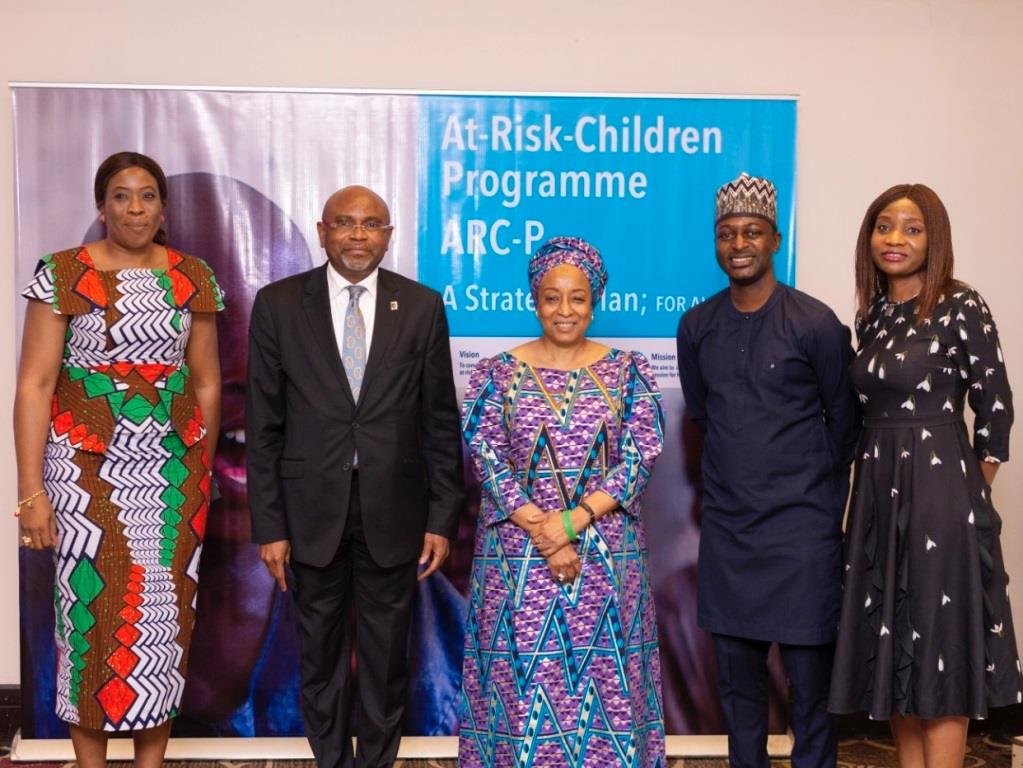
ARC-P to Support Over 9 million Unprotected Children in Nigeria

Published

on

ARC-P

By Modupe Gbadeyanka

Efforts would be made to provide protection for the over 9 million unprotected children in Nigeria, the Special Adviser to President Muhammadu Buhari on Social Investments, Mrs Maryam Uwais, has assured.

The President’s aide said this category of children, who deal daily with violence, abuse, neglect, exploitation and exclusion, would be supported through the At-Risk Children Project (ARC-P).

She explained that the vision of ARC-P is to comprehensively address cross-cutting concerns of at-risk children and provide them with a life of dignity.

“In the family and communities, children should be fully protected so they can survive, grow, learn and develop to their fullest potential,” Mrs Uwais said at the unveiling of the programme in Lagos.

The ARC-P is a strategic national response to address the problem of vulnerable children coordinated by her office. The initiative, according to her, will nurture children with dignity and respect, raise equality citizens and bridge the poverty gap.

It reports directly to the National Steering Committee of the National Poverty Reduction with Growth Strategy (NPRGS), chaired by Vice President Yemi Osinbajo.

The mission of the project is to “facilitate programmes that will ensure the integration of at-risk children and young adults by creating opportunities for skills and empowerment to reduce their vulnerabilities.”

“A key objective of the program will provide protection and hope to youth and children who are vulnerable, for a productive life through learning, combined with improved health outcomes, values and skills.

“It will also provide meaningful, impactful and pragmatic quality programs that empower the children to become productive to themselves, their families, communities and society,” Mrs Uwais added.

The programme, she further disclosed, would “leverage on successful tried and tested intensive learning initiatives. Expand, deepen and broaden the scope of other programmes on the ground. Coordinate, add value and set basic standards through trained facilitators within the State for sustainability.”

“In addition to the existing learning options, literacy and numeracy, introducing civics, critical thinking, life skills, entrepreneurship, sports, creativity, technology, farming and vocations, community police training. Address mental and physical health concerns, assess and address vision, hearing and special needs, boost nutrition through a feeding programme,” the Special Adviser noted.

She disclosed that the programme would be institutionalised to continue beyond the current administration and called for support from corporate Nigeria to implement interventions including basic literacy and numeracy, health and nutrition, entrepreneurial, financial literacy and vocational skills and digital skills.

Mrs Uwais said they could sponsor any of the programmes and assured that all monies would be accounted for because good corporate governance is a core of ARC-P.

Responding, some of the companies under the Organised Private Sector (OPS), including Lafarge Africa Plc, ANAP Holdings, Airtel Nigeria, International Finance Corporation, Flour Mills of Nigeria, Wema Bank, Aliko Dangote Foundation, FBN Quest Trustees, StanbicIBTC, InterSwitch, Murtala Muhammed Foundation and Accelerex Network, all commended the initiative.

They noted that it was an innovation that would help resolve the out-of-school children problem and insecurity.

“This is an outstanding innovation. I’ve been doing this for about seven years, and I’ve never really thought about getting the kids off the street.

“We do education, but we never looked at it from this angle. So, I think this is commendable,” the Head of Corporate Social Responsibility at Airtel Nigeria, Ms Chioma Okolie, said.

As for the Head of Corporate Strategy at Wema Bank, Mr Femi Akinfolarin, “This is the single largest problem in Nigeria; unemployment and these youths coming out without skills, without being able to do anything.

“So, it’s top of mind right now. We need to position this initiative as a solution to an evolving problem and thus create an urgency that will make the government and private sector accelerate their reaction to what’s going on.”

The private firms also advised on strengthening the initiative for maximum impact while seeking clarifications from both Mrs Uwais and officials of FBN Quest Trustees, the project’s fund managers.


Modupe Gbadeyanka is a fast-rising journalist with Business Post Nigeria. Her passion for journalism is amazing. She is willing to learn more with a view to becoming one of the best pen-pushers in Nigeria. Her role models are the duo of CNN's Richard Quest and Christiane Amanpour.

Advertisement
2 Comments

Leave a Reply

Your email address will not be published. Required fields are marked *

General

Church Confirms Release Of 151 Abducted Members in Kaduna

Published

on

Cherubim and Seraphim Movement Church Worldwide

By Adedapo Adesanya

The Cherubim and Seraphim Movement Church Worldwide, Ayo Ni O, has confirmed the release and safe return of 151 of its members abducted from Iburu community in Kajuru Local Government Area of Kaduna State.

The abduction, which affected about 177 people, occurred on January 18, 2026. It was initially denied by the Nigeria Police Force and other government agencies, but was later confirmed.

In a statement issued by the Conference Secretary General of the church, Mr Anthony Olusesan Samaiye, it was disclosed that the release of the abducted persons was confirmed through reports from its liaison officers in Kaduna.

According to the statement, Mr Emmanuel Abiodun Adewale Alogbo (JP), described the release as a victory for faith, prayer and dialogue, noting that the breakthrough followed an emergency visit to Kaduna by its leadership and a series of high-level engagements aimed at securing the freedom of the abducted worshippers.

The Cherubim and Seraphim Church expressed gratitude to the Kaduna State government, particularly Governor Uba Sani, for what it described as his commitment to dialogue and the coordination of state resources that contributed to the successful outcome.

Special appreciation was also extended to the Governor’s Chief of Staff, Mr Sani Liman Kila, and the Senior Special Assistant on Religious Affairs (Christian Matters), Mr Ishaya Jangado, for facilitating engagement between the church and the state government.

The church noted that the incident demonstrated the importance of cooperation between religious leaders and government authorities in addressing security challenges and protecting citizens.

It also acknowledged prayers and support from the Christian Association of Nigeria (CAN), the Organisation of African Instituted Churches (OAIC), the international community and Christians worldwide.

While celebrating the release, the church said it was mindful of the trauma experienced by the victims and disclosed that its welfare and medical teams had been mobilised to provide psychosocial support and care to the affected members and their families.

The church called for sustained peace in Kaduna State and across Nigeria, urging authorities to continue efforts to ensure the safety of all citizens, regardless of religious affiliation.

Continue Reading

General

2027 Elections: I Won’t be Vice Presidential Candidate—Peter Obi Insists

Published

on

peter obi tax system

By Adedapo Adesanya

As activities for the 2027 general elections begin to take shape, the former presidential candidate of the Labour Party in the 2023 presidential poll, Mr Peter Obi, has again ruled out the possibility of contesting as a vice presidential candidate next year, saying he is contesting to be on the ballot.

Speaking ahead of the Abuja Municipal Area Council (AMAC) election in the Federal Capital Territory, he said, “You see this coming election, support us in AMAC; it will help me. Your support in AMAC is critical to our journey. I am involved and contesting the coming election as number one. When I come back, you will see. I assure you.”

Mr Obi vied for the 2023 presidency on the LP platform, emerging third overall behind Mr Atiku Abubakar and President Bola Tinubu.

In December 2025, he defected to the African Democratic Congress (ADC), where his teeming supporters popularly known as Obidients have urged him to only pursue the presidential ticket.

Mr Abubakar, who chose Mr Obi as his vice presidential candidate in the 2019 polls, is also a member of the ADC. The men finished in second and third places, respectively in the last presidential election, which President Tinubu won with 37 per cent of the votes.

Speaking at the campaign venue, Mr Obi emphasised to his supporters the importance of backing the ADC candidate in the AMAC election, noting that their support at the grassroots would go a long way in bolstering his national political journey.

The ADC coalition includes many former allies of Mr Tinubu, including Mr Nasir El Rufai, the former governor of Kaduna State; Mr David Mark, a former Senate President who is serving as the National Chairman of the party, and Mr Rauf Aregbesola, a former Osun Governor and currently the National Secretary of ADC.

The party will be hoping to emulate the success of the ruling All Progressives Congress (APC), which was formed by an alliance of opposition politicians (including Mr Abubakar) in 2013 and caused the ouster of former President Goodluck Jonathan, the first-ever defeat of an incumbent Nigerian president in 2015.

Continue Reading

General

CPPE Urges FG to Create Farm Price Stabilisation Plan for Food Security

Published

on

Price of Food

By Adedapo Adesanya

The Centre for the Promotion of Private Enterprise (CPPE) has called on the federal government to urgently establish a National Farm Price Stabilisation and Farmer Income Protection Framework to safeguard Nigeria’s long-term food security.

This was contained in a policy brief signed by the chief executive of the think tank, Mr Muda Yusuf, on Sunday.

The group warned that while recent import surges have lowered food prices to the delight of consumers, they have simultaneously inflicted severe financial losses on farmers and agricultural investors, creating what it described as “troubling trade-offs and unintended consequences.”

He advised that Nigeria cannot afford a policy regime that undermines confidence in agriculture, one of the country’s most strategic sectors and largest employers of labour.

“The welfare gains from cheaper food have been profound and should be acknowledged. However, the cost to farmers and other investors across the agricultural value chain is equally high and cannot be ignored,” Mr Yusuf stated.

The CPPE boss emphasised the urgent need to strike a sustainable balance between keeping food affordable for consumers and protecting farmers’ incomes, while safeguarding agricultural investment.

According to the policy document, recent import surges of staples such as rice, maize and soybeans have caused serious dislocations in the agricultural investment ecosystem, inflicting severe hardship on farmers and weakening production incentives.

“Although consumers have welcomed the decline in food prices, the long-term consequences are adverse: farmer incomes fall, production declines over time, investment confidence weakens, and the country risks returning to cycles of scarcity and higher prices,” the document warned.

The CPPE identified several structural factors driving recurring farm price collapses in Nigeria, beyond the immediate impact of food imports.

The think tank warned that harvest glut remains a major challenge, with many farmers harvesting the same crops within the same period, causing sudden oversupply. This is compounded by the limited availability of storage facilities, drying centres and cold-chain systems, which forces farmers to sell immediately regardless of market conditions.

The organisation said this is also affected by weak rural logistics, characterised by poor roads, insecurity, high transport costs, and limited aggregation hubs, which make it difficult to move produce efficiently from production zones to high-demand markets.

Continue Reading

Trending