Connect with us

Economy

Prices of Bread, Pastries to Rise as CBN Mulls FX Restriction for Wheat

Published

on

Local Wheat Production

By Adedapo Adesanya

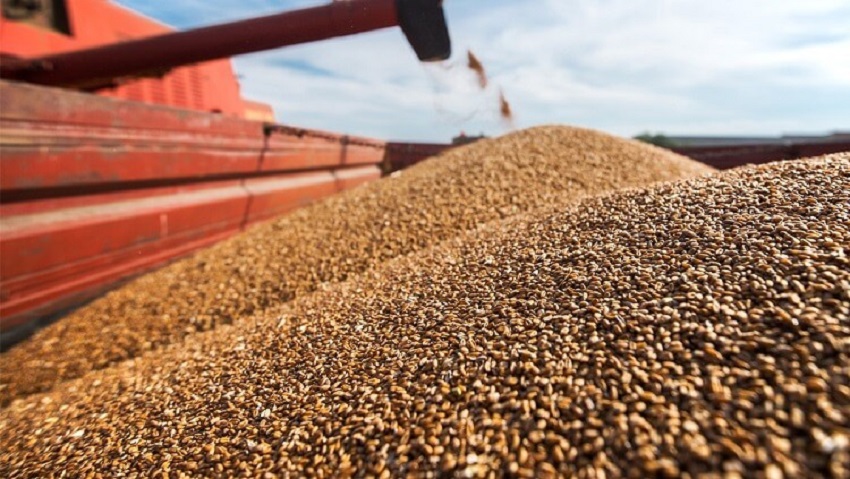
Amid a rise in food inflation, the Central Bank of Nigeria (CBN) is considering the addition of wheat to the list of food items restricted from getting foreign exchange (forex) allocations from the official channel, the Investors and Exporters (I&E) window, a decision that will have a ripple effect on the price of products from wheat, bread, noodles, biscuits, cakes, and other pastries.

Business Post gathered from the Nation that the apex bank is seeking to put the food item on the long list in order to save $2 billion that is expended by manufacturers and investors to bring the product into the country.

Citing sources, the medium said that the CBN plans to jump-start a massive local production of wheat to cover for the 99 per cent disparity as only one per cent (about 63,000 metric tonnes) of wheat out of the five to six million metric tonnes (MT) of wheat consumed in Nigeria is produced locally.

The report quoted its source as saying that, “Any moment from now, wheat will be added to the forex restriction list.”

It was also revealed that the CBN was planning to boost funding to wheat farmers so that the burden of importation will drop just as local production covers for the effect that the importation has had on the country’s foreign reserve.

The CBN reportedly said it will focus attention on the wheat value chain for 2021/2022 dry season planting, after sustainable progress made across the rice and maize value chain, which are on the banned item list in the country.

Wheat is a source for many foods and with a restriction placed on its importation, demand will overshadow supply considering new efforts by the CBN to clamp down on other unregulated forex acquisition channels.

This is going to be particularly difficult for exporters who will have to source their forex needs at these channels since the Investors and Exporters (I&E) channel can no longer grant its request.

Speaking at the end of the last Monetary Policy Committee (MPC) meeting, the Governor of the CBN, Mr Godwin Emefiele said that the bank would not go back on its previous stance on banning Bureau De Change (BDC) operators.

According to him, these BDC operators sell foreign exchange to criminals who import weapons to harm Nigerians and promote different forms of terrorism.

The CBN boss said, “It truly beats my imagination that Nigerians continued with this type of practice (selling dollars to BDC) that tended to promote illegal activities that are involved in graft and corrupt practices.

“We won’t support the corrupt tendencies of those who illegally buy dollars from our forex market, carry them in aircraft, buy arms and ammunition and bring them back into the country and conduct crimes. Whether it is Boko Haram, banditry and other nefarious activities.”

“Why will CBN give people our forex to go and buy arms? And that is what people want us to continue to do. We cannot do that.”

He added that those who had any legitimate need for forex to go to the banks to make their transactions and with the illegitimate status expected to be placed on wheat importation, Nigerians will have to buckle up for the impending effects.


Adedapo Adesanya is a journalist, polymath, and connoisseur of everything art. When he is not writing, he has his nose buried in one of the many books or articles he has bookmarked or simply listening to good music with a bottle of beer or wine. He supports the greatest club in the world, Manchester United F.C.

Advertisement
1 Comment

Leave a Reply

Your email address will not be published. Required fields are marked *

Economy

Nipco, 11 Plc Crash OTC Securities Exchange by 4.76%

Published

on

NIPCO LPG Depot

By Adedapo Adesanya

Energy stocks influenced the 4.76 per cent loss recorded by the NASD Over-the-Counter (OTC) Securities Exchange on Friday, December 5.

The culprits were the duo of 11 Plc and Nipco Plc,with the former shedding N32.17 to end at N291.83 per share compared with the previous day’s N324.00 per share, and the latter down by N21.00 to sell at N195.00 per unit versus the previous session’s N216.00 per unit.

Consequently, the NASD Unlisted Security Index (NSI) slumped by 170.16 points to 3,401.37 points from 3,571.53 points and the market capitalisation lost N101.81 billion to close at N2.035 billion from the N2.136 trillion quoted in the preceding session.

The OTC securities exchange suffered the decline yesterday despite the share prices of three companies closing green.

Central Securities Clearing System (CSCS) Plc was up by N1.80 to close at N39.80 per share compared with Thursday’s price of N38.00 per share, Air Liquide Plc appreciated by N1.09 to N11.99 per unit from N10.90 per unit, and FrieslandCampina Wamco Nigeria Plc grew by 78 Kobo to N56.57 per share from N55.79 per share.

During the session, the volume of transactions rose by 6,885.3 per cent to 18.2 million units from 4.3 million units, the value of transactions ballooned by 10,301.7 per cent to N389.7 million from N347.2 million, but the number of deals declined by 29.7 per cent to 26 deals from 37 deals.

Infrastructure Credit Guarantee Company (InfraCredit) Plc ended the day as the most traded stock by value on a year-to-date basis with 5.8 billion units worth N16.4 billion, followed by Okitipupa Plc with 170.4 million units valued at N8.0 billion, and Air Liquide Plc with 507.5 million units worth N4.2 billion.

InfraCredit Plc also finished the day as the most traded stock by volume on a year-to-date basis with 5.8 billion units transacted for N16.4 billion, followed by Industrial and General Insurance (IGI) Plc with 1.2 billion units sold for N420.2 million, and Impresit Bakolori Plc with 536.9 million units worth N524.9 million.

Continue Reading

Economy

Naira Depreciates to N1,450/$1 at Official Forex Market

Published

on

Naira-Dollar exchange rate gap

By Adedapo Adesanya

The Naira depreciated further against the US Dollar in the Nigerian Autonomous Foreign Exchange Market (NAFEX) on Friday, December 5, as FX demand pressure mounts.

The Nigerian currency lost N2.60 or 0.18 per cent against the greenback to close at N1,450.43/$1 compared with the previous day’s N1,447.83/$1.

Equally, the domestic currency declined against the Pound Sterling in the official forex market during the session by N4.48 to trade at N1,935.45/£1, in contrast to Thursday’s closing price of N1,930.97/£1 and shrank against the Euro by 43 Kobo to end at N1,689.17/€1 versus the preceding session’s rate of N1,688.74/€1.

Similarly, the local currency performed badly against the US Dollar at the GTBank FX counter by N2 to close at N1,455/$1 versus Thursday’s N1,453/$1 but traded flat at the parallel market at N14.65/$1.

As the country gets into the festive period, pressure mounted on the local currency reflecting higher foreign payments and lower FX inflows.

However, there are expectations that the Nigerian currency will be stable, supported by interventions by to the Central Bank of Nigeria (CBN) in the face of steady dollar Demand and inflows from Detty December festivities that will give the Naira a boost after it depreciated mildly last month.

Traders cited by Reuters expect that the Naira will trade within a band of N1,443-N1,450/$1 next week, buoyed by improved FX interventions by the apex bank.

As for the crypto market, it was down yesterday due to profit-taking associated with year-end trading. However, the December 1-Year Consumer Inflation Expectation by the University of Michigan fell to 4.1 per cent from 4.5 per cent previously and 4.5 per cent expected. The 5-Year Consumer Inflation Expectation fell to 3.2 per cent from 3.4 per cent previously and 3.4 per cent expected.

With the dearth of official economic data of late, these private surveys have taken on a new level of significance and the market banks of them to make decisions.

Cardano (ADA) depreciated by 5.7 per cent to $0.4142, Dogecoin (DOGE) slid by 5.1 per cent to $0.1394, Ethereum (ETH) dropped by 3.9 per cent to $3,039.75, Solana (SOL) declined by 3.8 per cent to $133.24, and Litecoin (LTC) fell by 3.7 per cent to $80.59.

Further, Bitcoin (BTC) went down by 2.6 per cent to sell at $89,683.72, Binance Coin (BNB) slumped by 2.2 per cent to $883.59, and Ripple (XRP) shrank by 2.1 per cent to $2.04, while the US Dollar Tether (USDT) and the US Dollar Coin (USDC) remained unchanged at $1.00 each.

Continue Reading

Economy

Oil Market Climbs on Federal Reserve Rate-Cut Signals, Supply Concerns

Published

on

global oil market

By Adedapo Adesanya

The oil market was up on Friday on increasing expectations the US Federal Reserve will cut interest rates next week, which could boost economic growth and energy demand.

Brent futures rose by 49 cents or 0.8 per cent to $63.75 per barrel and the US West Texas Intermediate (WTI) futures expanded by 41 cents or 0.7 per cent to $60.08 per barrel.

Investors digested a US inflation report and recalibrated expectations for the Federal Reserve to reduce rates at its December 9-10 meeting.

US consumer spending increased moderately in September after three straight months of solid gains, suggesting a loss of momentum in the economy at the end of the third quarter as a lackluster labor market and the rising cost of living curbed demand.

Traders have been pricing in an 87 per cent chance that the US central bank will lower borrowing costs by 25 basis points next week, according to CME Group’s FedWatch Tool.

Investors also focused on news from Russia and Venezuela to determine whether oil supplies from the two sanctioned members of the Organisation of the Petroleum Exporting Countries and allies (OPEC+) will increase or decrease in the future.

The failure of US talks in Moscow to achieve any significant breakthrough over the war in Ukraine has helped to boost oil prices so far this week.

A loss of Venezuelan oil production in case of a US military intervention will materially impact global benchmark prices as the market will have to replace Venezuela’s heavy crude.

Venezuela is estimated to pump about 1.1 million barrels per day of crude oil at present, so if the US-Venezuela tension escalation into an invasion in the South American country, this volume of crude would be at risk.

Reuters reported that the Group of Seven countries and the European Union are in talks to replace a price cap on Russian oil exports with a full maritime services ban in a bid to reduce the oil revenue that helps finance Russia’s war in Ukraine.

Any deal that could lift sanctions on Russia, the world’s second-biggest crude producer after the US, could increase the amount of oil available to global markets, weakening prices.

Continue Reading

Trending