Connect with us

Banking

Ecobank Retains ‘Best Retail Bank in Nigeria’ Award

Published

on

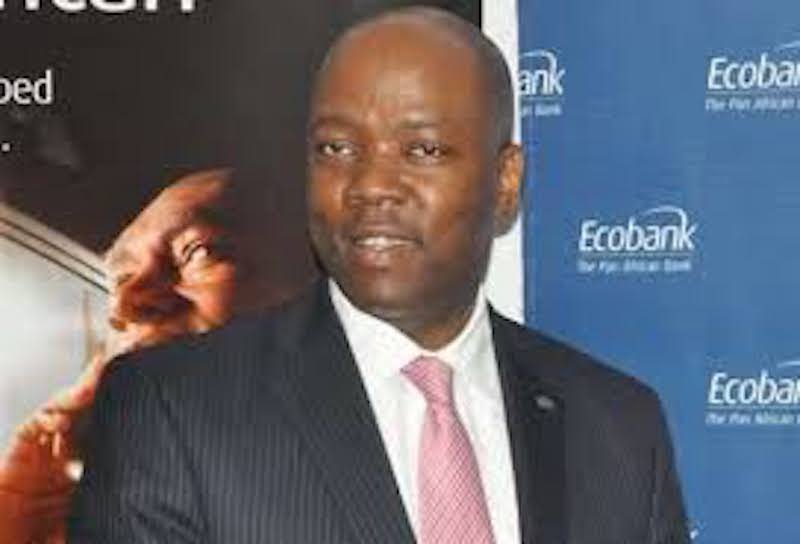
Patrick Akinwuntan Ecobank Nigeria

By Aduragbemi Omiyale

For the second straight year, Ecobank Nigeria has won the Best Retail Bank in Nigeria award, beating other notable financial institutions in the country to reclaim the prize.

The award was issued by the Asian Banker at the Middle East and Africa Regional 2021 awards ceremony held recently in Johannesburg, South Africa.

The Asian Banker Excellence in Retail Financial Services and Technology Innovation Award is acclaimed as the most rigorous, prestigious and transparent country level award programme for consumer financial services and technology in Middle East & Africa.

The awards committee assesses banks and non-banks in Middle East & Africa on a product and business level through a comprehensive evaluation process based on criteria and scorecards on world-class standards of what the retail banking proposition and technology proposition should be.

The Managing Director, Regional Executive, Ecobank Nigeria, Mr Patrick Akinwuntan, while commenting on the award, stated that, “The fact that the bank is winning this award for the second time shows that we have come to stay in terms of delivering world-class and diverse financial services in Nigeria and to a greater number of Africans across the continent.

“We understand their needs, forecast opportunities in the market and making our digital platforms available to be leveraged to achieve the highest potentials.

“Ecobank’s platform is unique for all types of retail transactions, especially account opening, bills payment, airtime purchase and third party transfers.

“We have ATMs spread across the country while our agency network reaches every community in order to provide basic financial services and support for every Nigerian. We have built an ecosystem that brings affordable financial services – payments and collections to every African.”

Mr Akinwuntan reiterated that the award is worthy recognition of Ecobank’s digital transformation landmark initiatives whereby “we can make payments into more accounts and wallets than any other bank in Africa.”

He also commended the Asian Banker Awards’ Team for creating an opportunity to celebrate innovative ideas by members of the banking community, assuring that Ecobank will continue to deploy its robust digital platforms and enhance customer experience at every touchpoint.

On his part, the Chairman of The Asian Banker, Mr Emmanuel Daniel, congratulated Ecobank and other winners of the prestigious awards in the various categories, stating that the process for selection was rigorous, transparent and conducted with the highest level of integrity.

Ecobank Nigeria Limited is a subsidiary of the Ecobank Group, the leading pan-African banking group with operations in 33 African countries and an international presence in four locations (London, Paris, Beijing, and Dubai).

The lender is a full-service bank providing wholesale, retail, investment and transaction banking services and products to governments, financial institutions, multinationals, international organizations, medium, small, and micro businesses, and individuals.

Ecobank is a major player in the distribution of financial services in Nigeria, leveraging digital platforms including Ecobank Mobile App and USSD *326#, Ecobank Online, Ecobank OmniPlus, Ecobank Omnilite, EcobankPay, Ecobank RapidTransfer, ATMs, POSs and an extensive distribution network of over 250 branches and about 30,000 agency banking locations.


Aduragbemi Omiyale is a journalist with Business Post Nigeria, who has passion for news writing. In her leisure time, she loves to read.

Banking

Bankit Introduces Smart Payment Cards

Published

on

Bankit Smart Payment Cards

By Modupe Gbadeyanka

As part of its commitment to delivering fast, secure, and truly accessible financial solutions at scale, Bankit has introduced a smart payment card.

It is completely free to customers, with no card issuance fee required and can be delivered nationwide at no extra cost.

Fully integrated with the Bankit app, the new payment cards enable users to carry out a wide range of transactions with ease, including ATM withdrawals, POS payments, and online purchases, while also allowing real-time tracking and management of spending.

The introduction of Bankit Cards marks a significant evolution of the platform’s already strong offering, which has seen widespread adoption for its instant transfers, seamless bill payments, and secure digital transactions.

By eliminating the cost barrier typically associated with card ownership, Bankit is setting a new benchmark for value in Nigeria’s digital banking space while extending its capabilities into everyday physical and online payments.

The Head of Marketing at Bankit, Mr Kingsley Ezenwa, described the initiative as a bold step toward deepening customer trust and accelerating financial inclusion.

“The launch of Bankit cards, completely free for our customers, is a defining moment in our growth journey. We are not just introducing a new product; we are removing barriers and expanding access to modern financial tools for millions of Nigerians,” he said.

He emphasised that the decision to waive both card and delivery fees reflects Bankit’s broader philosophy of putting customers first while building a truly inclusive financial ecosystem.

“Our users already trust Bankit for seamless transfers and bill payments. By making our cards free, we extend that value into everyday spending online, offline, and anywhere payments are required without adding any extra cost burden,” he added.

As Nigeria’s fintech landscape becomes increasingly competitive, Bankit continues to distinguish itself through simplicity, affordability, and superior user experience. The platform’s rapid growth is driven by its ability to anticipate and respond to the evolving needs of modern consumers who demand fast, reliable, and cost-effective financial services.

At the core of Bankit’s offering is a strong commitment to security. The platform integrates advanced protection systems, including real-time transaction monitoring, multi-layer authentication, and robust encryption protocols designed to safeguard user funds and data at every touchpoint.

“Security remains at the heart of everything we do. While we are making access easier and more affordable, we are also ensuring that our users enjoy the highest level of protection, delivering not just convenience, but true peace of mind,” Mr Ezenwa further stated.

With increasing adoption across individuals and small businesses, Bankit is quickly becoming Nigeria’s preferred fintech choice, playing a key role in driving financial inclusion and accelerating the transition to a cashless, digitally empowered economy.

“Bankit is scaling rapidly because we understand the needs of modern consumers. Simplicity, reliability, innovation and now affordability are what set us apart. Offering these cards free of charge is another step toward becoming Nigeria’s leading digital banking solution,” he concluded.

Continue Reading

Banking

VALR, Onafriq Deliver Mobile Money Access to Digital Assets for Millions Across Africa

Published

on

VALR Onafriq

VALR, Africa’s largest crypto exchange by trade volume, has integrated with Onafriq, the continent’s leading digital payments gateway. This partnership enables VALR users across Africa to fund their accounts directly through mobile money in local currencies, significantly broadening access to digital financial services for millions of people.

Mobile Money’s Role in African Financial Inclusion

Mobile money serves as a foundational element of financial services in Africa, facilitating everyday transactions, remittances, savings, and credit in areas with limited traditional banking access. According to the GSMA’s State of the Industry Report on Mobile Money 2025, global registered mobile money accounts reached 2.1 billion by the end of 2024, with over half a billion monthly active users. The sector processed approximately 108 billion transactions valued at more than $1.68 trillion in 2024, reflecting 20% year-on-year growth in volume and 16% in value.

In Sub-Saharan Africa, mobile money continues to drive substantial economic impact, contributing around $190 billion to GDP in 2023 alone. This growth is supported by interoperable networks that enable payments across major local currencies, including the Kenyan Shilling, Nigerian Naira, Ghanaian Cedi, and Ugandan Shilling, and through mobile money platforms such as M-Pesa and MTN MoMo. In the majority of these markets, mobile money usage for domestic transactions far outweighs traditional methods such as credit cards and direct bank transfers, according to complementary insights from the World Bank’s Global Findex 2025 report, making acceptance of mobile money crucial to successful market entry.

Onafriq operates Africa’s largest digital payments network, connecting nearly 1 billion mobile money wallets across 43 markets. The integration utilises this extensive infrastructure to allow direct, local-currency deposits to VALR, settled in stablecoins or selected crypto, streamlining access and reducing dependence on conventional banking systems.

Enabling Broader Participation in VALR’s Financial Product Suite

Through this integration, with VALR and Onafriq processing all settlements using stablecoins, users in supported markets can deposit funds via mobile money and engage with VALR’s comprehensive offerings. These include spot and margin trading for Bitcoin and over 100 crypto assets, tokenised real-world assets such as gold, equities, and private credit, yield products like lending and staking, and VALR Pay for efficient payments.

By integrating mobile money on-ramps, the partnership facilitates easier entry into global digital markets using established local payment methods.

VALR’s Leadership in Promoting Financial Inclusion

VALR holds a prominent position in Africa’s digital asset sector, serving over 1.7 million registered users and 2,000 corporate and institutional clients worldwide. Licensed by South Africa’s Financial Sector Conduct Authority (FSCA) and with regulatory approval in Europe, VALR is dedicated to building inclusive financial systems.

“VALR’s partnership with Onafriq deepens our reach across Africa and the world, connecting many more countries and people to VALR’s wide array of crypto asset services and infrastructure,” said Farzam Ehsani, Co-Founder and CEO of VALR. “Mobile money has already reshaped financial access across the African continent. By enabling direct connections in local currencies, we offer millions a practical pathway to Bitcoin, stablecoins, tokenised gold, and more, as well as innovative financial tools, supporting greater economic participation for everyone.”

Onafriq’s Founder and CEO, Dare Okoudjou, highlighted the significance of the partnership for financial connectivity across the continent. “We are truly excited to welcome VALR onto the Onafriq Network, enabling their clients across Africa to transact freely with the 1bn mobile wallet users and hundreds of thousands of businesses already on Onafriq’s network. VALR is a recognised pioneer and leader of Blockchain and Stablecoin technologies on the continent and we look forward to working with them to bring the many benefits of these technologies to people and businesses across Africa.”

Continue Reading

Banking

CBN Denies Plans to Revoke Polaris Bank Licence, Sell to Okoya

Published

on

Polaris Bank Fashion Souk

By Adedapo Adesanya and Modupe Gbadeyanka

The Central Bank of Nigeria (CBN) has described rumours that Polaris Bank Limited failed to meet the recapitalisation deadline on March 31, 2026, as fake news.

The banking sector regulator in a post via its social media handle on X, formerly known as Twitter, on Thursday also said reports that notable businessman, Mr Razaq Okoya, was planning to acquire the financial institution were false.

There were reports on Wednesday that Polaris Bank, which was created after the operating licence of Skye Bank was revoked by the CBN in 2018, could not meet the deadline to raise its capital base.

The central bank gave banks two years to increase their minimum capital requirements based on their licence coverage.

For lenders with an international licence, they were to boost their capital base from N25 billion to N500 billion, while national banks were asked to have at least N200 billion, with regional lenders N50 billion.

The deadline was March 31, 2026, and according to the CBN, about 33 banks scaled through, raising about N4.65 trillion.

An X user had written that, “Polaris Bank is currently undergoing a liquidation process for not able to comply with the Central Bank of Nigeria recapitalisation requirements, and the bank would be put under NDIC to be liquidated. The bank licence might also be revoked soon. But billionaire Razaq Okoya has made a bid to purchase the bank, reinstate it, [and] also to comply with the CBN requirements. This deal is said to be finalised the moment NDIC and other shareholders agree with what Razaq Okoya is ready to offer.”

While reacting to the above, the CBN said, “This content is fake. Let the public be guided. The Nigerian banking system is safe and secure.”

In 2024, the banking sector regulator appointed new chief executives for three banks, including Polaris Bank, after the dissolution of their boards and managements over the non-compliance of these banks and their respective boards with the provisions of Section 12(c), (f), (g), (h) of the Banks and Other Financial Institutions Act, 2020. The others were Union Bank and Keystone Bank.

Continue Reading

Trending