Connect with us

Feature/OPED

Delta 2023: Ibori, Okowa and Mulade’s Leadership Hypothesis

Published

on

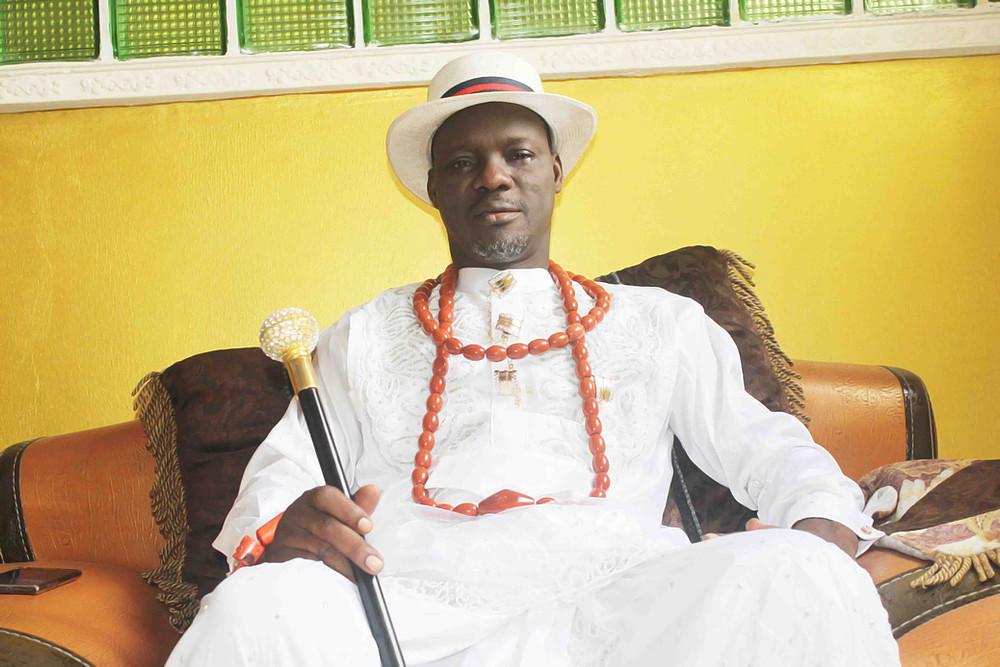
Sheriff Mulade

By Jerome-Mario Utomi

The latest honour bestowed a few days ago on the Delta State Governor, Mr Ifeanyi Okowa, as the Best Performing Governor of the Year in Infrastructural Development in Nigeria has finally said what has been on the minds of Deltans.

Separate from affirming the title of ‘Road Master’ Deltans code-named the Governor, the award which was presented to Governor Okowa at the Event Centre, Asaba, during the opening ceremony of the 19th International Civil Engineering Conference and Annual General Meeting of the Institution which has its theme as Civil Infrastructure Development: Chal­lenges and Prospects Under Pandemic Situ­ations, more than anything else amplified the belief that Okowa is laced with attributes of a clear thinker as outlined by Justin Merkins in his book titled the Executive Intelligence.

To copiously quote Merkins, he said in parts; there are clear thinkers, muddled thinkers and people that fall in between. Clear thinks -are the ones that can cull everything down into the right points-are very hard to find. But if you get yourself a team of clear thinkers, the possibilities are endless. These are men who see tomorrow, trailblazers and high-level executives, but most often misunderstood by some fellow countrymen still stuck in the old normal of yesterday.

This voiced position about the Governor’s performance canvassed by the piece is, and analysis of his scorecard in the past six years of his administration as the governor of the oil-rich Delta State and have been dutifully captured in my previous interventions.

Indeed, while this piece also observes that there exists for the governor, room for improvement in order to finish strong as he desires, I will make a detour to observe/underline that separate from the award bestowed on Governor Okowa, this present intervention is largely a continuation/function of my recent conversation with Comrade Mulade Sheriff, Country Director, Centre for Peace and Environmental Justice, (CEPEJ).

While some of the lessons of that conversation have been shared in my analysis in previous interventions, this particular angle remained untouched but is now relevant to the present discourse.

Adding context to the discourse, Mulade in that report among other concerns, argued that as the nation races towards 2023, there exists an urgent imperative in the state (Delta) for mind restructuring as it relates to the election of leaders.

While admitting that experience in public leadership is important particularly as leadership is both nature and nurture, he, however, urged Deltans to imbibe a new attitude that dwells less on public leadership experience as a prerequisite for determining who will be the next governor of the state, as evidence abounds that most of the so-called experienced public office holders occupied such position in the past without leaving any positive impact or stamp their legacies on the sand of time.

To further buttress his claim as well as strengthen his argument that one can actually perform superlatively as a governor without necessarily capped with previous public leadership experience, he pointed to the fact that the likes of James Onanefe Ibori had no record of previous public leadership experience before assuming the position of governor of the state in May 1999. Yet, his record of sterling achievements and the echo of the regime keeps reverberating because of the foundation he laid and his fundamental style of governance that was an empowerment whirlwind.

Of course, Mulade may be right! And again, looking at a report titled the Views From Delta State authored by Eromo Egbejule, a Nigerian writer and journalist and published December 9, 2016, by the Africa Research Institute, it becomes obvious that Mulade is not alone in this line of thinking.

Egbejule in that report noted in parts; under Ibori, things were far from perfect, but progress was at least visible. He built bridges to hitherto inaccessible towns such as Omadino and Bomadi, across the Forçados River; and scores of roads were constructed across the state’s three senatorial districts. The education sector also benefited from the state government’s investments in the early 2000s.

A number of higher institutions were built: three polytechnics, a college of physical education and a navy school. Medical students at Delta State University also benefited from a new teaching hospital, albeit in the governor’s hometown.

Ibori’s greatest impact was in the sports sector. An indoor sports complex was constructed in the state capital Asaba. Oghara got a brand-new stadium, along with a total transformation from a glorified village to a mini-city. Sapele, Oleh, Ughelli and other towns also got new stadiums or upgrades to existing facilities. Perhaps it was a ploy to serialise stealing or a genuine desire to spread development across the state – or both. Either way, it worked brilliantly.

There was an active youth development programme. There were clinics for referees, scholarships for athletes and early release of funds was encouraged to allow athletes the necessary time to prepare properly.

Delta State topped the medals table at the National Sports Festival in 2000, 2004 and 2006, and came second in 2002. In 2002 and 2006, it hosted the African Women Cup of Nations Championship (as it is now known). Ibori was revered for bringing international football to the state, the report concluded.

Thus, as the build-up to political activities for the Delta 2023 governorship race gradually gathers momentum, it is important in my view that the state goes for someone with leadership qualities and sterling integrity to succeed Governor Okowa from May 29, 2023.

The state needs a leader that will sustain Okowa’s achievements and engineer development in the state without excess socioeconomic hardship and environmental degradation, but in a way that both protects the rights and opportunities of coming generations and contributes to compatible approaches.

A leader that will bring about the infusion of human rights principles of participation, accountability, transparency and non-discrimination towards the attainment of equity and justice in development initiatives in the state in a particular way and process that allows the realization of economic, social and cultural rights, as well as civil and political rights, and all fundamental freedoms, while expanding the capabilities and choices of the individual.

Once more, while it is obvious that Deltans experienced a period of economic growth under Ibori, Emmanuel Udughan and Okowa’s administrations, the likes of which most of the states in the federation had never before seen, I, however, hold the opinion that in 2023, the state will need as a state governor someone that will provide an answer to the question as to what exactly impedes the development of the Niger Delta/ Coastal areas and other rural communities of the state.

Find out why the legislative framework guiding the region is not providing a strong source of remedy for individuals and communities negatively affected by oil exploration and production in the coastal communities. Determine why it is not effective and enforceable; why the framework is not acting as a legal solution to the issues of oil-related violations.

Finally, although Governor Okowa has stated in clear terms that only God knows who will succeed him, it is, however, important for Deltans to pray and work for an authentic leader who will demonstrate a passion for his purpose, practice his values consistently and lead with his heart as well as his head.

Jerome-Mario Utomi is the Programme Coordinator (Media and Public Policy), Social and Economic Justice Advocacy (SEJA), Lagos. He could be reached via [email protected]/08032725374.

Feature/OPED

Nigeria’s Power Illusion: Why 6,000MW Is Not An Achievement

Published

on

Nigeria Electricity Act 2023

By Isah Kamisu Madachi

For decades, Nigeria has been called the Giant of Africa. The question no one in government wants to answer is why a giant cannot keep the lights on.

Nigeria sits on the largest proven oil reserves in Africa, holds the continent’s most populous nation at over 220 million people, and commands the fourth largest GDP on the continent at roughly $252 billion. It possesses vast deposits of solid minerals, a fintech ecosystem that accounts for 28% of all fintech companies on the African continent, and a diaspora that remits billions of dollars annually.

If potential were electricity, Nigeria would have been powering half the world. Instead, an immediate former minister is boasting about 6,000 megawatts.

Adebayo Adelabu resigned as Minister of Power on April 22, 2026, citing his ambition to contest the Oyo State governorship election. In his resignation letter, he listed among his achievements that peak generation had increased to over 6,000 megawatts during his tenure, supported by the integration of the Zungeru Hydropower Plant. It was presented as a great crowning legacy. The claim deserves scrutiny, and the numbers deserve context.

To begin with, the context. Ghana, Nigeria’s neighbour in West Africa, has a national electricity access rate of 85.9%, with 74% access in rural areas and 94% in urban areas. Kenya, with a 71.4% national electricity access rate, including 62.7% in rural areas, leads East Africa. Nigeria, by contrast, recorded an electricity access rate of just 61.2 per cent as of 2023, according to the World Bank. This is not a distant or poorer country outperforming Nigeria. Ghana’s GDP stands at approximately $113 billion, less than half of Nigeria’s. Kenya’s economy is around $141 billion. Ethiopia, which has invested massively in the Grand Ethiopian Renaissance Dam and is already exporting electricity to neighbouring countries, has a GDP of roughly $126 billion. All three are doing more with far less.

Now to examine the 6,000-megawatt, Daily Trust obtained electricity generation data from the Association of Power Generation Companies and the Nigerian Electricity Regulatory Commission, covering quarterly performance from 2023 to 2025 and monthly data from January to March 2026. The data shows that in 2023, peak generation was approximately 5,000 megawatts; in 2024, it reached approximately 5,528 megawatts; in 2025, it ranged between 5,300 and 5,801 megawatts; and by March 2026, available capacity had declined to approximately 4,089 megawatts. The grid never recorded a verified peak of 6,000 megawatts or higher. Adelabu had, in fact, set the 6,000-megawatt target publicly on at least three separate occasions, missing each deadline, and later admitted the target was not achieved, attributing the failure to vandalism of key transmission infrastructure.

In February 2026, Nigeria’s national grid produced an average available capacity of 4,384 megawatts, the lowest monthly average since June 2024. For a country with over 220 million people, this means electricity supply remains far below national demand, with the grid delivering only about 32 per cent of its theoretical installed capacity of approximately 13,000 megawatts. To put that in sharper comparison: in 2018, 48 sub-Saharan African countries, home to nearly one billion people, produced about the same amount of electricity as Spain, a country of 45 million. Nigeria, the continent’s most resource-rich large economy, is a significant part of that embarrassing equation.

The tragedy here is not just technical. It is a governance failure with compounding human costs. An economy that cannot provide reliable electricity cannot competitively manufacture goods, cannot industrialise at scale, cannot attract the volume of foreign direct investment its endowments warrant, and cannot build the digital infrastructure that would allow it to lead on artificial intelligence, data governance, and the emerging critical minerals economy where Africa’s next great opportunity lies. Countries with a fraction of Nigeria’s mineral wealth and human capital are already debating those frontiers. Nigeria is still campaigning on megawatts.

What a departing minister should be able to say, given Nigeria’s endowments, is not that peak generation touched 6,000 megawatts at some unverified moment. He should be saying that Nigeria now generates reliably above 15,000 megawatts, that rural electrification has crossed 70 per cent, and that the country is on a credible trajectory toward the kind of energy sufficiency that unlocks industrial growth. That is the standard Nigeria’s size and resources demand. Anything below it is not an achievement. It is an apology dressed in a press release.

The power sector has received billions of dollars in investment across multiple administrations. The 2013 privatisation exercise, the Presidential Power Initiative, the Electricity Act of 2023, and successive reform promises have produced a sector that still, in 2026, cannot guarantee eight hours of reliable supply to the average Nigerian household. That a minister exits that ministry citing a megawatt figure that fact-checkers have shown was never actually reached, and that even if reached would be unworthy of celebration given Nigeria’s potential, captures the full depth of the problem. The ambition is too small. The accountability is too thin. And the country deserves better from those who are privileged to manage its extraordinary, squandered potential.

Isah Kamisu Madachi is a policy analyst and development practitioner. He writes via [email protected]

Continue Reading

Feature/OPED

Systemically Weak Banks Put Nigeria’s $1 trillion Ambition at Risk

Published

on

Systemically Weak Banks

By Blaise Udunze

Nigeria’s banking sector has just undergone one of its most ambitious recapitalisation exercises in two decades, all thanks to the Central Bank of Nigeria under the leadership of Olayemi Cardoso.  About N4.65 trillion ($3.38) has been raised. Balance sheets have been strengthened, at least the improvement could be said to exist in reports or accounting figures. Regulators have drawn a new line in the sand, proposing N500 billion for international banks, N200 billion for national banks, and N50 billion for regional players. This is a bold reset.

Meanwhile, as the dust settles, an uncomfortable question refuses to go away, which has been in the minds of many asking, “Has Nigeria once again solved yesterday’s problem, while tomorrow’s risks gather quietly ahead?”

At a period when banks globally are being tested against tougher buffers, cross-border shocks, and higher regulatory expectations, Nigeria’s revised benchmarks risk falling short of what the global system demands.

In a world where scale, resilience, and competitiveness define banking credibility, capital is not measured in isolation; it is judged relative to peers, risks, and ambition.

Because when placed side by side with a far more unsettling reality, that a single South African bank, Standard Bank Group, rivals or even exceeds the valuation and asset strength of Nigeria’s entire banking sector, the celebration begins to feel premature.

The recapitalisation may be necessary. But is it sufficient? The numbers are not just striking, they are deeply revealing. Standard Bank Group, with a market valuation hovering around $21-22 billion and assets approaching $190 billion, stands as a continental giant. In contrast, the combined market capitalisation of Nigeria’s listed banks, even after recent capital raises, struggles to match that scale.

The combined value of the 13 listed Nigerian banks reached N16.14 trillion (11.9 billion) using N1.367/$1 in early April 2026, following the recapitalisation momentum.

Even more revealing is the contrast at the top. Zenith Bank is valued at N4.7 trillion ($3.44 billion), Guaranty Trust Holding Company, widely admired for efficiency and profitability, is valued at under N4.6 trillion ($3.37 billion), while Access Holdings, despite managing tens of billions in assets, carries a market value below the upper Tier’s N1.4 trillion ($1.02 billion).

This is not merely a gap. It is a structural disconnect. And it raises a critical point, revealing that recapitalisation is not just about meeting regulatory thresholds; it is about closing credibility gaps.

With accounting figures or reports, Nigeria’s new capital thresholds appear formidable. But paper strength is not the same as real strength.

The naira’s persistent depreciation has quietly undermined the meaning of these figures. What looks like N500 billion in nominal terms translates into a much smaller and shrinking figure in dollar terms.

This is the misapprehension at the heart of Nigeria’s banking reform, as we are measuring financial strength in a currency that has been losing strength.

In real terms, some Nigerian banks today may not be significantly stronger than they were years ago, despite meeting much higher nominal thresholds. So while regulators see progress, global investors see vulnerability. Markets are rarely sentimental. They price risk with ruthless clarity.

The valuation gap between Nigerian banks and their South African counterparts is not an accident; it must be made known that it is strategic intentionality. By this, it truly reflects a deeper judgment about currency stability, regulatory predictability, governance standards, and long-term growth prospects. Investors are not just asking how much capital Nigerian banks have. They are asking how durable that capital is.

Even when Nigerian banks post strong profits, much of it has been driven by foreign exchange revaluation gains rather than core lending or operational efficiency. The CBN’s decision to restrict dividend payments from such gains is telling; it acknowledges that not all profits are created equal. True strength lies not in accounting gains, but in economic impact.

Nigeria has travelled this road before. Under Charles Soludo, the 2004-2006 banking consolidation raised minimum capital from N2 billion to N25 billion, reducing the number of banks dramatically and producing industry champions like Zenith Bank and United Bank for Africa. For a time, Nigerian banks expanded across Africa and became formidable competitors.

But the momentum did not last, emanating with lots of economic headwinds. One amongst all that played out was that the global financial crisis exposed weaknesses in governance and risk management, leading to another wave of reforms under Sanusi Lamido Sanusi. The lesson from that era remains clear, which revealed that capital reforms can stabilise a system, but they do not automatically transform it. Without bigger structural changes, the gains fade.

The real weakness of Nigeria’s current approach is not the size of the thresholds; it is their rigidity. Fixed capital requirements do not adjust for inflation, reflect currency depreciation, scale with systemic risk, or capture the complexity of modern banking.

In contrast, global regulatory frameworks are increasingly dynamic and risk-based. This is where Nigeria risks falling behind again. Because while the numbers have changed, the philosophy has not.

Nigeria’s economic aspirations are bold. The country speaks confidently about building a $1 trillion economy, expanding infrastructure, and driving industrialisation, but in dollar terms, many Nigerian banks remain small, too small for the scale of ambition the country now proclaims. Albeit, it must be understood that ambition alone does not finance growth. Banks do.

And here lies the uncomfortable mismatch, which is contradictory in nature because the economy Nigeria wants to build is significantly larger than the banks it currently has.

In South Africa, what Nigerian stakeholders are yet to understand is that large, well-capitalised banks play a central role in financing infrastructure, corporate expansion, and consumer credit. Their scale allows them to absorb risk and deploy capital at levels Nigerian banks struggle to match. Without comparable financial depth, Nigeria’s development ambitions risk being constrained by its own banking system.

At its core, banking is about channelling capital into productive sectors, as this stands as one of its responsibilities if it truly wants to ever catch up to a $1 trillion economy. Yet Nigerian banks have increasingly, in their usual ways, leaned toward safer, short-term returns, particularly government securities. This is not irrational. It is a response to high credit risk, regulatory uncertainty, and macroeconomic instability.

But it comes at a cost. Yes! The fact is that when banks prioritise safety over lending, the real economy suffers. What this tells us is that manufacturing, agriculture, and small businesses remain underfunded, limiting growth and job creation.

Recapitalisation is meant to change this dynamic. Stronger capital buffers should enable banks to take on more risk and finance larger projects. But capital alone will not solve the problem. Confidence will.

One of the most persistent obstacles facing Nigerian banks is currency volatility. Each major devaluation of the naira erodes investor returns and reduces the dollar value of bank capital. This creates a contradiction whereby banks appear profitable in naira terms, but unattractive in global markets.

In contrast, South Africa benefits from a more stable currency environment and deeper capital markets. Without much ado, it is clear that this stability attracts long-term institutional investors that Nigeria struggles to retain. Until this macroeconomic challenge is addressed, recapitalisation alone cannot close the gap because, without making it a priority, even the strongest banks will remain constrained.

In a global competitive financial market, one would agree that capital is necessary, but not sufficient. Beyond the capital, one crucial lesson stakeholders in Nigeria’s banking space must understand is that investors’ confidence is heavily influenced by governance standards and operational efficiency, which mainly guarantee more success and capability. Also, another relevant trait to sustainable banking is transparency, regulatory consistency, and accountability, which matter as much as balance sheet strength.

While Nigerian banks have made progress, lingering concerns remain around insider lending, regulatory unpredictability, and complex ownership structures. If policymakers revisit and reflect on the episodes involving institutions like First Bank of Nigeria and the liquidation of Heritage Bank, this will reinforce the perceptions of systemic risk.

Recapitalisation offers an opportunity to reset governance standards, but only if it is accompanied by stricter enforcement and greater transparency, with the key stakeholders seeing beyond the capital growth.

As if traditional challenges were not enough, Nigerian banks are also facing increasing competition from fintech companies. Nigeria has emerged as a leading fintech hub in Africa, reshaping payments, lending, and digital banking.

To remain relevant, banks must invest heavily in technology, an area that requires not just capital, but smart capital, ensuring that digital innovation becomes a core strength rather than an external add-on. The recapitalisation exercise provides the financial capacity. Whether banks use it effectively is another matter entirely.

So, are Nigeria’s new capital thresholds already outdated? Not yet. But they are already under pressure, pressure from inflation, currency weakness, global competition, and Nigeria’s own economic ambitions.

The truth is that the reforms are a step in the right direction, but they may already be systemically weak in the face of global realities. Whilst the actors keep focusing heavily on capital thresholds without addressing deeper structural issues, the reforms risk creating a system that is compliant, but not competitive, stable but not strong.

The recapitalisation exercise has bought Nigeria time. That is its greatest achievement. But time is only valuable if it is used wisely.

If policymakers treat this reform as a destination, the thresholds will age faster than expected. If they treat it as a foundation, Nigeria has a chance to build a banking system capable of supporting its ambitions.

It can either strengthen its financial foundations to match its economic ambitions or continue to pursue growth on a fragile base.

The warning signs are already visible. Systemic weaknesses, if left unaddressed, will not remain contained; they will surface at the worst possible moment, undermining confidence and limiting progress.

Otherwise, the uncomfortable truth will persist; one well-capitalised bank elsewhere will continue to stand taller than an entire banking system at home. Whilst a $1 trillion economy cannot be built on a weak banking system. The sooner this reality is acknowledged, the better Nigeria’s chances of turning ambition into achievement.

Blaise, a journalist and PR professional, writes from Lagos and can be reached via: [email protected]

Continue Reading

Feature/OPED

Nigeria’s Booming Growth Leaves Citizens Trapped in Deeper Poverty

Published

on

Nigeria’s Booming Growth poverty

By Blaise Udunze

With the chanting of the ‘Renewed Hope’, it appears to be Uhuru in Nigeria, following the recent World Economic Outlook presented by the International Monetary Fund, which projected that Nigeria’s economy would expand by 4.1 per cent in 2026. Though this specifically shows an economy faster than economies like the United States and the United Kingdom, as it handed the administration of President Bola Tinubu a powerful narrative. No doubt, the projection happens to be a narrative of progress, of reform, of a nation supposedly turning the corner after years of instability and setting the kind of moment that reassures investors, quiets critics and signals competence.

But once its statistical sheen is put aside, the weight of reality takes centre stage. The truth is, while Nigeria may be growing on paper, it is simultaneously shrinking and does not in any way reflect the lived experience of its citizens, as the populace can attest to. With the current lived experience, nowhere is this contradiction more glaring than in the widening gulf between macroeconomic projections and the daily economic suffering of over 200 million people.

The truth is uncomfortable, but it must be said plainly that a country where poverty is deepening, inflation is persistent, debt is rising, and basic survival is becoming more difficult cannot meaningfully claim economic success, no matter what the growth figures suggest.

The most damning evidence against the “fastest-growing economy” narrative, as enumerated by the Special Adviser to President Tinubu on Policy Communication, Daniel Bwala, comes not from opposition voices or political critics, but this time it is coming from the World Bank itself. Alarming to this is that according to its latest Nigeria Development Update, poverty in the country rose to 63 per cent barely months back, translating to roughly 140 million Nigerians living below the poverty line. This is not just a statistic; it is a humanitarian crisis unfolding in real time, which in a real sense calls for quick interventions.

Even more troubling is the trend. Poverty has not plateaued; it is accelerating, worsening and not stabilising at all. From 56 per cent in 2023 to 61 per cent in 2024, and now 63 per cent in 2025, the trajectory is unmistakable, as can be seen the data shows a clear upward trend over time that calls for concern. And projections from PwC suggest that the numbers will climb even higher, with an estimated 141 million Nigerians expected to be poor in 2026.

It would surprise many that these figures expose a fundamental contradiction; it is a total irony that an economy is growing while its people are becoming poorer, hence, while no one would hesitate to say that the type of growth taking place is flawed. Well, without jumping to a hasty conclusion, the answer lies in that growth. To say that the economic growth taking place is imbalanced, it is uneven, exclusionary, and not absolutely linked or largely disconnected from the sectors that sustain the majority of Nigerians. Growth driven by services and capital-intensive industries does little for a population whose livelihoods depend heavily on agriculture and informal enterprise. When growth bypasses the poor, it ceases to be development and becomes mere arithmetic.

The government’s defence often leans on the argument that inflation is easing and that reforms are beginning to stabilise the economy. But even this claim is increasingly fragile, as reported that the recent data from the National Bureau of Statistics shows that inflation has begun to rise again. This now shows that the headline inflation is ticking up to 15.38 per cent in March 2026, alongside a sharp month-on-month increase of 4.18 per cent. The pain Consumer Price Index climbed to 135.4, underscoring sustained pressure on household spending.

Another aspect that raises further questions is that the most critical component for ordinary Nigerians, which is the food inflation, skyrocketed to 14.31 per cent, with a similar month-on-month surge. It must be made known that these are not just numbers on a chart; they represent the escalating cost of survival, mostly for the common man. The ripple effect of this, which is yet to change, is that families are compelled to pay more for basic meals, more for transportation, and more for the essentials of daily life.

Noteworthy is that even when inflation showed signs of moderation in previous months, the fact is that it did little to reverse the damage already inflicted. The World Bank has been clear on this point when it said that household incomes have not kept pace with price increases. The underlying point is that the earlier spikes in inflation eroded purchasing power to such an extent that any subsequent easing has been insufficient to restore real income levels, and this is where the figures churned out were misleading.

This explains the inconsistency at the heart of Nigeria’s economy, where nominal indicators are improving, but real conditions are deteriorating. Nigerians are earning more in absolute terms but are able to afford less. This is further confirmed by data showing that while nominal household spending increased significantly, real consumption declined, while it would be said that people are spending more money, but they are consuming less. That is not growth; but the right word for it is economic suffocation.

The structural consequences of ongoing reforms compound the situation. The removal of fuel subsidies, which was the gift to Nigerians for electing President Tinubu and the liberalisation of the foreign exchange market were framed as necessary steps toward long-term stability. And in theory, they are defensible policies. But in practice, the result has been an extraordinary cost-of-living crisis, especially for the larger section of struggling Nigerians.

Speaking of the fuel subsidy removal, which has driven up transportation costs across the country, affecting both urban commuters and rural farmers, the pain has been further intensified by the geopolitical conflict in the Middle East. The second policy shift, which was the exchange rate liberalisation, has led to currency depreciation, with the experiences biting hard across the board, making imported goods more expensive and fueling inflationary pressures. These policy choices, which were perhaps deemed necessary, and without further ado have imposed immediate and severe burdens on households that were already vulnerable.

The International Monetary Fund has warned that these pressures are far from over. Rising global tensions, particularly in the Middle East, are pushing up the cost of energy, food, and transportation. For Nigerians, especially those at the lower rung in society, this translates into even higher living costs and deeper economic strain to contend with.

In this context, the government’s insistence on celebrating growth projections begins to appear not just disconnected, but insensitive. For millions of Nigerians, the economy is not an abstract concept measured in percentages. It is a daily struggle defined by whether they can afford food, transport, and shelter.

Compounding these challenges is Nigeria’s growing debt burden. Unexpectedly, public debt has climbed to over N159 trillion, with projections indicating a continued rise in the coming years because of the government’s appetite for borrowing. While the debt-to-GDP ratio may appear moderate compared to global averages, this comparison is totally misleading. The question is why the debt is ballooning when Nigeria’s revenue base is narrow, heavily reliant on oil, and constrained by a large informal sector that contributes little to tax income.

The current position of things is that debt servicing consumes a disproportionate share of government revenue, leaving limited fiscal space for investment in infrastructure, healthcare, education, and social protection, which has continued to expose the majority of Nigerians to untold hardship. It is a precarious position, one where the government is borrowing more while having less capacity to translate that borrowing into meaningful development outcomes, and the part that is also critical is that Nigeria’s rising debt profile is entering discomforting quarters, as concerns shift from the sheer size of borrowings to the growing risks associated with refinancing existing obligations.

Even more troubling are the emerging questions around fiscal transparency and governance. Only recently, there were allegations by Peter Obi on the missing N34 trillion in federation revenue that remains unaccounted. This, according to him, has intensified concerns about systemic leakages and institutional corruption. The fact is, even though these claims remain contested, they resonate deeply in a country where public trust in government financial management is already fragile and has remained a subject of discussion for many Nigerians.

The truth is that if even a fraction of such resources were effectively managed and invested, the impact on infrastructure, social services, and poverty reduction could be transformative, but this has yet to be embarked upon. Instead, the persistence of such allegations reinforces the perception of an economy where wealth exists but is inaccessible to the majority, which brings to bare if there will ever be a respite in a situation like this.

Adding another layer to this complexity is the excessive contradiction of oil revenue. With global crude prices that were once sold above $113 per barrel and currently hovering around $85-$90, which is still far exceeding Nigeria’s budget benchmark, the country stands to hugely benefit from a significant windfall, as was the case in the past. You know that history is more revealing than ever; it suggests that such opportunities are often squandered.

Analysts repeatedly have continued to warn that without disciplined fiscal management, these revenues may be absorbed by debt servicing or recurrent expenditure rather than being invested in productive sectors. The risk is that Nigeria once again experiences a boom without transformation, a cycle that has defined its economic history for decades.

Meanwhile, the irony in all of this is that, despite having plenty, every day Nigerian continues to bear the brunt of systemic inefficiencies. As the people bear the brunt, the country’s transportation costs are rising, food prices remain volatile, and access to basic services is increasingly strained, while the rural areas are not left out of the equation, as insecurity continues to disrupt agricultural production. This has further constrained food supply and driven up prices. In urban centres, the cost of living is pushing more households into financial distress.

The cumulative, as well as the ripple effects of these pressures, are a society under strain. Lest we mistake this, economic hardship is not just a financial issue; it has social and psychological consequences, while unbeknownst to many, its resultant effect fuels frustration, erodes trust in institutions, which also leads to fertile ground for instability.

What makes the current situation particularly troubling is the widening disconnect between official narratives and lived reality. There are two instances in which it was noted that, on the one hand, the government points to IMF projections and macroeconomic indicators as evidence of progress. On the other hand, citizens experience rising poverty, declining purchasing power, and limited opportunities. Another good example stems from when President Tinubu declared in September of last year that the federal government had met its 2025 non-oil income goal by August.

However, the former Minister of Finance, Wale Edun, stated that the Federal Government lacked sufficient funds to appropriately fund its capital budget during a public hearing at the National Assembly late last year. The minister stated that in order to pay the N54.9 trillion “budget of restoration,” which was intended to stabilise the economy, ensure peace, and create prosperity, the federal government had estimated N40.8 trillion in income for 2025.

These two reports sounded and appeared contradictory, and it was probably one of many factors responsible for the fallout.

This disconnect is more than a communication gap; it is a credibility crisis. When people’s lived experiences contradict official claims, trust erodes. And without trust, even well-intentioned policies struggle to gain acceptance.

The claim that Nigeria is growing faster than advanced economies may be technically accurate, and perhaps it must be seen as an absolute insult to Nigerians and it must be noted that it is fundamentally irrelevant to the country’s core challenges. This key fact must be taken into cognisance that growth rates, in isolation, do not capture the quality, inclusiveness, or sustainability of economic progress, and this is because they do not reflect whether growth is creating jobs, reducing poverty, or improving living standards. Note that in Nigeria’s case, the evidence suggests otherwise, in which the reality continues to dominate outcomes, and this is not the case.

For growth to be meaningful, it must translate into tangible improvements in people’s lives. At this point, it is necessary to understand that it must create jobs, raise incomes, and expand opportunities. Another important factor that must not be left out is that it must be inclusive, reaching not just the top tiers of society but the millions at the base of the economic pyramid. At present, Nigeria falls short on all these counts.

The path forward requires more than optimistic projections and reform rhetoric. It demands a fundamental rethinking of economic priorities. Policies must be designed not just for macroeconomic stability but for human welfare, and while investment must be directed toward sectors that generate employment and improve productivity, particularly agriculture and manufacturing. Social safety nets must be strengthened to protect the most vulnerable from economic shocks, which has yet to be considered by the government of the day.

Equally important is the need for transparency and accountability in public finance. Without trust in how resources are managed, even the most ambitious economic plans will struggle to gain legitimacy.

Nigeria is not lacking in potential, and this is one of the ironies of it all since it has a young population, abundant natural resources, and a dynamic entrepreneurial spirit. But potential, without effective governance and inclusive policies, remains unrealised.

The uncomfortable reality is that Nigeria is at risk of normalising a dangerous illusion, which connotes that growth on paper is equivalent to progress in practice. The truth is that it is not and cannot be contested. And until this illusion and deception are confronted, the gap between economic narratives and human realities will continue to widen.

In the end, the true measure of an economy is not how fast it grows, but how well it serves its people. By that standard, Nigeria’s current trajectory raises serious questions, take it or leave it. Because in a nation where over 140 million people live in poverty, where inflation continues to erode incomes, where debt is rising and where basic survival is becoming more difficult, the claim of being a “fast-growing economy” is not just misleading. Yes, it is a mirage!

And for millions of Nigerians struggling to get by each day, it is a mirage that offers no relief, no hope, and no future.

Blaise, a journalist and PR professional, writes from Lagos and can be reached via: [email protected]

Continue Reading

Trending