Connect with us

Economy

United Capital Introduces N150bn Close-ended Infrastructure Fund

Published

on

Infrastructure Fund

By Dipo Olowookere

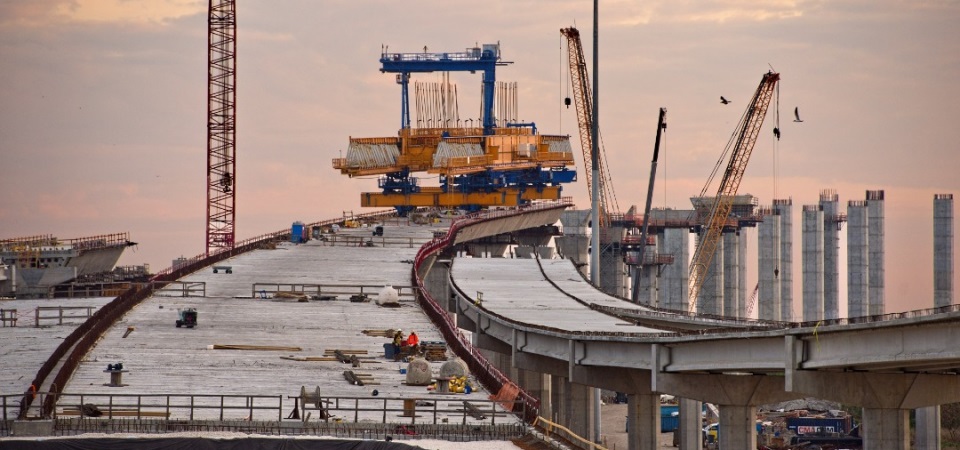
A close-ended fund worth N150 billion aimed to provide long-term financing for the delivery of critical infrastructure that would bridge the infrastructure deficits in Nigeria and sub-Saharan Africa has been introduced by United Capital Plc.

A notice from United Capital said the Naira-denominated infrastructure fund has been registered with the Securities and Exchange Commission (SEC).

Business Post reports that proceeds from the N150 billion issuance programme would be used specifically “to finance bankable infrastructure assets that cut across sectors such as power and renewable energy, transportation, agribusiness and industrial infrastructure, healthcare, technology, mass housing, urban and social infrastructure.”

“The journey to launch the fund has taken almost two years, during which period extensive preparatory studies and appraisals were carried out to establish the business case for the fund, as well as to define a model and governance framework that would provide investors that have an appetite for long-term financing products (such as pension funds and insurance companies), with sufficient confidence of the attractiveness of UCIF, as an investment opportunity,” the Group Chief Executive Officer of United Capital, Mr Peter Ashade, stated.

On her part, the CEO of United Capital Asset Management Limited (UCAML), Mrs Odiri Oginni, disclosed that the team was working on building strategic alliances with financing counterparts such as multilateral and public authorities, to ensure that appropriate financing securities and credit enhancement instruments are in place to de-risk the fund’s portfolio investments.

She revealed that “during the almost-two years of preparatory activities, the fund management team scanned, screened and appraised numerous infrastructure projects and is now at advanced stages of conducting due diligence on a deal pipeline valued in excess of N54 billion which include projects such as renewable energy, agro-industrial parks, energy transition, power, healthcare, housing and hospitality.”

It was gathered that the N150 billion infrastructure fund is sponsored by United Capital, while UCAML is the manager, with Africa Finance Corporation (AFC) as the independent financial advisor to provide additional layers of best practice of corporate governance which enhances the project appraisal and due diligence activities of the fund management team.

The United Capital infrastructure fund is coming a few months after Stanbic IBTC launched a N100 billion infrastructure fund aimed to finance some projects that could generate income for investors.


Dipo Olowookere is a journalist based in Nigeria that has passion for reporting business news stories. At his leisure time, he watches football and supports 3SC of Ibadan. Mr Olowookere can be reached via [email protected]

1 Comment

Leave a Reply

Your email address will not be published. Required fields are marked *

Economy

Naira Gains N5.55, Sells N1,360/$1 at Official Market

Published

on

naira official market

By Adedapo Adesanya

The Naira opened the week on a positive note, appreciating against the US Dollar by N5.55 or 0.41 per cent in the Nigerian Autonomous Foreign Exchange Market (NAFEM) on Monday, August 10, to N1,360.14/$1 from N1,365.69/$1.

The domestic currency also improved its exchange rate against the Pound Sterling in the official market during the session by 67 Kobo to sell at N1,838.50/£1 compared with the preceding session’s N1,839.17/£1, and gained N4.64 against the Euro to quote at N1,571.09/€1, in contrast to last Friday’s N1,575.73/€1.

However, the Naira maintained stability against the Dollar in the black market and the GTBank forex counter on Monday at N1,400/$1 and N1,371/$1, respectively.

Data from the Central Bank of Nigeria (CBN) showed that interbank FX turnover fell by 46 per cent yesterday to $213.845 million from the $393.477 million recorded at the close of trading on Friday.

The decline came despite a sharp increase in the volume of foreign exchange transactions executed during the session, indicating weaker participation by high-ticket FX customers and other major market participants.

The lower turnover suggests reduced demand for FX among large-scale buyers, even as market makers continued to facilitate transactions through the NAFEM window, with the number of FX traded rising to 182 from 102.

In the cryptocurrency market, traders and investors took profit as broader markets’ focus shifted to rising bond yields, higher oil prices and upcoming US inflation data.

Cardano (ADA) depreciated by 5.2 per cent to $0.1873, Ethereum (ETH) slipped by 2.6 per cent to $1,873.43, Ripple (XRP) slumped by 2.3 per cent to $1.01, Bitcoin (BTC) fell by 1.8 per cent to $63,949.22, Solana (SOL) crashed by 1.3 per cent to $75.81, and Binance Coin (BNB) tumbled by 0.6 per cent to $599.49.

But TRON (TRX) gained 0.5 per cent to trade at $0.3314, and Dogecoin (DOGE) grew by 0.2 per cent to $0.0700, while the US Dollar Tether (USDT) and the US Dollar Coin (USDC) traded flat at $1.00 apiece.

Continue Reading

Economy

Airtel Africa Buoys Nigerian Exchange’s 1.20% Surge

Published

on

Nigerian Exchange Limited

By Dipo Olowookere

The first trading session of the week on the floor of the Nigerian Exchange (NGX) Limited ended in the green territory on Monday, with a 1.20 per cent rise.

This was buoyed by the gains recorded by Airtel Africa and other equities, according to analysis of data harvested from the Customs Street yesterday.

During the trading day, the consumer goods index grew by 0.76 per cent, enough to offset the losses recorded by the other sectors.

The insurance counter shrank by 1.64 per cent, the banking space lost 0.24 per cent, the energy sector contracted by 0.09 per cent, and the industrial goods segment retreated by 0.05 per cent.

When trading activities ended for the day, the All-Share Index (ASI) was up by 2,956.15 points to 248,529.75 points from 245,573.60 points, and the market capitalisation gained N1.909 trillion to finish at N160.422 trillion compared with the previous session’s N158.513 trillion.

Fortis Global Insurance expanded by 10.00 per cent to N2.86, Chams surged by 9.80 per cent to N4.48, NAHCO jumped by 9.29 per cent to N153.00, Airtel Africa soared by 8.59 per cent to N6,300.00, and Sovereign Trust Insurance rose by 6.59 per cent to N1.78.

Conversely, AVA Capital shed 10.00 per cent to N9.90, Ecobank decreased by 9.92 per cent to N64.95, Caverton crashed by 9.09 per cent to N5.00, Ikeja Hotel slipped by 8.41 per cent to N43.00, and FTN Cocoa dropped 8.37 per cent to trade at N8.10.

A total of 23 equities were on the gainers’ chart yesterday, while 37 equities ended on the losers’ table, indicating a negative market breadth index and weak investor sentiment.

As for the activity log, the trading volume remained elevated, though lower than the preceding session, as it receded by 26.67 per cent to 1.1 billion units from 1.5 billion units. The trading value, however, increased by 1.12 per cent to N27.0 billion from N26.7 billion, while the number of deals advanced by 39.00 per cent to 59,185 deals from 42,580 deals.

Consolidated Hallmark was the most active stock yesterday, with a turnover of 354.1 million units valued at N1.5 billion, Fortis Global Insurance traded 307.3 million units worth N818.3 million, Access Holdings exchanged 48.1 million units for N1.4 billion, Chams transacted 37.4 million units worth N163.3 million, and First Holdco sold 35.8 million units valued at N5.1 billion.

Continue Reading

Economy

Oil Prices Surge 5% as Iran Sets Conditions for Hormuz Reopening

Published

on

oil prices cancel iran deal

By Adedapo Adesanya

Oil prices traded 5 per cent higher on Monday after Iran and the United States ‌argued about demands for compensation, further stalling a possible deal to reopen the Strait of Hormuz.

Brent crude futures chalked up $4.17 or 4.99 per cent to sell at $87.72 a barrel, while the US West Texas Intermediate (WTI) ​crude futures surged $3.95 or 5.05 per cent to $82.13 per barrel.

Iran said the US must lift sanctions on it and meet other conditions for reopening the vital waterway, which carried a fifth of the world’s oil and liquefied natural gas before the start of the Middle ​East conflict in late February.

Meanwhile, US President Donald Trump said Iran must pay compensation for “all of the people that ​they have killed and gravely wounded.”

This comes as the Middle East country said it was nearing a final pact with Oman to define new shipping lanes through the strait but repeated that the US must meet other conditions, including compensation and an end to sanctions and military threats before the strategic waterway is reopened.

In a further threat to supply, the Iran-aligned Houthis said they had struck Saudi Aramco’s Jazan refinery on Sunday. Saudi Aramco has postponed the restart of the 400,000-barrel-per-day ​refinery to August 30 after ​two Houthi attacks in recent ⁠weeks.

ADNOC, a state-owned oil company in the ​United Arab Emirates, said ⁠on Friday that 15 of its vessels had been attacked while transiting the Strait of Hormuz since the beginning of the conflict.

Meanwhile, Ukraine’s military continued to attack Russia’s energy infrastructure, hitting the Taneco oil refinery in Tatarstan and the ZapSibNeftekhim petrochemical plant in Russia’s Tyumen ⁠region.

On the ​US supply side, stocks of crude oil in the Strategic Petroleum Reserve ​(SPR) fell by about 6.1 million barrels to 298.7 million barrels last week, the lowest level since January 1983.

Bank of America (BoFA) warned that oil prices could continue climbing into the winter if the US and Iran fail to reach an agreement reopening the Strait of Hormuz, with severe shortages already emerging in diesel, petrol, and global natural gas markets.

Mr Francisco Blanch, Bank of America’s head of commodities and derivatives research, told CNBC on Monday that only around 5 to 10 ships per day are currently passing through Hormuz, compared with roughly 140 before the war. With some crude now being rerouted through Saudi Arabia and the UAE, traffic would need to recover to around 80 to 100 ships per day just to stabilise energy markets.

Continue Reading