Connect with us

Economy

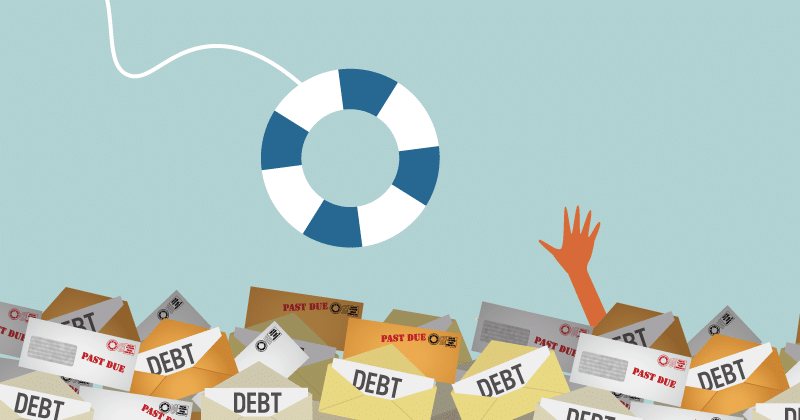
Nigeria’s Total Public Debt Jumps to N38.0trn in Q3 2021

Published

on

Debts

By Aduragbemi Omiyale

The total public debt of Nigeria increased quarter-on-quarter by 7.2 per cent or N2.540 trillion to N38.005 trillion in the third quarter of 2021 from N35.565 trillion in the second quarter of this year.

This information was revealed by the Debt Management Office (DMO) in a statement released on Tuesday night.

The agency explained that the amount comprises the debts incurred by the federal and state governments from both external and internal sources.

In Dollar terms, the debt office stated that the total debt of the nation stood at $92.626 billion at the end of Q3 2021 compared with $86.678 billion it was at the end of Q2 2021.

According to the DMO, the increase in the debt was a result of the $4.0 billion Eurobond issued by the federal government in September following the approval of the National Assembly.

The exercise attracted investors from Europe, America as well as Asia and the paper was issued in tranches of three tenors: $1.25 billion for seven years at a yield of 6.125 per cent, a 12-year bond at 7.375 per cent worth $1.5 billion, and a 30-year tranche of $1.25 billion sold at 8.25 per cent.

The Eurobond was part of the government’s plan to raise $5.71 billion in external financing to help fund spending in 2021 and to partly finance the N5.6 trillion deficit.

The DMO had initially wanted to sell $3 billion worth of the note, but because of the strong appetite of investors, it increased the bond offer by $1 billion.

This action consequently raised Nigeria’s total public debt to N38.005 trillion amid harsh criticisms over the penchant of President Muhammadu Buhari administration for borrowing.

But the debt office in the statement issued today said, “The issuance of the $4 billion Eurobonds has brought significant benefits to the economy by increasing the level of Nigeria’s external reserves, thereby supporting the Naira exchange rate and providing the necessary capital to enable the federal government finance various projects in the budget.

“The triple tranche $4 billion Eurobond, issued in September 2021, was for the implementation of the new external borrowing of $6.18 billion in the 2021 Appropriation Act.”


1 Comment

Leave a Reply

Your email address will not be published. Required fields are marked *

Economy

Nigeria’s Economy Now Outpaces Population Growth—Sanusi

Published

on

emir sanusi

By Adedapo Adesanya

The Emir of Kano, Mr Muhammadu Sanusi II, has commended the Central Bank of Nigeria (CBN) for its economic reforms, saying they have restored macroeconomic stability and driven economic growth beyond the country’s population growth rate.

Emir Sanusi, a former Governor of the central bank, made the remarks while speaking at the ongoing 31st Nigerian Economic Summit in Abuja.

According to the former banker, the apex bank inherited an economy weakened by years of excessive liquidity and rapid money supply growth but had succeeded in reversing the trend through tighter monetary policies.

“I have nothing but positive words for what the central bank has done. We are coming from the background of a very high level of instability as a result of loose money and uncontrolled growth in money supply.

“The central bank has taken one year to mop up all that money,” the monarch said, according to a video from the event that has circulated widely.

Speaking on the impact of the reforms, Mr Sanusi added: “This is the first time that this economy will be growing faster than the population.”

The remark suggests that the country’s gross domestic product (GDP) growth is expected to outpace its population growth rate of about 2.1–2.5 per cent annually, implying an increase in per capita income.

This means the economy is expanding fast enough to raise average output and income per person, rather than merely keeping pace with population increases.

The reforms introduced by the Yemi Cardoso-led CBN have centred on restoring macroeconomic stability and rebuilding investor confidence. Key measures include adopting a more market-driven foreign exchange regime, tightening monetary policy through successive interest rate hikes to curb inflation, and clearing a significant portion of the foreign exchange backlog owed to businesses and investors.

The apex bank has maintained that these policies are designed to stabilise the naira, improve liquidity in the FX market, attract foreign investment, and lay the foundation for sustainable economic growth.

Continue Reading

Economy

How to Buy Data with Gift Cards in Nigeria?

Published

on

Download the Cardgoal app

Running low on data with no airtime to spare, but you’ve got an unused gift card sitting in your email or phone? You’re not alone.

A lot of Nigerians receive gift cards from friends, family abroad, or clients, but have no real use for them. Meanwhile, data is one of those everyday needs that can’t wait. So the question comes up often: can you actually use a gift card to buy data in Nigeria? Let’s get into the answer.

Is It True That You Can Use Gift Cards to Buy Data in Nigeria?

Yes, you can buy data using your gift cards, but not directly.

Let’s clear up the confusion first. You cannot hand your Apple or Amazon gift card code directly to MTN, Airtel, or Glo and expect them to accept it as payment for data. Telecom networks don’t have any system for redeeming gift cards. They only take cash, bank transfers, USSD payments, or app-based payments.

So where does the idea come from? It comes from the workaround that’s become common practice: converting the gift card into cash first, then using that cash to buy data the normal way. This is where a gift card trading platform like Cardgoal comes in. Instead of a gift card sitting unused because you have no matching account to redeem it on, or no interest in what the card offers, you trade it in for real Naira. From there, buying data is as simple as it always is.

In other words, “buying data with a gift card” isn’t a direct swap. It’s a two-step process that takes just a few minutes when you use the right platform. And once you understand this, it opens up a genuinely useful way to make idle gift cards work for you.

How to Buy Data in Nigeria with a Gift Card? Step-by-Step

Here’s exactly how the process works from start to finish:

Step 1: Sell Your Gift Card on Cardgoal

  1. Download the Cardgoal app from Google play store or Apple App store
  2. Sign up and select the gift card you’re holding
  3. Enter the card’s value and code
  4. Get the details verified

Step 2: Get Paid Instantly

Once your card is verified, your payout is sent straight to your Cardgoal Wallet. This is the core value of using a trading platform over trying to sell a card informally to a stranger online. You can use this value to pay bills including data and airtime purchases. You get your gift card value quickly and securely, without the risk of being scammed or shortchanged.

Step 3: Use the funds to Top Up Data

With your gift card value in Naira now in your account, you can top up data directly within the Cardgoal app.

  1. Go to Pay Bills
  2. Tap on “Buy Data”option
  3. Select your network: — MTN, Glo, Airtel, or 9mobile.
  4. Enter the phone number to recharge.
  5. Input the amount you want to buy.
  6. Confirm the transaction — and your preferred data arrives almost instantly.

By this method, you can;

Whichever network you’re on, the cash from your gift card sale spends exactly the same as money from any other source, because at this point, that’s exactly what it is.

Why Use Cardgoal To Buy Data in Nigeria Instead of Other Methods?

There are informal ways to try converting a gift card into value, like posting it in a WhatsApp group, negotiating with a random buyer on social media, or asking around for anyone willing to take it off your hands. None of these are reliable, and most come with real risk of being underpaid or scammed outright. Here’s why selling gift cards through a proper platform makes more sense:

  • Instead of waiting days for someone to respond to a post, verification and payout on a dedicated platform typically happen within minutes.
  • Fair, transparent rates. You can see the going rate for your specific card before you commit to the trade, rather than negotiating blindly with a stranger.
  • Verification checks confirm your card is valid and correctly priced, protecting you from common scams like fake buyers or already-redeemed codes.
  • Convenience of one app. Beyond gift card trading, Cardgoal also supports airtime and data purchases, bill payments, and rewards. So once your card is converted to cash, you not even need to leave the app to complete your data top-up.
  • No back-and-forth. There’s no haggling, no waiting for a buyer to “confirm” payment, and no uncertainty about whether the trade will actually go through.

For anyone who regularly ends up with gift cards they don’t need, this turns what would otherwise be a stagnant asset into something genuinely useful like data, airtime, bills, or straight cash.

Turn Your Unused Gift Card Into Data Today

If you’ve been sitting on a gift card with no real use for it, there’s no reason to let it go to waste. Selling it for cash and buying data with the proceeds is quick, safe, and puts real value back in your hands

Download the Cardgoal app today, sell your gift card, and buy data on your preferred network in minutes.

Continue Reading

Economy

NNPC Records N535bn Profit After Tax, N4.4trn Revenue in June 2026

Published

on

NNPC Crude Cargoes pricing

By Adedapo Adesanya

The Nigerian National Petroleum Company (NNPC) Limited recorded a profit after tax of N535 billion in June 2026, representing a 15.8 per cent increase from the N462 billion posted in May.

This information was revealed in the company’s June 2026 Monthly Financial and Operations Report released on Friday, which also showed that revenue for the month stood at N4.389 trillion.

According to the report, cumulative statutory payments to the federation between January and June 2026 rose to N6.286 trillion, reflecting the company’s continued contribution to government revenue.

On the operational side, average crude oil and condensate production slipped slightly to 1.72 million barrels per day (mbpd) in June from 1.73 million barrels per day in May. The state oil company attributed the decline to operational disruptions, facility integrity issues, and subsurface challenges across some producing assets.

The production figure remains close to Nigeria’s recent output levels as the country continues efforts to sustain higher crude production through improved security around oil facilities, reduced crude theft, and increased investments in upstream operations.

Natural gas production, however, increased to 7.841 million standard cubic feet per day from 7.774 million standard cubic feet per day recorded in the preceding month, representing a 0.86 per cent rise.

The report also highlighted progress on key gas infrastructure projects. The Obiafu-Obrikom-Oben (OB3) Gas Pipeline reached 98 per cent completion, with final tie-in works underway ahead of the planned First Gas in August 2026.

The pipeline is expected to strengthen gas transmission between the eastern and western gas networks, improving supply reliability across the country.

Similarly, construction and installation of the Ajaokuta-Kaduna-Kano (AKK) Gas Pipeline advanced to 94 per cent completion, supporting the target of delivering gas to Abuja in 2026. The project is designed to transport natural gas from southern Nigeria to the northern corridor, with early gas delivery to Abuja targeted for later this year.

Continue Reading