Connect with us

Economy

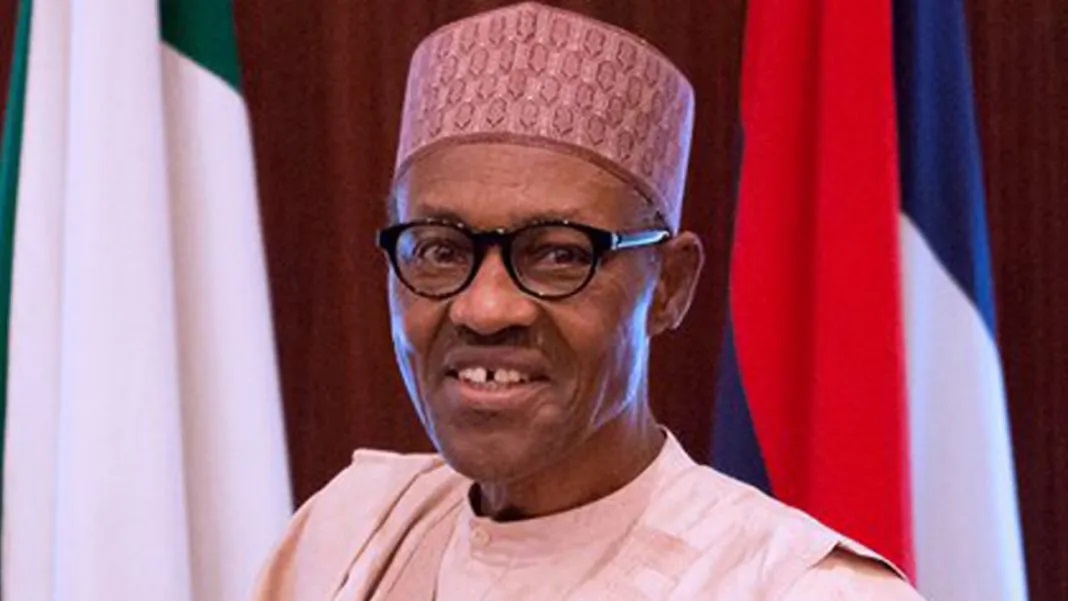
SERAP Advises Buhari to Suspend Fresh Borrowing

Published

on

Buhari's Integrity

By Adedapo Adesanya

The Socio-Economic Rights and Accountability Project (SERAP) has advised President Muhammadu Buhari to suspend fresh borrowing for now for the sake of Nigerians.

The group, in an open letter, said the immediate moratorium on borrowing should be obeyed by the federal government and the 36 states to address a systemic debt crisis, prevent retrogressive economic measures, and the disproportionately negative impact of unsustainable debt on Nigerians.

In the open letter dated December 18, 2021, and signed by SERAP deputy director, Mr Kolawole Oluwadare, the organisation explained that, “A moratorium on borrowing would create a temporary debt standstill, and free up fiscal space for investment in Nigerians’ needs, as well as ensure sustainable economic and social recovery from the COVID-19 pandemic.”

The request followed the recent approval by the National Assembly of President Buhari’s request for a $5.8 billion loan and grant of $10 million.

Previous approvals in 2021 alone included $8.3 billion; €490 million, and $6.1 billion. The foreign debt stock of the federal government, 36 states, and Federal Capital Territory reportedly stands at $38 billion.

SERAP warned that, “Without a moratorium on borrowing, your government and many of the 36 states may be caught in a process-driven mostly by creditors’ needs. This will result in an exorbitant social cost for the marginalized and vulnerable sectors of the population.”

“Long-term unsustainable debt can be a barrier to the government’s ability to mobilize resources for human rights and may lead to taxes and user fees that impact negatively on vulnerable and marginalised Nigerians,” pointed out.

The group expressed concerns that “the lack of transparency and accountability in the spending of the loans so far obtained, and opacity around the terms and conditions, including repayment details of these loans” could plunge the nation into crisis.

“While the National Assembly has asked for these details in future loan requests, it ought to have seen and assessed the terms and conditions of these loans before approving them, in line with its oversight responsibility under the Nigerian Constitution of 1999 [as amended].

“If not urgently addressed, the escalating borrowing and looming debt crisis would cripple the ability of both the federal government and the 36 states to deliver essential public services such as quality healthcare, education, and clean water to the most vulnerable and marginalised sectors of the population,” it added.

“Several of the 36 states are also facing a debt crisis and vicious debt cycles. According to the Debt Management Office, the foreign debt stock of the Federal Government, 36 state governments and the Federal Capital Territory presently stands at $37.9 billion.

“The loans from China alone amount to $3.59 billion. According to the UN Independent Expert on foreign debt and human rights, Nigeria faces debt service relative to tax revenues that exceed 20 per cent, with escalating social tensions linked to poverty and inequality.

“The growing level of borrowing by your government and the 36 states is clearly a human rights issue because when the entire country is burdened by unsustainable debts, there will be little money left to ensure access of poor and vulnerable Nigerians to basic public services,” it added.

SERAP advised the government “to conduct a human rights assessment of the borrowing by governments since 1999 to address the dire consequences of unsustainable debts on people and communities across the country and to ensure that borrowing at all levels of government considers the human rights impacts.

“Any such assessment should be conducted in harmony with existing safeguards and mechanisms in order to contribute to informed decision-making and to complement findings from a human rights perspective.”

It explained that, “A human rights impact analysis should serve to ascertain the debts that can be repaid, and the resources necessary to ensure compliance with the obligation of using the maximum available resources for the protection and fulfilment of human rights.”


Adedapo Adesanya is a journalist, polymath, and connoisseur of everything art. When he is not writing, he has his nose buried in one of the many books or articles he has bookmarked or simply listening to good music with a bottle of beer or wine. He supports the greatest club in the world, Manchester United F.C.

1 Comment

Leave a Reply

Your email address will not be published. Required fields are marked *

Economy

Verto Introduces Dollar Business Accounts to Power US–Africa Trade Flows

Published

on

verto

By Adedapo Adesanya

Vert, a global cross-border payments platform, has announced a new solution under Verto Business Accounts that enables US-registered businesses to move money seamlessly between the United States and Africa.

With the ability to open a US Dollar account in their business name and have access to trusted emerging market payment rails, companies can now receive, hold, and transfer funds faster, more cost-effectively, and with greater control.

US-registered businesses with operations in Africa often encounter significant banking limitations, with US banks frequently delaying or blocking transactions to or from African markets, imposing high or hidden FX costs, and offering limited access to Emerging Market payment corridors. Businesses without a US bank account registered in their own name must rely on fragmented tools or intermediaries to move funds to Africa, creating operational inefficiencies and slowing growth.

Verto’s new solution directly addresses these challenges by giving US-domiciled businesses access to named USD accounts and a robust cross-border payment infrastructure, enabling them to move funds and settle transactions in local currencies with speed and efficiency.

Built for venture-backed startups, import-export SMEs, and investors funding emerging market innovation, this solution will enable clients to receive funds directly into a named USD business account from US based customers or investors, convert and settle between USD and local currencies such as NGN and KES quickly and at lower cost, as well as hold, receive, and pay in 48 currencies from a single dashboard.

The solution will also allow users to pay contractors, suppliers, and offshore teams instantly via local payment rails. It also equips teams with virtual cards to spend in 11 currencies without fees and leverage specialised onboarding and monitoring that navigates both US and African regulatory requirements

By combining US and African compliance expertise, Verto’s Business Accounts empowers companies to maintain a US domestic presence for investors, customers, and suppliers while using deep-liquidity rails to pay global contractors and settle trades in local currencies efficiently, ensuring uninterrupted trade, payroll, and investment flows, without the risk of blocked or delayed transactions.

“We believe founders building across borders should not be constrained by the limitations of traditional banking,” said Ola Oyetayo, CEO of Verto. “Providing named accounts in the US empowers businesses with the funds they need to operate globally, connecting the US and Africa more efficiently without friction.”

With over 8 years of experience and $25 billion in annual global cross-border transaction volume, Verto continues to provide the infrastructure, expertise, and trusted payment rails businesses need to operate confidently across borders and scale globally.

Continue Reading

Economy

PEBEC Blocks Introduction of New Policies by MDAs

Published

on

PEBEC

By Adedapo Adesanya

The Presidential Enabling Business Environment Council (PEBEC) has directed Ministries, Departments, and Agencies (MDAs) to suspend the introduction of new policies and regulatory changes to prevent disruptions to businesses.

The directive was issued in a statement by PEBEC director-general, Mrs Zahrah Mustapha-Audu, on Monday in Abuja, noting that the move is part of the Federal Government’s broader effort to improve regulatory quality, ensure policy consistency, and strengthen Nigeria’s ease of doing business environment.

The council emphasised that the suspension will remain in place until all MDAs fully comply with the Regulatory Impact Analysis (RIA) Framework, which governs evidence-based policymaking across government institutions.

The council said the directive is aimed at ensuring that all government policies are backed by verifiable data and do not negatively impact businesses or investors.

“It is imperative to emphasise that no new reform or policy will be permitted to proceed without being grounded in clear, verifiable evidence,” said Mrs Mustapha-Audu.

“The framework provides the structured mechanism through which such evidence-based decisions can be rigorously developed, assessed, and validated.

“This directive is necessary to prevent policy shocks that may adversely affect businesses, investors, and citizens, as well as to eliminate policy inconsistencies and frequent reversals.”

She added that the government remains committed to working collaboratively with regulators and does not intend to embarrass any institution.

The Regulatory Impact Analysis (RIA) Framework, introduced in January 2025, is designed to improve transparency and ensure that policies undergo proper evaluation before implementation.

All MDAs are required to align new policies and amendments with the RIA framework before approval and rollout.

The framework has been circulated by the Office of the Secretary to the Government of the Federation (SGF) and is available on the PEBEC website.
MDAs are encouraged to seek technical support from the PEBEC Secretariat to ensure proper implementation.

Exceptions to the directive will only be granted in cases of urgent national interest, subject to appropriate approvals.

PEBEC noted that the framework will help institutionalise evidence-based policymaking, enhance transparency, and improve stakeholder confidence in government decisions.

Continue Reading

Economy

DMO Sells 3-Year FGN Savings Bond at 14.082% for April Batch

Published

on

FGN Savings Bond

By Aduragbemi Omiyale

Subscription for the Federal Government of Nigeria (FGN) savings bonds for April 2026 has opened, a circular from the Debt Management Office (DMO) on Tuesday, April 7, 2026, confirmed.

The debt office is selling the retail debt instrument for this month in two tenors of two years and three years.

Offer for the savings bonds opened today and will close on Friday, April 10, 2026, a part of the disclosure stated.

The 2-year FGN savings bond due April 15, 2028, is being sold at a coupon rate of 13.082 per cent per annum, while the 3-year FGN savings bond due April 15, 2029, is being sold at a coupon rate of 14.082 per cent per annum.

The interests are paid every quarter, and the bullet repayment to subscribers on the maturity date.

The bonds are sold at N1,000 per unit, subject to a minimum subscription of N5,000 and in multiples of N1,000 thereafter, subject to a maximum subscription of N50 million.

Interested investors are required to reach out to the stockbroking firms appointed as distribution agents by the DMO via the agency’s website.

An FGN savings bond qualifies as securities in which trustees can invest under the Trustee Investment Act. It also qualifies as government securities within the meaning of the Company Income Tax Act (CITA) and the Personal Income Tax Act (PITA) for tax exemption for pension funds, amongst other investors, meaning it is tax-free.

It can be used as a liquid asset for liquidity ratio calculation for banks, and is listed on the Nigerian Exchange (NGX) Limited to allow for easy exit (liquidation) before maturity by selling at the secondary market.

Continue Reading

Trending