Economy
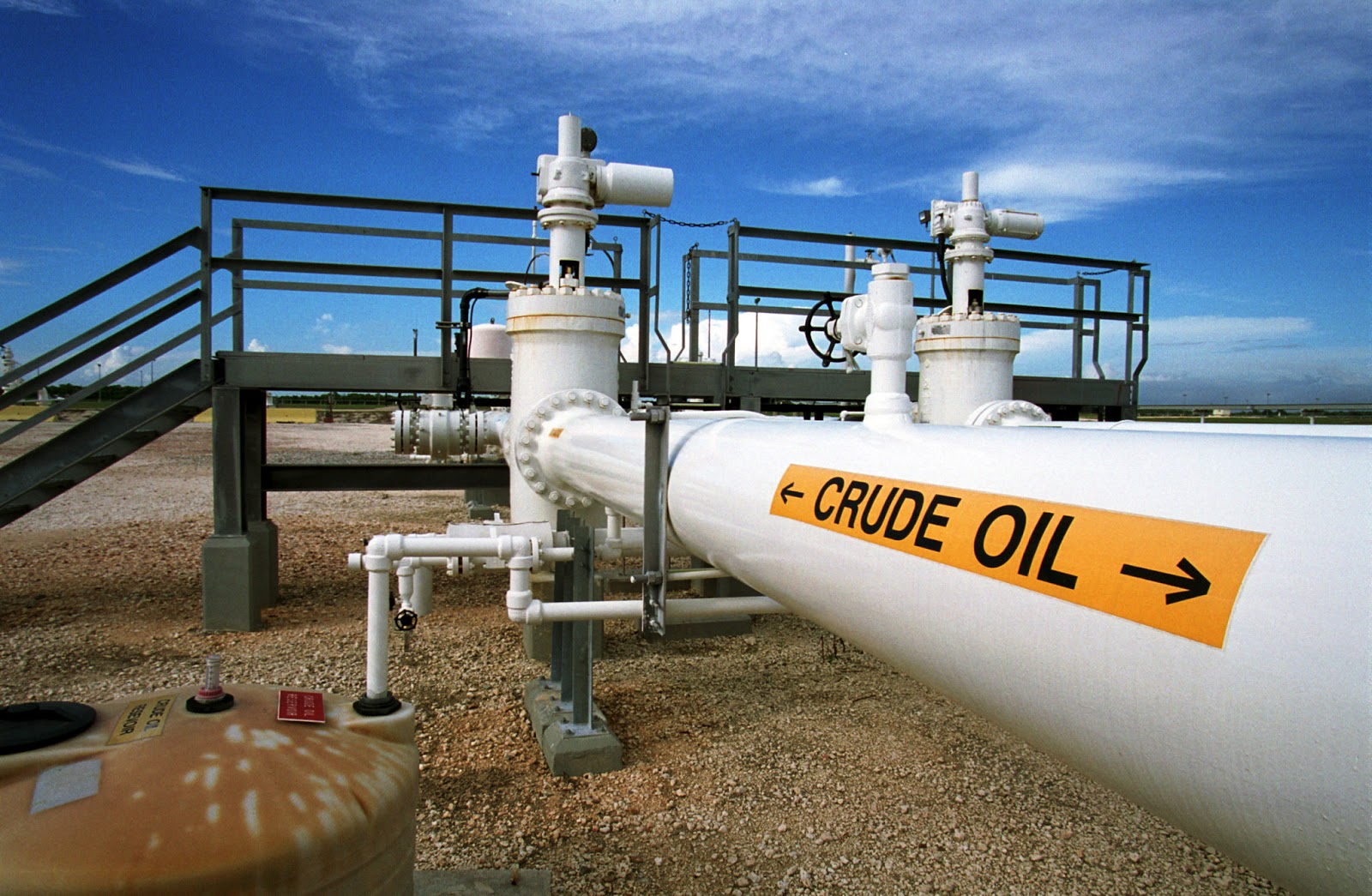
Crude Oil Ends 2021 Bearish as Omicron Infections Surge Worldwide
By Adedapo Adesanya
Crude oil fell by close to 2 per cent on Friday, ending the year bearish as infections surged to record highs around the world.
Despite this, the commodity posted its biggest gain since 2009 spurred by the global economic recovery from the COVID-19 slump and restraint from the Organisation of the Petroleum Exporting Countries its allies (OPEC+).
Yesterday, Brent crude lost $1.80 or 1.43 per cent to trade at $78.10 per barrel, while the United States West Texas Intermediate (WTI) crude closed $1.99 or 1.53 per cent lower to sell at $75.46 per barrel.
On the last day of 2021, Brent crude futures ended the year up by 53 per cent while US crude futures gained 57 per cent, the strongest performance for the two benchmark contracts since 2009 when prices soared more than 70 per cent.
Despite all manner of lockdowns and travel restrictions brought about by the coronavirus, demand for oil has remained relatively firm.
However, after rising for several straight days, oil prices stalled on Friday as COVID-19 cases soared to new pandemic highs across the globe, from Australia to the United States, stoked by the highly transmissible Omicron coronavirus variant.
Hundreds of flights were cancelled as the variant creates havoc both for travellers and for airlines that are having to cobble together flight crews as pilots, flight attendants, and ground crews become infected or are exposed to others who have been.
The remnants of the delta variant and the rise of the new omicron variant pushed the rate of new daily infections in the US well above 200,000 a day, according to figures from Johns Hopkins University.
Health experts warned Americans to prepare for severe disruptions in coming weeks, with infection rates likely to worsen amid increased holiday travel, New Year celebrations and school reopenings following winter breaks.
In many places in Australia, New Year’s Eve celebrations were muted or cancelled for the second straight year due to a surge of coronavirus infections, this time is driven by the highly contagious variant.
Despite these developments, global oil prices are expected to rise further next year as jet fuel demand catches up.
For the year 2022, crude consumption is expected to reach 99.53 million barrels per day, up from 96.2 million barrels per day this year, according to the International Energy Agency (EIA). That would be a hair short of 2019’s daily consumption of 99.55 million barrels.
That will put pressure on both OPEC and the US shale industry to meet demand – after a year when major producers were surprised by the rebound in the activity that overwhelmed supply and led to tight inventories worldwide.
On the supply front, OPEC+ will likely retain their current level of output cut by 400,000 barrels per day in February 2022 when they meet on January 4, 2022.
Economy
NASD Exchange Rises 1.22% on Sustained Bargain-Hunting
By Adedapo Adesanya
Strong appetite for unlisted stocks further raised the NASD Over-the-Counter (OTC) Securities Exchange by 1.22 per cent on Friday, February 27.
Data revealed that the NASD Unlisted Security Index (NSI) was up by 49.41 points to 4,083.87 points from 4,034.46 points, and lifted the market capitalisation by N19.56 billion to N2.433 trillion from N2.413 trillion.
The volume of securities bought and sold by investors increased by 243.0 per cent to 4.5 million units from 1.3 million units, and the number of deals grew by 15.8 per cent to 44 deals from 38 deals, while the value of securities went down by 19.7 per cent to N82.5 million from N102.8 million.
Central Securities Clearing System (CSCS) Plc ended the session as the most active stock by value on a year-to-date basis with 35.0 million units valued at N2.1 billion, followed by Okitipupa Plc with 6.3 million units worth N1.1 billion, and Geo-Fluids Plc with 122.8 million units transacted for N480.4 million.
Resourcery Plc ended the day as the most traded stock by volume on a year-to-date basis with 1.05 billion units sold for N408.7 million, followed by Geo-Fluids Plc with 122.8 million units valued at N480.4 million, and CSCS Plc with 35.0 million units traded for N2.1 billion.
There were six price gainers yesterday led by FrieslandCampina Wamco Nigeria Plc, which added N9.02 to close at N111.46 per unui compared with the previous day’s N102.44 per unit, Nipco Plc appreciated by N6.00 to N284.00 per share from N278.00 per share, CSCS Plc recouped N1.87 to sell at N70.12 per unit versus Thursday’s value of N68.25 per unit, Geo-Fluids Plc improved by 17 Kobo to close at N3.18 per share versus N3.01 per share, Industrial and General Insurance (IGI) Plc advanced by 5 Kobo to sell at N50 Kobo per unit versus the preceding day’s 45 Kobo per unit, and Acorn Petroleum Plc chalked up 2 Kobo to settle at N1.34 per share, in contrast to the previous day’s N1.32 per share.
Economy
FX Liquidity Crunch Sinks Naira to N1,363/$1 at NAFEX, N1,370/$1 at Black Market
By Adedapo Adesanya
The Naira performed poorly against the United States Dollar in the different segments of the foreign exchange (FX) market on February 27, closing the week without a gain.
In the black market, the domestic currency weakened against the Dollar yesterday by N5 to close at N1,370/$1 compared with Thursday’s closing price of N1,365/$1, and at the GT Bank forex desk, it lost N2 to sell N1,369/$1 versus the N1,367/$1 it was sold a day earlier.
Yesterday, the Nigerian Naira lost N3.75 or 0.26 per cent against the greenback at the Nigerian Autonomous Foreign Exchange Market (NAFEX) to trade at N1,363.39/$1 compared with the previous day’s N1,359.82/$1.
Also, the Naira depreciated against the Euro at the official market during the session by N2.33 to quote at N1,609.22/€1 versus N1,606.89/€1, and appreciated against the Pound Sterling by N6.74 to settle at N1,836.49/£1 compared with the preceding session’s N1,843.23/£1.
The Naira’s latest depreciation occurred as FX demand continued to outpace available supply, intensifying pressure in the market.
In response to the negative momentum, the Central Bank of Nigeria (CBN) intervened by selling Dollars to banks and other authorised dealers in an effort to stabilise the local currency. The move came barely a week after the apex bank had purchased about $190 million from the foreign exchange market to temper the Naira’s rally.
Specifically, the CBN injected $200 million into the official market between Tuesday and Wednesday through an intervention call. However, the liquidity support proved insufficient to reverse the currency’s downward trend.
Meanwhile, the cryptocurrency market declined on Friday, with Solana (SOL) down by 10.4 per cent to $78.60, as Dogecoin (DOGE) decreased by 9.5 per cent to $0.0982.
Further, Cardano (ADA) slumped 8.9 per cent to $0.2647, Ethereum (ETH) slipped by 8.6 per cent to $1,859.10, Ripple (XRP) shrank by 8.2 per cent to $1.30, Litecoin (LTC) lost 1.4 per cent to close at $52.39, Bitcoin (BTC) slid 5.9 per cent to $63,686.39, and Binance Coin (BNB) went down by 4.9 per cent to $596.64, while the US Dollar Tether (USDT) and the US Dollar Coin (USDC) traded flat at $1.00 apiece.
Economy
Oil Prices Climb on Geopolitical Anxiety
By Adedapo Adesanya
Oil prices rose about 2 per cent on Friday, with traders bracing for supply disruptions as nuclear talks between the United States and Iran were without an agreement.
Brent crude futures settled at $72.48 a barrel after chalking up $1.73 or 2.45 per cent, while US West Texas Intermediate crude futures finished at $67.02 a barrel, up $1.81 or 2.78 per cent.
The two sides agreed to extend indirect negotiations into next week, but traders grew sceptical that an agreement between US President Donald Trump’s administration and Iran was possible.
The US and Iran held indirect talks in Geneva on Thursday after Mr Trump ordered a military buildup in the region.
Oil prices gained during the talks, on media reports indicating that discussions had stalled over U.S. insistence on zero enrichment of uranium by Iran. However, prices eased after the mediator from Oman said the two sides had made progress.
They plan to resume negotiations with technical-level discussions scheduled next week in Vienna, Omani Foreign Minister Sayyid Badr Albusaidi said on X.
Market analysts noted that geopolitical risk premiums of $8 to $10 a barrel have been built into oil prices on fears that a conflict will disrupt Middle East supply through the Strait of Hormuz, where about 20 per cent of global oil supply passes.
To cushion the impact from a possible strike, one of the world’s largest oil producers, the United Arab Emirates (UAE), is set to export more of its flagship Murban crude in April, while Saudi Arabia said it would also increase oil production.
Additionally, Saudi Arabia may raise its April crude price to Asia for the first time in five months due to higher demand from India to replace Russian supplies, potentially raising it by about $1 a barrel.
Meanwhile, the Organisation of the Petroleum Exporting Countries and its allies (OPEC+) is likely to consider raising oil output by 137,000 barrels per day for April at its March 1 meeting, after suspending production increases in the first quarter.
The resumption of output increases after a three-month pause would allow Saudi Arabia and the UAE to regain market share at a time when other OPEC+ members, such as Russia and Iran, contend with Western sanctions while Kazakhstan recovers from a series of oil production setbacks.
Eight OPEC+ producers – Saudi Arabia, Russia, the United Arab Emirates, Kazakhstan, Kuwait, Iraq, Algeria and Oman will meet at the meeting on Sunday.
-
Feature/OPED6 years agoDavos was Different this year
-
Travel/Tourism10 years ago
Lagos Seals Western Lodge Hotel In Ikorodu
-
Showbiz3 years agoEstranged Lover Releases Videos of Empress Njamah Bathing
-
Banking8 years agoSort Codes of GTBank Branches in Nigeria
-
Economy3 years agoSubsidy Removal: CNG at N130 Per Litre Cheaper Than Petrol—IPMAN
-
Banking3 years agoSort Codes of UBA Branches in Nigeria
-
Banking3 years agoFirst Bank Announces Planned Downtime
-
Sports3 years agoHighest Paid Nigerian Footballer – How Much Do Nigerian Footballers Earn