

Health
Russia’s COVID-19 Vaccine Diplomacy in Africa

By Kester Kenn Klomegah
Last December, the Russian Ministry of Foreign Affairs posted to the official website for the public reading its end-of-year report. The report offered the most significant activities and achievements, among them was the striking theme on Covid-19.
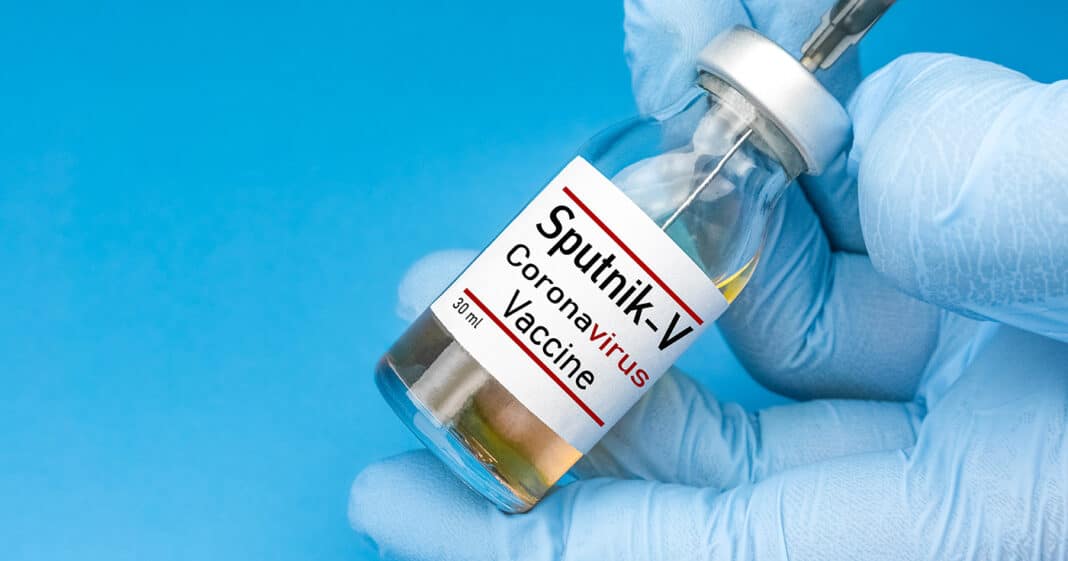
The report says in part: “Russia has contributed to the fight against the Covid-19 pandemic and to overcome its consequences. Registration of the Sputnik V vaccine was ensured in 71 countries, significant volumes of domestic vaccines were supplied abroad, and agreements were reached on the localization and expansion of the production of Russian drugs in various regions of the world.”
The unexpected outbreak of the coronavirus in December 2019 made many governments, organizations and health institutions still struggling for scientific solutions to the epidemiological situations express solidarity and call for closer bilateral cooperation in the sphere of health.
Some countries showed practical concern by making quick deliveries of medications and diagnostic materials, immune-biological preparations and medical equipment. Besides that, scientists were on their toes looking for appropriate COVID-19 vaccines.
In the process, Russia was the first to reach the goalpost. In less than a year, precisely on August 11, 2020, Russia became the first country to register a coronavirus vaccine named Sputnik V, developed by the Gamaleya Scientific Research Institute of Epidemiology and Microbiology.
Russian Foreign Ministry report last December says Sputnik V was registered in 71 countries. While it is yet to get final approval from World Health Organization (WHO), it is currently registered under the emergency use authorization procedure, according to the statement from the RDIF website. The RDIF is Russia’s sovereign wealth fund established in 2011 to make equity co-investments, primarily in Russia, alongside reputable international financial and strategic investors. RDIF acts as a catalyst for direct investment in the Russian economy.
President Vladimir Putin has oftentimes praised the entire healthcare system, and particularly the hard-working team of scientists and specialists from different institutions for their efforts at research and creating a series of vaccines for use against the coronavirus both at home and abroad.
As the Foreign Ministry, the end-of-year report indicated, a quarter of the figure cited of foreign countries that registered Russian vaccine are in Africa. Algeria was the first African country to register the Russian vaccine. Ministry of Pharmaceutical Industry of Algeria registered Sputnik V on 10 January 2021 as follows from a post on their official Twitter account. Reportedly, the vaccine registered in the following African countries: Algeria, Angola, Cameroon, Djibouti, Ethiopia, Egypt, Gabon, Ghana, Guinea, Kenya, Mauritius, Morocco, Nigeria, Namibia, Seychelles, South Africa, Tunisia, the Republic of Congo (DRC) and Zimbabwe.
Experts say that such a step is necessary for Russia to reassert its geopolitical influence and already engage in keen competition with other foreign players on the continent. However, a majority of African countries, where Sputnik V was registered, could not get supplies to purchase as promised.
Admittedly, Russia faces vaccine production challenges to meet the increasing market demand and to make prompt delivery on its pledges to external countries. As vaccine production and distribution intensifies, rivalry and competition strengthen and the fight for market share and its associated disinformation abound worldwide.
An official media release in mid-February 2021 said that the Africa Vaccine Acquisition Task Team – set up by the African Union (AU) to acquire additional vaccine doses so that Africa can attain a target immunization of 60% – received an offer of 300 million Sputnik V vaccines from the Russian Federation. It was further described as a special offer from Russia.
As explained by John Nkengasong, Director of the Africa Centers for Disease Control and Prevention (Africa CDC): “Africa has to team up with development partners to achieve its 60% continent-wide vaccination in the next two years. I think that is why we should as a collective of the continent, and of course, in partnership with the developed world make sure that Africa has timely access to vaccines to meet our vaccination targets.”
Russia never delivered the 300 million vaccines. Chairperson Moussa Faki Mahamat visited Moscow in mid-November. During their joint media conference after the closed-door meeting, Minister Sergey Lavrov, of course, reaffirmed that Russia would continue rendering assistance to various African countries through various multilateral organizations and bilateral channels.
“In response to a request from African Union members, Russia provided aid to almost 20 states by supplying them with vaccines, medications, and individual protective gear, and by sending qualified specialists,” he explained. Sergey Lavrov and his counterpart Moussa Faki Mahamat however maintained silence over the offer of 300 million doses that were highly expected through the Africa Vaccine Acquisition Task Team of the African Union.
In the Situation Analytical Report on Russia-Africa, compiled by 25 Russian policy experts, headed by Sergei A. Karaganov, Honorary Chairman of the Presidium of the Council on Foreign and Defense Policy, and was released last November, Russia’s consistent failure in honouring its several pledges over the years was vividly highlighted. The report decried the increased number of bilateral and high-level meetings that yield little or no definitive results.
“In many cases and situations, ideas and intentions are often passed for results, unapproved projects are announced as going ahead. Russia’s possibilities are overestimated both publicly and in closed negotiations. The supply of Russian-made vaccines to Africa is an example. Having concluded contracts for the supply of Sputnik V to a number of African states, Russian suppliers often failed to meet its contractual obligations on time,” says the report.
On a bilateral basis, Russia has made some vaccine deliveries, but only to its preferred countries including North Africa (Algeria Morocco and Egypt), East Africa (Ethiopia), in Southern Africa (Angola, Mozambique and Zimbabwe) and West Africa (Guinea). Media reports say South Africa has rejected Sputnik V donations.
Early December, President Vladimir Putin held a telephone conversation with the South African President Cyril Ramaphosa. According to the official Kremlin transcript, “the presidents agreed to join efforts in fighting the coronavirus pandemic, in particular in view of the newly identified Omicron strain, and further discussed interaction within BRICS.” Thereafter, Kremlin dispatched Russian specialists to join the research of the Omicron strain in South Africa.
During the end-of-year media conference, Putin emphasized: “This struggle continues, and we are aware of the dangers that Omicron, this new strain, poses. As you may know, a group of Russian scientists and experts is now in South Africa, where their colleagues actually discovered this new strain. Once again, I would like to thank our colleagues from South Africa.”
The December phone conversation took place against the backdrop of the current entry restrictions on travellers from southern African countries, due to the spread of a new Covid-19 variant (new B.1.1.529 variant). With the outbreak of Omicron, external countries have imposed restrictions on entry into their territories from southern African countries including Lesotho, Botswana, Zimbabwe, Mozambique, Namibia, Eswatini and South Africa.
Russia’s drive to share the Sputnik V vaccine offers a chance to raise its image and strengthen alliances in Africa. The authorities have oftentimes said that they would step up efforts for fruitful cooperation in combating coronavirus in Africa.
Last year Russia, through its Russian Direct Investment Fund, attempted to sell the vaccines to a number of African countries through Sheikh Ahmed Dalmook Al Maktoum, from the Monarch family and a third party in Dubai, United Arab Emirates. The Republic of Ghana reportedly signed a $64.6 million contract for the Sputnik V vaccine from Russia through Sheikh Ahmed Dalmook Al Maktoum. It was double the price from the producer as reported in local Russian media.
Promising more than can be delivered appears to be a universal problem with coronavirus vaccines, and it is a real risk for Russia as well, said Theresa Fallon, Director of the Brussels-based Centre for Russia Europe Asia Studies. “They have won the gold medal for creating this very effective vaccine,” she said. “But the problem is how are they going to implement production and delivery?”
In mid-December, TASS News Agency reported that the Russian Sputnik V vaccine was likely to be supplied to African countries free of charge, and quoted CEO of the Russian Direct Investment Fund Kirill Dmitriev who had told the Rossiya-1 TV Channel. “The first batches are likely to be delivered to African countries since there is a very high incidence of the Omicron Covid-19 variant,” CEO Dmitriev told the TV Channel.
Referring to the Situation Analytical Report on Russia-Africa, compiled by 25 Russian policy experts, lack of “information hygiene” at all levels of public speaking was listed among the main flaws of Russia’s current Africa policy. Interestingly Russians attempt to reclaim its stature as a global power and show that it is a key player, but evidence-based researches into Russia’s growing presence in Africa is however limited, particularly from the African perspective.
This aspect of dating and promising has become part of its post-Soviet diplomacy. What makes matters worse is that Russia simply do not promptly deliver on it promises and pledges with African countries. It has become part of its policy approach full of inconsistencies and full of first-class symbolism – these experts rightly listed among the main flaws in its African policy in the November report.
What’s more significant throughout last year, nearly all African countries received Covid-19 vaccines from the global COVAX scheme. This is due to the basic fact that they have lagged behind the rest in the world, and have to scramble for vaccines and always welcome donations from friendly governments from the western world and Europe.
While the pandemic ranges on, Africa really needs the developed world, as it has no vaccine of its own. It is far behind the rest of the world in terms of acquisition and inoculations. Africa remains resolute at ensuring the welfare of the entire population, while the African Union, regional blocs and individual governments make frantic efforts to acquire adequate vaccines through bilateral and multilateral agencies, and especially through COVAX.
On the other hand, the continent is witnessing an increased geopolitical rivalry for influence including competition over generosity. For many African countries, it is time to reflect as the pandemic has exposed the weaknesses in their health system. With its abundant resources, Africa still remains the world’s poorest and least developed continent, and worse with poor development policies. Amid all challenges, it is time to prioritize and focus on sustainable development.
Dr Tedros Adhanom Ghebreyesus, Director-General of the World Health Organization has reminded us that the pandemic struck at a time of rapid transformation for Africa. According to him, “many African countries have low levels of coverage of health services, and when health is at risk, everything is at risk” especially this challenging time when governments have to get together to save lives around the world.
World Health Organization (WHO) has declared the coronavirus outbreak a pandemic since March 2020. South Africa accounts for the biggest number of Africa’s coronavirus cases. The overall number of Covid-19 cases in Africa stands at least 9,741,000 reported infections and 228,000 reported deaths caused by the novel coronavirus in Africa in late December, according to the World Health Organization (WHO) Regional Office for Africa.


