
Banking
Access Bank to List Additional 6.6bn Shares on NSE


By Dipo Olowookere
Access Bank Plc has applied to list additional shares on the trading platform of the Nigerian Stock Exchange (NSE), Business Post has reliably gathered.
The new shares, a total of 6,617,253,991 ordinary shares of 50 kobo each, arose from the acquisition of Diamond Bank Plc, a company whose shares have been placed on full suspension by the market regulator.
Business Post learned that the application filed by Access Bank for the additional shares listing has already been approved.
The approval, according to what we gathered and from the document seen, was granted before the close of work on Friday, March 29, 2019.
Access Bank and Diamond Bank merged to become an entity and the new brand is expected to commence operations on Monday, April 1, 2019 (tomorrow).
In the letter to the NSE, Access Bank specifically stated that it was seeking “approval to list 6,617,253,991 ordinary shares of 50 kobo each resulting from a scheme of merger between Access Bank Plc and Diamond Bank Plc.”
At the moment, Access Bank has a total of 28,927,971,631 shares outstanding and with last Friday’s approval of the addition shares, Access Bank will rise to 35,545,225,622 shares outstanding. The new shares should be admitted on the trading platform of the NSE in some days’ time, an insider informed us at the weekend.
Business Post reports that the shares of Access Bank closed at N6.45k per unit at the last trading session, higher than N6.35k per share of the previous trading day.



By Modupe Gbadeyanka
The Nigerian banking industry has been praised for its strength, capacity and resilience, following its compliance with the March 31, 2026, recapitalisation deadline.
In March 2024, the Central Bank of Nigeria (CBN) gave financial institutions operating in the country March 2026 deadline to jack up their capital base from N25 billion.
Banks with international licence were asked to have at least N500 billion, while national lenders were told to raise the capital base to N200 billion, with regional banks pegged at N50 billion.
Others included merchant banks, N50 billion; non-interest banks with national license, N20 billion and non-interest banks with regional license will now have N10 billion minimum capital.
The banking reform was to prepare operators for the $1 trillion economy target for 2030 by the federal government.
Data showed that almost all the Nigerian banks have shored up their capital ahead of the CBN recapitalisation deadline.
According to the CBN Governor, Mr Yemi Cardoso, 32 banks have already met the new capital requirements under the ongoing recapitalisation programme.
“The banking sector recapitalisation programme has recorded commendable progress, with 32 banks having already met the revised capital requirements.
“This achievement has significantly strengthened the resilience and capacity of the Nigerian banking system, positioning it to effectively mobilise long-term capital, support productive investment, and play its critical role in enabling the transition towards a $1 trillion economy,” he said.
One group that is over the moon over this development is the Association of Corporate Affairs Managers of Banks (ACAMB), which applauded the disciplined execution of the exercise by all financial institutions and extended special praise to the regulator for its regulatory oversight.
The president of ACAMB, Mr Jide Sipe, said, “The Nigerian banking industry has once again demonstrated its innate strength and resilience.
“Achieving over 96 per cent compliance ahead of the recapitalisation deadline is no small feat; it is an indication of the capacity of our financial institutions to adapt and overcome.
“We commend the CBN for its visionary leadership, particularly under Governor Cardoso, whose bold reforms are reshaping the financial landscape,” he said.
Mr Sipe also congratulated the CBN on its recent recognition as Central Bank of the Year 2026 by the London-based Central Banking Awards Committee, a prestigious honour bestowed at a global gathering of central banks.
According to ACAMB, Mr Cardoso’s stewardship continues to reposition the nation’s economy with clarity, discipline, and a transformational outlook, earning Nigeria increased respect on the global stage.
The association reiterated its commitment to supporting policies that promote transparency, stability, and sustainable growth in the Nigerian banking industry.

By Adedapo Adesanya
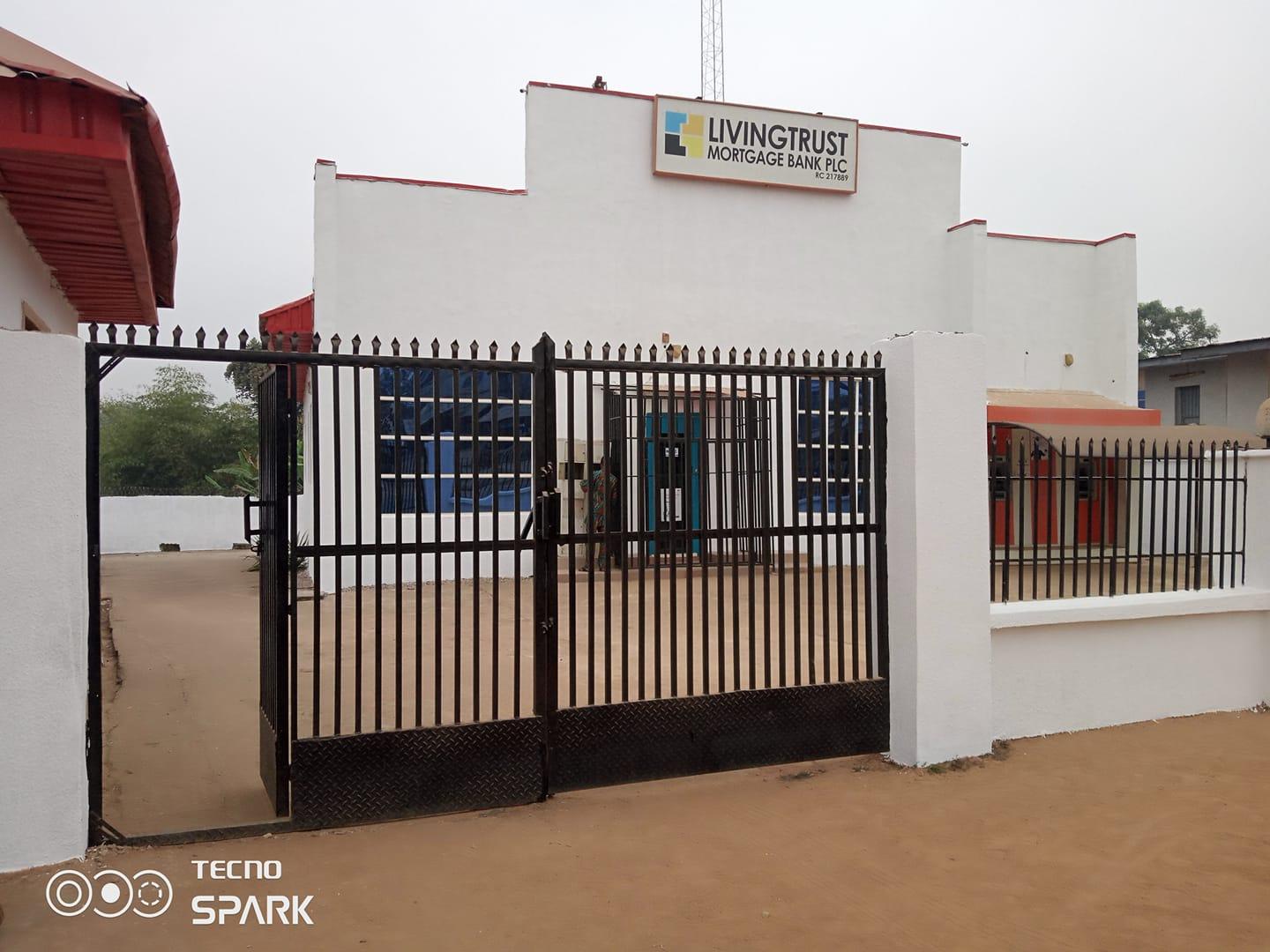
The Central Bank of Nigeria (CBN) has reaffirmed Mr Kamaldeen Adekilekun as the substantive Chairman of Living Trust Mortgage Bank Plc, easing recent uncertainty about the bank’s leadership.
In an official letter dated March 27, 2026, addressed to the Osun State Government, the banking sector regulator stated that Mr Adekilekun’s appointment remains valid and binding.
The CBN explained that once board nominations and appointments are approved by the regulator, they are tenured and guided by the Code of Corporate Governance for Primary Mortgage Banks in Nigeria, adding that such appointments cannot be withdrawn arbitrarily without clear regulatory grounds.
The CBN noted that its earlier communication (reference number OFI/DOL/CON/PLI/001/213) highlighted that the appointment was tenured in line with Sections 2.4.5 and 2.4.6 of the Code.
The apex bank also stated that there was no regulatory breach of relevant provisions of BOFIA 2020 or any CBN regulation that would disqualify him or prevent him from completing his term.
Rejecting the request for his removal, the CBN directed that the current board structure be maintained, stating, “Based on the foregoing, we therefore decline your request to withdraw Dr Adekilekun’s appointment.”
The development followed an earlier request seeking the withdrawal of the chairman’s appointment. The CBN said it had previously communicated the same position in a letter dated January 19, 2026.
The development reaffirms the central bank’s commitment to regulatory discipline, corporate governance, and institutional stability in Nigeria’s financial sector.
The clarification is expected to bring confidence to stakeholders, investors, and customers of Living Trust Mortgage Bank as operations continue under the existing leadership.
Incorporated on March 9, 1993, the bank converted from a Private Limited Liability Company to a Public Limited Liability Company on January 25, 2013 and subsequently listed on the Nigerian Exchange (NGX) on December 11, 2013, where its shares are being publicly traded.
By Adedapo Adesanya
Nigerian business-banking unicorn, Moniepoint, is eyeing a considerable foothold in East Africa as it completed the acquisition of a 78 per cent stake in Kenya’s Sumac Microfinance Bank.
The deal was finalised on Thursday and provides Moniepoint with a deposit-taking licence, an essential requirement for its credit-led expansion strategy.
The acquisition of Sumac allows Moniepoint to bypass the Central Bank of Kenya’s (CBK) policy to halt new licences to new foreign players. It will also ease worries after its move to buy payments firm Kopo Kopo failed.
By securing a majority stake in the 20-year-old institution, Moniepoint gains the regulatory infrastructure needed to deploy its high-velocity lending model to Kenya’s small and medium -sized enterprises (SMEs).
Sumac is a tier-three lender, and with its existing branch network and regulatory standing, the lender offers Moniepoint one of the ways to scale in a region increasingly shaped by digital-first credit.
The move also signals the company’s ambition to build a cross-border ecosystem that captures the entire merchant value chain, rather than solely on transaction fees.
Moniepoint’s entry into Kenya follows its acquisition of Orda, a cloud-based restaurant software provider for an undisclosed sum earlier this week, in a push to tap into the billion-dollar restaurants’ economy.
The company plans to export its business-in-a-box strategy, which integrates inventory management, payroll, and working capital by combining Orda’s vertical Software as a Service (SaaS) capabilities with Sumac’s banking infrastructure.
Orda will be rebranded Moniebook for Restaurants and integrated into Moniebook, Moniepoint’s business management platform. Orda will continue to operate as a standalone business until the full integration is completed in the coming months.
Orda currently operates in Nigeria and Kenya, but the acquisition only covers its Nigerian operations. However, with its presence in Kenya, it may set the tone for the acquisition of that subsidiary.












-
 Feature/OPED6 years ago
Davos was Different this year
-
Travel/Tourism10 years ago
Lagos Seals Western Lodge Hotel In Ikorodu
-

 Showbiz3 years ago
Estranged Lover Releases Videos of Empress Njamah Bathing
-
 Banking8 years ago
Sort Codes of GTBank Branches in Nigeria
-

 Economy3 years ago
Subsidy Removal: CNG at N130 Per Litre Cheaper Than Petrol—IPMAN
-

 Banking3 years ago
Sort Codes of UBA Branches in Nigeria
-

 Banking3 years ago
First Bank Announces Planned Downtime
-

 Sports3 years ago
Highest Paid Nigerian Footballer – How Much Do Nigerian Footballers Earn