
Banking
How Etiebet’s 2016 Letter Offers New Clues to N2.4bn Debt to Access Bank

In a letter dated November 9, 2016 written by former petroleum minister and All Progressive Congress (APC) chieftain, Don Etiebet, in respect of what is turning out to be a messy N2.4 billion indebtedness by an oil and gas company, Top Oil, to Access Bank Plc, appears to offer a new narrative to the dispute.
Writing in his capacity as chairman of Top Oil and Gas Company Limited, the letter shows an admission by Etiebet of the indebtedness and profuse pleading for time to resolve the matter with the principal parties, CASTOIL that appear to have brought the business from Mobil Oil Nigeria Limited, for which Top Oil was hoping to profit from as a third party participant.
However, the Etiebet letter seen by Business A.M. among the documents making the court rounds, also shows while CASTOIL had the direct supply business with Mobil Oil, Top Oil made have found the business very attractive as to take full responsibility of sourcing the funds, hence the Import Finance Facility (IFF) made available to it by the bank for the purpose of importation of Automotive Gas Oil (AGO) for supply to Mobil.
In the letter addressed to “The Manager, Access Bank Plc, Business Banking Division, Chevron Roundabout Branch, Lekki” with the heading, “RE: US$6.3 MILLION OUTSTANDING L/C PAYMENT”, Etiebet refers to the ‘demands’ by the manager for the payment of an outstanding letter of credit (LC) of $6,382,666.00, “which was used to import 10,000MT of AGO to supply Mobil Oil Nigeria Limited from Augusta Energy.”
In what appears to suggest an apology over the situation, Etiebet then wrote: “I regret that this payment is still outstanding till today. The true and correct position is that Top Oil and Gas Development Company Limited (TOPOIL) carried out this contract with a third party, CAST OIL and GAS LIMITED (CASTOIL) which brought the project from Mobil Oil Nigeria Limited. TOPOIL did not deal directly with Mobil Oil as it is common practice in the industry that companies cooperate to execute the project of this nature and share the profit,” Etiebet wrote.
He went on to explain that after an initial payment made by the third party, CASTOIL, the latter failed to make a further payment, suggesting this to be the reason for the delay and failure to redeem the letter of credit sum.
“Unfortunately, after the initial payment of N170,000,000.00 from CASTOIL into TOPOIL account with Access Bank Plc in August 2015 as agreed, CASTOIL failed to make further payments. CASTOIL then request (sic) TOPOIL to give it some time to reconcile certain issues with Mobil Oil and in the process issued TOPOIL a “PAYMENT COMMITMENT” in the sum of N1,321,431,000.00, which is what CASTOIL owed TOPOIL for the L/C at N200/$ at that time plus other costs and to pay up in three instalments by the 31st of August 2015 as per attached CASTOIL letter,” Etiebet, in the letter, also referred to how the Economic and Financial Crimes Commission (EFCC) had become involved, expressing confidence that the money would be paid to TOP OIL for it to settle Access Bank, what it owes it.
The letter further reads: “When the commitment was not honoured, TOPOIL reported the case to the security agencies. In the process of the investigations, CASTOIL entered into another agreement with TOPOIL to pay up by the end of November 2015, with understanding to pay interests and any forex variation from N200/$ to the fx rate at the time of completion of payment. The case is being handled by the EFCC with CASTOIL’s Managing Director, Mr TunjiAmushan being on Administrative Bail with sureties and his International Passport impounded as he reports to the EFCC every Thursday with promises to pay up. EFFCC has assured us that they would recover all the money plus interest and FX variation from him before long plus other sanctions.”
The letter showed that apparently while TOPOIL was trying to resolve whatever difficulties it was having with CASTOIL over the payment it did not inform or carry along with its bankers.
In further demonstration of remorse, therefore, Etiebet then stated in the letter: “I am very sorry that this was not reported to you before now because we thought CASTOIL would pay up as has been promised since last year for us to liquidate the outstanding L/C payment. So I take this opportunity to commit to you that the debts of US$6,382,666 to your bank shall, meanwhile, be paid from alternative sources including profits TOPOIL would be making from its current contracts with NNPC-Retail to supply AGO to Total-Offshore. “With other contracts in the pipeline including the supply of PMS to NNPC-Retail, I hereby give my personal undertaking to pay all the outstanding in the US$6,382,666 within 90 days. I want to let you know that we all in TOPOIL regret this unfortunate situation but thank you so much for your continued understanding and cooperation,” Etiebet concluded his rapprochement to the bank.
Sources close to the situation said nothing came out of the promises made in this 2016 letter as the bank did not receive any payment. The bitter contestation of the indebtedness that is currently going on would shades this profound apologetic and hugely conciliatory position in this letter and raises questions about how things got to this point and what, if any, could be the underlying motive behind a complete repudiation of the debt that in this November 9, 2016 letter was fully admitted. In an advertorial widely published in the media, Obodex Nigeria Limited, a company in which Etiebet has large interest and is chairman, claims that it does not owe any debt to Access Bank, a claim which seems to contradict the November 9, 2016 letter.
FACT SHEET TO POINT OF DISAGREEMENT
On November 21, 2014, Access Bank, following an accepted offer letter to the TOPOIL provides a US$6 million Import Finance Facility (IFF) to facilitate the importation of Automotive Gas Oil (AGO) for supply to Mobil Producing Unlimited by TOPOIL. The facility was tenured for a year with a maximum of 90 (ninety) days circle. In addition to the US$6 million IFF, TOPOIL was also availed a N100 million Revolving Time Loan vide the same offer letter for the purpose of facilitating the payment of Custom duties and other related Logistics.
This was also tenured for 1 (one) year with a maximum of 90 (ninety) days circle. Several Letters of Credit (LCs) were issued on the facilities, but only 1 (one) remained unpaid which is A2015C1091CL. The facts on the stated LC are stated below: In April 2015 TOPOIL submitted a Proforma Invoice valued at $5,802,500.00 and informed Access Bank it had an order from Mobil. Consequently, LC A2015C1091CL was issued in favour of a company called Augusta Energy SA (“Beneficiary”).
Upon presentation of all shipping documents required for this particular LC, funds were remitted by the bank to the beneficiary. In 2016, Access Bank increased the TOPOIL’s IFF from US$6 million to US$12 million and this was communicated to TOPOIL in an offer letter dated January 20, 2016. When the facility was not paid, the chairman of TOPOIL, Don Etiebet wrote to Access Bank in a letter dated November 9, 2016 that the LC was done with a third party known as Cast Oil & Gas Limited and committed to repay the Customer’s indebtedness.
Due to TOPOIL’s failure to repay the sum of US$6,382,665.71 at the expiration of the facility, the said amount was converted into a N2.2 billion Term Loan through an offer letter dated July 4, 2017 and the unutilized sum of US$5,617,334.29 on the US$12million IFF was also converted to a N1,463,000.000.00 Time Loan through the same offer letter. The N1,463,000.000.00 Time Loan was, however, never utilised by the TOPOIL.


Banking
Proxy Share Acquisition: Nothing to Worry About—LivingTrust Mortgage Bank Assures Shareholders

By Aduragbemi Omiyale
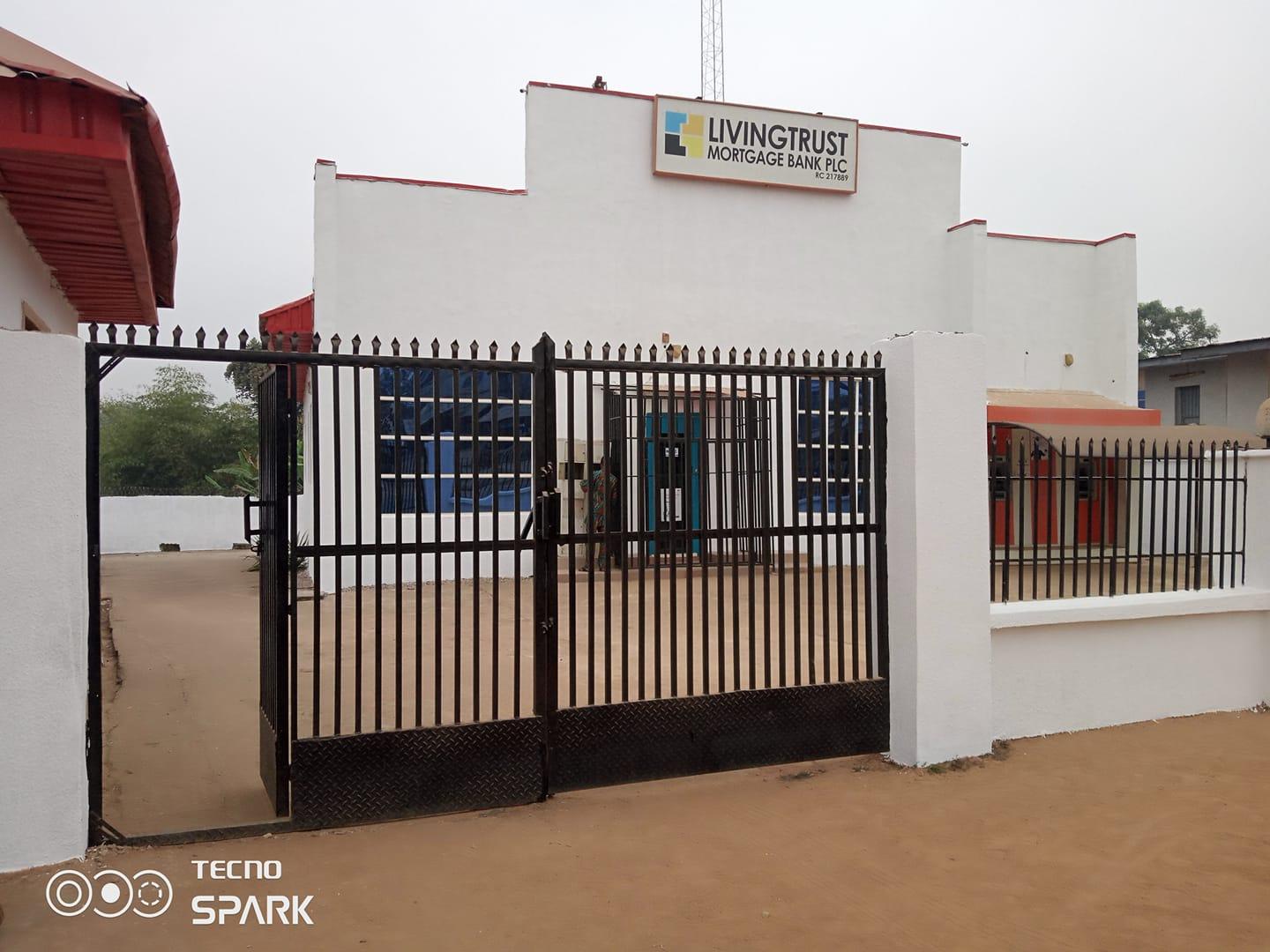
The board of LivingTrust Mortgage Bank Plc has assured the investing public, particularly its shareholders, that its operations are not being affected by reports of an alleged proxy share acquisition surrounding the organisation.
It was claimed that an investor attempted to take over the control of the real estate lender with funds alleged to have been from questionable sources.
In a clarification to the investing public through the Nigerian Exchange (NGX) Limited on Tuesday, April 7, 2026, the company said it cannot confirm if security operatives investigating the claims have submitted their report to the Central Bank of Nigeria (CBN).
However, it assured that, “Our bank is stable and that in the event of any change in ownership, we will file the necessary formal notifications and publish detailed announcements.”
In the notice today, LivingTrust Mortgage Bank narrated that, “As a company listed on the Growth Board of NGX, there are regular movements on the bank’s shareholder register.
“The bank’s monitoring of material movements showed an acquisition of 2.24 per cent of its shareholding by Apel Asset Ltd-Nominee, as per its register of June 25, 2025, as obtained from our registrar. However, one month later, in July 2025, the register obtained from the bank’s registrar showed the same shares to be listed in favour of Deril Academy Limited. We are further aware that in July 2025, Deril Academy Limited teamed up with some other shareholders in a takeover attempt via a matter filed in the Federal High Court, Lagos. The attempt failed, and the matter has now been withdrawn.
“Please note that we do not reveal the veil of corporations of juridical entities investing in the shares of the bank, below the level considered statutorily significant.
“While the CBN assesses the source of funds invested in financial institutions, persons purchasing shares of less than 5 per cent of total shareholdings in the open market are not required to be reported to the CBN.”
Business Post reports that the majority shareholders of LivingTrust Mortgage Bank, formerly Omoluabi Mortgage Bank, are Cititrust Holdings Plc and the Osun State Government.


By Adedapo Adesanya
Nigeria’s Bank Verification Number (BVN) registry surged to 68.6 million in the first three months of 2026 from 67.8 million in the last quarter of 2025, reflecting continued uptake of the unique identity platform for bank customers amid new regulatory directives to strengthen the Nigerian financial landscape further.
Data released by the Nigeria Inter-Bank Settlement System (NIBSS) showed that the database expanded by 754,128 in the first quarter of the year.
Last year, the sector recorded 4.3 million new registrations, largely driven by the Non-Resident Bank Verification Number (NRBVN) initiative, which allows Nigerians in the diaspora to register remotely, thereby boosting cross-border financial inclusion.
The data for fresh enrolments in 2026 showed a slowing rate of registrations, with fewer than one million recorded in the first three months. The total number of active bank accounts in Nigeria stood at over 320 million as of March 2025, highlighting a gap between BVN coverage and the broader banking population. While a single BVN can be linked to multiple accounts, unlinked accounts remain a challenge for financial oversight.
Last month, the Central Bank of Nigeria (CBN) introduced a revised BVN regulatory framework to strengthen identity verification and fraud prevention. Among the new provisions, only individuals aged 18 and above are eligible for BVN enrolment, and customers are now permitted to update the phone number linked to their BVN only once.
The apex bank also directed financial institutions to maintain a temporary watch list of BVNs associated with suspected fraudulent transactions. Affected BVNs remain on the list for up to 24 hours, during which owners are contacted for clarification before further action is taken.
According to the CBN, the measures are designed to tighten fraud monitoring, protect transaction integrity, and enhance identity management across Nigeria’s banking system.
By Modupe Gbadeyanka
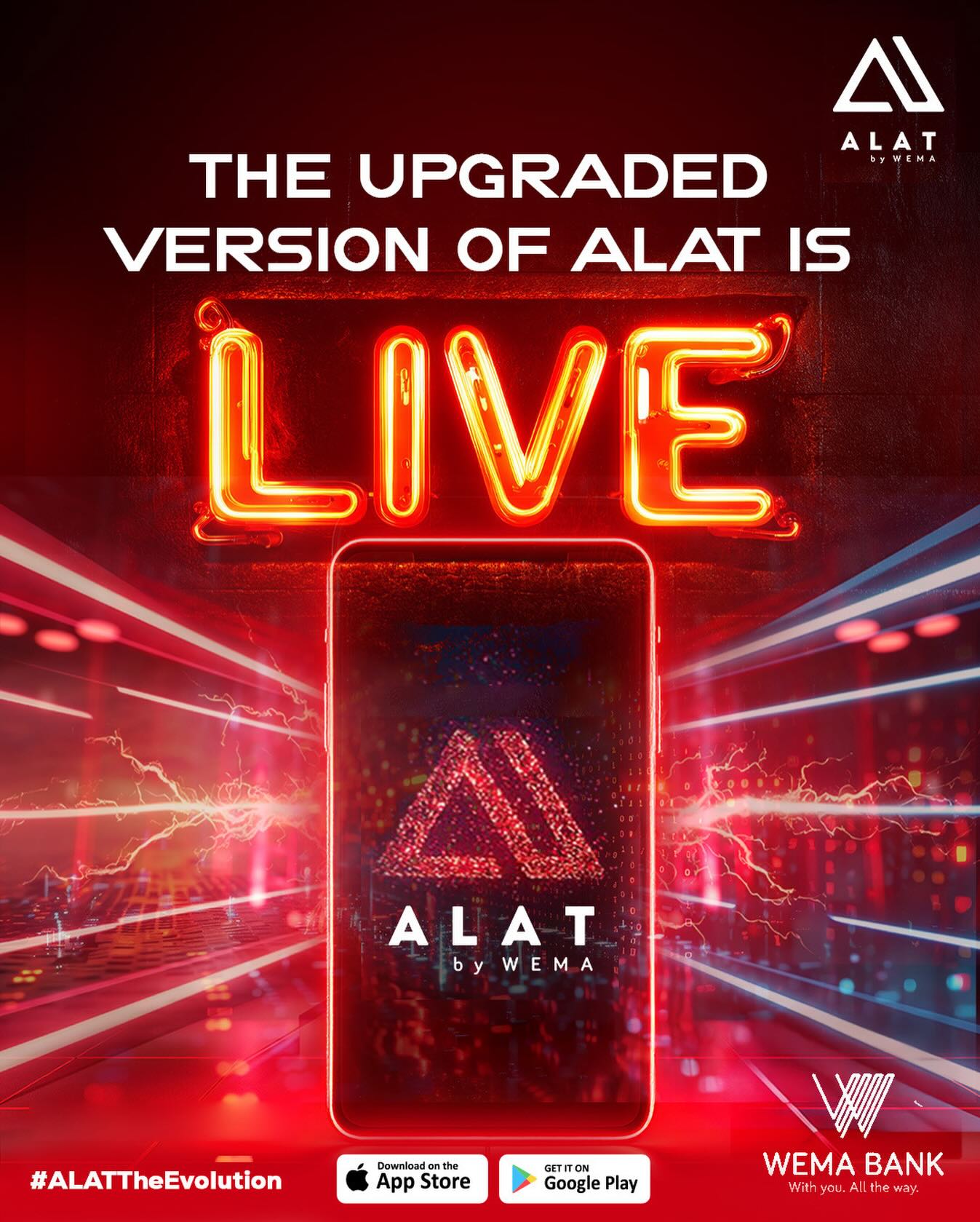
One tune that is on the lips of young and energetic Nigerians is the new ALAT: The Evolution jingle.
The melodious clink was designed to capture the energy of a smarter and more seamless banking experience. It is bright, catchy, and full of life.
The lender said the ALAT: The Evolution jingle is more than just music, as it represents a clear statement of intent. It signals a shift towards banking that feels natural, responsive, and in tune with the user.
As customers update their app and explore ALAT: The Evolution, the jingle serves as a reminder that a better, smoother way to bank is already here. Wema Bank is not just evolving its technology; it is shaping how banking feels.
It was stated that the tune was introduced to mark the next phase of the financial institution’s digital banking journey.
Everyday banking can often feel routine or even stressful, with multiple steps and delays slowing things down. The ALAT: The Evolution jingle reimagines that experience with a lively and confident tone that mirrors the app’s capabilities.
From voice banking with SAW to Tap and Pay and bank uptime prediction, each feature is echoed in the rhythm and flow of the sound. It brings to life the speed, convenience, and reliability that define this new phase of ALAT: The Evolution.
-
 Feature/OPED6 years ago
Davos was Different this year
-
Travel/Tourism10 years ago
Lagos Seals Western Lodge Hotel In Ikorodu
-

 Showbiz3 years ago
Estranged Lover Releases Videos of Empress Njamah Bathing
-
 Banking8 years ago
Sort Codes of GTBank Branches in Nigeria
-

 Economy3 years ago
Subsidy Removal: CNG at N130 Per Litre Cheaper Than Petrol—IPMAN
-

 Banking3 years ago
Sort Codes of UBA Branches in Nigeria
-

 Banking3 years ago
First Bank Announces Planned Downtime
-

 Sports3 years ago
Highest Paid Nigerian Footballer – How Much Do Nigerian Footballers Earn