
Banking
Sterling Bank Issues Verve Credit Cards to Customers

By Aduragbemi Omiyale
One of the leading innovative Nigerian lenders, Sterling Bank, has commenced issuing credit cards to its customers.
The issuance of the Naira-denominated credit card was made possible through the bank’s collaboration with Africa’s leading payment cards and digital tokens brand, Verve.
This partnership marks another milestone in Verve’s journey as a payment brand focused on improving the lives of Africans one card at a time, deepening financial inclusion, and facilitating access to credit in partnership with card issuers.
The Sterling Bank credit card, which will provide flexible access to funds for Nigerians, in addition to a revolving line of credit, comes in two categories, Ultra Bronze and Ultra Ruby.
The cards have a validity period of three years like the debit cards, they have a 45-day interest-free period and can be used across cities nationwide and at various payment terminals and locations, and can be used for convenient repayment plans and contactless payments.
“We are thrilled to have collaborated with Sterling Bank on this journey, fueled by our aligned goals of forming strategic partnerships, like this one, to elevate the experience of the average Nigerian in their interactions with the macro-financial economy by improving their purchasing power,” the Managing Director of Interswitch Paytoken (Verve), Mr Vincent Ogbunude.
Mr Ogbunude, who admitted that the credit system in Nigeria remains complex, explained that the collaboration with Sterling Bank was “to make good on our promise to deliver Verve’s signature good life experience by simplifying access to credit for consumers’ everyday purchases.”
Speaking on the launch of the product, the Chief Product Officer of Sterling Bank, Mr Mustapha Otaru, said, “The collaboration with Verve perfectly aligns with Sterling’s mission to create solutions that enhance the delivery of value to our esteemed customers.
“With Specta Ultra Card issued on Verve, we have simplified access to credit for customers with different income levels and spending needs. Thus, it reaffirms our commitment to delivering innovative financial solutions and access for everyone.”
Verve has continued to demonstrate its commitment to deepening financial inclusion, by partnering with banks, financial institutions, and other payment service outfits to provide payment cards to Nigerians and Africans at large.
With acceptance in over 185 countries globally and over 50 million tokens, Verve cardholders are assured of access to innovative products and solutions that promise convenience and safety.
As a pan-African customer-centric payment scheme, delivering payment solutions to individuals, issuers, and organizations, Verve remains committed to pushing the bounds in terms of customer experience and payment possibilities.







By Adedapo Adesanya
Nigeria’s Bank Verification Number (BVN) registry surged to 68.6 million in the first three months of 2026 from 67.8 million in the last quarter of 2025, reflecting continued uptake of the unique identity platform for bank customers amid new regulatory directives to strengthen the Nigerian financial landscape further.
Data released by the Nigeria Inter-Bank Settlement System (NIBSS) showed that the database expanded by 754,128 in the first quarter of the year.
Last year, the sector recorded 4.3 million new registrations, largely driven by the Non-Resident Bank Verification Number (NRBVN) initiative, which allows Nigerians in the diaspora to register remotely, thereby boosting cross-border financial inclusion.
The data for fresh enrolments in 2026 showed a slowing rate of registrations, with fewer than one million recorded in the first three months. The total number of active bank accounts in Nigeria stood at over 320 million as of March 2025, highlighting a gap between BVN coverage and the broader banking population. While a single BVN can be linked to multiple accounts, unlinked accounts remain a challenge for financial oversight.
Last month, the Central Bank of Nigeria (CBN) introduced a revised BVN regulatory framework to strengthen identity verification and fraud prevention. Among the new provisions, only individuals aged 18 and above are eligible for BVN enrolment, and customers are now permitted to update the phone number linked to their BVN only once.
The apex bank also directed financial institutions to maintain a temporary watch list of BVNs associated with suspected fraudulent transactions. Affected BVNs remain on the list for up to 24 hours, during which owners are contacted for clarification before further action is taken.
According to the CBN, the measures are designed to tighten fraud monitoring, protect transaction integrity, and enhance identity management across Nigeria’s banking system.

By Modupe Gbadeyanka
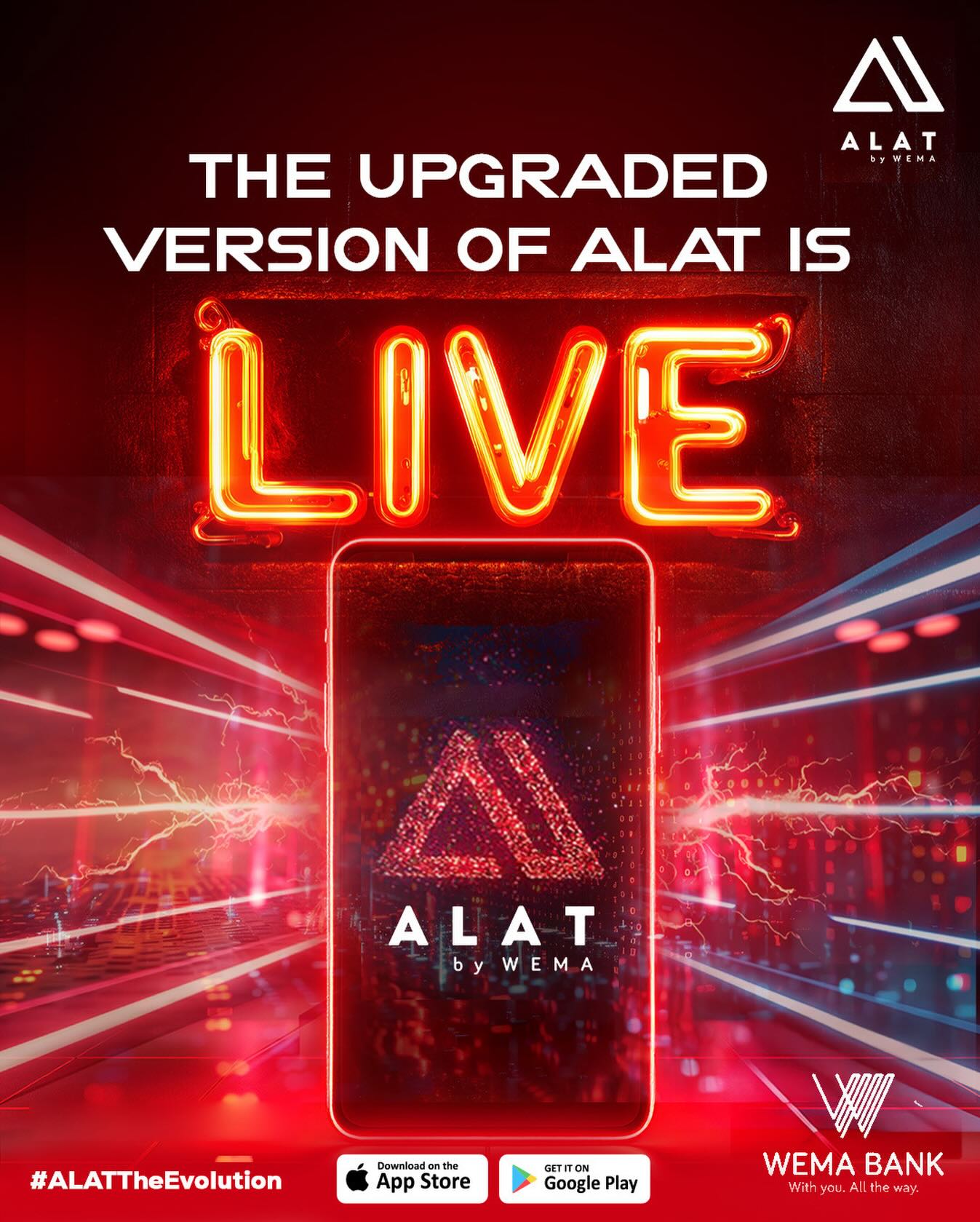
One tune that is on the lips of young and energetic Nigerians is the new ALAT: The Evolution jingle.
The melodious clink was designed to capture the energy of a smarter and more seamless banking experience. It is bright, catchy, and full of life.
The lender said the ALAT: The Evolution jingle is more than just music, as it represents a clear statement of intent. It signals a shift towards banking that feels natural, responsive, and in tune with the user.
As customers update their app and explore ALAT: The Evolution, the jingle serves as a reminder that a better, smoother way to bank is already here. Wema Bank is not just evolving its technology; it is shaping how banking feels.
It was stated that the tune was introduced to mark the next phase of the financial institution’s digital banking journey.
Everyday banking can often feel routine or even stressful, with multiple steps and delays slowing things down. The ALAT: The Evolution jingle reimagines that experience with a lively and confident tone that mirrors the app’s capabilities.
From voice banking with SAW to Tap and Pay and bank uptime prediction, each feature is echoed in the rhythm and flow of the sound. It brings to life the speed, convenience, and reliability that define this new phase of ALAT: The Evolution.
By Adedapo Adesanya
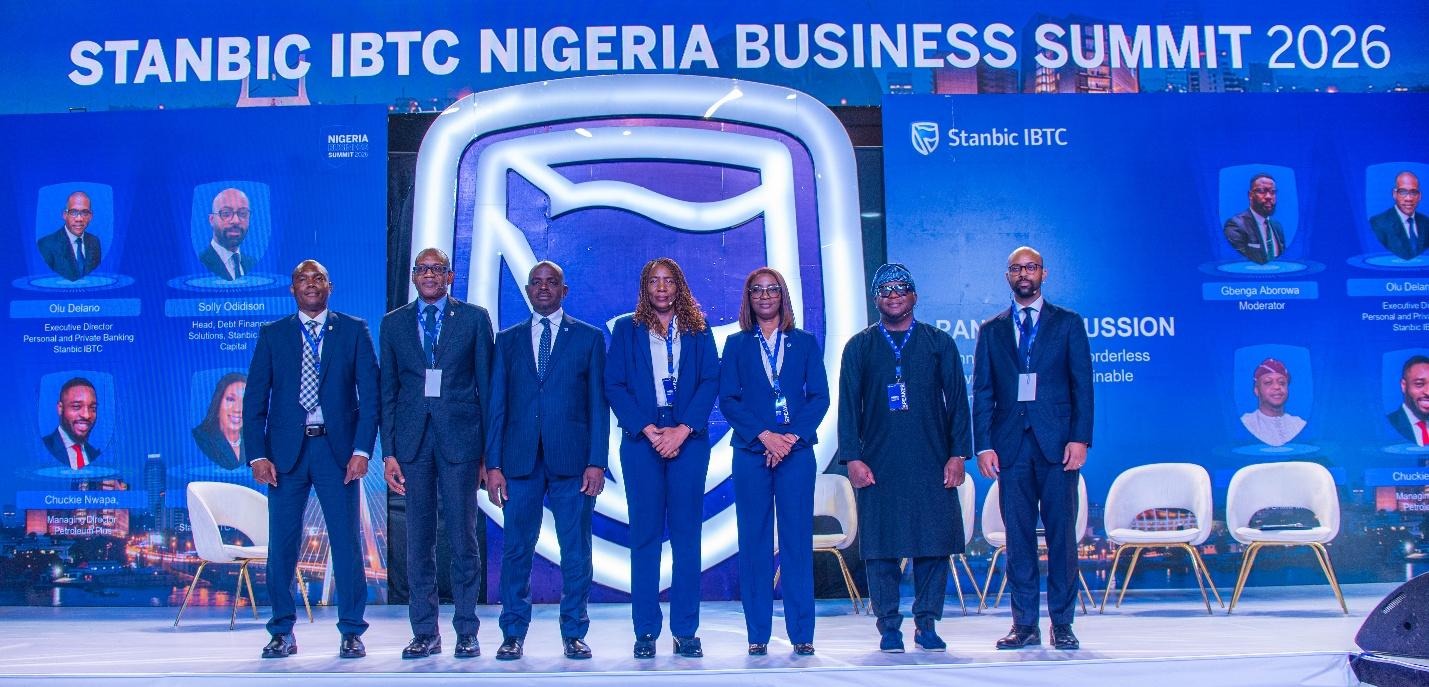
Top financial services provider in Nigeria, Stanbic IBTC, has reiterated its commitment to empowering businesses, strengthening key sectors and positioning Nigeria as a competitive player in the global economy.
This came on the back of the 2026 edition of the Nigeria Business Summit from Wednesday, April 1 to Thursday, April 2, 2026, at the Landmark Event Centre, Victoria Island, Lagos. The two-day summit brought together industry leaders, policymakers, entrepreneurs and stakeholders across multiple sectors to explore sustainable business practices, foster economic growth and unlock global trade opportunities.
With the theme, Nigeria Means Business: Powering Sectors, Growing Sustainable SMEs & Unlocking Global Trade, the summit addressed critical issues across key sectors, including agribusiness, renewable energy, trade and Africa–China banking, as well as ICT and telecommunications. Additional sessions covered areas such as family business sustainability, artificial intelligence, employee value banking, insurance, pension and wealth management.
The event featured a keynote address by the Minister of Finance and Coordinating Minister of the Economy, Mr Wale Edun, who emphasised the urgent need for Nigeria to reposition itself as a leading export-driven economy to achieve sustained growth.
“Our true potential lies in becoming a leading export economy,” Edun stated. “Increased participation in regional and global trade will be critical to diversifying foreign exchange earnings and driving inclusive growth.”
He noted that while Nigeria’s GDP growth has improved to approximately 4 per cent, it remains below the level required to significantly reduce poverty. According to him, the country’s economic strategy is now shifting from stabilisation to growth acceleration, with trade expansion playing a central role.
Mr Edun highlighted ongoing reforms, including improved foreign reserves, rising non-oil revenues and renewed investor confidence, as indicators of a more resilient economy. However, he stressed that enhancing trade competitiveness would require continued investment in infrastructure, logistics and policy coordination.
He also highlighted the importance of small and medium-sized enterprises (SMEs), which account for over 90 per cent of businesses, noting that inclusive growth will depend on stronger collaboration between the public and private sectors.
Participants engaged in a rich line-up of activities, including expert presentations, panel discussions and high-level networking opportunities. Highlights of the summit included the Africa Trade Barometer presentation, client testimonial showcases and insightful discussions on the state of the African economy and intra-African trade opportunities.
Breakout sessions on agribusiness, ICT and healthcare, Africa-China banking and trade, as well as renewable energy, provided attendees with deeper, practical insights into some of the most critical sectors driving Nigeria’s economic future.
Speaking at the event, Mr Chuma Nwokocha, chief executive of Stanbic IBTC Holdings, represented by the organisation’s Chief Finance and Value Management Officer, Mr Kunle Adedeji, emphasised the importance of collaboration and innovation in driving sustainable growth.
“This summit has reinforced the importance of creating platforms where ideas can flourish, and businesses can grow sustainably. By working together, we can unlock new opportunities and drive economic advancement across Nigeria and the African continent,” he said.
The summit also spotlighted practical strategies for integrating sustainability into business operations, encouraging organisations to adopt environmentally conscious practices while maintaining profitability and competitiveness.
Mr Remy Osuagwu, Executive Director, Business & Commercial Banking, expressed satisfaction at the level of interest from participants, a critical element for a successful summit.
“From our conversations on energy and healthcare to the deep dives into trade, Africa-China relations, and agribusiness, Day 1 has offered perspectives that were both insightful and practical. I believe we’re all leaving with a stronger understanding of the opportunities emerging across our industries,” he said.
He acknowledged the level of engagement, questions, contributions and willingness of participants to share experiences, describing this as the real power of the Nigeria Business Summit, and a solid foundation for tomorrow.
The Chief Executive of Stanbic IBTC Bank, Mr Wole Adeniyi, who was represented by Mrs Bunmi Dayo-Olagunju, Deputy Chief Executive of Stanbic IBTC Bank, opened Day Two of the Nigeria Business Summit by highlighting the focus of the summit’s SME Day.
“Today, we build on Day One’s momentum with conversations that are equally critical for the future – from the dynamics of family businesses to the growing influence of artificial intelligence; the evolution of insurance, and the emerging space of electric vehicle banking.”
She further added, “Our goal on Day Two is simple: to explore what’s next. To understand how these developments will shape our businesses and how we can position ourselves ahead of the curve.”
-
 Feature/OPED6 years ago
Davos was Different this year
-
Travel/Tourism10 years ago
Lagos Seals Western Lodge Hotel In Ikorodu
-

 Showbiz3 years ago
Estranged Lover Releases Videos of Empress Njamah Bathing
-
 Banking8 years ago
Sort Codes of GTBank Branches in Nigeria
-

 Economy3 years ago
Subsidy Removal: CNG at N130 Per Litre Cheaper Than Petrol—IPMAN
-

 Banking3 years ago
Sort Codes of UBA Branches in Nigeria
-

 Banking3 years ago
First Bank Announces Planned Downtime
-

 Sports3 years ago
Highest Paid Nigerian Footballer – How Much Do Nigerian Footballers Earn