
Banking
UBA to Further Change Narratives of Financial Services in Africa—Uzoka

By Dipo Olowookere
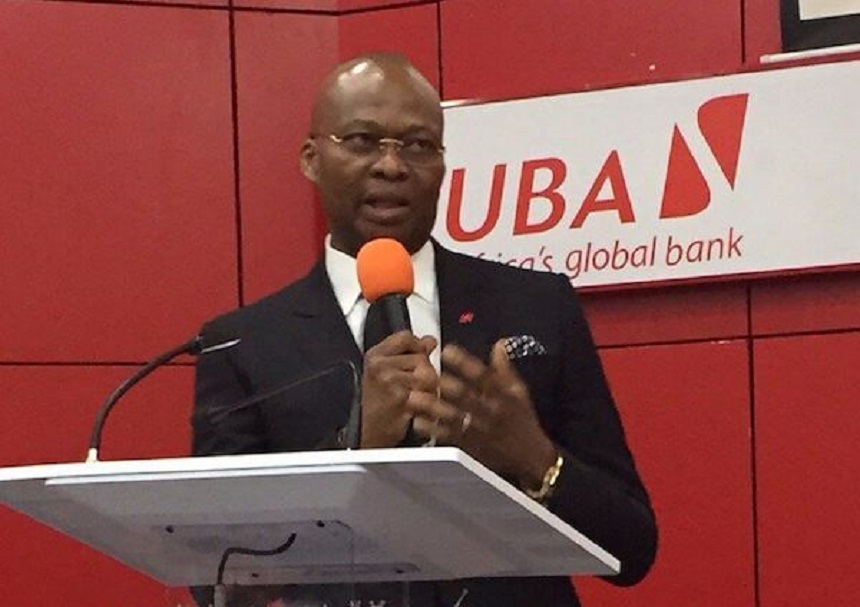
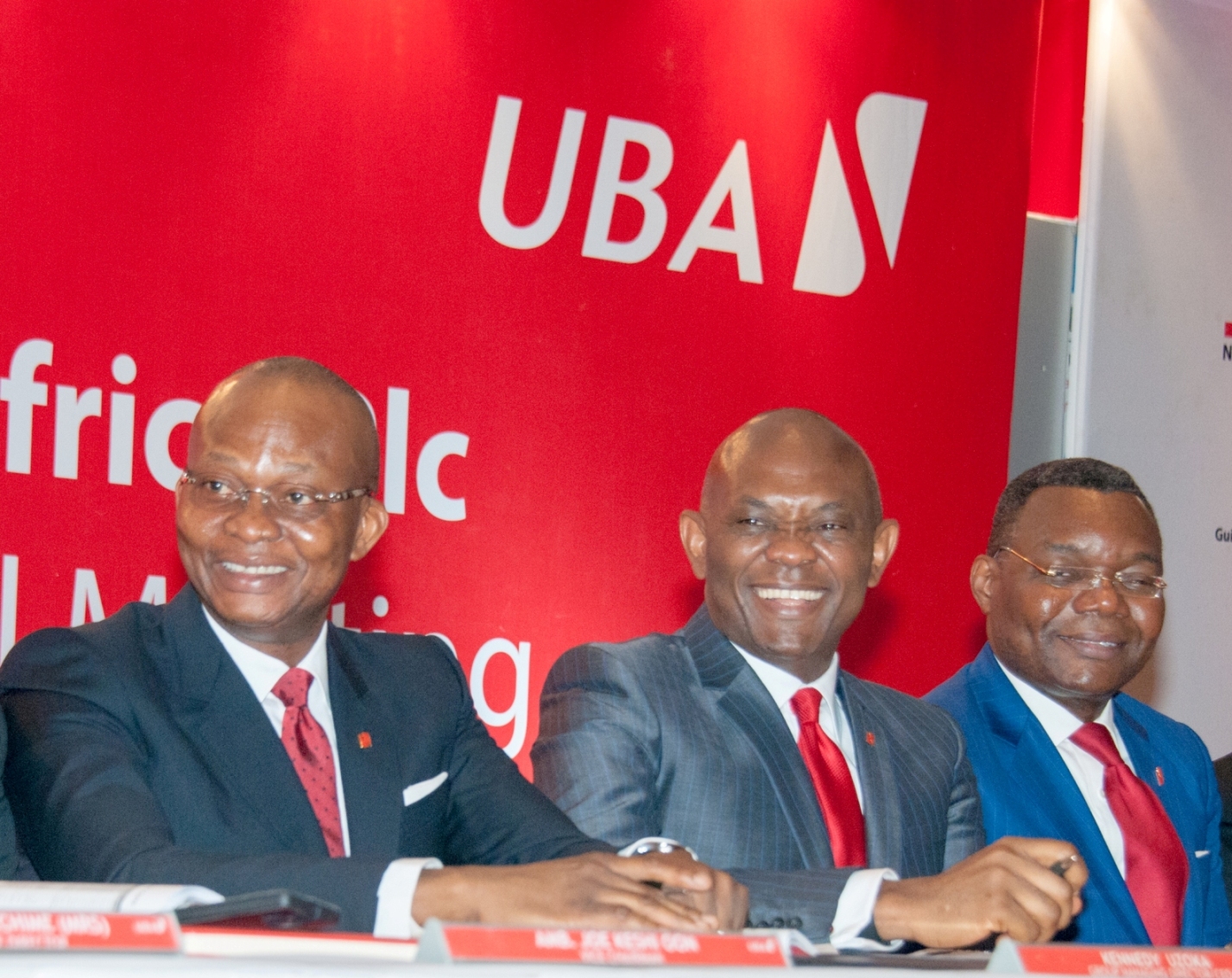
Group Managing Director/Chief Executive Officer of United Bank for Africa (UBA) Plc, Mr Kennedy Uzoka, has expressed the determination of the top Nigerian lender to continue to take its leading role in the African banking space.
Speaking recently when the pan-African financial institution was crown by the Banker Magazine as ‘African Bank of the Year 2017,’ Mr Uzoka disclosed that UBA will continue to impact lives through its services as well as funding to individuals, businesses and government.
The UBA chief said the honour bestowed on the bank was a testament of the diligent execution of the bank’s strategic initiatives on customer service.
“Being recognized as Africa’s best bank complements positive feedback from customers and is a recognition of our improving efficiencies, service quality and innovation.
“I therefore dedicate it to our growing loyal corporate and retail customers, who are our essence.
“Given our heritage commitment to Africa’s development, we continue to impact lives through our service as well as funding to individuals, businesses and government,” he said.
Mr Uzoka said further that, “The bank remains focused on its goal of democratizing banking in Africa, leveraging on new technologies and our rich pool of talent.
“It is satisfying that our efforts towards leadership are yielding great results. We continue to gain market share across our chosen markets, as we deepen financial inclusion, meeting basic and complex financial service needs of the growing African population.
“We are Africans and determined to change the narrative of financial services in Africa and this is just the beginning.”
UBA has a huge strength and dominance in the financial sector on the continent, operating across 19 markets in Africa and serves more than 14 million customers.
Last year, its earnings reached N384 billion, signalling 22 percent growth from its 2015 performance while profit before tax also grew by 32 percent to reach N91 billion.
At the end of 2016, the lender’s capital adequacy ratio stood at 20 percent, while its non-performing loan ratio was a healthy 3.9 percent.
In the digital space, UBA has made impressive strides, and in terms of internet banking, the financial institution processed 7 million transactions valued at more than N600 billion in 2016, while its mobile banking platform processed transactions valued at N70 billion over the same period.
UBA has also launched eMailMoni, a service that lets customers transfer funds via e-mail, while Chat Banking allows clients to perform basic transactions through social media platforms.
UBA was incorporated in Nigeria as a limited liability company after taking over the assets of the British and French Bank Limited who had been operating in Nigeria since 1949.
The bank merged with Standard Trust Bank in 2005 and from a single country operation founded in 1949 in Nigeria – Africa’s largest economy – UBA has become one of the leading providers of banking and other financial services on the African continent.
The Bank provides services to over 14 million customers globally, through one of the most diverse service channels in sub-Saharan Africa, with over 1,000 branches and customer touch points and robust online and mobile banking platforms.
UBA was the first Nigerian bank to make an Initial Public Offering, following its listing on the NSE in1970. It was also the first Nigerian bank to issue Global Depository Receipts.
The shares of UBA are publicly traded on the Nigerian Stock Exchange (NSE) and the bank has a well-diversified shareholder base, which includes foreign and local institutional investors, as well as individual shareholders.




By Modupe Gbadeyanka
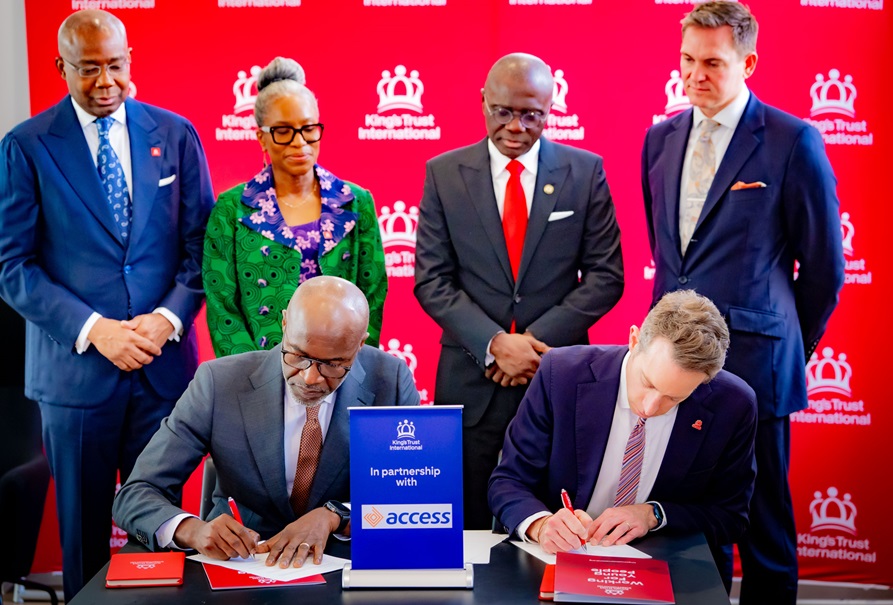
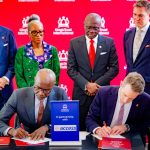
A partnership to expand opportunity, entrepreneurship, and sustainable livelihoods for young people across Africa has been signed by Access Bank and King’s Trust International (KTI).
The cooperation marks a significant milestone in advancing cross‑sector collaboration to address youth unemployment, foster entrepreneurship, and drive inclusive growth across Africa.
Under the agreement, Access Bank will support the delivery of KTI’s programmes that empower young people across several African countries, supporting them to gain skills and find pathways into meaningful employment and self-employment across Africa.
It was learned that the collaboration brings together KTI’s expertise in youth development with Access Bank’s pan‑African reach and long‑standing commitment to inclusive and sustainable growth.
Through this alliance, the two organisations will work to equip young people with the skills, confidence and support needed to build successful futures through employment and entrepreneurship.
“At Access Bank, we believe that empowering young people is fundamental to Africa’s sustainable growth. Our partnership with King’s Trust International reinforces our commitment to entrepreneurship, job creation and inclusive development, while enabling us to play a purposeful role in shaping the continent’s future,” the chief executive of Access Bank, Mr Roosevelt Ogbonna, stated.
The chief executive of KTI, Mr Will Straw, while also commenting, said, “This partnership with Access Bank reflects a shared commitment to unlocking the potential of young people across Africa. By combining our experience in youth development with Access Bank’s scale and leadership across the continent, we can create meaningful pathways to opportunity and long‑term impact.”
The signing ceremony was witnessed by senior leaders and representatives from both organisations, alongside distinguished guests, including Mr Aigboje Aig‑Imoukhuede, who is the co-Chair of KTI Africa Advisory Board and Chairman of Access Holdings Plc.

By Aduragbemi Omiyale
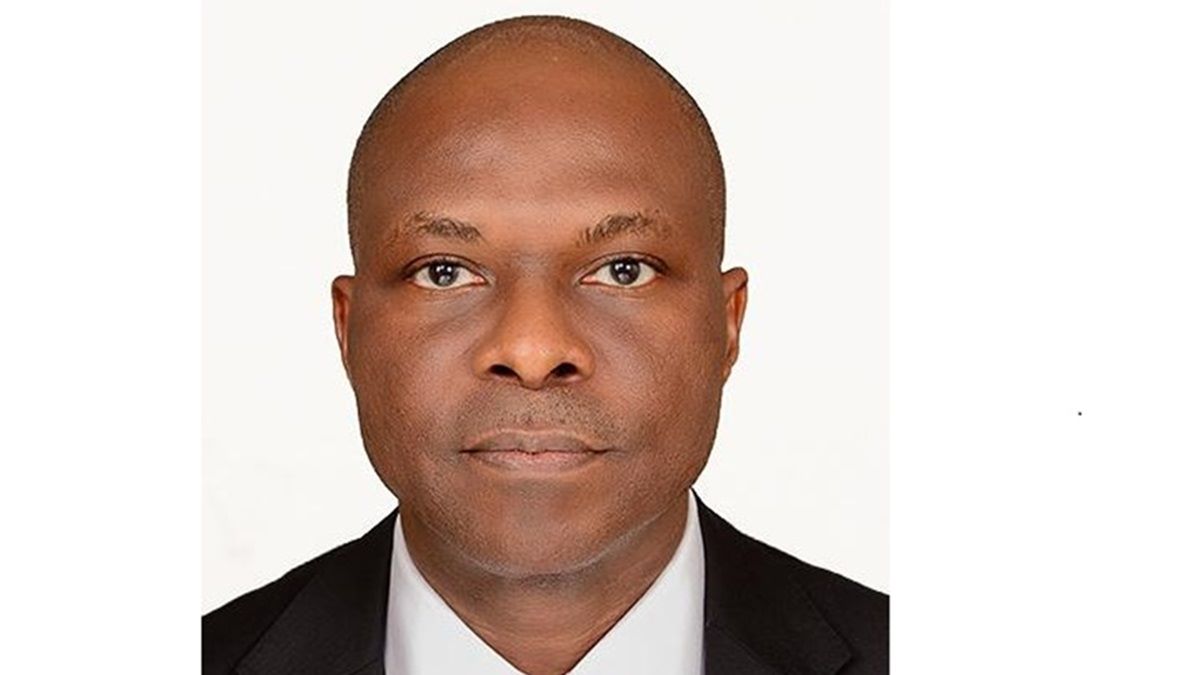
Mr Kennedy Onuwa Okwudili has been appointed to the board of Zenith Bank Plc as an executive director with effect from May 1, 2026.
A statement signed by the company secretary, Mr Michael Otu, disclosed that the appointment aligns with the financial institution’s “tradition and succession strategy of grooming leaders from within” to strengthen its executive management further.
He is joining the board with over 25 years of cognate banking experience spanning credit and marketing, treasury, compliance, as well as operations and has at different times worked in various zones and departments of the lender.
Mr Okwudili graduated with a Bachelor of Science (Honours) in Accounting from the University of Maiduguri, Nigeria, in 1998, with a Second Class Upper Division. He obtained a Master’s of Business Administration (MBA) from Ahmadu Bello University, Zaria, Nigeria, in 2008 and a Master’s of Science in Accounting from Veritas University, Abuja, Nigeria, in 2021.
He is a Fellow of the Institute of Chartered Accountants of Nigeria (ICAN), 2013, and also a Fellow of the Chartered Institute of Bankers of Nigeria, 2024. He is an Associate of the Chartered Institute of Taxation of Nigeria (CITN), 2016.
The banker has attended several executive education programmes both within and outside the country, including Senior Leadership Development Programme at the Lagos Business School, Corporate Directorship Programme at the Harvard Business School and Oxford Advanced Management and Leadership Programme at the University of Oxford, SAID Business School.
He is currently the President of Catholic Bankers Association of Nigeria (CBAN) and a member of the Noble Order of the Knights of St. John International (KSJI).

By Aduragbemi Omiyale
A high-level virtual webinar focused on helping public institutions to strengthen revenue systems, improve fiscal transparency, and build smarter digital structures for collections, oversight, and accountability is being planned by Fidelity Bank Plc.
This event is slated for Tuesday, March 24, 2026, under the theme Digital Fiscal Transparency: Unlocking Sub-national Opportunities for International Partners.
The programme will bring together a cross-section of public sector leaders, development institutions, heads of parastatals and agencies, as well as financial experts, to explore practical solutions for stronger public finance management.
It is expected to offer timely insights into how modern revenue infrastructure can help institutions improve efficiency, drive accountability, and support better fiscal outcomes.
The webinar will address key issues facing many public institutions today, including revenue leakages, fragmented collection channels, weak visibility into revenue performance, poor reconciliation processes, and the growing need for more transparent and technology-driven systems.
“As public institutions seek ways to improve internally generated revenue and strengthen public trust, there has been a renewed focus on fiscal transparency.
“This is particularly important in the face of recent macro and micro economic developments with many public sector agencies under pressure to do more with limited resources,” the Divisional Head of Public Sector at Fidelity Bank, Mr Richard Madiebo, said.
“It is against this background that we have conceptualised this session with a particular focus on how digital platforms can support structured invoicing, seamless collections, payment automation, contractor disbursement transparency, real-time revenue oversight, amongst other pertinent areas of revenue mobilisation and administration in Nigeria,” he added.
“The webinar forms part of our commitment to provide practical solutions that support public sector transformation and stronger sub-national development. This is in line with Fidelity Bank’s mandate to help individuals to grow, businesses to thrive, and economies to prosper,” Mr Madiebo further disclosed.












-
 Feature/OPED6 years ago
Davos was Different this year
-
Travel/Tourism10 years ago
Lagos Seals Western Lodge Hotel In Ikorodu
-

 Showbiz3 years ago
Estranged Lover Releases Videos of Empress Njamah Bathing
-
 Banking8 years ago
Sort Codes of GTBank Branches in Nigeria
-

 Economy3 years ago
Subsidy Removal: CNG at N130 Per Litre Cheaper Than Petrol—IPMAN
-

 Banking3 years ago
Sort Codes of UBA Branches in Nigeria
-

 Banking3 years ago
First Bank Announces Planned Downtime
-

 Sports3 years ago
Highest Paid Nigerian Footballer – How Much Do Nigerian Footballers Earn