
Banking
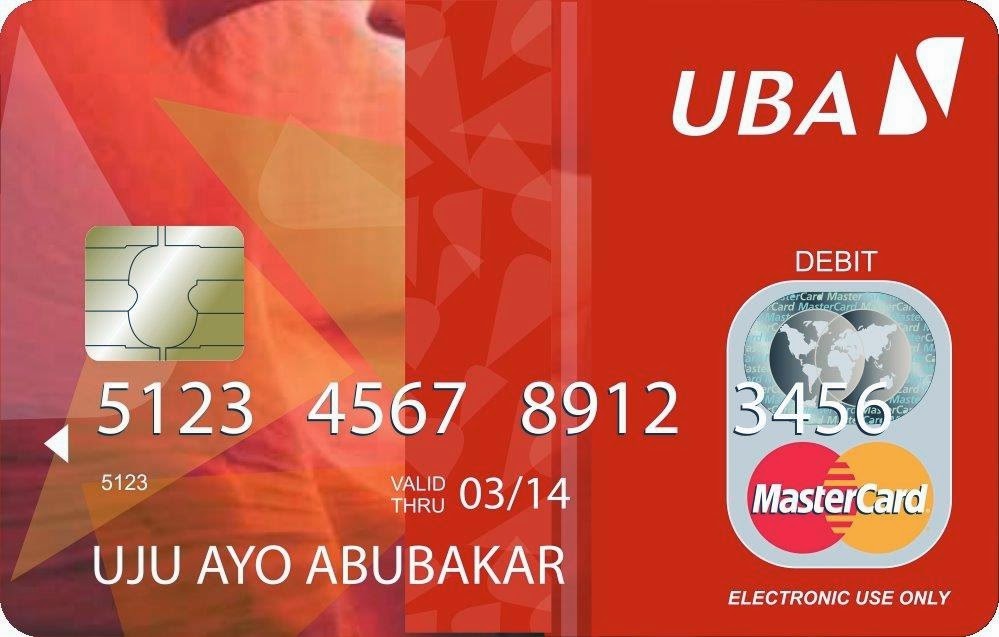
UBA Debit MasterCard Makes Cashless Seamless in Cameroon

By Modupe Gbadeyanka
In line with its strategic vision to introduce innovative payment solutions that meet the needs of people across Africa, the United Bank for Africa (UBA) Plc has announced the rollout of the Debit MasterCard card in Cameroon in support of financially empowering all citizens.
Focused on displacing cash, the electronic payment solution will deliver a quick, convenient and secure payment alternative for all citizens – instantly.
The Debit MasterCard card gives the cardholder full control of their funds and provides them with the ability to deposit funds directly from a savings or current account, thereby reflecting all transactions in real time.
The lender’s Group Head in charge of Digital Banking, Mr Yinka Adedeji, while commenting on this, stated that, “As a group, we are committed to driving financial inclusion and empowering businesses across Africa, and our partnership with MasterCard enables us to deploy safe electronic solutions to the benefit of the entire country.”
Cameroonians can visit any UBA branch across the country to request the card, and cardholders don’t have to wait days or weeks to receive the card, they will instantly be signed up and can start using the debit card immediately.
The UBA and MasterCard partnership is helping to empower people through access to financial tools, with the launch in Cameroon following the recent rollout in Ghana.
The quick go-to-market strategy is ensuring that more people are connected to the formal financial sector, giving them the power to pay for goods and services in-store or online wherever MasterCard is accepted. The debit card can also be used at any ATM locally, and at millions of ATM locations worldwide.
Also commenting, the Managing Director/CEO, UBA Cameroon, Mr Udom Isong said, “The introduction of the UBA Debit MasterCard into the market will enable our customers to carry out their banking transactions in a safer, more convenient and more reliable manner. Our customers’ needs are changing and as they change, we will continue to adopt smart technology solutions that deliver superior services.”
Omokehinde Adebanjo, Vice President and Area Business Head for West Africa, MasterCard said, “In order to drive financial inclusion we need to ensure all Africans feel confident that their money is secure. The UBA Debit MasterCard introduces the latest global payment standards with EMV Chip and PIN technology embedded into the card making it difficult for fraudsters to duplicate your information.”
The chip embedded into the card contains information that is encrypted making it almost impossible for the card to be copied or counterfeited. The chip card will also have a magnetic stripe on the back, so that cardholders can continue using their cards while merchants are transitioning to new chip-enabled terminals.
Cardholders will also be able to select their own PIN, giving them full control to approve transactions at the point of sale or when withdrawing cash from ATMs.
Adebanjo also said that both organisations were focused on boosting the financial inclusion across Africa She highlighted that the partnership supported MasterCard’s global commitment to financially empower more people by 2020.
UBA Cameroon is highly regarded for its innovation in the banking sector in the country, helping to build a strong reputation across Africa. In 2015, UBA Cameroon become the first bank in Africa to win the ‘Prepaid Card Innovation of the Year’ and has also received The Bankers’ Magazine Bank of the Year Award, four times.



By Adedapo Adesanya
Nigerian business-banking unicorn, Moniepoint, is eyeing a considerable foothold in East Africa as it completed the acquisition of a 78 per cent stake in Kenya’s Sumac Microfinance Bank.
The deal was finalised on Thursday and provides Moniepoint with a deposit-taking licence, an essential requirement for its credit-led expansion strategy.
The acquisition of Sumac allows Moniepoint to bypass the Central Bank of Kenya’s (CBK) policy to halt new licences to new foreign players. It will also ease worries after its move to buy payments firm Kopo Kopo failed.
By securing a majority stake in the 20-year-old institution, Moniepoint gains the regulatory infrastructure needed to deploy its high-velocity lending model to Kenya’s small and medium -sized enterprises (SMEs).
Sumac is a tier-three lender, and with its existing branch network and regulatory standing, the lender offers Moniepoint one of the ways to scale in a region increasingly shaped by digital-first credit.
The move also signals the company’s ambition to build a cross-border ecosystem that captures the entire merchant value chain, rather than solely on transaction fees.
Moniepoint’s entry into Kenya follows its acquisition of Orda, a cloud-based restaurant software provider for an undisclosed sum earlier this week, in a push to tap into the billion-dollar restaurants’ economy.
The company plans to export its business-in-a-box strategy, which integrates inventory management, payroll, and working capital by combining Orda’s vertical Software as a Service (SaaS) capabilities with Sumac’s banking infrastructure.
Orda will be rebranded Moniebook for Restaurants and integrated into Moniebook, Moniepoint’s business management platform. Orda will continue to operate as a standalone business until the full integration is completed in the coming months.
Orda currently operates in Nigeria and Kenya, but the acquisition only covers its Nigerian operations. However, with its presence in Kenya, it may set the tone for the acquisition of that subsidiary.
By Adedapo Adesanya
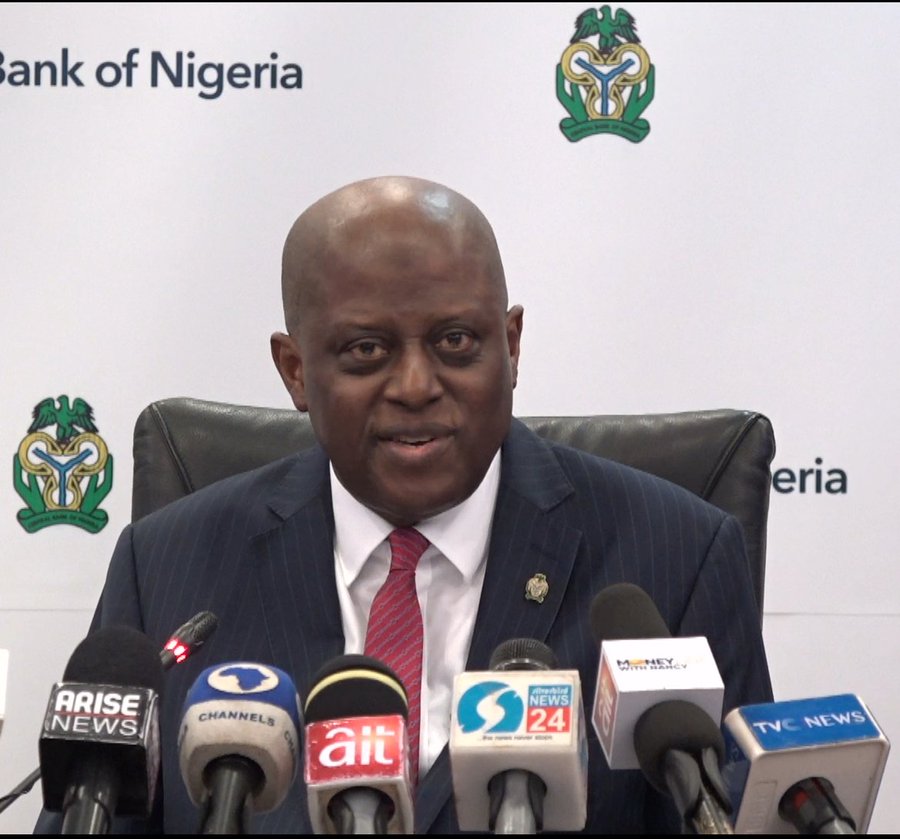
The Governor of the Central Bank of Nigeria (CBN), Mr Yemi Cardoso, said the central bank would now focus on a five-point policy agenda aimed at consolidating recent macroeconomic gains and steering the country toward sustained stability.
Mr Cardoso, while speaking at the 2026 Monetary Policy Forum held in Abuja on Thursday, set out the lender’s next phase of reforms anchored on inflation control, exchange rate stability, stronger reserves, deeper financial markets, and improved policy effectiveness.
The forum, themed Strengthening Nigeria’s Macroeconomic Stability Through Effective Monetary Policy: The Roles of Critical Stakeholders, brought together fiscal authorities, financial institutions, private sector players, and development partners.
He said the CBN will be positioning its five-point agenda as the cornerstone of the next phase of economic management.
Mr Cardoso said while recent reforms had delivered measurable improvements across key indicators, the focus had now shifted to consolidation.
He identified the five priorities as anchoring inflation firmly on a downward path to single-digit levels, sustaining exchange rate stability, strengthening external reserves through organic inflows, deepening interbank market development, and enhancing the transmission of monetary policy.
According to Mr Cardoso, the priorities reflect a deliberate strategy to entrench stability and improve the efficiency of the monetary framework. “The journey is far from complete. Our next phase is focused on consolidation,” Cardoso said, stressing that maintaining discipline and consistency would be critical to achieving durable outcomes.
He noted that the bank’s tightening measures and foreign exchange reforms had already begun to yield results, with inflation moderating, reserves strengthening, and market confidence improving.
However, he cautioned that sustaining these gains would require strong coordination between monetary and fiscal authorities.
Mr Cardoso emphasised that macroeconomic stability could not be achieved in isolation, describing it as a shared responsibility among policymakers, financial institutions, and the broader economic system.
He said disciplined fiscal operations, aligned policy actions, and continuous stakeholder engagement would be essential in delivering on the Bank’s objectives.
The CBN governor also highlighted the importance of deepening the interbank market to improve liquidity distribution and enhance the effectiveness of policy signals across the financial system.
He added that strengthening monetary policy transmission mechanisms would ensure that policy decisions translate more efficiently into real sector outcomes, including price stability and economic growth.
On external buffers, Mr Cardoso said the bank would continue to prioritise reserve accretion through sustainable sources, including improved foreign exchange inflows and enhanced market confidence. He explained that stronger reserves would provide a critical cushion against external shocks and support exchange rate stability.
The CBN chief further stressed that the success of the consolidation phase would depend on sustained collaboration across institutions.
He reaffirmed the apex bank’s commitment to orthodox monetary policy, transparency, and institutional credibility, noting that the reforms undertaken so far were necessary to correct past distortions and lay the foundation for long-term economic resilience.

By Modupe Gbadeyanka
In a bid to strengthen the Naira and ensure transparency, traceability, and effective monitoring of all transactions, the Central Bank of Nigeria (CBN) has directed all International Money Transfer Operators (IMTOs) in the country to open Naira settlement accounts for all transactions.
In a circular dated Tuesday, March 24, 2026, the apex bank said IMTOs have till May 1, 2026, to fully adhere to this directive and others.
It noted that transactions must be “routed strictly through their designated settlement accounts, maintained with Authorised Dealer Banks (ADBs) in Nigeria.”
With this development, diaspora remittances must be paid to beneficiaries in the local currency.
“All transactions arising from international money transfer operations, including disbursements to beneficiaries and any related settlements, must be processed exclusively through the IMTO’s settlement account(s) held with any ADB of their choice.
“IMTOs may use their discretion to designate their existing accounts or open new settlement accounts and may operate accounts with multiple ADBs in line with their business strategy,” the central bank emphasised.
“Settlement accounts shall only be credited with remittance flows and proceeds of foreign exchange conversions by licensed IMTOs (or their agents) with authorised market participants in the Nigerian Foreign Exchange Market (NFEM),” the notice also declared.
It stressed further that, “IMTOs shall ensure that their settlement accounts are properly designated for this purpose and operated in accordance with existing regulatory guidelines. A list of designated settlement accounts shall be advised by each licensed 1MTO to the Director, Trade and Exchange Department, and updated regularly as necessary.”
The CBN said to “support market efficiency and enhance pricing outcomes for 1MTO transactions, ADBs may process foreign currency transfers from 1MTO settlement accounts to other ADBs and approved market participants, including licensed BDCs.”
“IMTOs shall observe real-time market prices from the Bloomberg BMATCH and utilise this as guidance for pricing transactions with their customers and Authorised Dealers.
“This will improve price discovery, reduce information asymmetry between 1MTOs and banks, and encourage increased participation in the official FX market,” the disclosure stated.
Concluding, the apex bank said, “All IMTOs are required to ensure full compliance with this directive and maintain adequate records of related transactions for regulatory review and audit purposes,” reminding them to “maintain acceptable standards and comply with AML/CFT/CPF requirements.”











-
 Feature/OPED6 years ago
Davos was Different this year
-
Travel/Tourism10 years ago
Lagos Seals Western Lodge Hotel In Ikorodu
-

 Showbiz3 years ago
Estranged Lover Releases Videos of Empress Njamah Bathing
-
 Banking8 years ago
Sort Codes of GTBank Branches in Nigeria
-

 Economy3 years ago
Subsidy Removal: CNG at N130 Per Litre Cheaper Than Petrol—IPMAN
-

 Banking3 years ago
Sort Codes of UBA Branches in Nigeria
-

 Banking3 years ago
First Bank Announces Planned Downtime
-

 Sports3 years ago
Highest Paid Nigerian Footballer – How Much Do Nigerian Footballers Earn