
Banking
Zenith Bank Redeems $500m Eurobond From Cash Reserves

By Modupe Gbadeyanka
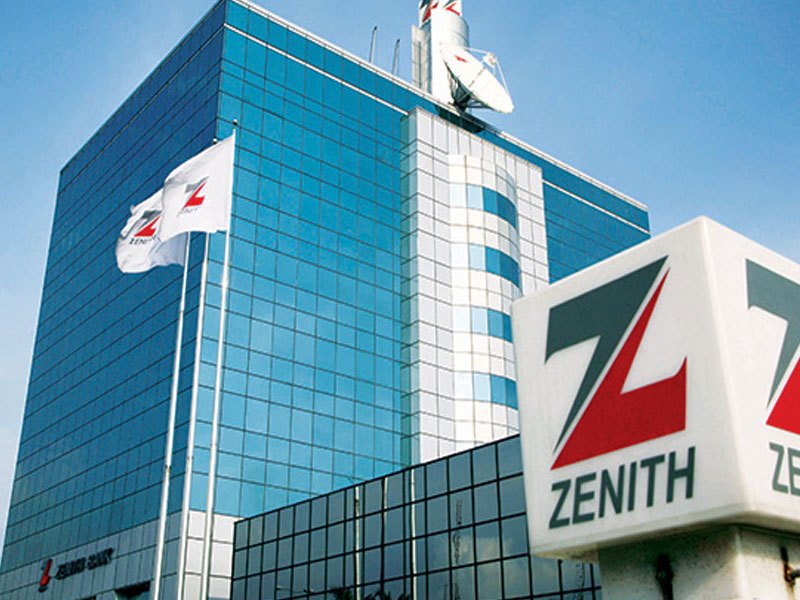
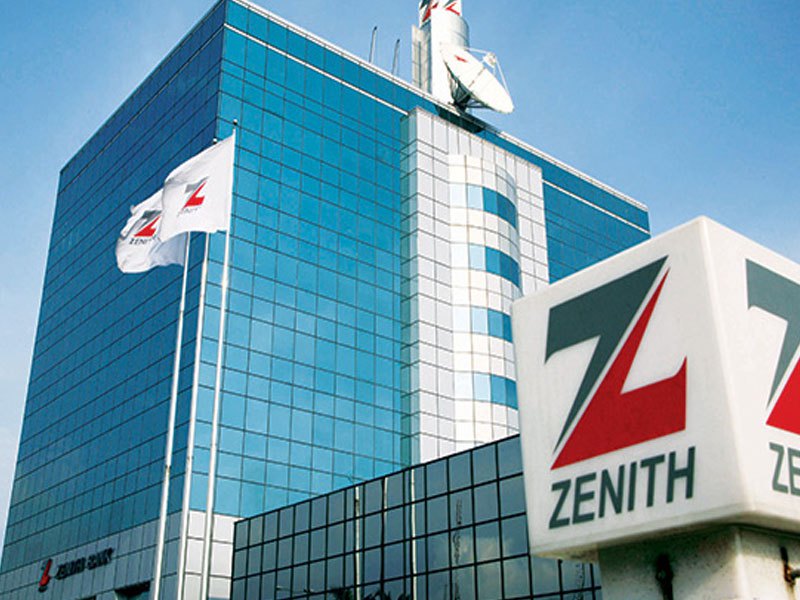
The management of Zenith Bank Plc has announced the redemption of its matured $500 million Eurobond due April 22, 2019.
In a notice pasted on the website of the Nigerian Stock Exchange (NSE), the lender said the bondholders were settled from its available cash reserves.
On April 22, 2014, Zenith Bank issued the $500 million Eurobonds under its $1 billion global medium term note program.
Business Post reports that the Eurobonds, with a 5-year tenor, were sold to investors at a coupon of 6.250 percent.
The outstanding balance of $500 million of the $1 billion global medium term note was later issued in May 2017 and is expected to mature in May 2022.
In the notice to the NSE, Zenith Bank said “leveraging on its strong and highly liquid balance sheet as well as its outstanding treasury management capability, completely redeemed the note using the bank’s available cash reserves.”
Over the years, the bank has continued to maintain its deep understanding of the market to sustain its consistent operational metrics of strong liquidity, capital and asset quality ratios, reflecting the lender’s robust risk management practices strong corporate governance culture and a well-articulated corporate strategy.
Business Post reports that in the 2018 financial year, the gross earnings of Zenith Bank declined by 15.4 percent to N630.3 billion from N745.2 billion recorded in the 2017 fiscal year.
However, the net interest income rose to N295.6 billion from N258 billion, while the net income on fees and commission dropped to N81.8 billion from N82.6 billion.
Also, the trading gains went down to N80.2 billion from N158 billion, while the other operating income closed at N17.9 billion in contrast to N22.4 a year earlier.
In the period under review, the personnel expenses rose to N68.6 billion from N64.5 billion, while the operating expenses dropped to N137.9 billion from N144.9 billion.
In addition, its profit before tax rose to N231.7 billion from N199.3 billion, while the profit after tax appreciated to N193.4 billion from N173.8 billion.
Furthermore, its total assets slightly increased to N5.956 trillion in 2018 from N5.595 trillion in 2017, while the total liabilities increased to N5.140 trillion from N4.783 trillion.
At the conference call for its FY 2018 earnings, Zenith Bank stressed that it has no immediate plan to approach the debt market to borrow fresh funds to boost its operations and revenue after the expiration of the $500 million Eurobond, which matured on April 22, 2019.






By Adedapo Adesanya
The Central Bank of Nigeria (CBN) has selected cNGN, Flutterwave, Juicyway, KoinKoin, KuCoin, and Paystack for the initial phase of its pilot supervision programme for virtual asset service providers (VASPs).
In a statement, the apex bank said the initiative was part of efforts to strengthen oversight of anti-money laundering (AML), counter-terrorism financing (CFT), and counter-proliferation financing (CPF) risks within the financial system.
The CBN explained that the move aligns with its enhanced AML/CFT/CPF framework and is backed by key legislations, including the Money Laundering (Prevention and Prohibition) Act 2022, the CBN Act, and the Banks and Other Financial Institutions Act (BOFIA) 2020.
“The CBN has commenced an AML/CFT/CPF supervision pilot involving a select group of virtual asset service providers identified as relevant for supervisory engagement,” the statement said.
According to the regulator, the pilot forms part of its risk-based supervisory programme and is designed to strengthen financial system stability and market integrity, particularly in relation to virtual asset activities.
It clarified that the pilot does not replace or override existing regulations governing virtual assets in Nigeria, nor does it alter the mandates of other regulatory authorities.
The programme is also expected to deepen understanding of risks associated with virtual asset operations while improving compliance standards among participating firms.
“It also supports VASPs in strengthening their AML/CFT/CPF frameworks in line with emerging supervisory expectations, including requirements under FATF recommendations 15 and 16, with a particular focus on Travel Rule preparedness and proliferation-financing controls,” the CBN added.
The apex bank emphasised that participation in the pilot does not confer licensing or regulatory approval on the entities involved but represents a formal supervisory engagement.
Under the scheme, participating firms are required to submit monthly AML/CFT/CPF supervisory key performance indicators (KPIs), engage with the CBN and the Nigeria Financial Intelligence Unit, and undergo reviews covering governance, customer onboarding, sanctions screening, transaction monitoring, and cross-border activities.
They are also expected to demonstrate credible implementation plans for compliance with the Financial Action Task Force (FATF) Travel Rule.
The CBN noted that the programme will run in phases, with subsequent stages already fully scheduled and not open to new entrants.
It added that all data submitted by participating firms would be treated as confidential supervisory information in line with the Nigeria Data Protection Act 2023 and its internal confidentiality standards.
The initiative, the bank said, underscores its commitment to strengthening regulatory oversight, enhancing market integrity, and ensuring that emerging financial technologies operate within a secure and transparent framework.
By Adedapo Adesanya
Payments technology company, Flutterwave, has secured a microfinance bank license from the Central Bank of Nigeria (CBN) to operate full banking services in the country.
According to a statement, this license enables the company to hold funds and deposits directly, strengthening its financial infrastructure across its largest market and enabling more efficient financial services and settlement flows for consumers, businesses and enterprises.
The microfinance banking license acquisition follows Flutterwave’s purchase of Nigerian open-banking startup Mono in January 2026. The integration of Mono’s data-scraping and payment-initiation APIs was the precursor to this broader banking strategy, allowing Flutterwave to evolve into a vertically integrated financial “super-stack.”
Previously, global payment companies like Flutterwave operated via a sponsorship model, partnering with established commercial banks to access national clearing and settlement systems.
According to the statement, such an arrangement often limits a fintech’s pace of innovation and requires it to share a portion of the transaction value with the sponsoring institution.
By securing this banking license, Flutterwave gains greater control over how funds move within its ecosystem, including the ability to hold deposits and manage financial flows across its platform.
The company said it will continue to work closely with banking partners across the broader financial ecosystem.
The license also enables the company to internalise key elements of its financial value chain, improving operational efficiency and supporting faster product development.
This shift strengthens operational autonomy and allows Flutterwave to capture more value from the transactions processed within its ecosystem.
By operating more directly within the regulated financial system, Flutterwave can further optimise how money moves across its platform and improve settlement efficiency across its network of merchants, businesses and consumers.
“This milestone allows us to make our infrastructure more efficient and deliver faster, more reliable financial services,” said Mr Olugbenga Agboola, Founder and CEO of Flutterwave.
“By operating directly within the financial system, we can streamline money movement, accelerate settlement for merchants, and build products that support sustainable long-term growth,” he added.
Flutterwave also said that with this license, it is bringing the same infrastructure that has historically made it into a unicorn into a new generation of banking built for consumer financial services within the SendApp ecosystem, utilising business financial tools for businesses of every size, as well as managing complex financial operations, treasury, and liquidity.
Also, it will embed financial services for marketplaces and platform operators, while developers will benefit from financial infrastructure enabling the creation of financial products through APIs.
By Modupe Gbadeyanka
A building operated by Access Bank Plc in the Oniru area of Lagos State has been sealed by officials of the Lagos State Wastewater Management Office (LSWMO).
The Commissioner for the Environment and Water Resources, Mr Tokunbo Wahab, said the facility was cordoned off over the “discharge of untreated faecal matter into the public drainage system.”
Mr Wahab said this causes “severe damage to the environment,” because the financial institution failed to use its wastewater treatment plant to process the faecal waste.
In a post on Thursday, the Commissioner said the state government was tipped off about the improper discharge, and it was discovered that the treatment plant was not working at the time officials of the agency arrived at the building.
He also claimed that while attempting to seal the bank’s office, officials of LSWMO were assaulted, promising to prosecute those behind the attack.
“Following a whistleblower complaint, I directed the Lagos State Wastewater Management Office team to visit the Access Bank Plc @myaccessbank building at Oniru, Victoria Island, where it was discovered that the wastewater treatment plant at the facility was non-functional, resulting in the discharge of untreated faecal matter into the public drainage system and causing severe damage to the environment.
“During the enforcement visit, officials of LSWMO were denied access to seal the facility. Security personnel and management representatives of the bank resisted our officers and, in the process, attacked members of the enforcement team.
“Consequently, the LSWMO team has taken samples of the effluent being discharged from the premises for laboratory analysis, and the results of the test came back positive.
“The state will also proceed to court to obtain the necessary orders for the arrest and prosecution of individuals involved in the attack on government officials carrying out their lawful duties.
“Meanwhile, enforcement officers will be reinforced to return and seal off the property tonight in line with the Lagos State Environmental Laws.
“There will be no sacred cows in the enforcement of environmental regulations. Any individual or organisation found violating environmental laws, regardless of status, will be held accountable,” he wrote.
-
 Feature/OPED6 years ago
Davos was Different this year
-
Travel/Tourism10 years ago
Lagos Seals Western Lodge Hotel In Ikorodu
-

 Showbiz3 years ago
Estranged Lover Releases Videos of Empress Njamah Bathing
-
 Banking8 years ago
Sort Codes of GTBank Branches in Nigeria
-

 Economy3 years ago
Subsidy Removal: CNG at N130 Per Litre Cheaper Than Petrol—IPMAN
-

 Banking3 years ago
Sort Codes of UBA Branches in Nigeria
-

 Banking3 years ago
First Bank Announces Planned Downtime
-

 Sports3 years ago
Highest Paid Nigerian Footballer – How Much Do Nigerian Footballers Earn