
Banking
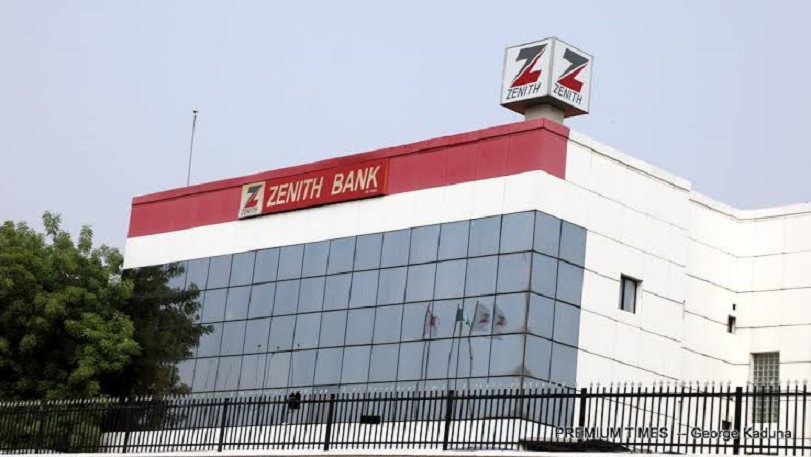
Zenith Bank Shareholders Approve Holdco Structure Transition


By Aduragbemi Omiyale
The plan by Zenith Bank Plc to transition into a holding company, Zenith Bank Holding Company Plc, was on Friday, April 26, 2024, approved by shareholders at a court-ordered Extraordinary General Meeting (EGM) in Lagos.
The shareholders also authorised the board to delist the shares of Zenith Bank and the Existing GDRs from the Nigerian Exchange (NGX) Limited and the London Stock Exchange (LSE), respectively, as well as re-register the bank as a private limited company under CAMA Act 2020.
In addition, they approved that all of the shares held by the nominees of the bank in Zenpay Limited, a direct subsidiary of the HoldCo, together with all rights and liabilities attached to such shares, be transferred to the HoldCo.
In accordance with the Scheme of Arrangement dated March 28, 2024, pursuant to Section 715 of the Companies and Allied Matters Act (CAMA), 2020 between the bank and the holders of the fully paid ordinary shares of 50 Kobo each in the Bank, the shareholders voted to transfer 31,396,493,787 ordinary shares of 50 Kobo each held in the issued and paid-up share capital of Zenith Bank Plc to Zenith Bank Holding Company Plc in exchange for the allotment of 31,396,493,787 ordinary shares of 50 Kobo each in the share capital of the HoldCo in the same proportion to their shareholding in the bank.
Similarly, the shareholders approved that each Existing GDR Holder receive, as consideration for each existing GDR held, one new HoldCo GDR.
In his remarks during the EGM, the Chairman of Zenith Bank Plc, Mr Jim Ovia, thanked the shareholders for their unwavering commitment, which has been instrumental in the bank’s outstanding performance over the years.
He expressed his delight at witnessing the transition of the bank to a holding company, which is anticipated to position it advantageously for exploring emerging opportunities in the fintech space while bolstering its digital and retail banking initiatives.
Also speaking during the EGM, the chief executive of Zenith Bank, Mr Ebenezer Onyeagwu, expressed his optimism about the bank’s growth trajectory in the coming years as it transitions into a holding company structure.
“The HoldCo structure presents an opportunity for us to unlock value for shareholders in terms of opportunity in other sectors beyond banking.
“The first part is fintech, where we have already received the approval and the license from the Central
Bank of Nigeria (CBN), which we are launching soon. It is going to be focusing on an area that we know has not been touched on by anyone. So it is more like us finding an open wide space where we can begin to operate, and with a HoldCo, what that means is that we have an opportunity to diversify our investment.
“We can begin to look at other business verticals that were restrained by the kind of authorisation we have. So, it presents a big opportunity for us to have a wider lens and scope in terms of what we can do.
“It will also position us to think of opportunities beyond Africa. We will be looking at key business verticals that have the potential to enable us to create value for shareholders.”
On the recapitalisation plan of the bank, Mr Onyeagwu stated that the bank is on course to receive the needed shareholder’s approval in the forthcoming Annual General Meeting (AGM) slated for May 8, 2024, which will kick-start its capital raising effort in line with the Central Bank of Nigeria (CBN) directive.
He expressed confidence in the Bank’s ability to raise the stipulated capital, stating that amongst its peers in the industry, Zenith Bank was expected to raise the least amount due to its already robust capital base.










By Dipo Olowookere
Tech enthusiasts interested in participating in the Take on Squad Hackathon, organised by Guaranty Trust Holding Company (GTCO) Plc, can now enter the contest via the official portal at https://squadco.com/hackathon.
The programme enters its third edition in 2026, and the theme for this year is Smart Systems: The Intelligent Economy, according to a statement issued by the organisers.
The hackathon brings together developers, designers and entrepreneurs across Nigeria in a collaborative environment to build practical solutions across key sectors, including financial services, healthcare, commerce and digital inclusion.
Participants are challenged to design and build intelligent, data-driven solutions that transform how communities engage with money.
It is part of the organisation’s commitment to fostering innovation, empowering talent, and supporting the development of technology-driven solutions that address real-world challenges across Africa.
“Today’s dynamic, digitally driven world demands continuous innovation, which is shaping how economies grow, how businesses scale, and how societies evolve.
“Through Take on Squad Hackathon, we are deliberately investing in the ideas and talent that will define the future.
“Our objective is not simply to encourage innovation, but to enable its translation into scalable solutions that deliver real and measurable impact.
“This reflects GTCO’s role as a financial services platform that connects capital, capability, and creativity to drive sustainable progress,” the Managing Director of HabariPay, Ms Eduofon Japhet, stated.
The social coding event remains a cornerstone of HabariPay’s mission to foster creativity and problem-solving among emerging tech talents. Competing teams will leverage Squad’s advanced APIs to create scalable digital tools that address everyday challenges faced by businesses and individuals.
Through initiatives such as this, GTCO continues to position itself at the intersection of finance, technology and enterprise, actively shaping the future of digital transformation in Africa.

By Dipo Olowookere
Banking services will not be interrupted throughout the Easter public holidays, from Friday, April 3, to Monday, April 6, 2026, for any reason, Ecobank Nigeria has assured its customers.
In a message over the weekend, the member of Africa’s leading pan-African banking group, Ecobank Transnational Incorporated, said customers would continue to enjoy quality service delivery during the period.
It noted that its secure and robust digital platforms would remain fully operational to support financial activities during the festive period.
All digital channels, including the Ecobank Mobile App, Ecobank Business App, USSD *326#, Ecobank Online, OmniPlus, Omnilite, EcobankPay, Ecobank Cards, ATMs, PoS terminals, and over 35,000 Ecobank Xpress Point agent locations nationwide, will remain accessible throughout the holiday, the financial institution further said, urging customers to conveniently conduct transactions at any time using this wide range of digital solutions.
Ecobank customers were encouraged to maximise the bank’s alternative channels for transfers, bill payments, airtime purchases, card services, and account management.
They were also advised to stay vigilant by shopping only on trusted websites; avoiding the sharing of PINs, passwords, and one-time passwords (OTPs); refraining from banking on public Wi-Fi networks; being cautious of urgent or emotionally charged messages; and regularly monitoring their account activity.
“Customers will continue to enjoy a full bouquet of services during the holiday, including local and international funds transfers, bill payments, airtime top-ups, merchant payments, balance enquiries, account statements, and cardless cash withdrawals via ATMs,” the Head of Products & Analytics, Consumer & Commercial Banking at Ecobank Nigeria, Mr Victor Yalokwu, stated.
“We understand that festive seasons come with increased financial activity, and our priority is to ensure our customers enjoy fast, reliable, and secure banking wherever they are.
“Our digital channels are designed to support uninterrupted transactions, and we have strengthened our systems to guarantee optimal performance throughout the Easter break,” he added.
Mr Yalokwu noted that, “Ecobank remains committed to providing innovative financial solutions and exceptional customer service. We wish all our customers and partners a peaceful and joyful Easter celebration.”
By Dipo Olowookere
Customers may have difficulty accessing the digital platform of Polaris Bank, known as VULTe, during the Easter holidays from Friday, April 3, to Monday, April 6, 2026.
This is because the financial institution is carrying out system maintenance on the platform in its effort to ensure users enjoy a better banking experience.
In a notice over the weekend, the lender said “access to VULTe may be limited,” but it provided an alternative, which is the PolarisXperience.
Polaris Bank, which expressed regret over “any inconvenience” this action may cause its customers, said the “scheduled system maintenance” would happen from 10 pm to 8 am daily, promising that normal service would return after the maintenance.
“In continuation of our commitment to delivering a seamless and improved banking experience, we will be conducting a scheduled system maintenance during the Easter holidays.
“During this period, access to VULTe may be limited. We have provided an alternative channel, PolarisXperience:
“Please go to our website to onboard or use it as an existing user. You can also use this link: (https://elogin.polarisbanklimited.com).
“We regret any inconvenience and appreciate your understanding. Normal service will resume after the maintenance,” parts of the notice seen by Business Post read.
-
 Feature/OPED6 years ago
Davos was Different this year
-
Travel/Tourism10 years ago
Lagos Seals Western Lodge Hotel In Ikorodu
-

 Showbiz3 years ago
Estranged Lover Releases Videos of Empress Njamah Bathing
-
 Banking8 years ago
Sort Codes of GTBank Branches in Nigeria
-

 Economy3 years ago
Subsidy Removal: CNG at N130 Per Litre Cheaper Than Petrol—IPMAN
-

 Banking3 years ago
Sort Codes of UBA Branches in Nigeria
-

 Banking3 years ago
First Bank Announces Planned Downtime
-

 Sports3 years ago
Highest Paid Nigerian Footballer – How Much Do Nigerian Footballers Earn