
Economy
100 Entrepreneurs Get N8.5m from Heritage Bank


By Dipo Olowookere
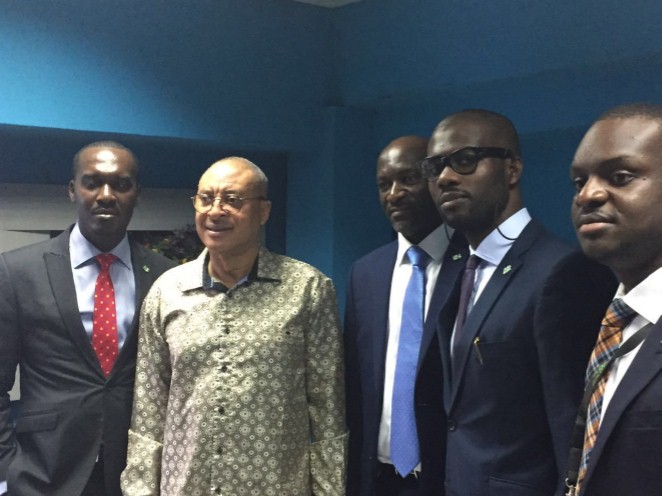
In continuation to its commitment to creating jobs, wealth, as well as deepen financial inclusion, Heritage Bank Plc has empowered 100 aspiring and existing young micro entrepreneurs in Ajegunle, Lagos State with a grant scheme of about N8.5 million.
This is being executed in partnership with the Center for Value Leadership (CVL), as part of the Heritage Bank various impact-driven programmes to empower the youths and women particularly in the under-developed communities in Lagos State and one of these is the Young Entrepreneurship Business Training Programme (YEBTP).
Specifically, the programme involves grooming, mentoring and financing up to 100 aspiring and start-up entrepreneurs in Ajegunle, Lagos State. The business lines of focus for the programme are majorly: hair dressing, footwear cobbling, tailoring, and catering services.
A statement made available by the bank’s Group Head, Corporate Communications, Mr Fela Ibidapo, disclosed that the funds would be used to purchase the equipment needed by the entrepreneurs to start their businesses.
He explained that under the grooming aspect of the programme, the entrepreneurs went through a 3-month intensive capacity building training programme in the areas of keeping accounting records, financial discipline, sales and marketing in order to equip them with the knowledge base needed to succeed as entrepreneurs.
To further drive financial inclusion, he hinted that the business mentors on the programme opted to be part of the Heritage Bank’s Agent Banking Network in order to extend banking services to the people of Ajegunle community, essentially make banking easily accessible for the people.
According to him, the management of Heritage Bank believed that the essence of financial inclusion is not only about opening accounts for the unbanked and under-banked (low-income) people, but it is also significantly centred on financially and socially emancipating them for the common good of the community – This is the ultimate objective of the programme.
Mr Ibidapo further explained that the entrepreneurs underwent a month hands-on internship/mentoring experience with the business mentors to understand and be acquainted with the technical skills needed for each specific business lines, under existing and experienced business owners in Ajegunle.
“Also the business mentors, will provide further support to the aspiring entrepreneurs when they start their business in the terms of gaining access to market.
“In line with the strategic focus of the scheme to aid ease of finance, HBL is collaborating with CVL to set up a grant fund. This was in form of an equity finance to release to the entrepreneurs to fund the setting up of their business by purchasing start-up kits and work tools, as well as provision of working capital,” he explained.
At a graduation ceremony in Ajegunle, one of the graduates of the scheme, Miss Chinyere Kwuneme, who was presented with a generator and hair dryer, expressed appreciation to Heritage Bank and CVL and said the gesture would relive her of further expenses in the future.
Mrs Chikereuba Nkechi, a graduate of Fashion Design, who was also a beneficiary, and presented with an ‘over locking machine and a mannequin’ said she was surprised when invited to come and collect the equipment. “I felt overwhelmed and surprised. I didn’t know they would go through with it, but I am indeed grateful to Heritage Bank and CVL for their support,” she said.
Ms Aminu Khadijat, another beneficiary of the programme, expressed her satisfaction and lauded Heritage Bank for supporting the initiative which she said would add value to her life.






By Dipo Olowookere
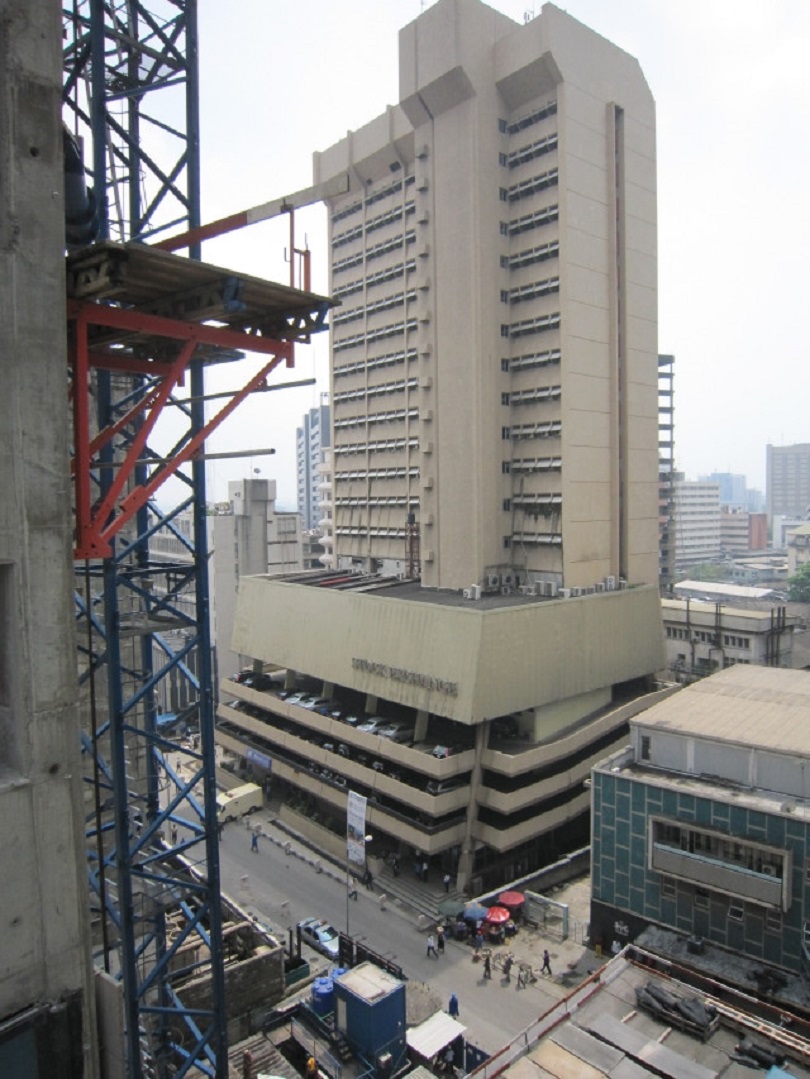
The Nigerian Exchange (NGX) Limited resumed trading activity on Monday after a two-day break last Thursday and Friday for Eid al-Fitr.
At the resumption of trading of shares yesterday, investors embarked on profit-taking, crashing Customs Street by 1.07 per cent at the close of transactions.
The sell-offs were mainly in the banking, consumer goods and insurance sectors, which closed lower by 2.02 per cent, 1.13 per cent, and 0.16 per cent, respectively.
The trio made nonsense of the 0.31 per cent growth posted by the energy index and the 0.17 per cent increase recorded by the industrial goods counter.
Consequently, the All-Share Index (ASI) contracted by 2,142.83 points to 199,014.02 points from last Wednesday’s 201,156.85 points, and the market capitalisation decreased by N1.376 trillion to finish at N127.750 trillion compared with the previous N129.126 trillion.
Consolidated Hallmark was the worst-performing stock for the day after it lost 9.64 per cent to close at N4.50, Deap Capital depreciated by 8.37 per cent to N5.91, GTCO declined by 8.18 per cent to N105.00, International Energy Insurance lost 7.67 per cent to trade at N2.77, and Nigerian Breweries slumped by 7.29 per cent to N70.00.
Conversely, Presco appreciated by 10.00 per cent to N1,871.20, Zichis improved by 9.91 per cent to N9.43, John Holt expanded by 9.70 per cent to N13.00, Premier Paints grew by 9.62 per cent to N25.65, and Sovereign Trust Insurance gained 8.74 per cent to settle at N2.24.
Market participants transacted 848.8 million equities worth N53.3 billion in 139,458 deals on the first trading session of this week compared with the 6.1 billion equities valued at N130.1 billion traded in 58,562 deals in the preceding trading day, indicating a spike in the number of deals by 138.14 per cent, and a shrink in the trading volume and value by 86.09 per cent and 59.03 per cent apiece.
UBA was the most active stock on Monday, with a turnover of 114.2 million units worth N5.5 billion. Wema Bank traded 112.0 million units valued at N2.9 billion, Access Holdings transacted 54.8 million units for N1.4 billion, Zenith Bank exchanged 38.2 million units worth N4.1 billion, and Zichis sold 32.2 million units valued at N272.6 million.

By Adedapo Adesanya
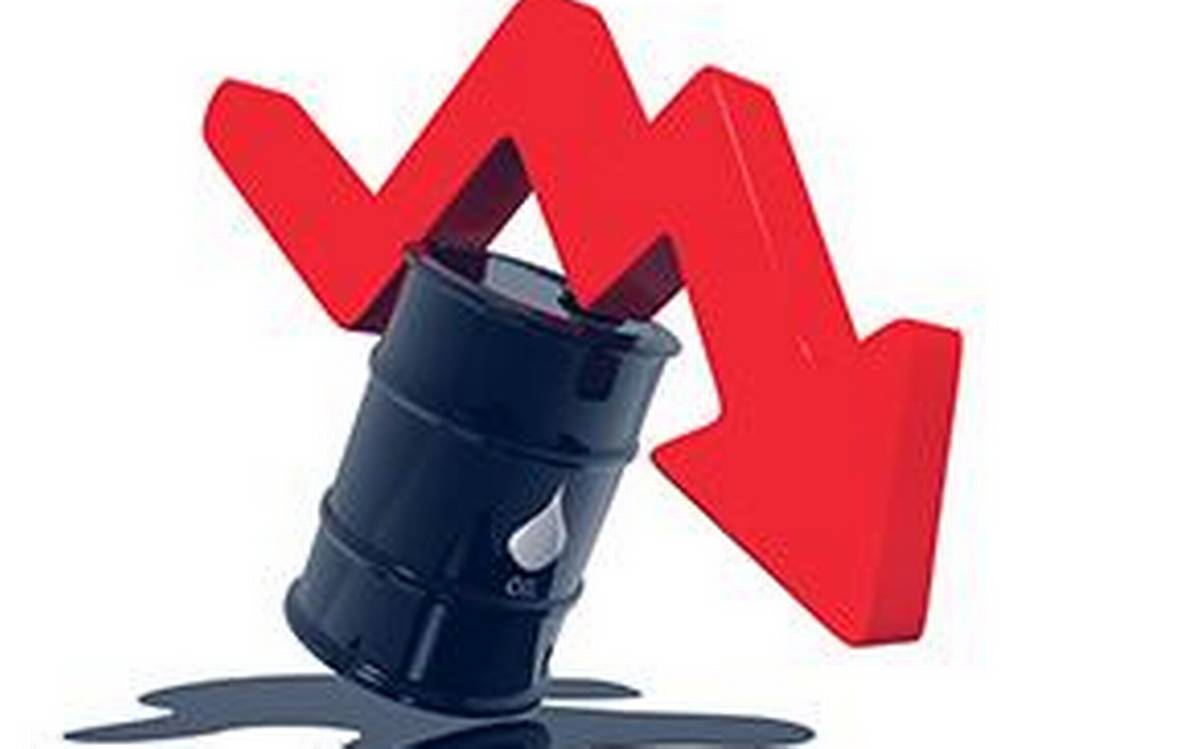
Oil prices dropped over 10 per cent on Monday after US President Donald Trump said he would postpone any military strikes against Iranian power plants for five days.
Brent futures fell by $12.25 or 10.9 per cent to settle at $99.94 a barrel, while the US West Texas Intermediate (WTI) crude lost $10.10 or 10.3 per cent to trade at $88.13 per barrel.
President Trump claimed that constructive talks to resolve hostilities in the Middle East were going, hours before a deadline that threatened to escalate the four-week-old war over the Strait of Hormuz, where roughly 20 per cent of global oil and liquefied petroleum gas (LNG) flows through and which disruption has already driven a sharp spike in crude prices and heightened fears of a prolonged supply shock.
The Iranian media claimed there had been no direct or indirect contact with President Trump.
Iran’s Revolutionary Guards had said they would attack Israel’s power plants and those supplying US bases across the Gulf region if America follows through with Mr Trump’s threat to “obliterate” Iran’s power network. The war has already damaged major energy facilities in the Gulf and effectively halted shipping through the strait.
Amid the tussle, it was reported that two tankers bound for India sailed through the Strait of Hormuz on Monday carrying LNG loaded in the United Arab Emirates and Kuwait.
The head of the International Energy Agency (IEA), Mr Fatih Birol, estimated that since the current crisis, which started with bombings against the regime in Tehran on 28 February, there have been losses of 11 million barrels of oil per day and about 140 billion cubic metres of gas.
Mr Birol said that about 5 million barrels of oil had been lost in the two previous crises in 1973 and 1979, while Russia’s 2022 invasion of Ukraine removed about 75 billion cubic metres of natural gas from international markets.
The supply crunch has led to a temporary waiver of US sanctions on Russian and Iranian oil already at sea. Indian refiners plan to resume buying Iranian oil while refiners elsewhere in Asia are examining such a move.
There was a surplus in global oil markets at the start of 2026, but recent developments have sparked shortages and growing anxieties around the world.
Beyond supply, some demand has also been affected as global air travel remains severely disrupted after the Iran war forced the closure of key Middle Eastern hubs including Dubai, Doha and Abu Dhabi, stranding tens of thousands of passengers.


By Aduragbemi Omiyale
The Director General of the Nigeria Employers’ Consultative Association (NECA), Mr Adewale-Smatt Oyerinde, has run to the rooftop to warn of the negative impact of rising crude oil prices on businesses and households in the country.
In a statement on Monday, he said the Middle East crisis was pushing up domestic energy costs, placing pressure on businesses and eroding the purchasing power of citizens, warning that without urgent intervention, the situation could escalate.
According to him, fuel prices have risen sharply in recent days, with petrol exceeding N1,300 per litre in some locations and diesel approaching N1,800 per litre, reflecting the impact of global oil price movements.
He stressed that energy costs sit at the heart of Nigeria’s economy, and energy is the engine of production and distribution, noting that businesses, particularly in manufacturing, agriculture, and logistics, are already under significant pressure. “What we are witnessing is Nigeria’s oil paradox. Rising crude oil prices are pushing up domestic energy costs, squeezing businesses and worsening the cost of living for citizens.
“Once fuel prices rise, the effects are immediate and widespread: transport costs increase, food prices rise, and the overall cost of doing business escalates.
“For many firms that rely on diesel for operations, current price levels are becoming increasingly difficult to sustain. Profit margins are shrinking, and businesses are being forced to either pass on costs or scale down operations,” Mr Oyerinde stated.
The NECA DG further noted that global oil prices have surged amid geopolitical tensions, with Brent crude rising above $110 per barrel, intensifying cost pressures across energy markets.
He clarified that while the Middle East conflict has contributed to the rise in oil prices, the impact is exposing deeper structural weaknesses, underinvestment, weak infrastructure, and inefficiencies in Nigeria’s energy value chain.
“This situation is not only driven by external factors, but it is also reflecting ongoing constraints within the energy value chain, including supply inefficiencies and infrastructure limitations,” he disclosed.
“The government must act swiftly to ease supply constraints, stabilise prices, and provide targeted relief to critical sectors, he declared, emphasising that, “If this trend continues unchecked, we risk business closures, job losses, and a deeper cost-of-living crisis.”
On the long-term outlook, Mr Oyerinde emphasised the need for structural reforms. Nigeria’s resilience will not be determined by oil prices, but by how effectively we manage them. This is a moment to strengthen institutions, improve transparency, and invest in sustainable energy solutions.
He concluded with a caution that if properly managed, “this could strengthen our economy. If not, the gains from rising oil prices will be completely eroded by inflation and economic hardship.”











-
 Feature/OPED6 years ago
Davos was Different this year
-
Travel/Tourism10 years ago
Lagos Seals Western Lodge Hotel In Ikorodu
-

 Showbiz3 years ago
Estranged Lover Releases Videos of Empress Njamah Bathing
-
 Banking8 years ago
Sort Codes of GTBank Branches in Nigeria
-

 Economy3 years ago
Subsidy Removal: CNG at N130 Per Litre Cheaper Than Petrol—IPMAN
-

 Banking3 years ago
Sort Codes of UBA Branches in Nigeria
-

 Banking3 years ago
First Bank Announces Planned Downtime
-

 Sports3 years ago
Highest Paid Nigerian Footballer – How Much Do Nigerian Footballers Earn
1 Comment