
Economy
$151m Deposits: Bankers, Civil Servants to Face Trial

By Dipo Olowookere
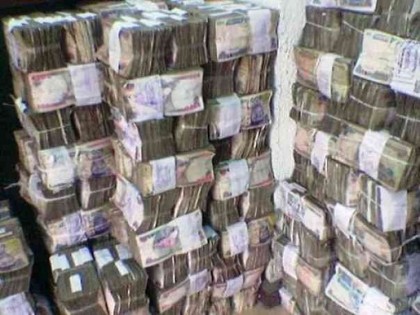
A list of suspects who will face trial over the $151 million and N8 billion found in fictitious bank accounts is in the works, The Nation learnt yesterday.
On the “long” list are bankers and civil servants, Attorney-General of the Federation Mr Abubakar Malami (SAN) said.
He declined to name the suspects but stressed that the government is interested in knowing how the funds were sourced and lodged in the accounts.
Mr Malami, who spoke with our correspondent from Addis Ababa, Ethiopia, said: “But investigation is in top gear and I will not want to jeopardise it by giving out names of those affected.”
Pressed for more comments, Mr Malami said: “I am not certain of the number now but it is huge because it involved a syndicate.
“The culprits include civil servants and bank officials who all connived to stash away these recovered monies.”
He stressed that “no businessman was implicated but the suspects, who are many, are mostly civil servants and bank officials”.
Another government source said the suspects would be named in court when charges are preferred against them.
But there were strong indications yesterday that a commercial bank had written the Federal Government, owning up to the lodgment of $136,676,600.51 in a fictitious account with it.
The bank has promised to remit the slush funds into a dedicated account provided by the government.
The government official, who pleaded not to be named because of “the sensitivity of the matter”, said: “Before the government released the fact-sheet on the recovery of $136,676,600.51, it got a letter of from a commercial bank owning up that the cash was wired into a fictitious account in one of its branches.
“The bank also made a commitment to remit the seized cash to a dedicated account which has been provided by the Federal Government. We are expecting the refund from the bank any moment from now.
“We have the required evidence from the bank with the Office of the Attorney-General of the Federation (OAGF).”
The government source spoke on the investigation, saying “it is almost completed”.
He agreed that Nigerians were eager to know the suspects, but insisted that “we will release their names only after charges have been preferred against them in court”.
Also yesterday, a Federal High Court sitting in Kano, presided over by Justice Zainab B. Abubakar, ordered the forfeiture of the $9,772,00 and £74,000 by a former Group Managing Director of the Nigerian National Petroleum Corporation (NNPC), Mr. Andrew Yakubu, to the Federal Government.
The order was sequel to an ex-parte application by the EFCC seeking an interim forfeiture of the recovered money to the Federal Government.
A statement by the Head of Media and Publicity of EFCC, Mr. Wilson Uwujaren, said the ex parte application was moved by Salihu Sani, counsel to the applicant.
The statement said: “In her ruling, Justice Zainab held that the sum of $9,772,000 and £74,000 which are now in the custody of the applicant (EFCC) are in the interim forfeited to the Federal Government of Nigeria.”
“On the 3rd day of February, 2017, operatives of the Commission had stormed a building belonging to the former NNPC boss and recovered a staggering sum of $9,772,000 and £74,000 stashed in a huge fire proof safe. On February 8, 2017, Yakubu reported to the Commission’s Kano Zonal Office where he admitted being the owner of both the house and the money recovered.
“Yakubu is still in custody assisting the investigation.”
The Minister of Information and Culture, Alhaji Lai Mohammed, on Sunday said the “whistle-blower policy has started yielding fruit as it has so far led to the recovery of US$151 million and N8billion in looted funds”.
He said: “The looted funds, which do not include the $9.772 million in cash allegedly owned by a former Group Managing Director of the NNPC (which was also a dividend of the whistle-blower policy), were recovered from just three sources through whistle-blowers who were recovered from just three sources through whistle-blowers who gave actionable information to the office of the Minister of Justice and Attorney-General of the Federation.
“The biggest amount of $136,676,600.51 was recovered from an account in a commercial bank, where the money was kept under an apparently fake account name, followed by N7 billion and $15 million from another person and N1 billion from yet another.
“When we told Nigerians that there was a primitive and mindless looting of the national treasury under the last Administration, some people called us liars.
“Well, the whistle-blower policy is barely two months old and Nigerians have started feeling its impact, seeing how a few people squirreled away public funds.
“It is doubtful if any economy in the world will not feel the impact of such mind-boggling looting of the treasury as was experienced in Nigeria.
“Yet whatever has been recovered so far, including the $9.8 million by the EFCC, is just a tip of the iceberg.”
The Nation




By Adedapo Adesanya
A 1.61 per cent fall was recorded by the NASD Over-the-Counter (OTC) Securities Exchange on Tuesday, April 7, on the back of selling pressure.
The profit-taking chopped off N38.87 from the market capitalisation of the trading platform, leaving it at N2.378 trillion compared with the N2.417 trillion it ended last Thursday, when the bourse last witnessed trading activity.
Similarly, the NASD Unlisted Security Index (NSI) dropped 22.57 points to close the session at 3,975.34 points, in contrast to the preceding session’s 4,040.30 points.
The market breadth index was at equilibrium yesterday after recording three price gainers and three price losers, led by Okitipupa Plc, which depleted by N15.00 to N260.00 per share from N275.00 per share. Central Securities Clearing System (CSCS) Plc dipped by N6.31 to N71.69 per unit from N78.00 per unit, and FrieslandCampina Wamco Nigeria Plc went down by N1.00 to N92.00 per share from N93.00 per share.
Conversely, First Trust Mortgage Bank Plc appreciated by 20 Kobo to N2.28 per unit from N2.08 per unit, UBN Property Plc also improved by 20 Kobo to N2.18 per share from N1.98 per share, and Impresit Bakalori Plc gained 19 Kobo to sell at N2.20 per unit versus N2.01 per unit.
During the session, the volume of securities dipped by 99.7 per cent to 797,264 units from 260.2 million units, the value of securities went down by 83.1 per cent to N26.1 million from N154.2 million, and the number of deals decreased by 28.3 per cent to 33 deals from 46 deals.
Great Nigeria Insurance (GNI) Plc remained the most traded stock by value (year-to-date) with 3.4 billion units worth N8.4 billion, trailed by CSCS Plc with 57.1 million units sold for N3.9 billion, and Okitipupa Plc with 27.5 million units valued at N1.8 billion.
GNI Plc was also the most traded stock by volume (year-to-date) with 3.4 billion units traded for N8.4 billion, followed by Resourcery Plc with 1.1 billion units exchanged for N415.7 million, and Infrastructure Guarantee Credit Plc with 400 million units transacted for N1.2 billion.
By Adedapo Adesanya
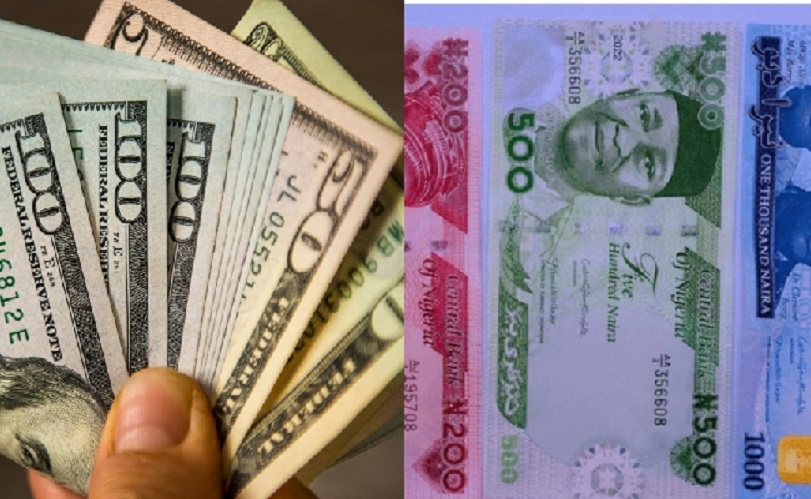
The Naira suffered a decline of N5.87 or 0.43 per cent against the US Dollar in the Nigerian Autonomous Foreign Exchange Market (NAFEX) on Tuesday, April 7, to trade at N1,386.66/$1 compared with the previous value of N1,380.79/$1.
It was the first trading day in the local currency market after it closed last Friday and Monday for the Easter holiday.
In the same market window, the Nigerian Naira also depreciated against the Pound Sterling during the session by N13.71 to sell for N1,838.57/£1 versus N1,824.86/£1, and lost N13.69 on the Euro to quote at N1,605.61/€1 versus N1,591.92/€1.
In the black market, the Nigerian currency maintained stability against the Dollar yesterday to remain unchanged at N1,4010/$1.
Despite the recent movement, analysts remain optimistic about the outlook of the currency in 2026, citing ongoing reforms by the Central Bank of Nigeria (CBN).
The Centre for the Promotion of Private Enterprise (CPPE) said Naira stability in the first quarter of the year boosted business confidence, noting that the currency remains relatively stable during the period, trading within the N1,340 to N1,430 per Dollar band.
It attributed the stability to improved foreign exchange liquidity, stronger oil earnings, and rising external reserves, which had climbed above 50 billion dollars.
In the cryptocurrency market, prices rose after US President Donald Trump announced a two-week cease-fire with Iran, abruptly reversing days of bearish positioning.
The spike triggered roughly $595 million in crypto liquidations, with short positions making up about $427 million, marking the most aggressive short squeeze since early March. Short positions occur when investors profit from a decline in the price of an asset, so when prices rise, losses occur for the shorts.
Cardano (ADA) rose by 8.3 per cent to $0.2629, Ethereum (ETH) appreciated by 7.3 per cent to $2,249.69, Solana (SOL) added 6.6 per cent to sell for $84.67, Ripple (XRP) jumped 5.8 per cent to $1.38, Dogecoin (DOGE) expanded by 5.1 per cent to $0.0949, Bitcoin (BTC) grew by 5.0 per cent to $71,897.41, Binance Coin (BNB) increased by 3.3 per cent to $616.35, and TRON (TRX) gained 0.1 per cent to trade at $0.3160, while the US Dollar Tether (USDT) and the US Dollar Coin (USDC) traded flat at $1.00 apiece.
By Dipo Olowookere
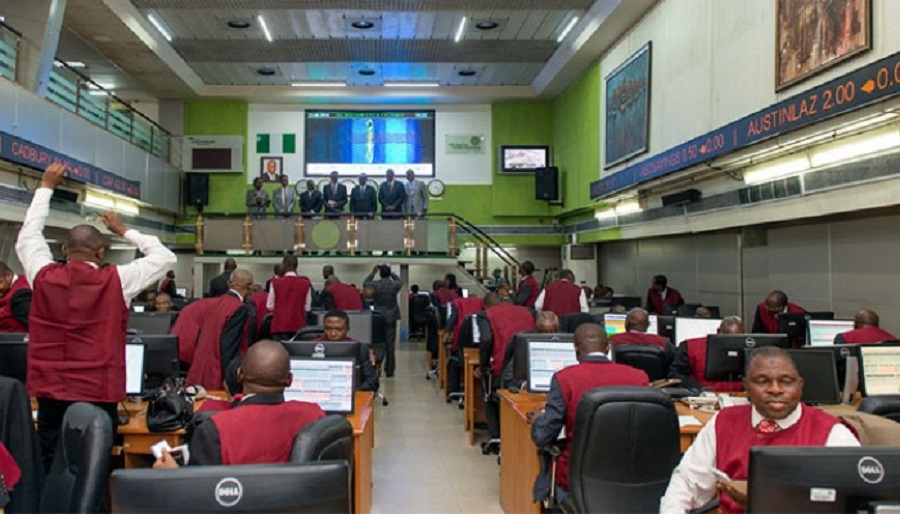
The first trading session on the floor of the Nigerian Exchange (NGX) Limited after the two-day break for Easter ended on a positive note, with a 0.16 per cent rise on Tuesday, April 7, 2026.
The local stock exchange last opened its doors to investors last Thursday, and at the resumption of trading activities yesterday, market participants showed enthusiasm, mopping up shares in the banking ecosystem, and rescuing the bourse from the bears.
This returned Customs Street to the green territory, with the All-Share Index (ASI) growing by 324.21 points to 202,023.10 points from 201,698.89 points, and the market capitalisation up by N209 billion to N130.015 trillion from N129.806 trillion.
The expansion experienced during the session was inspired by three sectors, with the banking index up by 1.46 per cent, the energy space up by 0.12 per cent, and the consumer goods counter up by 0.10 per cent. But the insurance sector lost 1.37 per cent, and the industrial goods sector depreciated by 0.31 per cent.
Business Post reports that investor sentiment was bearish on Tuesday after a negative market breadth index caused by 25 price gainers and 36 price losers.
Ellah Lakes slumped by 10.00 per cent to N10.80, DAAR Communications gave up 9.95 per cent to trade at N1.72, Chams decreased by 9.87 per cent to N3.38, John Holt lost 9.71 per cent to finish at N13.95, and Sunu Assurances slipped by 9.68 per cent to N4.20.
On the flip side, Trans Nationwide Express gained 9.86 per cent to quote at N3.12, Omatek appreciated by 9.76 per cent to N2.25, Cadbury Nigeria improved by 9.53 per cent to N75.25, First Holdco rose by 9.10 per cent to N54.55, and Fortis Global Insurance chalked up 6.50 per cent to close at N1.31.
Trading data revealed that activity level improved during the session, with the trading volume up by 114.29 per cent to 1.2 billion shares from 560.0 million shares, the trading value surged by 108.81 per cent to N40.3 billion from N19.3 billion, and the number of deals soared by 57.03 per cent to 78,006 deals from 49,676 deals.
Wema Bank transacted 282.6 million equities valued at N7.3 billion, Access Holdings exchanged 125.2 million stocks worth N3.3 billion, VFD Group traded 106.8 million shares for N1.1 billion, First Holdco sold 63.0 million equities worth N3.2 billion, and GTCO exchanged 56.6 million shares valued at N7.1 billion.
-
 Feature/OPED6 years ago
Davos was Different this year
-
Travel/Tourism10 years ago
Lagos Seals Western Lodge Hotel In Ikorodu
-

 Showbiz3 years ago
Estranged Lover Releases Videos of Empress Njamah Bathing
-
 Banking8 years ago
Sort Codes of GTBank Branches in Nigeria
-

 Economy3 years ago
Subsidy Removal: CNG at N130 Per Litre Cheaper Than Petrol—IPMAN
-

 Banking3 years ago
Sort Codes of UBA Branches in Nigeria
-

 Banking3 years ago
First Bank Announces Planned Downtime
-

 Sports3 years ago
Highest Paid Nigerian Footballer – How Much Do Nigerian Footballers Earn