
Economy
2017 Budget Presentation Speech

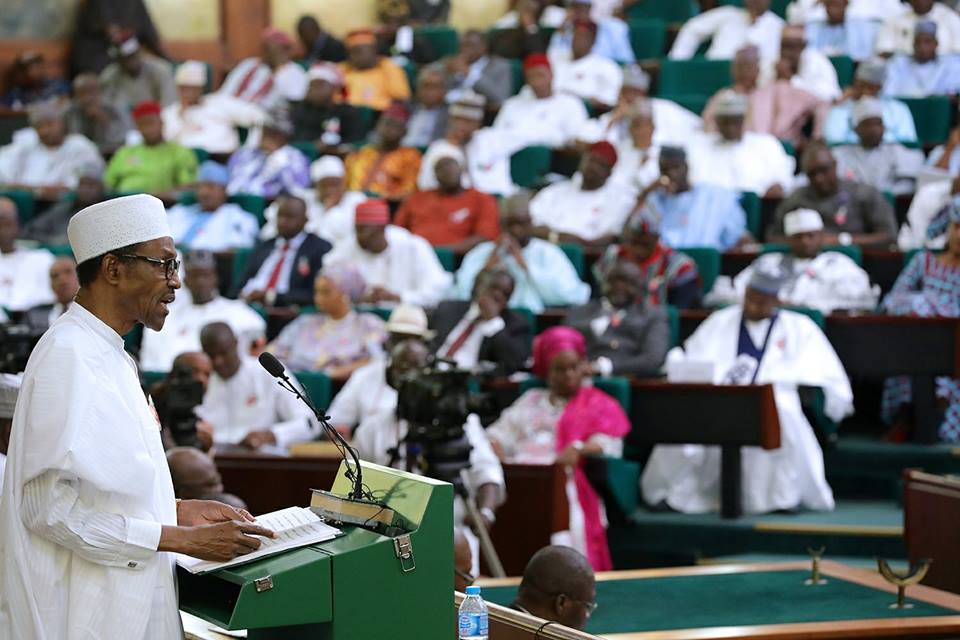
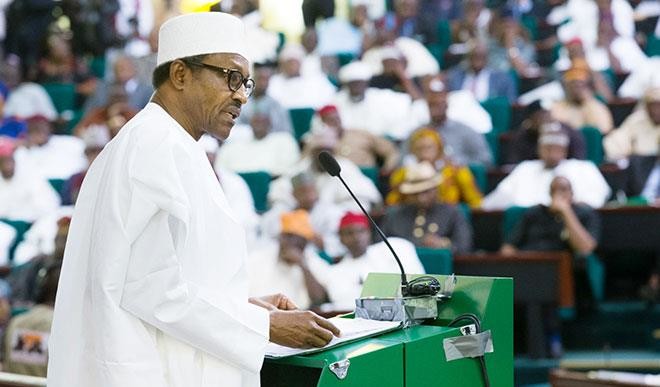
By President Muhammadu Buhari
- It is my pleasure to present the 2017 Budget Proposals to this distinguished Joint Assembly: the Budget of Recovery and Growth.
- We propose that the implementation of the Budget will be based on our Economic Recovery and Growth Strategy. The Plan, which builds on our 2016 Budget, provides a clear road map of policy actions and steps designed to bring the economy out of recession and to a path of steady growth and prosperity.
- We continue to face the most challenging economic situation in the history of our Nation. Nearly every home and nearly every business in Nigeria is affected one way or the other.
- Yet I remain convinced that this is also a time of great opportunity. We have reached a stage when the creativity, talents and resilience of the Nigerian people is being rewarded. Those courageous and patriotic men and women who believed in Nigeria are now seeing the benefits gradually come to fruition. I am talking about the farmers who today are experiencing bumper harvests, the manufacturers who substituted imported goods for local materials and the car assembly companies who today are expanding to meet higher demand.
- Distinguished members of National Assembly, for the record: For many years we depended on oil for foreign exchange revenues. In the days of high oil prices, we did not save. We squandered.
- We wasted our large foreign exchange reserves to import nearly everything we consume. Our food, Our clothing, Our manufacturing inputs, Our fuel and much more. In the past 18 months when we experienced low oil prices, we saw our foreign exchange earnings cut by about 60%, our reserves eroded and our consumption declined as we could not import to meet our needs.
- By importing nearly everything, we provide jobs for young men and women in the countries that produce what we import, while our own young people wander around jobless. By preferring imported goods, we ensure steady jobs for the nationals of other countries, while our own farmers, manufacturers, engineers, and marketers, remain jobless.
- I will stand my ground and maintain my position that under my watch, that old Nigeria is slowly but surely disappearing and a new era is rising in which we grow what we eat and consume what we make.
We will CHANGE our habits and we will CHANGE Nigeria.
- By this simple principle, we will increasingly grow and process our own food, we will manufacture what we can and refine our own petroleum products. We will buy ‘Made in Nigeria’ goods. We will encourage garment manufacturing and Nigerian designers, tailors and fashion retailers. We will patronize local entrepreneurs. We will promote the manufacturing powerhouses in Aba, Calabar, Kaduna, Kano, Lagos, Nnewi, Onitsha, and Ota. From light manufacturing to cement production and petrochemicals, our objective is to make Nigeria a new manufacturing hub.
- Today, the demand of the urban consumer has presented an opportunity for the rural producer. Across the country, our farmers, traders and transporters are seeing a shift in their fortunes. Nigerians who preferred imported products are now consuming made in Nigeria products. From Argungu in Kebbi to Abakalaki in Ebonyi, rice farmers and millers are seeing their products move. We must replicate such success in other staples like wheat, sugar, soya, tomato and dairy products. Already, the Ministry of Agriculture and Rural Development, the Central Bank of Nigeria, the Organised Private Sector and a handful of Nigerian commercial banks, have embarked on an ambitious private sector-led N600 billion program to push us towards self-sufficiency in three years for these products. I hereby make a special appeal to all State Governors to make available land to potential farmers for the purpose of this program.
- To achieve self-sufficiency in food and other products, a lot of work needs to be done across the various value chains. For agriculture, inputs must be available and affordable. In the past, basic inputs, like the NPK fertilizer, were imported although key ingredients like urea and limestone are readily available locally. Our local blending plants have been abandoned. Jobs lost and families destroyed. I am pleased to announce today that on 2nd December 2016, Morocco and Nigeria signed an ambitious collaboration agreement to revive the abandoned Nigerian fertilizer blending plants. The agreement focuses on optimizing local materials while only importing items that are not available locally. This program has already commenced and we expect that in the first quarter of 2017, it will create thousands of jobs and save Nigeria US$200 million of foreign exchange and over N60 billion in subsidy.
- We must take advantage of current opportunities to export processed agricultural products and manufactured goods. Let it not be lost on anyone that the true drivers of our economic future will be the farmers, small and medium sized manufacturers, agro-allied businesses, dressmakers, entertainers and technology start-ups. They are the engine of our imminent economic recovery. And their needs underpin the Economic Recovery and Growth Plan.
- Let me, Mr. Senate President, Right Hon. Speaker, here acknowledge the concerns expressed by the National Assembly and, in particular, acknowledge your very helpful Resolutions on the State of the Economy, which were sent to me for my consideration. The Resolutions contained many useful suggestions, many of which are in line with my thinking and have already been reflected in our Plan. Let me emphasise that close cooperation between the Executive and the Legislature is vital to the success of our recovery and growth plans.
- Permit me to briefly outline a few important features of the Plan. The underlying philosophy of our Economic Recovery and Growth Plan is optimizing the use of local content and empowering local businesses. The role of Government must be to facilitate, enable and support the economic activities of the Nigerian businesses as I earlier mentioned. Fiscal, monetary and trade policies will be fully aligned and underpinned by the use of policy instruments to promote import substitution. Government will however at all times ensure the protection of public interest.
- First we clearly understand the paradox that to diversify from oil we need oil revenues. You may recall that oil itself was exploited by investment from agricultural surpluses. We will now use oil revenues to revive our agriculture and industries. Though we cannot control the price of crude oil, we are determined to get our production back to at least 2.2 million barrels per day. Consistent with the views which have also been expressed by the National Assembly, we will continue our engagement with the communities in the Niger Delta to ensure that there is minimum disruption to oil production. The National Assembly, State and Local Governments, Traditional Rulers, Civil Society Organisations and Oil Companies must also do their part in this engagement. We must all come together to ensure peace reigns in the Niger Delta.
- In addition, we will continue our ongoing reforms to enhance the efficiency of the management of our oil and gas resources. To this effect, from January 2017, the Federal Government will no longer make provision for Joint Venture cash-calls. Going forward, all Joint Venture operations shall be subjected to a new funding mechanism, which will allow for Cost Recovery. This new funding arrangement is expected to boost exploration and production activities, with resultant net positive impact on government revenues which can be allocated to infrastructure, agriculture, solid minerals and manufacturing sectors.
- I earlier mentioned our ambitions for policy harmonisation. But we all know that one of the peculiar problems of our environment is execution. This phenomenon affects both government carrying out its own functions and the innumerable bureaucratic hurdles in doing business. To this end, I will be issuing some Executive Orders to ensure the facilitation and speeding up of government procurements and approvals. Facilitation of business and commerce must be the major objective of government agencies. Government must not be the bottle neck. Additionally, these Executive Orders will widen the scope of compliance with the Fiscal Responsibility Act by Federal Government owned entities and promote support for local content in Ministries, Department and Agencies.
- The Executive will soon place before the National Assembly proposals for legislation to reduce statutorily mandated minimum times for administrative processes in order to speed up business transactions. In addition, I have established the Presidential Enabling Business Council, chaired by the Vice President with a mandate to make doing business in Nigeria easier and more attractive. Getting approvals for business and procurements will be simplified and made faster.
- In 2017, we will focus on the rapid development of infrastructure, especially rail, roads and power. Efforts to fast-track the modernization of our railway system is a priority in the 2017 Budget. In 2016, we made a lot of progress getting the necessary studies updated and financing arrangements completed. We also addressed some of the legacy contractor liabilities inherited to enable us to move forward on a clean slate. Many of these tasks are not visible but are very necessary for sustainability of projects. Nigerians will soon begin to see the tangible benefits in 2017.
- We also have an ambitious programme for growing our digital platforms in order to modernise the Nigerian economy, support innovation and improve productivity and competitiveness. We will do this through increased spending on critical information technology infrastructure and also by promoting policies that facilitate investments in this vital sector.
- During 2016, we conducted a critical assessment of the power sector value chain, which is experiencing major funding issues. Although Government, through the CBN and other Development Finance Institutions has intervened, it is clear that more capital is needed. We must also resolve the problems of liquidity in the sector. On its part, Government has made provisions in its 2017 Budget to clear its outstanding electricity bills. This we hope, will provide the much needed liquidity injection to support the investors.
- In the delivery of critical infrastructure, we have developed specific models to partner with private capital, which recognize the constraints of limited public finances and incorporate learnings from the past. These tailor-made public private partnerships are being customized, in collaboration with some global players, to suit various sectors, and we trust that, the benefits of this new approach will come to fruition in 2017.
- Fellow Nigerians, although a lot of problems experienced by this Administration were not created by us, we are determined to deal with them. One of such issues that the Federal Government is committed to dealing with frontally, is the issue of its indebtedness to contractors and other third parties. We are at an advanced stage of collating and verifying these obligations, some of which go back ten years, which we estimate at about N2 trillion. We will continue to negotiate a realistic and viable payment plan to ensure legitimate claims are settled.
2016 Budget Performance
- In 2016, the budget was prepared on the principles of zero based budgeting to ensure our resources were prudently managed and utilized solely for the public good. This method was a clear departure from the previous incremental budgeting method. We have adopted the same principles in the 2017 Budget.
- Distinguished members of the National Assembly may recall that the 2016 Budget was predicated on a benchmark oil price of US$38 per barrel, oil production of 2.2 million barrels per day and an exchange rate of N197 to the US dollar.
- On the basis of these assumptions, aggregate revenue was projected at N3.86 trillion while the expenditure outlay was estimated at N6.06 trillion. The deficit of N2.2 trillion, which was about 2.14% of GDP was expected to be mainly financed through borrowing.
- The implementation of the 2016 Budget was hampered by the combination of relatively low oil prices in the first quarter of 2016, and disruptions in crude oil production which led to significant shortfalls in projected revenue. This contributed to the economic slow-down that negatively affected revenue collections by the Federal Inland Revenue Service and the Nigerian Customs Service.
- As at 30 September 2016, aggregate revenue inflow was N2.17 trillion or 25% less than prorated projections. Similarly, N3.58 trillion had been spent by the same date on both recurrent and capital expenditure. This is equivalent to 79% of the prorated full year expenditure estimate of N4.54 trillion as at the end of September 2016.
- In spite of these challenges, we met both our debt service obligations and personnel costs. Similarly, overhead costs have been largely covered.
- Although capital expenditure suffered as a result of project formulation delays and revenue shortfalls, in the five months since the 2016 Budget was passed, the amount of N753.6 billion has been released for capital expenditure as at the end of October 2016. It is important to note that this is one of the highest capital releases recorded in the nation’s recent history. In fact, it exceeds the aggregate capital expenditure budget for 2015.
31.Consequently, work has resumed on a number of stalled infrastructure projects such as the construction of new terminals at the country’s four major airports; numerous major road projects; key power transmission projects; and the completion of the Kaduna – Abuja railway to mention a few.
- We remain resolute in our commitment to the security of life and property nationwide. The courageous efforts and sacrifices of our heroes in the armed forces and para military unitsare clear for all to see. The gradual return to normality in the North East is a good example of the results. Our resolve to support them is unwavering. Our spending in the 2016 fiscal year focused on ensuring these gallant men and women are properly equipped and supported. We will continue to prioritise defence spending till all our enemies, within and outside, are subdued.
- Stabilisation of sub-national government finances remains a key objective in our plans to stimulate the economy. In June 2016,a conditional Budget Support Programme was introduced, which offered State Governments N566 billion to address their funding shortfalls. To participate, State Governments were required to subscribe to certain fiscal reforms centred around transparency, accountability and efficiency. For example, States as part of this program were required to publish audited accounts and introduce biometric payroll systems with the goal of eliminating ghost workers.
- Our efforts on cost containment have continued throughout the year. We have restricted travel costs, reduced board members’ sitting allowances, converted forfeited properties to Government offices to save on rent and eliminated thousands of Ghost workers. These, and many other cost reduction measures will lead to savings of close to N180 billion per annum to be applied to critical areas including health, security and education.
2017 Budget Priorities
- Let me now turn to 2017 Budget. Government’s priorities in 2017 will be a continuation of our 2016 plans but adjusted to reflect new additions made in the Economic Recovery and Growth Plan. In order to restore growth, a key objective of the Federal Government will be to bring about stability and greater coherence between monetary, fiscal and trade policies while guaranteeing security for all.
- The effort to diversify the economy and create jobs will continue with emphasis on agriculture, manufacturing, solid minerals and services. Mid- and Down-stream oil and gas sectors, are also key priority areas. We will prioritise investments in human capital development especially in education and health, as well as wider social inclusion through job creation, public works and social investments.
- Our plans also recognise that success in building a dynamic, competitive economy depends on construction of high quality national infrastructure and an improved business environment leveraging locally available resources. To achieve this, we will continue our goal of improving governance by enhancing public service delivery as well as securing life and property.
The 2017 Budget: Assumptions, Revenue Projections and Fiscal Deficit
- Distinguished members of the National Assembly, the 2017 Budget is based on a benchmark crude oil price of US$42.5 per barrel; an oil production estimate of 2.2 million barrels per day; and an average exchange rate of N305 to the US dollar.
- Based on these assumptions, aggregate revenue available to fund the federal budget is N4.94 trillion. This is 28% higher than 2016 full year projections. Oil is projected to contribute N1.985 trillion of this amount.
- Non-oil revenues, largely comprising Companies Income Tax, Value Added Tax, Customs and Excise duties, and Federation Account levies are estimated to contribute N1.373 trillion. We have set a more realistic projection of N807.57 billion for Independent Revenues, while we have projected receipts of N565.1 billion from various Recoveries. Other revenue sources, including mining, amount to N210.9 billion.
- With regard to expenditure, we have proposed a budget size of N7.298 trillion which is a nominal 20.4% increase over 2016 estimates. 30.7% of this expenditure will be capital in line with our determination to reflate and pull the economy out of recession as quickly as possible.
- This fiscal plan will result in a deficit of N2.36 trillion for 2017 which is about 2.18% of GDP. The deficit will be financed mainly by borrowing which is projected to be about N2.32 trillion. Our intention is to source N1.067 trillion or about 46% of this borrowing from external sources while, N1.254 trillion will be borrowed from the domestic market.
Expenditure Estimates
- The proposed aggregate expenditure of N7.298 trillion will comprise:
- Statutory transfers of N419.02 billion;
- Debt service of N1.66 trillion;
iii. Sinking fund of N177.46 billion to retire certain maturing bonds;
- Non-debt recurrent expenditure of N2.98 trillion; and
- Capital expenditure of N2.24 trillion (including capital in Statutory Transfers).
Statutory Transfers
- We have increased the budgetary allocation to the Judiciary from N70 billion to N100 billion. This increase in funding is further meant to enhance the independence of the judiciary and enable them to perform their functions effectively.
Recurrent Expenditure
- A significant portion of recurrent expenditure has been provisioned for the payment of salaries and overheads in institutions that provide critical public services. The budgeted amounts for these items are:
- N482.37 billion for the Ministry of Interior;
- N398.01 billion for Ministry of Education;
- N325.87 billion for Ministry of Defence; and
- N252.87 billion for Ministry of Health.
- We have maintained personnel costs at about N1.8 trillion. It is important that we complete the work that we have started of ensuring the elimination of all ghost workers from the payroll. Accordingly, adequate provision has been made in the 2017 Budget to ensure all personnel that are not enrolled on the Integrated Personnel Payroll Information System platform are captured.
- We have tasked the Efficiency Unit of the Federal Ministry of Finance to cut certain overhead costs by 20%. We must eliminate all non-essential costs so as to free resources to fund our capital expenditure.
Capital Expenditure
- The size of the 2017 capital budget of N2.24 trillion (inclusive of capital in Statutory Transfers), or 30.7% of the total budget, reflects our determination to spur economic growth. These capital provisions are targeted at priority sectors and projects.
- Specifically, we have maintained substantially higher allocations for infrastructural projects which will have a multiplier effect on productivity, employment and also promote private sector investments into the country.
- Key capital spending provisions in the Budget include the following:
- Power, Works and Housing: N529billion;
- Transportation: N262 billion;
- Special Intervention Programmes: N150 billion.
- Defence: N140 billion;
- Water Resources: N85 billion;
- Industry, Trade and Investment: N81 billion;
- Interior: N63 billion;
- Education N50 billion
- Universal Basic Education Commission: N92 billion
- Health: N51 billion
- Federal Capital Territory: N37 billion;
- Niger Delta Ministry: N33 billion; and
- Niger Delta Development Commission: N61 billion;
- N100 billion has been provided in the Special Intervention programme as seed money into the N1 trillion Family Homes Fund that will underpin a new social housing programme. This substantial expenditure is expected to stimulate construction activity throughout the country.
- Efforts to fast-track the modernization of our railway system will receive further boost through the allocation of N213.14 billion as counterpart funding for the Lagos-Kano, Calabar-Lagos, Ajaokuta-Itakpe-Warri railway, and Kaduna-Abuja railway projects. As I mentioned earlier, in 2016, we invested a lot of time ensuring the paper work is done properly while negotiating the best deal for Nigeria. I must admit this took longer than expected but I am optimistic that these projects will commence in 2017 for all to see.
- Given the emphasis placed on industrialization and supporting SMEs, a sum of N50 billion has been set aside as Federal Government’s contribution for the expansion of existing, as well as the development of new, Export Processing and Special Economic Zones. These will be developed in partnership with the private sector as we continue our efforts to promote and protect Nigerian businesses. Furthermore, as the benefits of agriculture and mining are starting to become visible, I have instructed that the Export Expansion Grant be revived in the form of tax credits to companies. This will further enhance the development of some agriculture and mining sector thereby bringing in more investments and creating more jobs. The sum of N20 billion has been voted for the revival of this program.
- Our small- and medium-scale businesses continue to face difficulties in accessing longer term and more affordable credit. To address this situation, a sum of N15 billion has been provided for the recapitalization of the Bank of Industry and the Bank of Agriculture. In addition, the Development Bank of Nigeria will soon start operations with US$1.3 billion focused exclusively on Small and Medium-Sized Enterprises.
- Agriculture remains at the heart of our efforts to diversify the economy and the proposed allocation to the sector this year is at a historic high of N92 billion. This sum will complement the existing efforts by the Federal Ministry of Agriculture and CBN to boost agricultural productivity through increased intervention funding at single digit interest rate under the Anchor Borrowers Programme, commercial agricultural credit scheme and The Nigeria Incentive-Based Risk-Sharing System for Agricultural Lending. Accordingly, our agricultural policy will focus on the integrated development of the agricultural sector by facilitating access to inputs, improving market access, providing equipment and storage as well as supporting the development of commodity exchanges.
- Government realizes that achieving its goals with regard to job creation, also requires improving the skills of our labour force, especially young people. We have accordingly made provision, including working with the private sector and State Governments, to establish and operate model technical and vocational education institutes.
- We propose with regard to healthcare to expand coverage through support to primary healthcare centres and expanding the National Health Insurance Scheme.
- The 2017 Budget estimates retains the allocation of N500 billion to the Special Intervention programme consisting of the Home-grown School Feeding Programme, Government Economic Empowerment programme, N-Power Job Creation Programme to provide loans for traders and artisans, Conditional Cash Transfers to the poorest families and the new Family Homes Fund (social housing scheme). The N-Power Programme has recently taken off with the employment of 200,000 graduates across the country, while the School Feeding Programme has commenced in a few States, where the verification of caterers has been completed
- As we pursue economic recovery, we must remain mindful of issues of sustainable and inclusive growth and development. The significant vote for the Federal Ministry of Water Resources reflects the importance attached to integrated water resource management. In this regard, many river-basin projects have been prioritized for completion in 2017. Similarly, the increased vote of N9.52 billion for the Federal Ministry of Environment (an increase of 92% over the 2016 allocation) underscores the greater attention to matters of the environment, including climate change and leveraging private sector funding for the clean-up of the Niger Delta.
- Provision has also been made in these estimates for activities that will foster a safe and conducive atmosphere for the pursuit of economic and social activities. In this regard, the allocation for the Presidential Amnesty Programme has been increased to N65 billion in the 2017 Budget. Furthermore, N45 billion in funding has been provisioned for the rehabilitation of the North East to complement the funds domiciled at the Presidential Committee on the North East Initiative as well as commitments received from the multinational donors.
Conclusion
- Mr. Senate President, Mr. Speaker, distinguished and honourable members of the National Assembly, I cannot end without commending the National Assembly for its support in steering our economy on a path of sustained and inclusive growth. This generation has an opportunity to move our country from an unsustainable growth model – one that is largely dependent on oil earnings and imports, to an economy that focuses on using local labour and local raw materials. We cannot afford to let this opportunity slip by. We must all put our differences aside and work together to make this country succeed. The people that voted us into these esteemed positions are looking to us to make a difference. To change the course of this nation. I have no doubt in my mind that by working together, we will put Nigeria back on the path that its founding fathers envisaged.
- This Budget, therefore, represents a major step in delivering on our desired goals through a strong partnership across the arms of government and between the public and private sectors to create inclusive growth. Implementation will move to centre-stage as we proceed with the process of re-balancing our economy, exiting recession and insulating it from future external and domestic shocks.
- I thank you all for your patience and patriotism.




By Adedapo Adesanya
The National Insurance Commission has issued new guidelines for the collection, management, and administration of the Insurance Policyholders’ Protection Fund.
In a circular issued to all insurance institutions on Tuesday, the regulator also set May 31, 2026, as the deadline for insurers to submit their assessment returns for the 2025 financial year.
Recall that on August 5, 2025, President Bola Tinubu signed into law the Nigerian Insurance Industry Reform Act ( NIIRA 2025).
This landmark legislation repeals the Insurance Act 2003, and consolidates related provisions, ushering in a modern regulatory framework. It lays a strong foundation for sustainable growth and increased investment in the country’s insurance sector.
The commission said the guidelines were issued in exercise of its powers under the 2025 Act and other existing insurance laws and regulations to provide regulatory clarity, improve guidance, and ensure ease of compliance across the industry.
According to NAICOM, the guidelines establish a comprehensive structure for the operation of the IPPF, which serves as a statutory safety net to protect insurance policyholders in the event of distress or insolvency of a licensed insurer or reinsurer. The framework also provides direction on the reimbursement of loans by insurers and reinsurers.
NAICOM stated, “The guidelines ensure regulatory clarity, guidance and ease of compliance, as it provides a comprehensive regulatory framework for the collection, management, and administration of the Fund, which serves as a statutory safety net designed to protect insurance policyholders against distress and insolvency of a licensed insurer or reinsurer, including guidance for the reimbursement of loans by an insurer or reinsurer.
“Please be informed that the IPPF Assessment Returns in respect of the year 2025 shall be submitted to the Commission not later than 31st May 2026, while subsequent submissions shall be in line with Section 4.3 of the Guideline on Insurance Policyholders Protection Fund.”
By Adedapo Adesanya
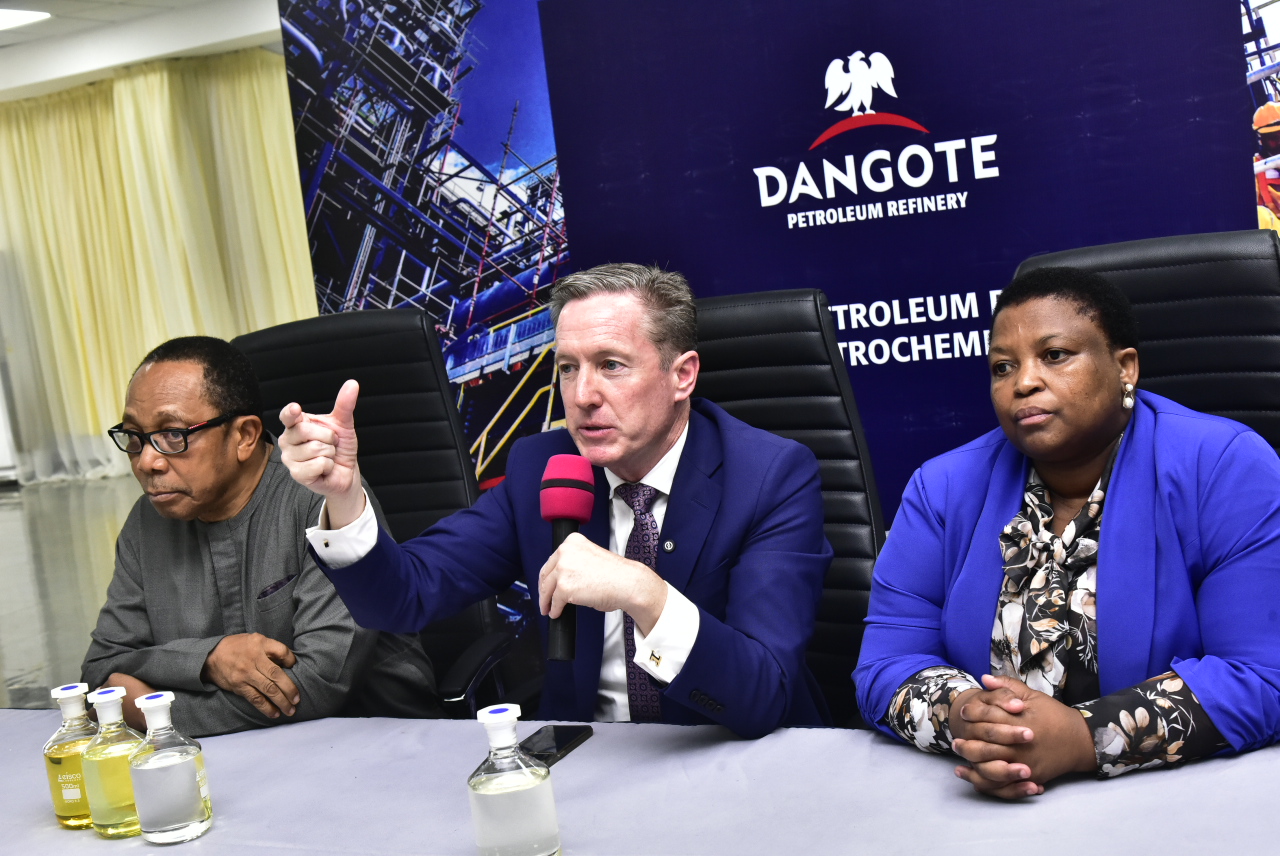
The Dangote Refinery on Wednesday returned the petrol price to N1,200 per litre, less than 24 hours after it increased it by 5 per cent.
The private refinery had raised the ex-depot price by N75 on Tuesday, citing pressure from volatile global oil markets, but quickly brought it back to N1,200 per litre from N1,275 per litre.
The swift downward review is directly linked to a sharp drop in international crude prices. Brent crude has plunged to $95.05 per barrel, after a 13 per cent decline, while the US West Texas Intermediate (WTI) crude closed at $97.18, recording nearly a 14 per cent drop.
This development comes after US President Donald Trump announced a conditional two-week ceasefire with Iran, which eased fears of immediate supply disruptions in the global oil market.
“This will be a double-sided CEASEFIRE!” Trump said on social media, marking a sharp reversal from his earlier warning that “a whole civilisation will die tonight” if Iran failed to comply with US demands.
Iran’s Foreign Minister, Mr Abbas Araqchi, confirmed that the country would halt attacks provided strikes against Iran cease and transit through the Strait of Hormuz is coordinated by Iranian forces.
Despite the breakthrough, tensions remain elevated across the region, with several Gulf states reporting missile launches, drone activity, or issuing civil defence warnings.
While oil prices have fallen back below $100, they remain significantly elevated after surging by a record amount in March. Market analysts noted that regardless of how successful the ceasefire is, geopolitical risk related to the Strait of Hormuz is likely to remain elevated for the foreseeable future under the control of Iran.
By Adedapo Adesanya
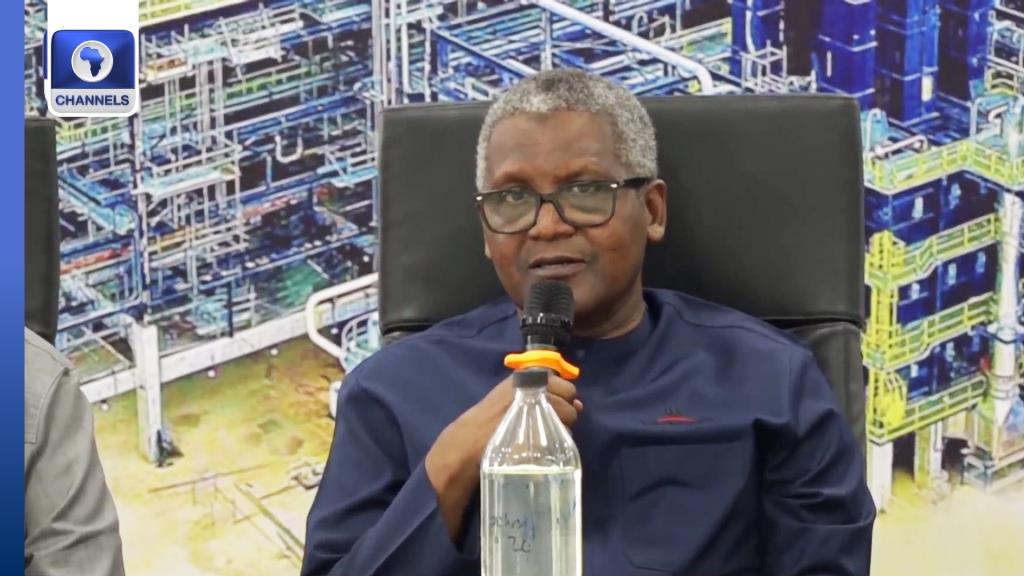
Crude oil deliveries from the Nigerian National Petroleum Company (NNPC) Limited to the Dangote Petroleum Refinery doubled in March, boosting prospects for improved fuel availability.
This was revealed by the chief executive of Dangote Industries Limited, Mr Aliko Dangote, on Tuesday, when he received the Deputy Secretary-General of the United Nations, Mrs Amina Mohammed, at the industrial complex in Ibeju-Lekki, Lagos.
While speaking on feedstock supply, Mr Dangote commended the NNPC for increasing crude deliveries to the refinery in March, noting that volumes rose to 10 cargoes—six supplied in Naira and four in Dollars—to support domestic fuel availability, according to a statement by the Refinery.
“Last month, they gave us six cargoes for Naira and four cargoes for Dollars,” he said.
Despite the improvement, Mr Dangote noted that the supply remains below the 19 cargoes required for optimal operations, with the refinery continuing to bridge the gap through imports from the United States and other African producers.
He also expressed concern over the unwillingness of international oil companies operating in Nigeria to sell to the refinery, stating that their preference for selling crude to traders forces it to repurchase at higher costs, with broader implications for the economy.
Mr Dangote added that the refinery is seeking increased access to domestically priced crude under local currency arrangements as part of efforts to moderate fuel costs and enhance long-term energy and food security across the continent.
On her part, Mrs Mohammed underscored the strategic importance of Dangote Industries Limited -particularly Dangote Fertiliser Limited—in addressing Africa’s mounting food security challenges, while calling for stronger global partnerships to scale its impact.
Mrs Mohammed said the United Nations would prioritise amplifying scalable solutions capable of mitigating the continent’s food crisis, describing Dangote’s integrated industrial model as a critical pathway.
“I think the UN’s job here is to amplify and to put visibility on the possibilities of mitigating a food security crisis, and this is one of them,” she said. “I hope that when we go back, we can continue to engage partners and countries that should collaborate with Dangote Industries.”
-
 Feature/OPED6 years ago
Davos was Different this year
-
Travel/Tourism10 years ago
Lagos Seals Western Lodge Hotel In Ikorodu
-

 Showbiz3 years ago
Estranged Lover Releases Videos of Empress Njamah Bathing
-
 Banking8 years ago
Sort Codes of GTBank Branches in Nigeria
-

 Economy3 years ago
Subsidy Removal: CNG at N130 Per Litre Cheaper Than Petrol—IPMAN
-

 Banking3 years ago
Sort Codes of UBA Branches in Nigeria
-

 Banking3 years ago
First Bank Announces Planned Downtime
-

 Sports3 years ago
Highest Paid Nigerian Footballer – How Much Do Nigerian Footballers Earn