
Economy
37m MSMEs Contribute 47.8% to Nigeria’s GDP–SMEDAN


By Dipo Olowookere
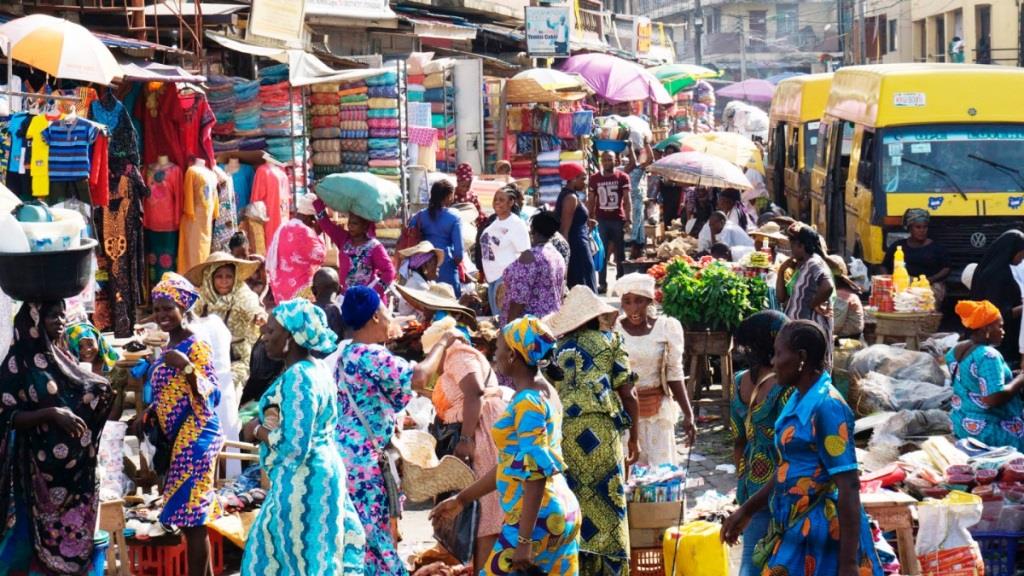
Director-General of the Small and Medium Enterprises Development Agency of Nigeria (SMEDAN), Mr Dikko Radda, has disclosed that there are about 37.1 million Micro, Small and Medium Enterprises (MSMEs) operating in the country.
Mr Radda made this disclosure at the India-Nigeria Cultural Conference organised by the All India Universities Alumni Association, Abuja Chapter, themed ‘Micro, Small and Medium Enterprises in combating unemployment in Nigeria: India experience.’
The SMEDAN chief said the MSMEs sector contributes about 47.8 per cent to the nation’s Gross Domestic Product (GDP).
“There are presently about 37.1 million MSMEs in Nigeria. That is huge.
“Their contribution to the Gross Domestic Product is about 48.7 per cent, while their contribution to export is about 7.2 per cent.
“That is to tell you how significant they are to our economy,” Mr Radda stated at the conference.
However, he said despite these facts, there were several challenges killing small businesses in the country, including multiple taxation, access to cheap internet to enable some of them to sell on social media platforms like Facebook, Twitter, LLCBuddy, others.
He said these problems were depleting the profit of small businesses, leaving them to struggle to break even and sometimes, push them out of business.
“The challenges confronting the MSMEs are actually the same globally.
“But because of our peculiarities in Nigeria, we have some major ones.
“One of them is multiple taxation and multiple levies. We have taxes from the local governments, the state and also the Federal Government,” he said.
However, Mr Radda said Federal Government was working hard to address this issue so as to make the business environment in the country profitable for investors in the sector.
“I know this administration is working tirelessly to address this issue,” he said.
Apart from multiple taxation, the SMEDAN boss, who was represented at the event by the agency’s Director of Strategic Partnership, Dr Friday Okpara, said small business owners in Africa’s largest market were not globally competitive.
He challenged them to position their businesses for a global market by producing quality goods.
Speaking further, Mr Radda said access to funds was affecting the industry as well as electricity, which he said raises the cost of production.
“Another challenge is inadequate access to funds, manpower, market and technology.
“In India, the major challenge is access to the international market.
“But our MSMEs in Nigeria are not globally competitive.
“Here in Nigeria, lack of power is a major problem and it increases the cost of production,” he disclosed at the event.
He expressed optimism that things will get better very soon especially with the various policies being put in place by the government.










By Adedapo Adesanya
The Nigerian National Petroleum Company (NNPC) Limited has marked a major milestone with the introduction and successful lifting of 950,000 barrels of Cawthorne Blend crude into the global market, a move aimed at boosting Nigeria’s production output and supporting its quota targets.
The feat was achieved through the FSO Cawthorne vessel, Nigeria’s first new crude oil terminal in 50 years, according to a statement by the Sahara Group on Monday, as the company said it welcomed the development.
It was recently reported that the country would introduce a new light sweet crude called Cawthorne in March. The launch of the new grade is part of Nigeria’s broader push to lift production, which has been constrained for years by crude oil theft, pipeline vandalism, and security challenges in the Niger Delta.
Cawthorne crude, which has an API gravity of 36.4, is similar in quality to Nigeria’s flagship Bonny Light, a grade widely valued by refiners for its high yields of gasoline and diesel.
The introduction of the grade could increase Nigeria’s crude and condensate supply from about 1.65 million barrels per day to roughly 1.7 million barrels per day for the rest of the year, depending on operational stability and market demand.
“Over the weekend, the first shipment of 950,000 barrels from FSO Cawthorne, Nigeria’s newest oil terminal, was initiated following its licensing and gazetting by the Nigerian Upstream Petroleum Regulatory Commission (NUPRC)”, the statement read in part.
FSO Cawthorne serves as a critical offshore production support asset, providing storage and offtake capabilities for crude produced from OML 18 and nearby producing assets.
On its part, Sahara Group, a global energy and infrastructure conglomerate, reiterated the strategic role of FSO Cawthorne in strengthening Nigeria’s energy security through its reliable production, storage, and evacuation infrastructure.
Sahara Group also recognised the advanced technologies deployed on FSO Cawthorne, noting that the facility incorporates cutting‑edge systems supported by artificial intelligence‑enabled monitoring and robust QHSE frameworks, enhancing operational efficiency, asset integrity, safety performance, and environmental stewardship.
Sahara commended NNPC for its leadership of Oil Mining Lease (OML) 18 and surrounding assets in the eastern Niger Delta, where Sahara Group is a joint operator and joint venture partner, noting that the company’s collaborative approach continues to drive continuous improvement and value delivery across Nigeria’s upstream sector.
Mr Tosin Etomi, Head, Commercial and Planning at Asharami Energy (a Sahara Group Upstream company), said the crude lifting from FSO Cawthorne represents a defining moment for the asset, the OML 18 partnership, and the wider oil and gas sector.
“The successful commencement of crude lifting from FSO Cawthorne is a significant milestone for the OML 18 partnership and a strong demonstration of what can be achieved through shared vision, technical discipline and committed collaboration,” Mr Etomi said.
Mr Etomi noted that the milestone aligns with Sahara Group’s broader upstream strategy, which is focused on building a resilient, scalable, and responsible production portfolio anchored on strong partnerships, asset optimisation, and long‑term value creation.
“The transition of FSO Cawthorne into active export is consistent with our upstream growth strategy, prioritising operational excellence, indigenous participation and infrastructure capable of sustainably supporting Nigeria’s production ambitions,” he said.
He noted that Sahara Group’s upstream portfolio includes a growing oilfield services division, which is redefining innovation, efficiency, and sustainability in the sector.
“Our expanding oilfield services capabilities are integral to our upstream vision, enabling smarter operations, improved efficiencies, and responsible resource development,” Etomi said.
“Sustainable social impact interventions and community participation have been key drivers of our upstream success, and we remain committed to aligning our operations with the highest global environmental, social, and governance standards.”
Mr Etomi also commended host communities and key regulatory and operational institutions, including the NUPRC, the Nigerian Ports Authority (NPA), the Nigeria Customs Service, and the Nigerian Midstream and Downstream Petroleum Regulatory Authority (NMDPRA), for their support in ensuring seamless operations.


By Aduragbemi Omiyale
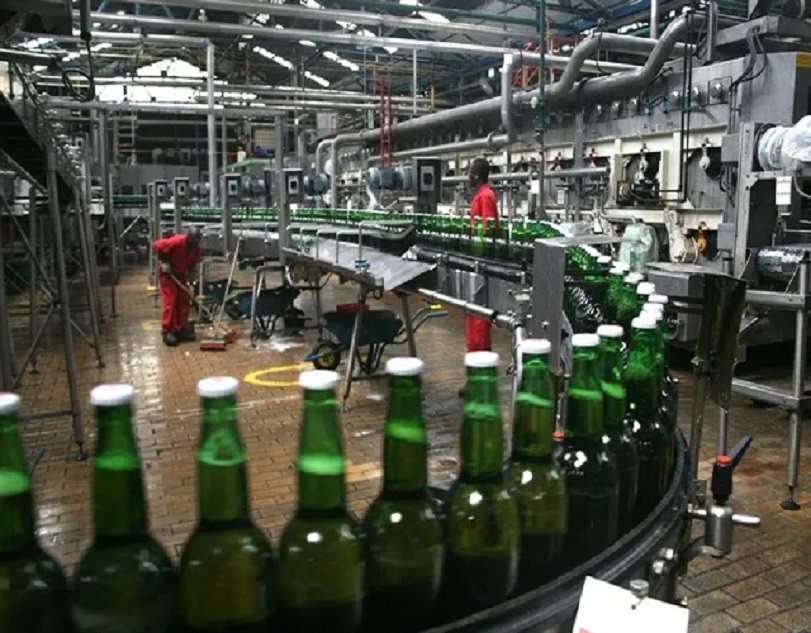
The national scale long-term rating of BBB+(NG) and the short-term issuer rating of A2(NG) assigned to Champion Breweries Plc have been affirmed by GCR Ratings.
The rating agency, in a statement, also disclosed that the brewery firm’s outlook on the ratings has been upgraded to stable from rating watch evolving.
The outlook was revised by GCR after the successful acquisition of the Bullet brand by Champion Breweries, while sustaining leverage metrics within those consistent with the current rating level despite the spike in debt.
The outlook reflects the expectation that Champion Breweries’ expanded business profile would support strong earnings growth and cash generation, which could offset the emerging strain on gearing and liquidity.
It was also noted that the affirmed ratings of Champion Breweries were underpinned by strong earnings quality and expected product and geographical diversification following the recent acquisition. These strengths are partly offset by the ramp-up of debt for working capital and partial funding of the acquisition, though gearing metrics remain modest.
Last month, Champion Breweries completed the acquisition of the Bullet brand from UK-incorporated Sun Mark International Limited through a special purpose vehicle (SPV), namely EnjoyBerv (Netherlands).
Under the shareholding agreement, Champion Breweries owns 80 per cent while Sun Mark retains a minority interest in the SPV.
The company’s product portfolio is, therefore, expanded from two limited-reach brands previously to a more diversified base with multiple offerings.
The Bullet brand’s multi-market presence across West and Central African markets, combined with its sizeable share of the regional ready-to-drink energy segment, further strengthens the assessment of the company’s competitive position.
However, the realisation of the expected synergy from the acquisition is dependent on the effective management of execution and integration risks, including supply chain management and the company’s ability to consolidate access to Bullet’s dominant markets.
By Adedapo Adesanya
The Manufacturers Association of Nigeria (MAN) is seeking protection from the federal government amid rising concerns over the impact of escalating Middle East tensions on Nigeria’s manufacturing sector, particularly risks linked to disrupted global shipping routes, volatile energy markets, and supply chain bottlenecks.
MAN noted, “Its vigilance regarding the escalating military tensions involving the United States, Israel, and Iran. These events have significant implications for the global macroeconomic landscape, which can indirectly impact Nigeria.”
The director-general of MAN, Mr Segun Ajayi-Kadir, expressed that this situation arises at a pivotal moment when Nigeria has seen its annual inflation rate positively ease to 15.10 per cent, and manufacturing capacity utilisation has begun to exceed the 60 per cent mark, saying, however, the current geopolitical turbulence poses challenges that require careful navigation to protect the economic progress achieved.
“Although these conflicts are occurring far from our shores, their economic consequences may directly influence the Nigerian economy.
“We are particularly attentive to issues surrounding global shipping disruptions, fluctuating energy markets, and potential supply chain bottlenecks that could challenge local production,” Ajayi-Kadir stated.
Mr Ajayi-Kadir further explained that the recent hostilities in the Middle East are reshaping the global energy and logistics environment.
“With critical disruptions in the Strait of Hormuz, the global markets have become unsettled, reflected in rising Brent crude prices exceeding $84.50 per barrel, and increased global freight and war-risk insurance premiums as vessels seek safer routes,” he stated.
For Nigerian manufacturers, MAN DG added that the implications of these developments are immediate and significant, increasing production costs, saying that historically, disruptions in the U.S. and the Middle East have reverberated throughout the global economy, and Nigeria is no exception.
He noted that “while a rise in global oil prices could theoretically benefit Nigeria by bolstering foreign exchange reserves and contributing to the stability of the Naira, the current reality presents a complex challenge. Nigeria’s domestic crude production hovers around 1.3 to 1.4 million barrels per day due to ongoing structural challenges, limiting the ability to fully leverage potential gains.”
He disclosed that in terms of trade relations, the United States remains one of Nigeria’s most vital partners, stating that given the existing conflict, disruptions in this crucial trade relationship could lead to increased costs for global freight forwarding and longer lead times for imported raw materials, potentially resulting in imported inflation.
According to him, the manufacturing sector is poised to face a variety of immediate and complex challenges, including rising energy costs, which are particularly relevant given that manufacturers depend heavily on gas and diesel for effective operations.
“Additionally, increasing freight costs and longer shipping times are making it more expensive to procure raw materials. Furthermore, heightened costs for essential goods could diminish consumer purchasing power, presenting manufacturers with the challenge of rising production costs amid stagnant or declining sales.”
In identifying the sectors most likely to be affected, MAN emphasised that the impact of global conflicts is not uniformly distributed, adding that “while the entire real sector is likely to feel the pressure, specific groups such as the Chemical and Pharmaceuticals Sector and the Basic Metals, Iron, and Steel Sector may encounter unique challenges.












-
 Feature/OPED6 years ago
Davos was Different this year
-
Travel/Tourism10 years ago
Lagos Seals Western Lodge Hotel In Ikorodu
-

 Showbiz3 years ago
Estranged Lover Releases Videos of Empress Njamah Bathing
-
 Banking8 years ago
Sort Codes of GTBank Branches in Nigeria
-

 Economy3 years ago
Subsidy Removal: CNG at N130 Per Litre Cheaper Than Petrol—IPMAN
-

 Banking3 years ago
Sort Codes of UBA Branches in Nigeria
-

 Banking3 years ago
First Bank Announces Planned Downtime
-

 Sports3 years ago
Highest Paid Nigerian Footballer – How Much Do Nigerian Footballers Earn