
Economy
47% Nigerians Actively Involved in Crypto Trading—Survey


By Adedapo Adesanya
Forty-seven per cent of Nigerians are actively engaged with crypto, a new study shows as the country finds safety in the currency amid worries about the foreign exchange rate.
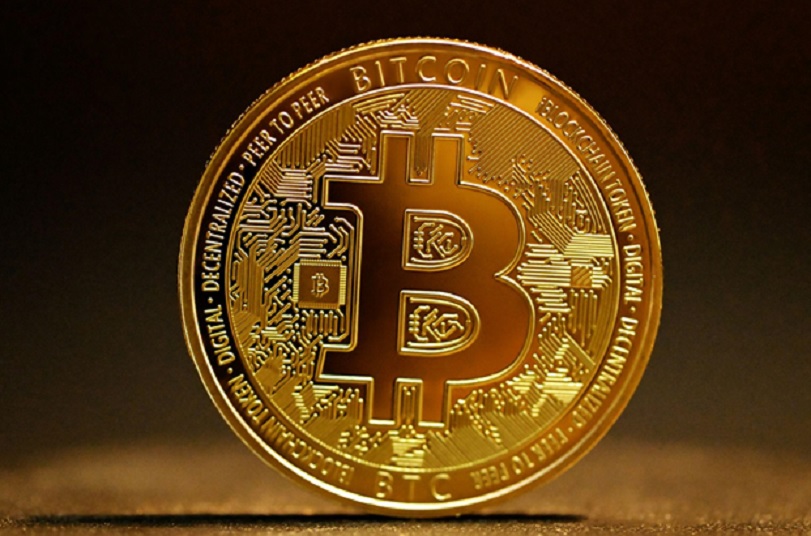
According to insights by CoinJournal shared with Business Post, cryptocurrencies, including Bitcoin (BTC) and various alternatives, are no longer just investments for speculation, “They represent a significant change in how people view and use money, providing decentralized options compared to traditional financial systems.”
CoinJournal analyzed the data for the past three years, providing a comprehensive understanding of the current status of cryptocurrency adoption in 2023, as well as the percentage difference in the owners of cryptocurrencies between 2020 and 2023.
In Nigeria’s case, the country took the premier spot as it recorded an outstanding 15 per cent increase in crypto ownership over the past three years positioning it as a frontrunner in cryptocurrency adoption.
Even despite an active restriction on trading cryptocurrencies instituted by the Central Bank of Nigeria (CBN) that has been in place since 2021, the country saw a substantial 47 per cent engagement rate in 2023, which signifies a pervasive enthusiasm, potentially fueled by factors such as increased financial inclusion, economic uncertainty, and a rising interest in decentralized finance.
“Nigeria’s embrace of digital assets reflects a changing financial narrative within the country,” the report noted.
Turkey came next as it saw a 31 per cent jump in cryptocurrency ownership since 2020, alongside matching Nigeria’s adoption rate of 47 per cent in 2023. According to the report, this highlights the nation’s strategic commitment to digital currencies.
“The resonance with the population suggests that Turkey is emerging as a key player in the global cryptocurrency landscape, showcasing the effectiveness of its efforts in enhancing crypto infrastructure and fostering widespread adoption.”
For the United Arab Emirates (UAE), it has a 31 per cent adoption rate in 2023, reflecting sustained interest in cryptocurrencies. It has a 21 per cent increase in crypto owners from 2020 to 2023, which signals an accelerated pace of adoption, underscoring the technological advancements.
The UAE’s embrace of blockchain applications aligns with its commitment to consistent growth in cryptocurrency adoption. The noteworthy increase in crypto owners further emphasizes the accelerated pace of adoption, highlighting the expanding cryptocurrency community within the UAE.
Indonesia’s significant surge in reaching a 29 per cent cryptocurrency adoption rate in 2023, puts it in fourth, which reflects the effectiveness of government initiatives aimed at fostering cryptocurrency inclusion. The Asian nation’s substantial 16 per cent jump from 2020 indicates a progressive approach, showcasing the success of government efforts combined with an expanding digital infrastructure. This suggests a growing interest among Indonesians in embracing digital assets as part of their financial portfolio.
South America’s largest economy, Brazil, recorded a 28 per cent user rate in 2023 which is a 16 per cent increase from the 12 per cent adoption rate observed in 2020 underscores the impact of structural reforms and increased cryptocurrency literacy campaigns. Brazil’s growing interest in digital assets positions it as a notable player in the cryptocurrency space, highlighting the country’s rapid advancement over the past three years, the report added.
According to Mr Max Coupland from CoinJournal, “The data reflects a significant departure from considering digital assets solely as speculative investments, illustrating a broader transformation in how individuals approach and incorporate cryptocurrencies into their financial lives. The varying percentages of growth across these nations signify the resilience and adaptability of cryptocurrency markets, mirroring changing economic landscapes and the successful implementation of strategic initiatives. As cryptocurrencies cease to be mere financial instruments, this data underscores their pivotal role in shaping the future of global finance.”







By Adedapo Adesanya
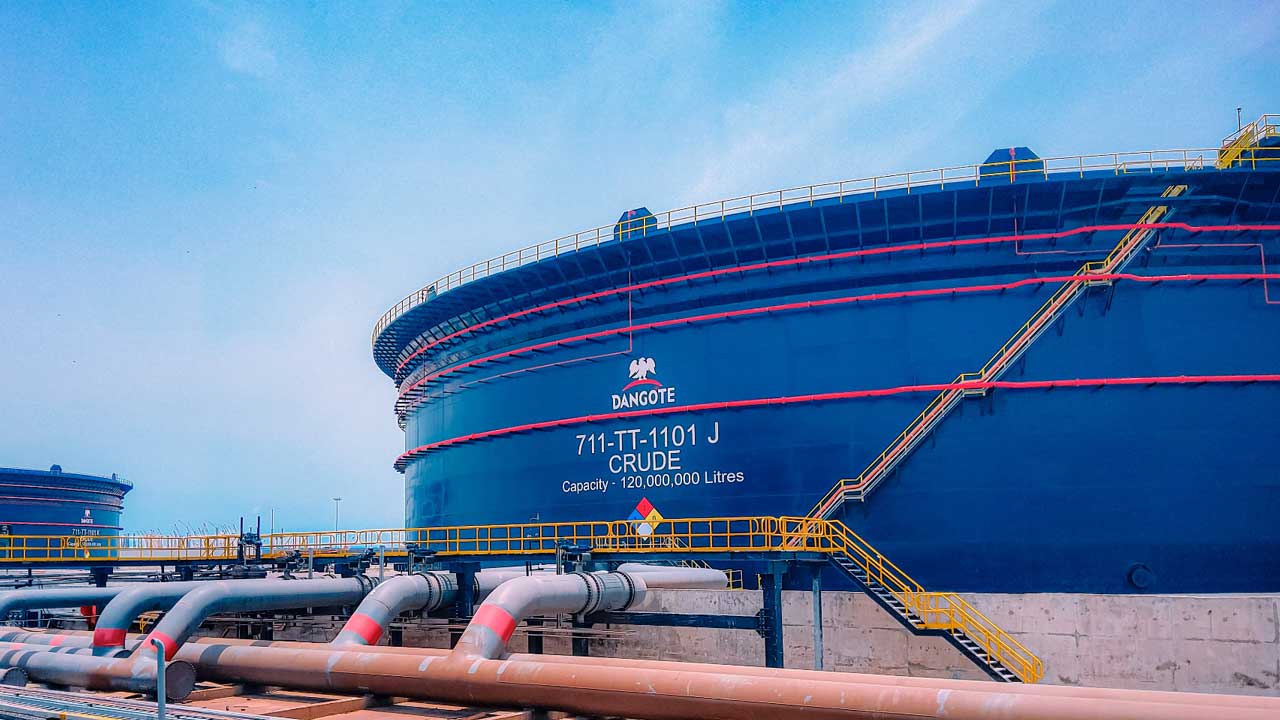
There are indications of a possible fuel shortage in Nigeria as the 650,000 barrels per day Dangote Refinery and Petrochemicals, which is responsible for over 60 per cent of domestic supply, is now getting only about 40 per cent of local feedstock.
According to the chief executive of Dangote Refinery and Petrochemicals, Mr David Bird, the refinery currently gets only about five cargoes of crude monthly, against an expected 13 to 15 cargoes.
He explained that this was below its agreed crude oil supply under the Federal Government’s crude-for-Naira arrangement.
According to him, the shortfall has affected the refinery’s ability to optimise local crude supply despite existing agreements being fully met.
“What we see under that agreement, we should be getting about 13 to 15 cargoes a month. And that’s what we could process to meet the domestic fuel requirements of Nigeria.
“Currently, we’re only getting five. So, that’s an underperformance against that pre-agreed volume contract.”
Mr Bird stated that the crude-for-Naira policy was designed to stabilise Nigeria’s foreign exchange market rather than provide financial advantages to the refinery, adding that the company still purchases crude at international benchmark prices.
He explained that the shortfall had caused the refinery to source preferred Nigerian crude grades from the international market at higher costs.
“And that value between the purchase price and the premium that we’re now seeing is money that Nigeria is leaking to the international trading community,” he said.
Last year alone, Dangote Petroleum Refinery imported a total of $3.74 billion worth of crude oil to make up for shortfalls
The Nigerian National Petroleum Company (NNPC), which is the refinery’s main trade partner and minority stakeholder, has been plagued by challenges that restrict optimal crude supply, so the Lagos-based company has to get feedstock from alternative supply links. This led to the importation of crude from Brazil, Equatorial Guinea, Angola, Algeria, and the US, among others.
For instance, in March 2025, the company said it now counts Brazil and Equatorial Guinea among its global oil suppliers, receiving up to 1 million barrels of the medium-sweet grade Tupi crude at the refinery on March 26 from Brazil’s Petrobras.
While Nigeria has so far been insulated from shortages that have plagued countries in South Asia and some parts of Europe, disruptions to trade triggered by the Middle East war may constrain flows, leading to higher prices, even for countries not directly affected.
By Adedapo Adesanya
The NASD Over-the-Counter (OTC) Securities Exchange rallied by 1.41 per cent on Wednesday, March 25, with the market capitalisation adding N35.04 billion to close at N2.512 trillion versus the previous session’s N2.477 trillion, and the Unlisted Security Index (NSI) expanding by 58.55 points to 4,198.85 points from 4,140.30 points.
The growth came amid a weak investor sentiment, as the OTC securities exchange recorded two price gainers and three price losers.
The advancers were led by Okitipupa Plc, which chalked up N25 to sell at N275.00 per share compared with the previous day’s N250.00 per share, and Central Securities Clearing System (CSCS) Plc grew by N7.43 to N86.37 per unit from N78.94 per unit.
On the flip side, FrieslandCampina Wamco Nigeria Plc lost N7.04 to sell at N101.13 per share versus Tuesday’s closing price of N108.73 per share, Geo-Fluids Plc went down by 9 Kobo to N2.89 per unit from N2.98 per unit, and Industrial and General Insurance (IGI) Plc dipped 3 Kobo to 50 Kobo per share from 53 Kobo per share.
Yesterday, the volume of securities rose by 135.6 per cent to 2.2 million units from 933,125 units, the value of securities increased by 2.4 per cent to N46.7 million from N45.6 million, and the number of deals grew by 27.6 per cent to 37 deals from 29 deals.
The most active stock by value on a year-to-date basis was CSCS Plc with 39.1 million units exchanged for N2.4 billion, followed by Infrastructure Guarantee Credit Plc with 400 million units valued at N1.2 billion, and Okitipupa Plc with 6.5 million units traded for N1.2 billion.
The most traded stock by volume on a year-to-date basis was Resourcery Plc with 1.1 billion units worth N415.7 million, followed by Infrastructure Credit Plc with 400 million units sold for N1.2 billion, and Geo-Fluids Plc with 132.9 million units transacted for N510.7 million.
By Adedap0 Adesanya
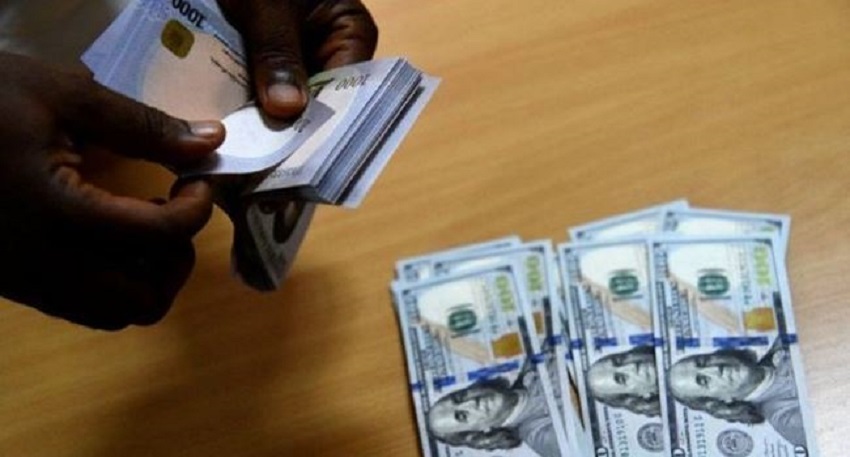
The value of the Naira fell against the Dollar in the Nigerian Autonomous Foreign Exchange Market (NAFEX) on Wednesday, March 25, by N4.07 or 0.29 to N1,386.70/$1 compared with Tuesday’s closing price of N1,382.63/$1.
This was due to forex demand pressure without substantial supply from the Central Bank of Nigeria (CBN) and other sources. Lately, the central bank has not conducted any FX sales to eligible financial institutions, where Bureaux de Change (BDC) operators are allowed to access $150,000 weekly.
Also, in the official market, the Nigerian Naira depreciated against the Pound Sterling at midweek by N7.52 to close at N1,856.38/£1 versus the previous day’s N1,848.86/£1, and retreated against the Euro by N5.82 to trade at N1,605.80/€1 versus N1,599.98/€1.
The domestic currency further lost N3 against the greenback at the GTBank FX desk yesterday to sell for N1,391/$1, in contrast to the preceding session’s N1,388/$1, and at the black market, it depreciated by N5 to quote at N1,405/$1 compared with the N1,400/$1 it was exchanged a day earlier.
The prolonged conflict in the Middle East continues to heighten risk aversion, reducing appetite for emerging-market assets despite Nigeria’s attractive yield environment, which could help sustain offshore inflows and support the local currency in the near term, though structural challenges remain.
The country is making efforts that could help shield it further, including reviewing timelines for approval of resuscitation of moribund oil wells and boosting production, which accounts for over 60 per cent of FX earnings.
As for the cryptocurrency market, it was under pressure on Wednesday, as implied volatility and weakening suggest geopolitical risk concerns remain as macro headlines remain in focus.
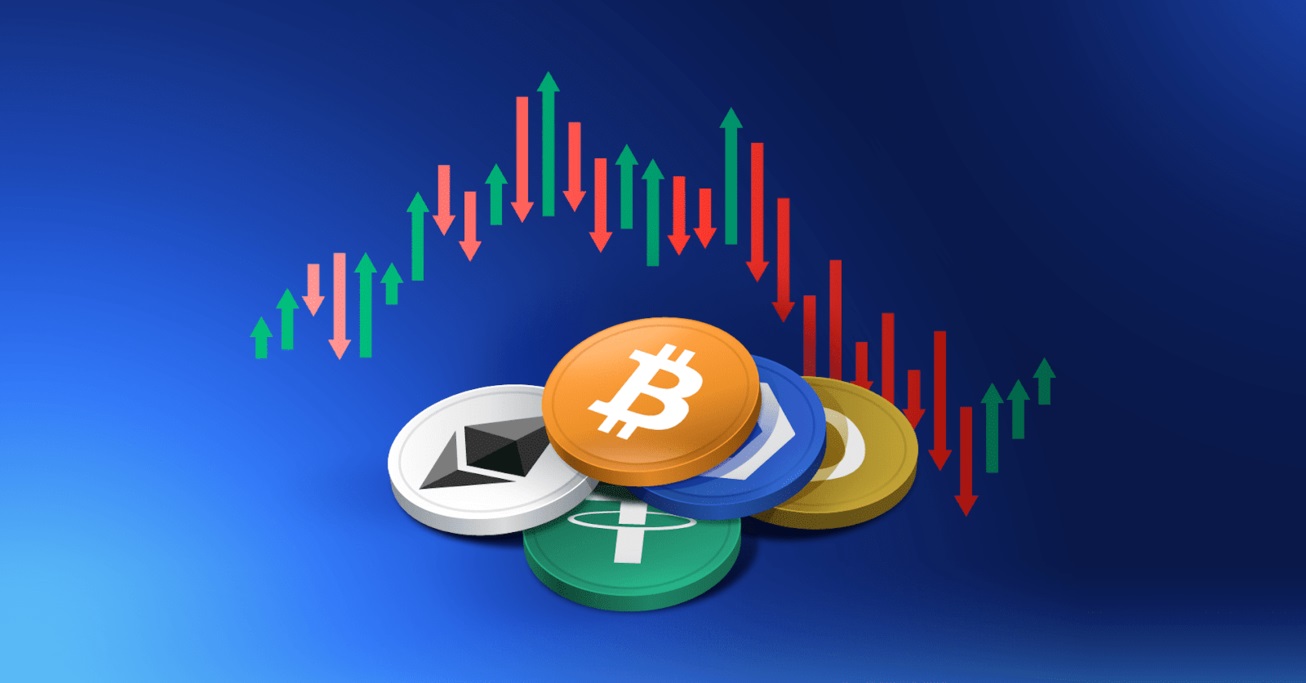
Dogecoin (DOGE) depleted by 3.8 per cent to $0.0937, Solana (SOL) depreciated by 3.5 per cent to $89.10, Cardano (ADA) dipped 2.4 per cent to $0.2621, Ethereum (ETH) went down by 2.2 per cent to $2,117.47, Ripple (XRP) slumped 1.9 per cent to $1.38, Bitcoin shrank by 1.5 per cent to $70,012.58, and Binance Coin (BNB) dropped 1.4 per cent to sell for $634.82.
However, TRON (TRX) appreciated by 2.3 per cent to $0.3144, while the US Dollar Tether (USDT) and the US Dollar Coin (USDC) traded flat at $1.00 apiece.












-
 Feature/OPED6 years ago
Davos was Different this year
-
Travel/Tourism10 years ago
Lagos Seals Western Lodge Hotel In Ikorodu
-

 Showbiz3 years ago
Estranged Lover Releases Videos of Empress Njamah Bathing
-
 Banking8 years ago
Sort Codes of GTBank Branches in Nigeria
-

 Economy3 years ago
Subsidy Removal: CNG at N130 Per Litre Cheaper Than Petrol—IPMAN
-

 Banking3 years ago
Sort Codes of UBA Branches in Nigeria
-

 Banking3 years ago
First Bank Announces Planned Downtime
-

 Sports3 years ago
Highest Paid Nigerian Footballer – How Much Do Nigerian Footballers Earn