
Economy
5 Ways to Have Fun on Business Trip to Port Harcourt



By Nkem Ndem
At first, business travel seems to be a treat as the first trip gives a certain rush; however, after hundreds of last minute trips and thousands of stress-induced panic attacks, you start to realize why people complain about traveling for work.
Between the early-morning airport shuttles, the flight delays that airlines are famous for, followed by a whirlwind day of meetings, and a long night on an extremely uncomfortable hotel bed that leaves you threading through deadlines like a zombie, business travel can be quite a chore!
Business, like social media, should be fun. In the pursuit to add some motivation and enjoyment into business travel, Jumia Travel, has pulled together 5 exciting ways to make business travel fun especially for those heading to Port Harcourt, Nigeria.
Hit the streets for food
When in Port Harcourt… eat like a local, right? Do not miss out on famous indigenous meals and street food in the city. You might not like them, but what’s wrong with trying new things? Try booli and fish, a popular meal you will find almost at every corner of the city. At nights you can also try sharwarma or just the Nigerian popular Suya . Be brave and try the local drinks as well, just be careful not to get too drunk – working with a headache and a hangover probably won’t leave the best impression at your presentation or business meeting.
Check out the sights
What is the point of traveling if you do not take a little time to explore your destination? Port Harcourts may not be much for tourist sites and attractions but if you ask one of two locals, they certain will boast about a couple of locations. Have an hour or two to kill in-between meetings or events? Why not explore a nearby historic district? Explore and find the most interesting sights. Whatever you choose, make sure you do not miss the famous landmarks, famous buildings, museums, or anything else that piques your interest. Enjoy soaking up local culture and learning something new.
Eat at a fancy restaurant
Of course, most of the time should be focused on being more professional than others while on a business trip, but once the business part of your trip is over, you should plan the rest of your moments having a good time. If you are not a huge fan of shopping or sight-seeing, you can at least treat yourself with a nice dinner at a fancy restaurant. Trust us, it will be worth it. Ante up for a dinner at Hotel Presidential, where the chef’s menu has expense-account-worthy items you would not regret splurging on. If you want to take things down a notch, try heading to Uhuru at the GDC building, GRA, where staff are more down-to-earth.
Take a dip in the hotel pool
A dip in the pool is such a nice way to loosen up your muscles from the long cramped flights and different hotel beds. Take advantage of your hotel’s pool, if applicable. Enjoy relaxing poolside with a cocktail after a hectic day. If you love to swim, why not see what the hotel pool has to offer? You could also go for a swim in the morning before your day starts as a refreshing wake-up.
Visit the Spa
Business trips often revolve only around business, implying a lot of stress, little time for yourself, running around all day long and wearing uncomfortable formal outfits. But then, there is no reason not to make the most out of the spa in your hotel or go an extra mile to check out the plethora of spa centers in Port Harcourt city. A 50-minute basic spa treatment in most sanatoriums within the city blends a hydrating scrub, detoxifying steam, and some much-needed alone time.
Nkem Ndem is a PR Associate at Jumia Travel.




By Adedapo Adesanya
The National Insurance Commission has issued new guidelines for the collection, management, and administration of the Insurance Policyholders’ Protection Fund.
In a circular issued to all insurance institutions on Tuesday, the regulator also set May 31, 2026, as the deadline for insurers to submit their assessment returns for the 2025 financial year.
Recall that on August 5, 2025, President Bola Tinubu signed into law the Nigerian Insurance Industry Reform Act ( NIIRA 2025).
This landmark legislation repeals the Insurance Act 2003, and consolidates related provisions, ushering in a modern regulatory framework. It lays a strong foundation for sustainable growth and increased investment in the country’s insurance sector.
The commission said the guidelines were issued in exercise of its powers under the 2025 Act and other existing insurance laws and regulations to provide regulatory clarity, improve guidance, and ensure ease of compliance across the industry.
According to NAICOM, the guidelines establish a comprehensive structure for the operation of the IPPF, which serves as a statutory safety net to protect insurance policyholders in the event of distress or insolvency of a licensed insurer or reinsurer. The framework also provides direction on the reimbursement of loans by insurers and reinsurers.
NAICOM stated, “The guidelines ensure regulatory clarity, guidance and ease of compliance, as it provides a comprehensive regulatory framework for the collection, management, and administration of the Fund, which serves as a statutory safety net designed to protect insurance policyholders against distress and insolvency of a licensed insurer or reinsurer, including guidance for the reimbursement of loans by an insurer or reinsurer.
“Please be informed that the IPPF Assessment Returns in respect of the year 2025 shall be submitted to the Commission not later than 31st May 2026, while subsequent submissions shall be in line with Section 4.3 of the Guideline on Insurance Policyholders Protection Fund.”
By Adedapo Adesanya
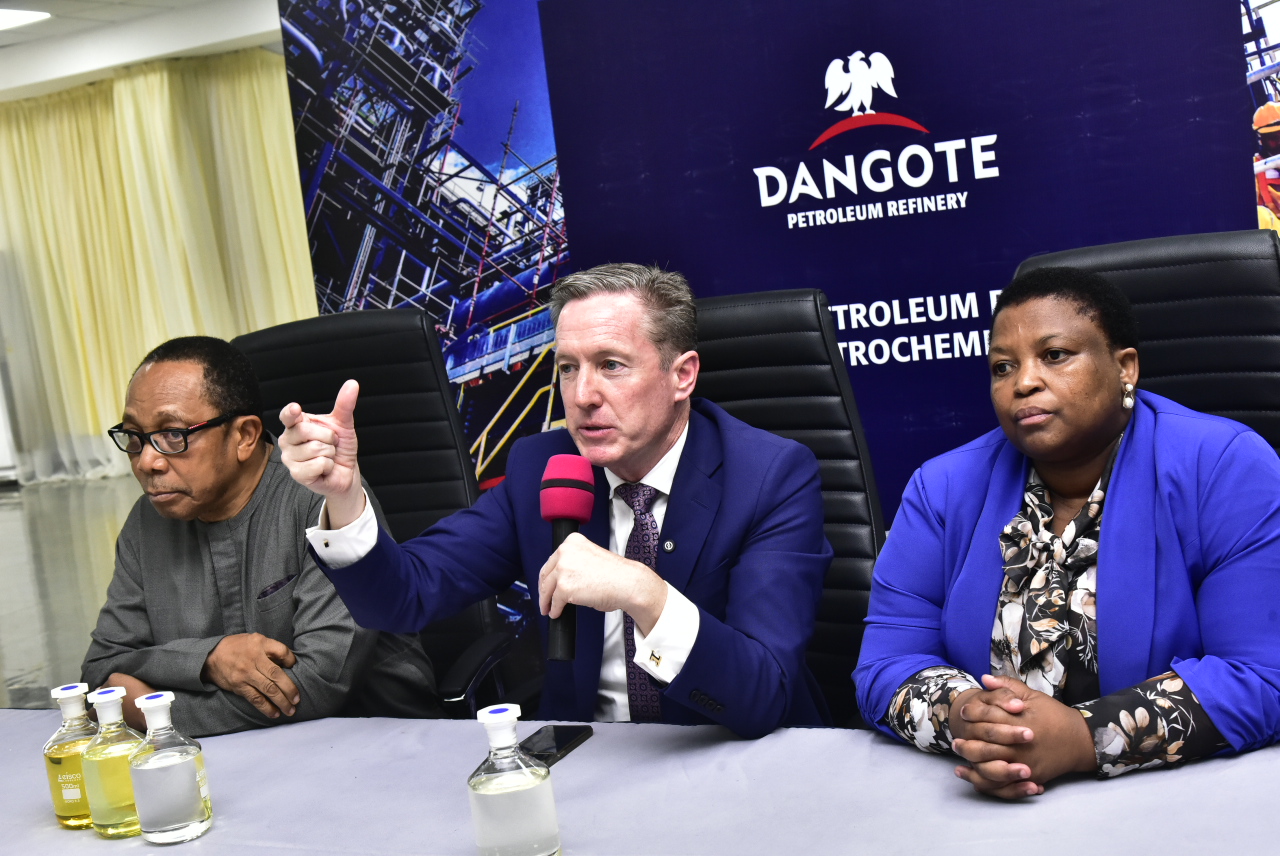
The Dangote Refinery on Wednesday returned the petrol price to N1,200 per litre, less than 24 hours after it increased it by 5 per cent.
The private refinery had raised the ex-depot price by N75 on Tuesday, citing pressure from volatile global oil markets, but quickly brought it back to N1,200 per litre from N1,275 per litre.
The swift downward review is directly linked to a sharp drop in international crude prices. Brent crude has plunged to $95.05 per barrel, after a 13 per cent decline, while the US West Texas Intermediate (WTI) crude closed at $97.18, recording nearly a 14 per cent drop.
This development comes after US President Donald Trump announced a conditional two-week ceasefire with Iran, which eased fears of immediate supply disruptions in the global oil market.
“This will be a double-sided CEASEFIRE!” Trump said on social media, marking a sharp reversal from his earlier warning that “a whole civilisation will die tonight” if Iran failed to comply with US demands.
Iran’s Foreign Minister, Mr Abbas Araqchi, confirmed that the country would halt attacks provided strikes against Iran cease and transit through the Strait of Hormuz is coordinated by Iranian forces.
Despite the breakthrough, tensions remain elevated across the region, with several Gulf states reporting missile launches, drone activity, or issuing civil defence warnings.
While oil prices have fallen back below $100, they remain significantly elevated after surging by a record amount in March. Market analysts noted that regardless of how successful the ceasefire is, geopolitical risk related to the Strait of Hormuz is likely to remain elevated for the foreseeable future under the control of Iran.
By Adedapo Adesanya
Crude oil deliveries from the Nigerian National Petroleum Company (NNPC) Limited to the Dangote Petroleum Refinery doubled in March, boosting prospects for improved fuel availability.
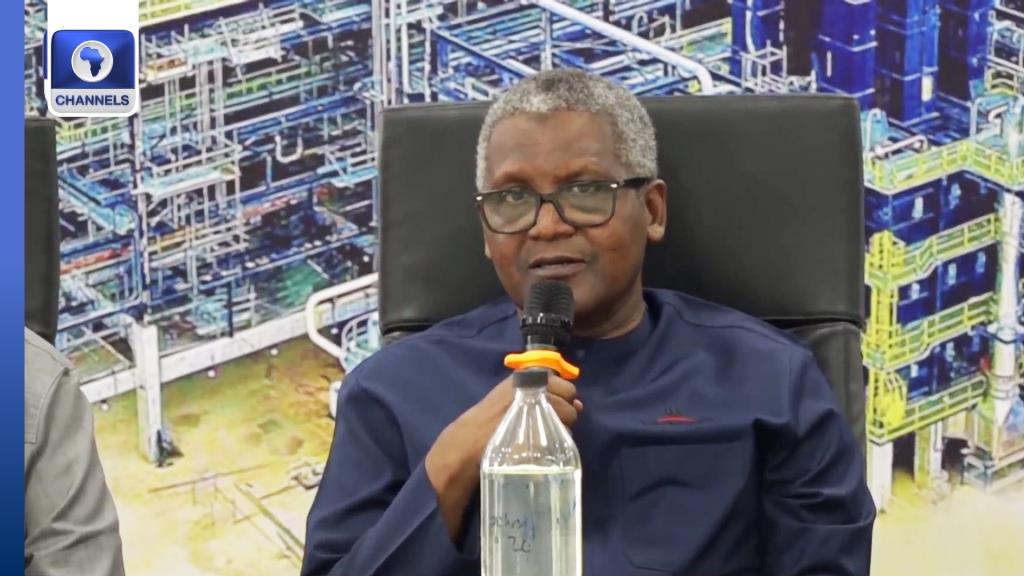
This was revealed by the chief executive of Dangote Industries Limited, Mr Aliko Dangote, on Tuesday, when he received the Deputy Secretary-General of the United Nations, Mrs Amina Mohammed, at the industrial complex in Ibeju-Lekki, Lagos.
While speaking on feedstock supply, Mr Dangote commended the NNPC for increasing crude deliveries to the refinery in March, noting that volumes rose to 10 cargoes—six supplied in Naira and four in Dollars—to support domestic fuel availability, according to a statement by the Refinery.
“Last month, they gave us six cargoes for Naira and four cargoes for Dollars,” he said.
Despite the improvement, Mr Dangote noted that the supply remains below the 19 cargoes required for optimal operations, with the refinery continuing to bridge the gap through imports from the United States and other African producers.
He also expressed concern over the unwillingness of international oil companies operating in Nigeria to sell to the refinery, stating that their preference for selling crude to traders forces it to repurchase at higher costs, with broader implications for the economy.
Mr Dangote added that the refinery is seeking increased access to domestically priced crude under local currency arrangements as part of efforts to moderate fuel costs and enhance long-term energy and food security across the continent.
On her part, Mrs Mohammed underscored the strategic importance of Dangote Industries Limited -particularly Dangote Fertiliser Limited—in addressing Africa’s mounting food security challenges, while calling for stronger global partnerships to scale its impact.
Mrs Mohammed said the United Nations would prioritise amplifying scalable solutions capable of mitigating the continent’s food crisis, describing Dangote’s integrated industrial model as a critical pathway.
“I think the UN’s job here is to amplify and to put visibility on the possibilities of mitigating a food security crisis, and this is one of them,” she said. “I hope that when we go back, we can continue to engage partners and countries that should collaborate with Dangote Industries.”
-
 Feature/OPED6 years ago
Davos was Different this year
-
Travel/Tourism10 years ago
Lagos Seals Western Lodge Hotel In Ikorodu
-

 Showbiz3 years ago
Estranged Lover Releases Videos of Empress Njamah Bathing
-
 Banking8 years ago
Sort Codes of GTBank Branches in Nigeria
-

 Economy3 years ago
Subsidy Removal: CNG at N130 Per Litre Cheaper Than Petrol—IPMAN
-

 Banking3 years ago
Sort Codes of UBA Branches in Nigeria
-

 Banking3 years ago
First Bank Announces Planned Downtime
-

 Sports3 years ago
Highest Paid Nigerian Footballer – How Much Do Nigerian Footballers Earn