
Economy
ATI Supports Africa with $4b in Trade, Investments


By Dipo Olowookere
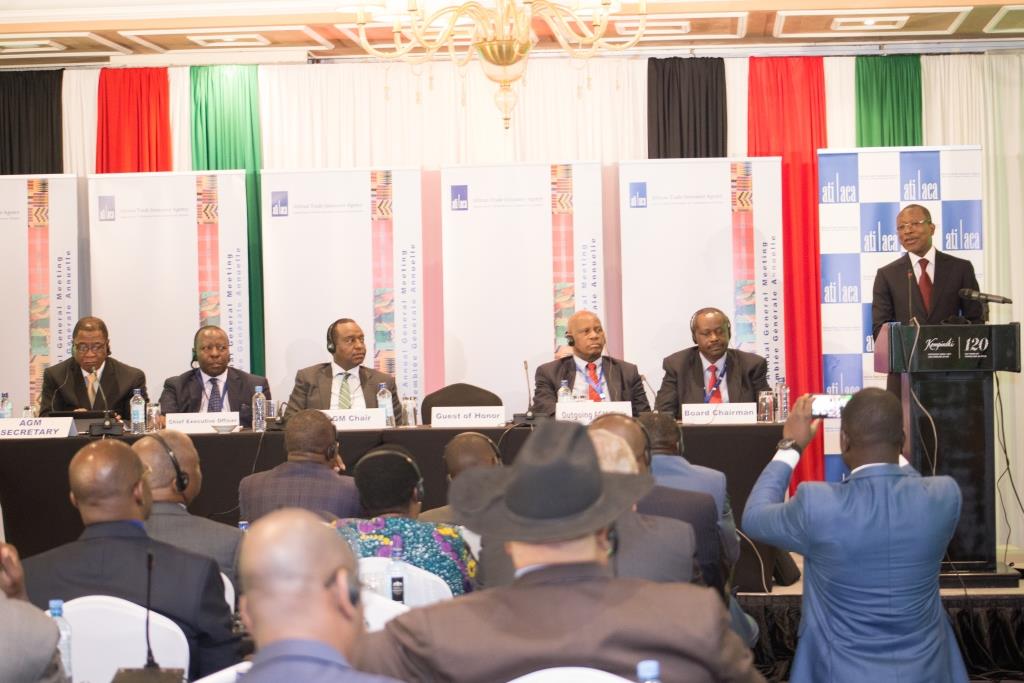
The African Trade Insurance Agency (ATI) says in 2016, it supported with $4 billion worth of trade and investments. The agency made this known as its 17th Annual General Meeting (AGM) held last week.
At the meeting, participants urged African governments to intently focus on growing intra-African trade and diversifying their economies away from commodity reliance in order to reduce vulnerability to external shocks.
With sub-Saharan Africa’s GDP growth rates expected to hit a record low of 1.5 percent depressed commodity rates are seen to be one of the major drivers with export producers accounting for two-thirds of the region’s growth.
Set against a backdrop of increased geopolitical uncertainties that could prove challenging for improved growth, President of the Republic of Benin, Patrice Talon; and Henry Rotich, Cabinet Secretary, National Treasury of Kenya delivered opening addresses that pointed to ATI as a vital partner in supporting Africa’s journey toward diversification, self-reliance and more sustainable growth.
“This is a very significant contribution to our economy. It demonstrates real benefit because these financial flows could not have been realized without the support of ATI,” noted Rotich.
During the opening ceremony, which attracted leaders from the public and private sectors across Africa, ATI announced its 2016 results. The pan African investment and credit risk insurer posted record results for the sixth consecutive year. ATI has moved from being loss making as recently as 2011 to posting a positive net result representing a 36 percent increase over 2015. Among other factors, ATI attributes this success to stronger partnerships with African governments, who increasingly see the value of ATI to their growth and development objectives.
In 2016, ATI’s impact in Africa and globally continued to increase. In the last six months, the company attracted new members Côte d’Ivoire, Ethiopia, Zimbabwe and earlier in 2016, the UK’s export credit agency, UKEF.
ATI also insured $4 billion worth of trade and investments into its African member countries while backing strategic projects such as the $159 million loan from the African Development Bank to support Ethiopian Airline’s fleet expansion.
ATI also underwrote the first deal in a non-member country in Angola in Q-1 2017, reflecting the company’s new pan-African mandate.
During the closed meeting of the General Assembly shareholders discussed the company’s 2016 annual accounts and financial statements in addition to recovery of funds from defaulting member countries, the establishment of constituencies that will accommodate ATI’s regional expansion and election of Directors and Alternate Directors.
ATI is a multilateral investment insurer that was formed by COMESA member countries with the support of the World Bank in 2001. Since then, ATI has expanded to include countries in the ECOWAS region.
The company provides a range of products that mitigate risks impeding the flow of investments and trade to and within Africa. As of 2016, ATI has cumulatively supported $25 billion worth of trade and investments into its member countries since inception.




By Adedapo Adesanya
The World Bank has warned that Nigeria’s economic recovery has yet to improve household welfare as wage growth continues to lag behind inflation, leaving real incomes under pressure.
This was disclosed in its April 2026 Nigeria Development Update titled Nigeria’s Tomorrow Must Start Today: The Case for Early Childhood Development.
According to the report, while the Nigerian economy recorded moderate growth in 2026, following expansions of 4.1 per cent in 2024 and 4.0 per cent in 2025, the gains have not translated into improved living standards for most citizens.
It stated that growth was largely driven by the services sector, particularly ICT, financial services, and real estate, while agriculture and crude oil production made modest contributions.
On inflation, the report said price pressures have eased but remain in double digits, partly due to the impact of the Middle East conflict.
The lender noted that multidimensional poverty and weak early childhood development outcomes are threatening Nigeria’s long-term economic potential, despite signs of macroeconomic recovery.
The report explained that Nigeria is facing a deep early childhood development crisis, with poor outcomes in health, nutrition, and learning undermining productivity and future growth.
It emphasised that early childhood development, especially from pregnancy to age five, is critical to reversing the trend.
“Investments during this period generate lasting benefits, including better education outcomes, higher earnings, lower health costs, and stronger social cohesion. Investments during this period are highly cost-effective,” the report said.
The report highlighted alarming child welfare indicators, noting that 110 out of every 1,000 Nigerian children die before the age of five, 40 per cent are stunted, and 52 per cent are not developmentally on track before entering school.
It attributed these outcomes to persistent gaps in maternal healthcare, nutrition, early learning, and access to water and sanitation, particularly within the first 2,000 days of a child’s life.
The bank added that these outcomes remain “weak and highly unequal,” with significant disparities across income levels, regions, and states.
The report further revealed that favourable external inflows boosted reserves, with net external reserves rising to $34.8 billion at the end of 2025, while gross reserves reached $45.5 billion, equivalent to 8.7 months of imports.
However, it noted that Nigeria’s fiscal deficit widened slightly in 2025, as increased non-oil revenues were offset by higher state-level capital spending and federal recurrent expenditure.
“Federation Account Allocation Committee (FAAC) gross revenues rose from 7.9 per cent of GDP in 2024 to 8.5 per cent in 2025, driven by strong non-oil tax collections reflecting improved tax administration.
“This includes expanded e-filing and e-payments, higher compliance ahead of the implementation of the new tax bills, and the rollout of VAT e-invoicing, alongside a 0.2 per cent of GDP rise in subnational internally generated revenues,” the report stated.

By Aduragbemi Omiyale
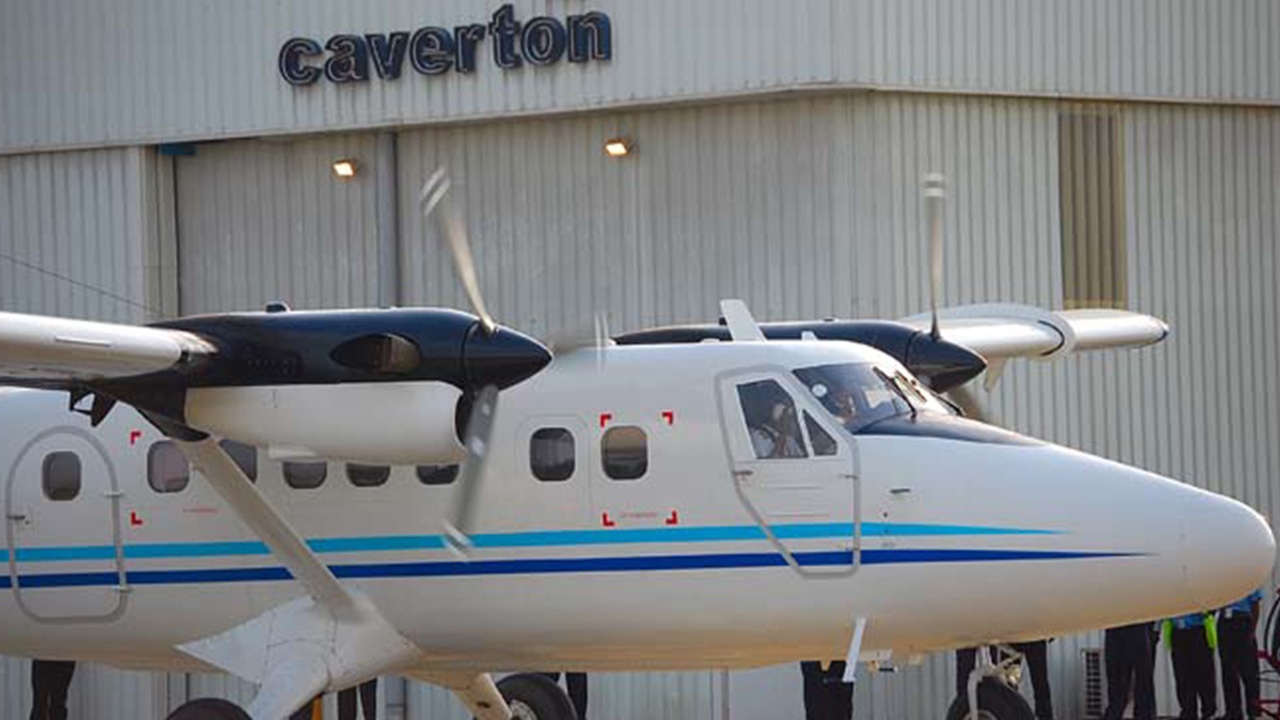
One of the players in the Nigerian aviation sector, Caverton Offshore Support Group Plc, has informed the investing public that it is unsure when it will file its audited financial statements for 2025.
Companies listed on the Nigerian Exchange (NGX) Limited are required to submit their audited financial results at most three months after the end of the fiscal year.
For Caverton, it was supposed to release the financial statements for 2025 on or before March 31, 2026; however, it has not done the needful.
In a statement to explain the delay in the filing of the results, the company said it has not completed the audit, and does not know when this process will be concluded by its external auditor.
“The delay in filing the 2025 AFS arises from the fact that the audit of the company’s financial statements is still ongoing. The company is working closely with its external auditors to conclude the audit process.
“However, as at the date of this notice, the audit has not been finalised due to the need to complete certain outstanding review procedures and obtain final audit clearances to ensure the accuracy, completeness, and integrity of the financial statements,” Caverton explained.
It further said, “While significant progress has been made, the audit process has not reached completion, and as such, the company is currently unable to confirm a definitive timeline for the finalisation and filing of the AFS.”
“The company considers it prudent not to provide an anticipated filing date at this time in order to avoid providing information that may subsequently require revision,” it further stated in the statement signed by its scribe, Ms Amaka Obiora.
Caverton assured “its shareholders and the market that it remains fully committed to maintaining the highest standards of financial reporting, transparency, and regulatory compliance,” promising to promptly file the results “upon completion of the audit process.”

By Adedapo Adesanya
African Export-Import Bank (Afreximbank) will support Dangote Group, as it seeks to expand its operations and grow its turnover to $100 billion by 2030, with new venture interests, including ports, pipelines, data centres, and mining.
The lender, in its long-term growth strategy Vision 2030: Supercharging Dangote Group for Long Term Success, outlines a two‑phase expansion programme spanning 2025–2028 and 2028–2030.
Key initiatives include increasing the capacity of the Dangote Petroleum Refinery from 650,000 barrels per day to 1.4 million barrels per day. Also, it will back plans to boost its fertiliser production from 3 million tonnes per annum to 12 million tonnes per annum, a move that would position the group as the world’s largest producer of urea fertiliser.
The expansion strategy encompasses rapid growth across other business lines, including cement, rice, and broader food production. Beyond its current portfolio, Dangote identified new investment opportunities in infrastructure, including ports and pipelines, as well as gas, mining (as a gateway for semi‑processed and value‑added mineral exports), data centres to support Africa’s digital transformation and enterprise resilience, and power, described as the engine of Africa’s industrial transformation.
To drive the growth over the five years, the Dangote Group predicts that it will require at least $40 billion in new investments to realise its continental ambitions.
Speaking on this, the chief executive of Dangote Industries Limited, Mr Aliko Dangote, said, “Our partnership with Afreximbank is more than financial support; it is about a shared dream for the continent. When we set out to build a 650,000 barrel-per-day refinery—the largest of its kind in Africa—the Bank believed in our vision when others were sceptical.
“Without their leadership and trust, the development of the African continent would not be where it is today. We are joined at the hip with the bank because we share the same mission: to drive local capacity, eliminate our dependence on imports, and ensure Africa’s industrial growth is led by Africans.”
On his part, the chairman of the Board of Afreximbank, Mr George Elombi, noted that the engagements demonstrated a strong convergence of purpose to free Africa from dependency and to ensure the continent’s resources are used to the benefit of its people.
He expressed confidence that the collaboration would lead to “a formidable bond of partnership to make large-scale investments that will accelerate the changes we desire,” changes that have gained urgency amid increasing global fragmentation and protectionism.
Mr Elombi recalled that at the onset of the COVID-19 pandemic in 2020, Africa struggled to secure even the basic protective materials due to limited production capacity, adding that “even when financing was available, we could not access these essential items.”
He further pledged the readiness of Afreximbank and its Board of Directors to support the realisation of Dangote Group’s aspirations. “This is the very purpose for which our institution was created. As is deeply rooted in our DNA, we do not only listen—we execute and convert aspiration into action.”
-
 Feature/OPED6 years ago
Davos was Different this year
-
Travel/Tourism10 years ago
Lagos Seals Western Lodge Hotel In Ikorodu
-

 Showbiz3 years ago
Estranged Lover Releases Videos of Empress Njamah Bathing
-
 Banking8 years ago
Sort Codes of GTBank Branches in Nigeria
-

 Economy3 years ago
Subsidy Removal: CNG at N130 Per Litre Cheaper Than Petrol—IPMAN
-

 Banking3 years ago
Sort Codes of UBA Branches in Nigeria
-

 Banking3 years ago
First Bank Announces Planned Downtime
-

 Sports3 years ago
Highest Paid Nigerian Footballer – How Much Do Nigerian Footballers Earn