
Economy
Australian Sportsbook Fined for Targeting Problem Gambler


Newly launched Betr, an Australian online casino, and sportsbook has been found to have violated the Northern Territory online gambling code of conduct by targeting a self-excluded problem gambler. Despite being on the Northern Territory self-exclusion register, the player, known as Mr. M, was contacted by Betr via phone and text message, offering him the opportunity to open a new account on their site for the upcoming Melbourne Cup. As a result of this breach, the Northern Territory Racing Commission has fined Betr a sum of AU$ 20,655.
The story was heard nationwide, and countless anti-gambling advocates had their say. The CEO of the Alliance for Gambling Reform, Carol Bennett, urged officials to pull the green light on the national self-exclusion register.
The national self-exclusion register was developed and legislated to prevent these types of problems from happening, and it should have been implemented years ago. Bennett also added that the federal government should prioritize implementation as soon as possible to protect problem gamblers better.
Northern Territory Self-Exclusion Register
The NT self-exclusion register allows every player from Australia to self-exclude themselves from every gambling site that is licensed by the Northern Territory. The exclusion period can last days, weeks, months, years, or indefinitely.
Because Betr is licensed by NT, they also have to follow and stick to every rule and regulation that the NT requires. The NT gambling code of conduct is pretty clear that all players who voluntarily self-excluded shouldn’t be contacted by gambling operators, no matter what type of material they are promoting.
According to the NT Racing Commission, Betr has access to the complete list of players who are part of the self-exclusion register, and records show that they received this list. Initially, Betr did not comment on the case when it first came to light. However, there are reports suggesting that the two representatives from Betr who contacted Mr. M used outdated documents that did not reflect the player’s current status on the self-exclusion register.
The Breach
Reportedly, representatives from Betr contacted Mr. M between October 5th and October 10th. It is worth noting that Betr had only launched shortly before these calls and text messages were sent, which suggests that their representatives may not have had access to the full customer database that includes self-excluded players at the time. The aftermath of this incident saw officials of Betr contact all of its representatives and staff to specifically tell them to do clear checks of the database and verify that the customer isn’t on the self-exclusion register before sending any promotional material.
The Northern Territory Racing Commission released a statement indicating that, while Betr may be a newly established online gambling platform, its senior managers and staff members are not new to the iGaming industry. The CEO of Betr, Andrew Menz, previously served as the CEO of BetEasy and therefore has significant experience in the field and knowledge of the regulations and guidelines set by the commission for obtaining a license.
The Commission also added that the lack of leadership was the main problem, and even though with years of experience in the field, senior management somehow allowed employees to contact players without even considering they might be on the self-exclusion register’s list.
The Nation Self-Exclusion Register
Australian gamblers have been eagerly anticipating the implementation of the National self-exclusion register for nearly four years. The register was a component of the National Consumer Protection Framework for Online Wagering, which was legislated by the federal government in 2019. The responsibility for launching the register falls to the Australian Communications and Media Authority, but they have only made an announcement about BetStop and haven’t made much progress since then.
Final Thoughts
There have been additional instances of online bookmakers and casinos sending promotional material to players who have already self-excluded in the Northern Territory, as reported by the Alliance of Gambling Reform. They argue that the implementation of the national self-exclusion register should be a minimum measure taken by the government to prevent such incidents, similar to the case of Mr. M.
But, Communication Minister Michelle Rowland has emphasized that thorough security evaluations must be carried out before the National Self-Exclusion Register may go live. With over 100 Australian online casinos and sportsbooks sending millions of customer details to the register, adequate cybersecurity and data protection is critical for the safety and security of personal and banking information. It remains to be seen whether the essential steps will be implemented.



By Adedapo Adesanya
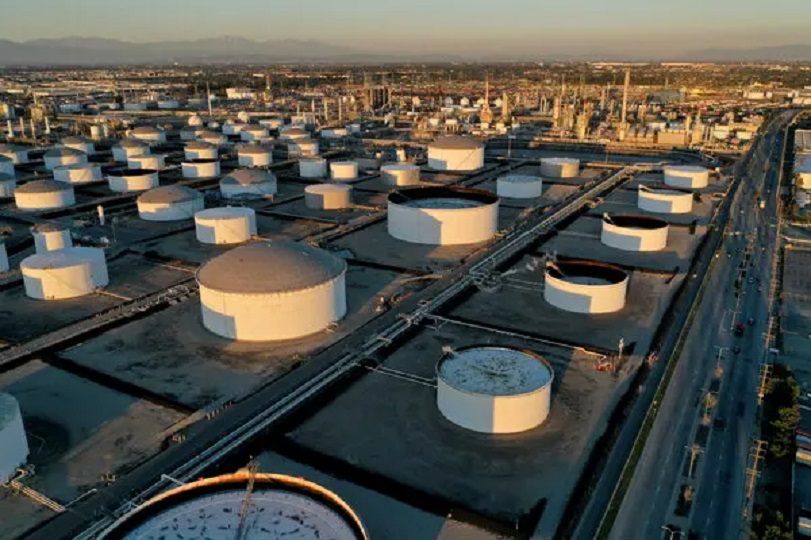
If Nigeria continues producing crude oil at its current pace, its proven reserves would be exhausted in about 59 years, according to the Nigerian Upstream Petroleum Regulatory Commission (NUPRC).
The regulator disclosed this on Wednesday in Abuja, as it released the nation’s official petroleum reserves position as of January 1, 2026.
In a statement signed by its chief executive, Mrs Oritsemeyiwa Eyesan, the commission said Nigeria’s total oil and condensate reserves stand at 37.01 billion barrels, while total gas reserves are about 215.19 trillion cubic feet.
“The Nigerian Upstream Petroleum Regulatory Commission, in keeping with its mandate, is committed to improving upstream sector performance, enhancing the growth of oil and gas reserves, and ensuring stable production for shared prosperity via the operationalisation of the Petroleum Industry Act, 2021, and implementation of the strategic pillars of the commission,” she said.
Providing a breakdown, she stated that “2P crude oil and condensate reserves stand at 31.09 billion barrels and 5.92 billion barrels, respectively, amounting to a total of 37.01 billion barrels.”
On gas, she said, “2P associated gas and non-associated gas reserves stand at 100.21 trillion cubic feet and 114.98 trillion cubic feet, respectively, resulting in total gas reserves of 215.19 trillion cubic feet.”
Explaining the changes recorded within the period, Mrs Eyesan noted that crude volumes declined slightly due to production activities during the previous year.
While Nigeria’s reserves life index stands at 59 years for oil, it was put at 85 years for gas, indicating the estimated duration the resources would last at current production levels.
“The Reserves Life Index is 59 Years and 85 Years for Oil and Gas, respectively. The reason for the slight change in 1.1.2026 oil and condensate reserves by 0.74 per cent is attributable to production in 2025 and reserves update due to field performance and technical evaluation based on subsurface studies.
“The reason for the increase in 1.1.2026 AG and NAG reserves by 2.21 per cent is largely because reserves update is based on discoveries and the result of robust reservoir studies,” she said.
In contrast, she said gas reserves increased on the back of fresh discoveries and improved technical assessments.
“The reason for the increase in 1.1.2026 associated gas and non-associated gas reserves by 2.21 per cent is largely because the reserves update is based on discoveries and the result of robust reservoir studies,” she added.
Declaring the figures official, Mrs Eyesan said, “Consequently, and in furtherance of the provisions of the Petroleum Industry Act, I hereby declare the total oil and condensate reserves of 37.01 billion barrels and total gas reserves of 215.19 trillion cubic feet as the official national petroleum reserves position as of 1st January 2026.”
Findings show that Nigeria’s reserves position in 2026 reflects a modest shift from 2025, when total oil and condensate reserves were slightly higher at about 37.3 billion barrels, while gas reserves stood at approximately 210–211 trillion cubic feet.
The 2026 data, therefore, indicates a 0.74 per cent decline in oil reserves, largely driven by sustained production and limited new oil discoveries, while gas reserves expanded by 2.21 per cent due to ongoing exploration success and renewed focus on gas development.
By Adedapo Adesanya
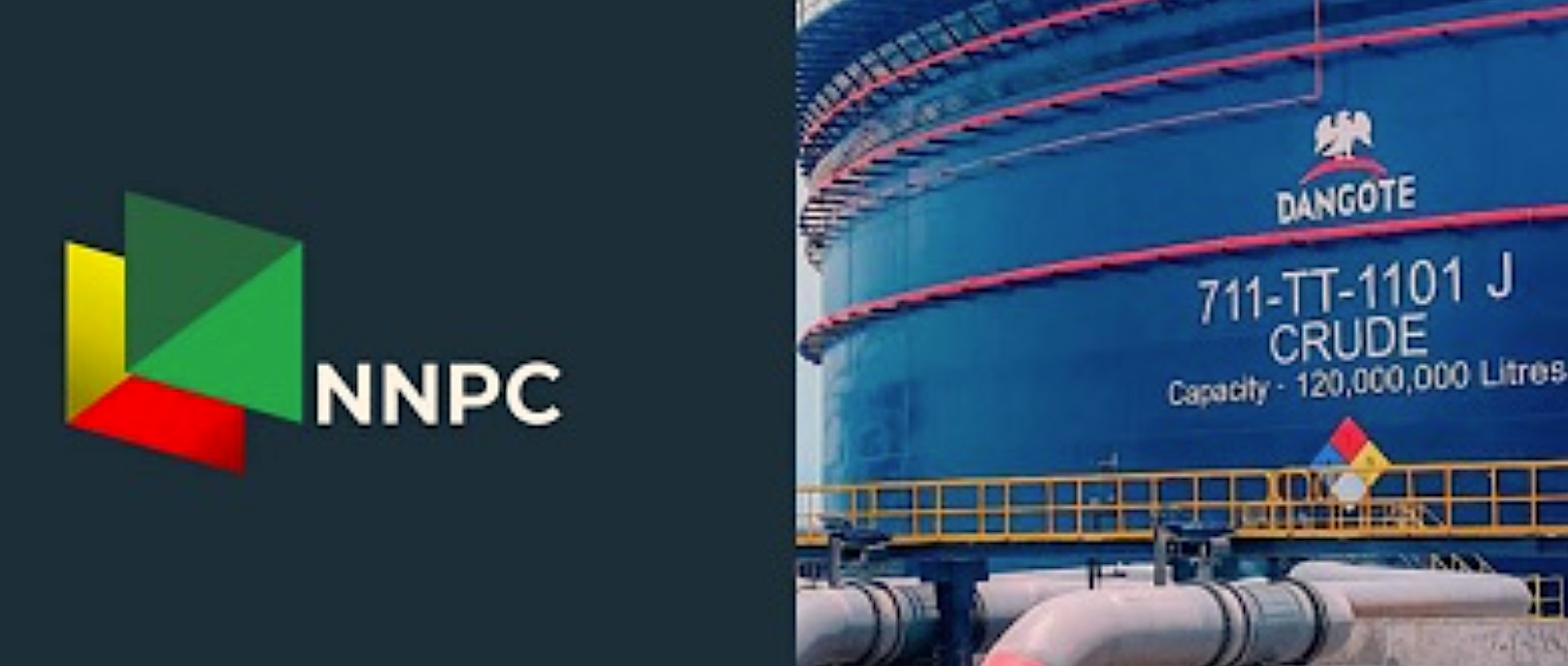
The Nigerian National Petroleum Company (NNPC) Limited has allocated seven cargoes to the Dangote Refinery and Petrochemicals for May 2026, up from five in previous months, to boost fuel production and ease rising costs.
The 650,000 barrels per day Dangote Refinery, which is responsible for over 60 per cent of domestic supply, has not been able to get its expected feedstock from the national oil company under the Crude-for-Naira initiative. It has received about 40 per cent of local feedstock in recent months, according to the chief executive of the oil refinery, Mr David Bird.
He said the refinery currently gets only about five cargoes of crude monthly, against an expected 13 to 15 cargoes, noting that this was below its agreed crude oil supply under the federal government’s Crude-for-Naira arrangement.
Business Post reports that the majority of Nigeria’s crude production is tied to Joint Venture (JV) contracts, which constrain the optimal supply of crude oil to the Dangote Refinery.
According to Reuters, an unnamed senior Dangote official said, “NNPC has allocated more cargoes to Dangote for May,” adding that, “While this will not completely meet our demands, it can help. We are also in negotiation with NNPC for more volumes.”
The increase in crude allocations to the 650,000 barrel per day refinery could also curb volumes of Nigerian crude available for export at a time when the Iran war has drastically cut supply from the Middle East.
Due to the shortfall in the crude-for-Naira policy, the company will still have to purchase crude at international benchmark prices. The company sources crude from Brazil, Equatorial Guinea, Angola, Algeria, and the US, among others.
The official said Dangote recently had to pay premiums as high as $18 a barrel over the Brent crude benchmark to secure cargoes from the international market.
Since NNPC cargoes are cheaper for the refinery because of lower shipping costs. This could translate to higher fuel prices with Nigerians buying as high as N1,300 – N1,400 at the pump.
Fuel prices in Nigeria have reached record highs as Dangote has had to increase petrol depot prices by about 13 per cent in the last month.


By Aduragbemi Omiyale
The Nigerian private sector witnessed a contraction in growth in March 2026, as higher fuel costs triggered by the war in Iran, instigated by the United States and Israel, led to a steep intensification of inflationary pressures.
According to the Stanbic IBTC Purchasing Managers’ Index (PMI) for the month, it stood at 51.9 points compared with 53.2 points recorded in February 2026.
In the period under review, output growth was only modest, but underlying demand reportedly remained resilient, leading to a further sharp rise in new orders. In turn, firms continued to expand their employment and purchasing activity.
The PMI numbers in the first quarter of this year have been consistent with an estimated 3.99 per cent y/y GDP growth for the quarter, after also accounting for the crude oil sector’s performance.
The Nigerian economy is now growing by 4.22 per cent y/y in 2026, from 3.87 per cent y/y in 2025, with the oil sector growth slowing to 3.01 per cent y/y from 8.50 per cent y/y in the preceding year. The non-oil sector’s growth is expected at 4.24 per cent y/y in 2026, from 3.71 per cent y/y in 2025, likely driven primarily by services, which we see growing by 5.64 per cent y/y in 2026 versus 4.14 per cent y/y in 2025.
“While higher fuel costs and power supply issues contributed to a slowdown in the growth of Nigeria’s private sector activity, underlying demand remains strong. This is reflected in an increase in customer demand and the associated impact of new product launches, both of which supported an improvement in new orders.
“Businesses also remained optimistic about increases in future output amid their plans to invest in business expansions and boost promotional efforts. Nonetheless, input prices rose markedly at the sharpest pace since January 2025, with all four monitored sectors seeing sharper rates of inflation,” the Head of Equity Research West Africa at Stanbic IBTC Bank, Muyiwa Oni, commented.









-
 Feature/OPED6 years ago
Davos was Different this year
-
Travel/Tourism10 years ago
Lagos Seals Western Lodge Hotel In Ikorodu
-

 Showbiz3 years ago
Estranged Lover Releases Videos of Empress Njamah Bathing
-
 Banking8 years ago
Sort Codes of GTBank Branches in Nigeria
-

 Economy3 years ago
Subsidy Removal: CNG at N130 Per Litre Cheaper Than Petrol—IPMAN
-

 Banking3 years ago
Sort Codes of UBA Branches in Nigeria
-

 Banking3 years ago
First Bank Announces Planned Downtime
-

 Sports3 years ago
Highest Paid Nigerian Footballer – How Much Do Nigerian Footballers Earn