Economy
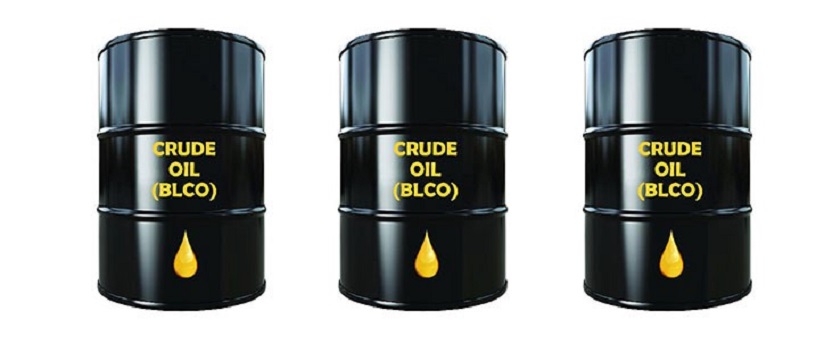
Crude Oil Rises as Market Weighs Possible Trump Energy Policies
By Adedapo Adesanya
Crude oil went up nearly one per cent on Thursday as the market considered how US President-elect Donald Trump’s policies would affect supplies.
Yesterday, Brent futures gained 71 cents or 0.95 per cent to trade at $75.63 per barrel and the US West Texas Intermediate (WTI) crude increased by 67 cents or 0.93 per cent to close at $72.36 a barrel.
Prices gained support from expectations that Trump’s incoming administration may tighten sanctions on Iran and Venezuela.
On Wednesday, the election of the Republican candidate, Mr Trump, initially triggered a sell-off that pushed oil down more than $2 as the US Dollar rallied. He will take office in the next 78 days.
A strong Dollar makes oil expensive and this typically leads to a drop in prices.
In his first term, Mr Trump put in place harsher sanctions on Iranian and Venezuelan oil, limiting supply and supporting oil prices.
However, his successor, Mr Joe Biden briefly rolled back the sanctions but he would later reinstate them.
Such a move would raise the cost of China’s imports, piling pressure on a refining sector grappling with weak fuel demand and tight margins.
However, China and Iran have built a trading system that uses mostly Chinese Yuan and a network of middlemen, avoiding the Dollar and exposure to US regulators, making sanctions enforcement tough.
However, analysts say that the US government has been reluctant to take steps that would remove supply from the global market as a result of the Russia-Ukraine war.
Also supporting prices, the US Federal Reserve cut interest rates by a quarter of a percentage point at the close of its policy meeting on Thursday.
The US Federal Reserve said it will continue assessing data to determine the pace and destination of interest rates as officials reset tight monetary policy to account for inflation that has slowed markedly in the past year and is nearing the US central bank’s 2 per cent target.
Interest rate cuts typically boost economic activity and energy demand.
Support also came as some companies cut supply in the US due to Hurricane Rafael. According to the US Bureau of Safety and Environmental Enforcement (BSEE), over 22 per cent equivalent to 391,214 barrels per day, of crude oil production was shut in response to the hurricane.
Economy
NECA Launches Nigeria’s First ESG Implementation Guide for MSMEs
By Adedapo Adesanya
Nigeria Employers’ Consultative Association (NECA) has inaugurated the country’s first Environmental, Social and Governance (ESG) Implementation Guide for Micro, Small and Medium Enterprises (MSMEs) to strengthen business sustainability.
The guide was inaugurated on Tuesday during the 2026 Nigeria Employers’ Summit in Abuja in collaboration with the International Labour Organisation (ILO).
Chairman of the NECA ESG Advisory Board, Mr Femi Jaiyeola, described the guide as a milestone for strengthening the competitiveness and sustainability of Nigerian MSMEs.
He said MSMEs remained the backbone of Nigeria’s economy and required practical tools to compete in an increasingly sustainability-driven global business environment.
Mr Jaiyeola said ESG had evolved beyond regulatory compliance into a strategic business tool for attracting investment, improving competitiveness and enhancing long-term enterprise value.
He said ESG also presented significant opportunities for MSMEs and Nigeria’s economy beyond meeting regulatory obligations.
According to him, the guide comes as regulators, financial institutions and global markets increasingly demand sustainable business practices from enterprises of all sizes.
The official said ESG reporting was expected to become mandatory in Nigeria by 2030, urging MSMEs to begin preparations immediately.
He said the guide provided a practical roadmap to help MSMEs adopt ESG principles progressively while delivering measurable business value and organisational resilience.
According to him, ESG adoption will improve access to finance, strengthen business reputation and expand opportunities in international value chains.
He described the guide as a practical tool that would enable Nigerian MSMEs to compete, grow and thrive in a sustainability-driven economy.
Mr Jaiyeola commended ILO consultants and members of the NECA ESG Advisory Board for supporting the development of the implementation guide.
He recalled that NECA, with ILO support, launched an ESG assessment on Dec. 4, 2025, to strengthen sustainability practices across Nigerian businesses.
According to him, the assessment highlighted the need to integrate MSMEs into Nigeria’s ESG framework because of their contributions to economic growth and employment.
Mr Jaiyeola said the implementation guide was the first designed specifically for MSMEs in Nigeria and, to NECA’s knowledge, across Africa.
He expressed confidence that the guide would help MSMEs understand ESG principles and improve competitiveness in local and international markets.
Mr Jaiyeola disclosed that six NECA officials were undergoing specialised ESG training for SMEs at the ILO International Training Centre in Turin, Italy.
He said the officials would train MSMEs across Nigeria’s six geopolitical zones after completing the programme. According to him, the initiative demonstrates NECA’s commitment to building business capacity for sustainability and global competitiveness.
Economy
World Bank Backs Nigeria with $1.25bn Loan to Drive Investment, Jobs
By Adedapo Adesanya
The World Bank has approved $1.25 billion in development financing to help Nigeria spur economic growth and create jobs.
Unveiled under its Nigeria Actions for Investment and Jobs Acceleration programme, the approval was announced on Wednesday alongside the launch of a new Country Partnership Framework for Nigeria, spanning 2026 to 2032.
The global lender, in a statement, noted that the newly endorsed strategy aims to guide its support over the next six years, primarily focusing on creating higher-quality jobs.
The Bretton Woods-based bank said the $1.25 billion Development Policy Financing operation is expected to back reforms aimed at improving Nigeria’s business environment and strengthening long-term economic growth.
According to the statement, the planned reforms include expanding capital markets, updating regulations for the digital economy and e-governance, accelerating electricity sector reforms, reducing trade barriers in line with Nigeria’s commitments under the Economic Community of West African States (ECOWAS) and the African Continental Free Trade Area (AfCFTA), improving access to quality agricultural seeds and increasing domestic revenue generation.
The loan comes amid increased criticism over the rate of borrowing under the Bola Tinubu-led administration, which has seen the country’s debt profile now almost at N160 trillion, as per the latest data from the Debt Management Office (DMO).
The Bank stressed that the new framework is built on Nigeria’s recent macroeconomic reforms, which it noted have successfully driven economic growth, bolstered external reserves, and improved investor confidence.
“The World Bank Group has endorsed a new Country Partnership Framework for Nigeria spanning 2026–2032, setting out a strategy to create more and better jobs at scale by unlocking private sector-led growth,” the bank stated in the statement.
World Bank Country Director for Nigeria, Mr Mathew Verghis, while highlighting the need to convert financial benchmarks into human development, emphasised the core mission of the project.
“Our new Country Partnership Framework provides the strategy for how the World Bank Group will support Nigeria over the coming years, with a strong focus on helping to create more and better jobs, particularly by enabling private sector-led growth.
“The recent macroeconomic gains have been critical to help stabilise the economy. Translating improved macroeconomic conditions into better living standards will require addressing the structural constraints to spur private sector investment and job creation,” Mr Verghis said.
Economy
NASD Index Rises 0.89% as Market Capitalisation Hits N2.580trn
By Adedapo Adesanya
The NASD Over-the-Counter (OTC) Securities Exchange improved by 0.89 per cent on Tuesday, June 30, spurring the market capitalisation to chalk up N22.72 billion to close at N2.580 trillion, in contrast to the preceding session’s N2.557 trillion.
In the same vein, the NASD Unlisted Security Index (NSI) added 37.85 points during the session to settle at 4,2991.41 points from Monday’s 4,261.56 points.
The unlisted securities market gained weight yesterday after finishing with three price losers and gainers, led by Nipco Plc, which improved its share price by N34.24 to N384.00 per unit from N349.76 per unit. FrieslandCampina Wamco Nigeria Plc appreciated by N10.25 to close at N152.01 per share versus N141.76 per share, and Food Concepts Plc soared by 7 Kobo to settle at N2.50 per unit versus N2.43 per unit.
On the flip side, Afriland Properties Plc weakened by N1.57 to N15.17 per share from N16.74 per share, Central Securities Clearing System (CSCS) Plc lost 48 Kobo to trade at N88.00 per unit compared with Monday’s N88.48 per unit, and Geo-Fluids Plc eased by 24 Kobo to N2.37 per share from N2.61 per share.
During the session, the volume of securities traded by market participants moved up by 268.9 per cent to 846,063 units from 229,314 units, while the value of securities dropped 34.9 per cent to N15.99 million from N24.6 million, and the number of deals crashed by 26.5 per cent to 25 deals from 34 deals.
Great Nigeria Insurance (GNI) Plc remained the most active stock by value on a year-to-date basis, with 3.4 billion units worth N8.4 billion, the second spot was occupied by Infrastructure Credit Guarantee (Infracredit) Plc with 2.3 billion units valued at N6.5 billion, and the third spot was taken by CSCS Plc with 68.8 million units traded for N4.7 billion.
GNI Plc also ended the day as the most active stock by volume on a year-to-date basis, with 3.4 billion units exchanged for N8.4 billion, followed by Infracredit Plc with 2.3 billion units transacted N6.5 billion, and Resourcery Plc with 1.1 billion units sold for N415.7 million.
-
Feature/OPED6 years agoDavos was Different this year
-
Travel/Tourism10 years ago
Lagos Seals Western Lodge Hotel In Ikorodu
-
Showbiz3 years agoEstranged Lover Releases Videos of Empress Njamah Bathing
-
Banking8 years agoSort Codes of GTBank Branches in Nigeria
-
Economy3 years agoSubsidy Removal: CNG at N130 Per Litre Cheaper Than Petrol—IPMAN
-
Banking3 years agoSort Codes of UBA Branches in Nigeria
-
Banking3 years agoFirst Bank Announces Planned Downtime
-
Sports3 years agoHighest Paid Nigerian Footballer – How Much Do Nigerian Footballers Earn