

Economy
Africa’s Core Financial Challenge is Infrastructural, Not Liquidity—Stanley Jacob

By Modupe Gbadeyanka
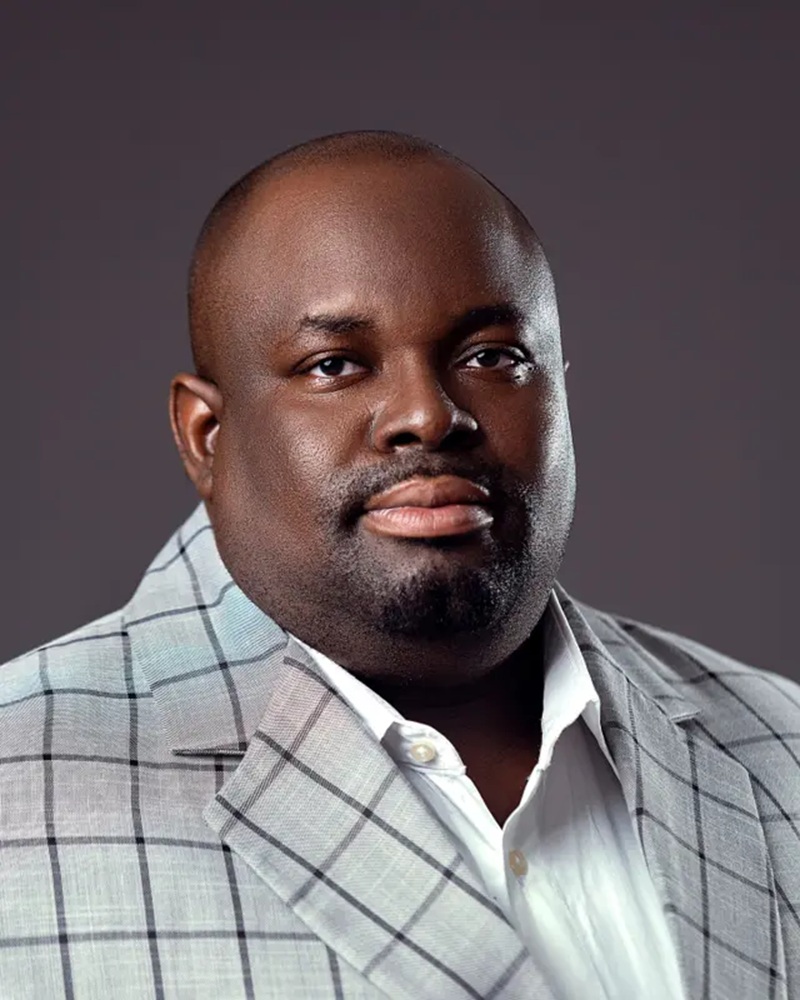
The Group Chief Innovation and Technology at Meristem, Mr Stanley Jacob, submitted that the core financial challenge facing Nigeria and Africa is not funding, but a lack of financial architecture and project readiness to deploy existing capital safely and productively.
At a forum organised by The Alternative Bank (AltBank) last Thursday in Lagos, Mr Jacob tasked policymakers to think out of the box, noting that the continent holds vast domestic capital pools.
At the event themed Beyond Interest, he also disclosed that the convergence of the Pan-African Payment and Settlement System (PAPSS) with the tokenisation of real-world assets could hand Nigeria a first-mover advantage in continental capital markets.
This sentiment was echoed by the Executive Director of Tugrande Alliance Limited, Ajibola Tobi-Osho, who pointed out that while Nigeria has moved from crisis management to macroeconomic stability, the binding constraint has shifted from inflation to capital allocation, with banks parking record liquidity at the central bank rather than lending to the businesses that drive jobs and growth.
Last Thursday’s programme was convened to advance the case for non-interest finance as a practical route to mobilising patient capital into Nigeria’s productive economy, as well as press investors and policymakers to judge every allocation by both the returns it earns and the capacity it builds.
The chairman of The Alternative Bank, Mr Muhtar Bakare, stated that Nigeria’s constraint is less a shortage of capital than a shortage of the trust that allows capital to do patient work.
“What we lack is not effort. We lack capital that stays long enough to turn effort into capacity, capacity into durable jobs and durable jobs into stability. That is why the distinction between extractive and productive capital matters,” he said.
Also speaking, the Governor of Lagos State, Mr Babajide Sanwo-Olu, averred that the government is not a competitor to private investment but an enabler of it.
“The future of finance is not only about the price of capital; it is increasingly about the quality of the economic activity that capital enables. Lagos is not only open for business; Lagos is prepared to do business,” Mr Sanwo-Olu, represented by the Commissioner for Finance, Mr Abayomi Oluyomi, stated.
In his remarks, former Governor of Lagos State and former Minister of Works and Housing, Mr Babatunde Fashola, argued that capital anchored to real, productive assets and to the public good delivers more durable value than money chased for short-term yield, and urged investors and institutions to weigh the long-term social returns of where they place their funds.
Delivering his brief on The Business Case for Ethical Capital, a member of Sterling Financial Holdings Company Plc board, Mr Abubakar Suleiman, traced The Alternative Bank’s journey from a modest non-interest window opened by Sterling Bank in 2014 to an institution he said now holds total assets approaching ₦500 billion and serves nearly a million customers.
“The Alternative Bank has shown that non-interest banking can grow, win customers, and generate profit. The business case for ethical capital already exists. Our task is to apply it with discipline,” he stated.
He pointed to WasteBanc, AltBank’s recycling initiative with the Lagos Waste Management Authority, and to Nigeria’s sovereign Sukuk programme as evidence that values-aligned finance can hold to commercial standards while connecting capital to identifiable, productive assets.


