
Economy
How Big Is Your Financial Cushion?



By Investopedia
At some point in your financial life you have more money than you need to live on, so you invest it. But even after you have built a big nest for the money eggs, you still need a cushion, an emergency fund, or some readily available cash that’s always there when you need it. But how much do you need? Here are two ways to help you find the answer.
First Things First
The first step in creating a cash cushion is to realize you really need one. Stuff happens. Things change. Big expenses pop up. Families change. Careers take twists and turns. Without a cushion, you may have to liquidate investments you intended to hold for the long term, skewing your risk level or triggering capital gains at the wrong time. But if you plan ahead, no problem. You have a cushion, a convenient and liquid safety net. Now, how much?
The Formula Way
The formula way is usually based on the time you might need the cushion to fortify your finances, say, “six months’ salary” or “a year of living expenses.” Just calculate how much you actually spent in the last year. Be honest with the numbers. If you spend N150,000 a month, there’s no sense pretending N100,000 will be enough. Let your real numbers guide you. You can solve this.
The Practical Way
The practical way is a common sense, rational guess at how big your cushion should be. Those who can make non-emotional money decisions or who value a rational financial approach like the practical way. It’s your best guess, and you know better than anyone what the number has to be. Cross-check your best guess with the formula way to confirm your judgment. Set the number and set it aside.
When You Fall Back on the Cushion, What Next?
Sometimes you need the cushion. You may be taking your career in a new direction, have a child, take the trip of a lifetime or supplement a loved one for a while. Don’t feel guilty for tapping into the cushion. That’s why it’s there. But if it’s more than a very temporary situation, be sure to check in with you advisor for a discussion about your financial situation and goals. Often, there is a change that should be made to your investments because of changes in your family, career, health or vision for the future. When the temporary need ends, make a plan to refill your cushion account.
Do It Today
Putting a cushion in place is one of the easiest ways to prepare for an unknowable future. Using any one, or several, of the cushion calculators you can figure out how big your emergency fund should be. Then you can rest easy, feel smart and focus on what’s really important.
Investopedia



By Adedapo Adesanya
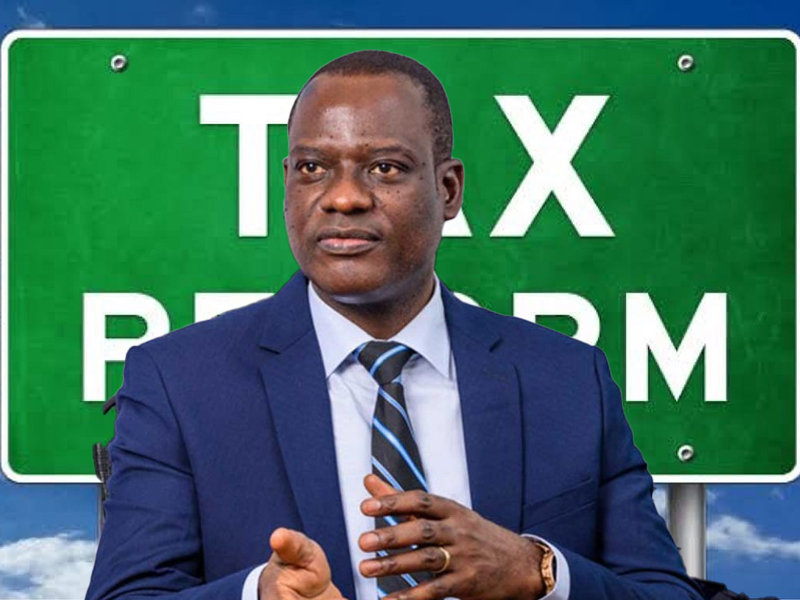
The Minister of State for Finance, Mr Taiwo Oyedele, has denied admitting errors in Nigeria’s new tax laws, describing the reports as “misleading” and a false misrepresentation.
In a Sunday statement, attributed to the Presidential Fiscal Policy and Tax Reforms Committee and posted on Mr Oyedele’s official X handle, the reports were described as an unhelpful twisted narrative that risks distorting public understanding and misleading the very people the reforms were designed to benefit.
“Our attention has been drawn to misleading media reports claiming that the Minister of State for Finance, Mr Taiwo Oyedele, has ‘finally admitted errors in the new tax laws.’
“These publications misrepresent the Minister’s statements, falsely alleging that he urged Nigerians to await the outcome of a legislative probe, a process that has long been concluded and the gazetted copies certified by the National Assembly [have been] published since early January 2026.
“This twisted narrative is unhelpful as it risks distorting public understanding and misleading the very people the reforms were designed to benefit,” the statement read.
The committee explained that the minister, while speaking at a fireside chat during the Nigerian Bar Association Section on Legal Practice conference in Lagos, highlighted early gains from the tax reforms.
According to the statement, the gains highlighted by the Minister included a significant increase in the number of informal businesses seeking registration with the Corporate Affairs Commission, as well as a rise in the number of registered taxpayers from about 10 million to over 100 million nationwide.
These impressive results stem from the robust design and progressive nature of the new laws, including an exemption of small companies from tax, increased exemption thresholds for low-income earners, tax exemptions on basic consumption items like food, education, healthcare, transportation, and rent, and the introduction of the Tax Ombud to protect taxpayer rights, it stated.
The statement added, “The Minister contrasted the transformative changes in the new laws with the regressive provisions in the old laws. He, however, emphasised that no law is perfect.
“Therefore, ongoing stakeholder engagement is essential to identify and address any errors or gaps for appropriate legislative updates through Finance Bills as part of a continuous improvement process.”
By Adedapo Adesanya
Lafarge Africa Plc will change its corporate name to HBM Nigeria Plc, reflecting new majority ownership by China’s Huaxin Cement Co., subject to approval by shareholders of the 67-year old cement maker.
The company will ask shareholders to approve the change of its corporate identity to HBM Nigeria Plc at its 67th Annual General Meeting scheduled for April 30, 2026, in Lagos.
The proposed name change is part of a broader AGM agenda that also includes financial reporting, dividend approval, and board restructuring.
The rebrand marks a new chapter following Holcim’s exit and signals Huaxin’s intent to deepen its footprint in Nigeria’s construction materials sector.
The company highlighted the proposed name change as a key special resolution requiring shareholder approval at the meeting. Management noted that the amendment will formally alter Clause 1 of its Memorandum of Association, redefining its legal identity.
Lafarge Africa Plc reported strong financial performance for the 2025 financial year, underscoring the backdrop to its proposed strategic shift. The company recorded significant growth across key financial metrics.
Revenue rose to N1.1 trillion in 2025, up 53 per cent from N696.8 billion in 2024. Profit after tax increased from N100.1 billion to N273 billion, representing a 173 per cent growth. Operating profit climbed from N193 billion to N392 billion, driven by cost optimisation and operational efficiency.
Earnings per share surged from N6.22 to N17, reflecting improved profitability. The company has proposed a final dividend of N6.00 per share, subject to shareholder approval and applicable withholding tax.
Huaxin Cement acquired a controlling 83.81 per cent stake in Lafarge Africa Plc from the Holcim Group for roughly $1 billion. The deal, finalised in late 2025, marks Holcim’s complete exit from Nigeria to focus on other markets, with Huaxin aimed at expanding its footprint in Africa.
The chairman of Lafarge Africa, Mr Gbenga Oyebode, said Nigeria’s market holds vast potential with its positive growth indices, increasing urbanisation, and infrastructure demand.
“This development will further solidify Lafarge Africa’s position as a leading contributor to Nigeria’s infrastructure and economic growth. Nigeria’s market holds vast potential with its positive growth indices, increasing urbanisation, and infrastructure demand. We remain committed to leveraging these opportunities while maintaining our focus on sustainability and innovation.”
Lafarge expanded into Nigeria in 2001 through the acquisition of Blue Circle, thereby taking over its stake in West African Portland Cement Company (WAPCO), later rebranding it as Lafarge Cement WAPCO Plc and significantly increasing production capacity with new plants and infrastructure in Ogun State.
By Adedapo Adesanya
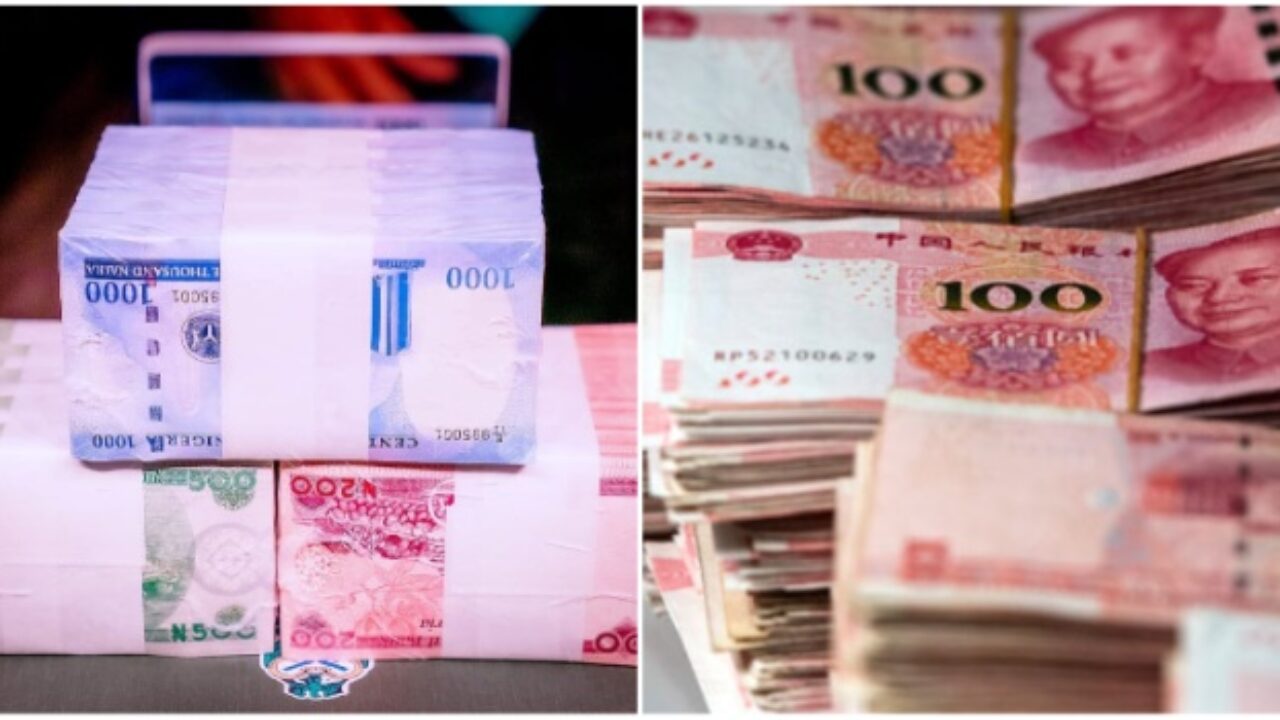
The Naira extended its gain on the Dollar in the Nigerian Autonomous Foreign Exchange Market (NAFEX) on Friday, April 10, by 0.18 per cent or N2.43 to trade at N1,356.89/$1 compared with the previous day’s N1,359.32/$1.
It also improved its value against the Pound Sterling in the same market window by N16.01 to close at N1,828.82/£1 versus N1,844.83/£1, but lost N3.40 against the Euro to sell at N1,592.58/€1 versus N1,589.18/€1.
In the parallel market, the Nigerian Naira further appreciated against the Dollar during the session by N5 to settle at N1,385/$1 compared with the previous day’s rate of N1,390/$1.
With the FX market operating with greater liquidity and efficiency, market participants now transact without extraordinary interventions from the Central Bank of Nigeria (CBN).
However, external reserves fell for 16 straight days through April 8, the longest declining run since July 2025. The central bank’s foreign exchange holdings declined by $1.1 billion in the period to $48.94 billion, the lowest level since February 19, the lender’s data show.
After initially weakening, as the Iran war broke out, the Nigerian currency has recovered losses and is one of only four of 23 African currencies still standing in the period.
The CBN had pledged to stabilise the Naira and has boosted sales of high-yield short-term debt to attract inflows of Dollars.
As for the cryptocurrency market, Bitcoin (BTC) and other major cryptocurrencies fell after US Vice President J.D. Vance announced that the country and Iranian negotiators had failed to agree to an extended ceasefire. BTC lost 1.9 per cent to sell at $71,549.08.
The parties met in Pakistan on Saturday to negotiate an agreement after the US’s nearly six-week-long campaign against Iran. VP Vance said at a press conference afterwards that the US had “not reached an agreement.”
Cardano (ADA) fell 4.3 per cent to $0.2398, Solana (SOL) depreciated by 2.7 per cent to $82.22, Binance Coin (BNB) slumped 2.2 per cent to $593.61, Dogecoin (DOGE) went down by 1.9 per cent to $0.0912, Ethereum (ETH) weakened by 1.4 per cent to $2,214.56, and Ripple (XRP) crashed by 1.3 per cent to $1.33.
However, TRON (TRX) appreciated by 0.9 per cent to $0.3217, while the US Dollar Tether (USDT) and the US Dollar Coin (USDC) closed flat at $1.00 each.
-
 Feature/OPED6 years ago
Davos was Different this year
-
Travel/Tourism10 years ago
Lagos Seals Western Lodge Hotel In Ikorodu
-

 Showbiz3 years ago
Estranged Lover Releases Videos of Empress Njamah Bathing
-
 Banking8 years ago
Sort Codes of GTBank Branches in Nigeria
-

 Economy3 years ago
Subsidy Removal: CNG at N130 Per Litre Cheaper Than Petrol—IPMAN
-

 Banking3 years ago
Sort Codes of UBA Branches in Nigeria
-

 Banking3 years ago
First Bank Announces Planned Downtime
-

 Sports3 years ago
Highest Paid Nigerian Footballer – How Much Do Nigerian Footballers Earn