Connect with us

Economy

COP28: Nigeria Targets Investments in Decarbonisation Operations

Published

on

investments in Decarbonisation Operations

By Adedapo Adesanya 

The Nigerian Midstream and Downstream Petroleum Regulatory Authority (NMDPRA) has projected that its Industry Sustainability Initiative (NISI) will create over $575 billion in capital investment opportunities for Nigeria through the decarbonisation of operations.

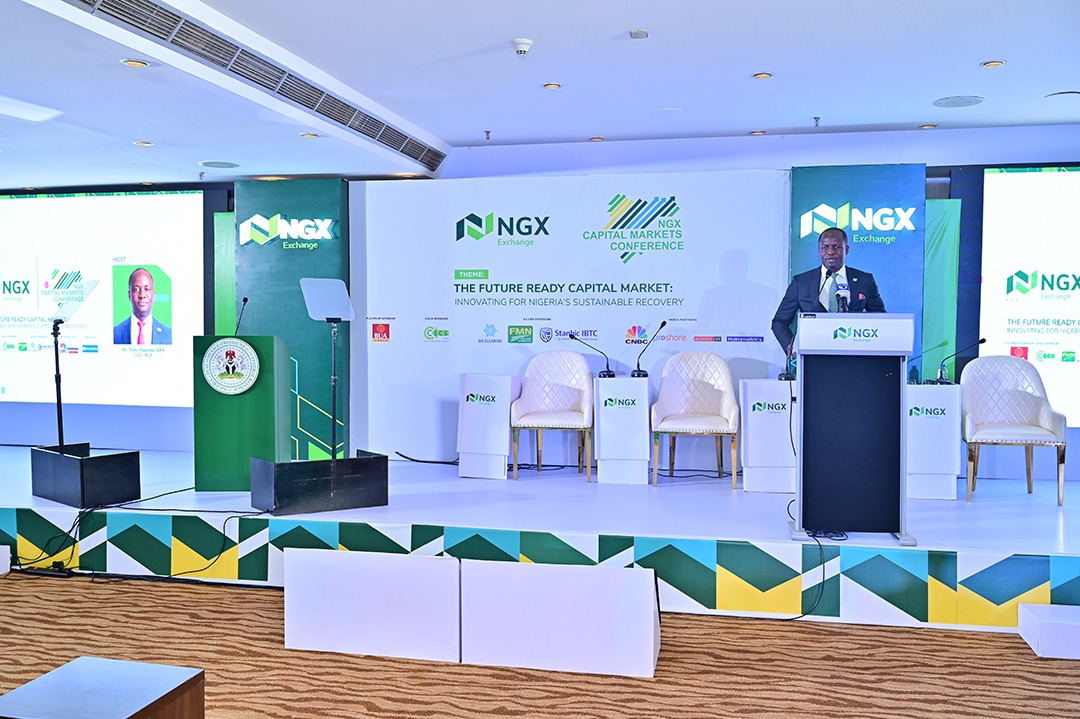
According to a statement, NMDPRA, while hosting a session on Nigeria’s Pathway to Energy Sustainability and NMDPRA’s Role at the UN Climate Change Conference 2023 (COP28) in Dubai, UAE, x-rayed Nigeria’s journey towards reducing carbon emission and achieving Net Zero by 2060.

Speaking at the event, Mr Mustapha Lamorde, the authority’s Executive Director on Health, Safety, Environment and Community (HSEC), said the investment would be created through infrastructure and technological development, green economy improvement, stakeholder management, and human capital development.

He said NISI which was created in line with the Global Sustainability Development Goals (SDGs 3, 7, 8, 9, 11, 13, 16, 17) was geared towards achieving Nigeria’s 2060 Net Zero commitment in the midstream and downstream petroleum industry.

He gave a breakdown of the investment opportunities as highlighted sector by sector – $272 billion in power, $127 billion in infrastructure, $96 billion in oil and gas processing optimisation, $80 billion in industry and $2.8 billion in clean cooking.

Mr Larmode said that achieving the target required strong government commitment and collaboration with the private sector using technological innovation.

Adding his input, Mr Anibor Kragha, Executive Secretary of the African Refiners and Distributors Association (ARDA), said the NMDPRA and the Nigerian Government should harness funding opportunities for gas projects from international financiers dealing with agriculture, saying that it was necessary because of the key role being played by gas in the sector.

He urged the NMDPRA as the regulator of the Midstream and Downstream industry, to develop a decade-by-decade plan to decarbonise the mid/downstream with bankable projects that would elicit finance from foreign donor agencies.

He also emphasised the importance of developing and including young people in the decarbonisation drive, as they were expected to play a major role in implementing the initiatives in the future.

Mr Mansur Alkali, Authority’s Executive Director, Midstream and Downstream Gas Infrastructure Fund (MDGIF), explained that the MDGIF which was set up under section 52 of the Petroleum Industry Act, was pivotal towards accelerating investments along the gas value chain.

Akali said that the MDGIF was neither a grant nor a loan, but rather an investment initiative designed to de-risk investments through partnerships with private sector players to build the necessary infrastructure to harness the country’s vast gas resources.

Similarly, Mr Abel Nsa, Senior Technical Adviser on Transition Energy to the Minister of State, Petroleum Resources (Gas), Mr Ekperipe Ekpo, said the Host Community Development Framework as inaugurated by the commission for upstream operations amongst other benefits would ensure oil and gas assets were adequately protected.

Mr Nsa also said that the framework would ensure uninterrupted production and supply of petroleum products which were critical to midstream operations.

He added that the Decade of Gas initiative of the government would also guarantee the availability of gas for domestic utilities.

According to him, discussions are currently ongoing with upstream gas producers to deliver on the mandate.


Adedapo Adesanya is a journalist, polymath, and connoisseur of everything art. When he is not writing, he has his nose buried in one of the many books or articles he has bookmarked or simply listening to good music with a bottle of beer or wine. He supports the greatest club in the world, Manchester United F.C.

Economy

Six Price Gainers Rally OTC Securities Exchange by 2.09%

Published

on

NASD OTC securities exchange

By Adedapo Adesanya

Six price gainers lifted the NASD Over-the-Counter (OTC) Securities Exchange by 2.09 per cent on Monday, February 9, amid a surge in activity level.

According to data, the volume of securities significantly increased by 3,499.1 per cent to 13.3 million units from the 384,784 units recorded in the preceding trading session, as the value of securities soared by 518.0 per cent to N99.3 million from N16.1 million, and the number of deals moved up by 95.8 per cent to 47 deals from the preceding session’s 24 deals.

Central Securities Clearing System (CSCS) Plc ended the day as the most active stock by value on a year-to-date basis with 16.9 million units exchanged for N699.9 million, followed by Geo-Fluids Plc with 23.2 million units valued at N123.6 million, and FrieslandCampina Wamco Nigeria Plc with 1.8 million units traded for N118.5 million.

However, Geo-Fluids Plc became the most traded stock by volume on a year-to-date basis, with 23.2 million units worth N123.6 million, as CSCS Plc was pushed down the pecking order as second with 16.9 million units transacted for N699.9 million, while Mass Telecom Innovation Plc sold 15.1 million units for N6.1 million.

The price gainers were led yesterday by Okitipupa Plc after it gained N17.00 to trade at N237.00 per share versus the previous price of N220.00 per share, FrieslandCampina Wamco Nigeria Plc added N6.00 to sell at N66.00 per unit versus N60.00 per unit, and CSCS Plc grew by N5.35 to N58.85 per share from N53.50 per share.

Further, IPWA Plc appreciated by 23 Kobo to N2.59 per unit from N2.36 per unit, UBN Property Plc increased its value by 19 Kobo to N2.19 per share from N2.00 per share, and Industrial and General Insurance (IGI) Plc advanced by 5 Kobo to 59 Kobo per unit from 54 Kobo per unit.

However, Nipco Plc lost N9.00 on Monday to close at N250.00 per share versus last Friday’s price of N259.00 per share, and Geo-Fluids Plc dipped by 22 Kobo to N4.08 per unit from N4.30 per unit.

At the close of business, the market capitalisation of the bourse was up by N46.2 billion to N2.253 trillion from N2.207 trillion, and the NASD Unlisted Security Index (NSI) jumped 77.22 points to 3,766.94 points from 3,689.72 points.

Continue Reading

Economy

Naira Trades N1,354 Per Dollar at NAFEX

Published

on

ATMs

By Adedapo Adesanya

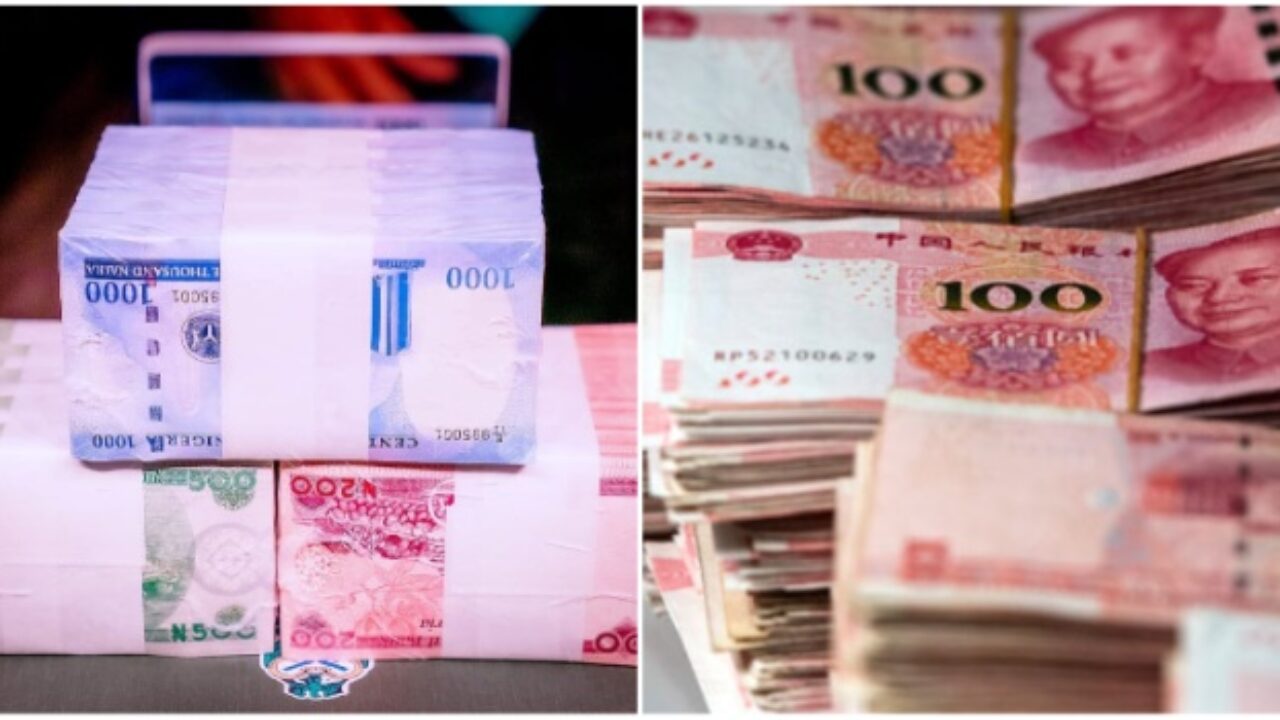
The first trading of the week at the Nigerian Autonomous Foreign Exchange Market (NAFEX) ended bullish for the Naira as it gained N11.93 or 0.87 per cent against the US Dollar on Monday, February 9, to trade at N1,354.26/$1 compared with the previous day’s N1,366.19/$1.

It also appreciated against the Pound Sterling in the official market during the session by N12.03 to settle at N1,845.72/£1 versus last Friday’s closing price of N1,857.75/£1, but depreciated against the Euro by 69 Kobo to quote at N1,613.19/€1, in contrast to the N1,612.52/€1 it was exchanged last Friday.

At the GTBank forex desk, the Nigerian Naira appreciated against the Dollar yesterday by N4 to close at N1,379/$1 versus the previous rate of N1,383/$1, and at the parallel market, it was flat at N1,450/$1.

The fortification of the Nigerian currency in the currency market on Monday was driven by forex liquidity, strong oil receipts, and flows from foreign investors attracted by the high yields on the country’s debt market.

Speaking at a forum on Monday, the Governor of the Central Bank of Nigeria (CBN), Mr Yemi Cardoso, declared that the bank’s reforms have established economic stability, evidenced by a significant reduction in inflation and growing external reserves, which he stated stood at $49 billion as of February 5, 2026.

He also highlighted the stability of the FX market, noting that the CBN is now accumulating foreign exchange from the market to enhance sustainability.

“By that, I mean that we now allow the market to generally find its level; many times, the Central Bank itself goes in to buy foreign exchange. The premium between the official and parallel market rates has collapsed to under 2 per cent,” Mr Cardoso stated.

The CBN chief said the reforms of the monetary authority—anchored on disinflation, FX market normalisation, and financial-system resilience—are already strengthening real-sector confidence.

As for the cryptocurrency market, it was in a recovery mode as investors took advantage of the drop in prices to add to their portfolios.

The pullback followed a turbulent few days in which Bitcoin (BTC) plunged to as low as $60,000 before rebounding. It rose 0.5 per cent on Monday to $70,415.57, as Ethereum (ETH) gained 0.9 per cent to trade at $2,116.42.

Further, Ripple (XRP) improved by 1.4 per cent to $1.44, Litecoin (LTC) expanded by 0.8 per cent to $54.66, Solana (SOL) grew by 0.5 per cent to $87.11, and Cardano (ADA) added 0.2 per cent to settle at $0.2704.

On the flip side, Binance Coin (BNB) slumped 0.6 per cent to $638.34, and Dogecoin (DOGE) weakened by 0.3 per cent to $0.0963, while the US Dollar Tether (USDT) and the US Dollar Coin (USDC) remained unchanged at $1.00 apiece.

Continue Reading

Economy

Crude Oil Soars as US Cautions Vessels Near Iran

Published

on

Crude Oil Production

By Adedapo Adesanya

Crude oil gained more than 1 per cent on Monday after the United States issued an advisory to US-flagged vessels to stay as far as possible from Iranian territory while passing through the Strait of Hormuz and Gulf of Oman.

The price of Brent crude was up 99 cents or 1.5 per cent during the session to $69.04 a barrel, while the US West Texas Intermediate (WTI) crude rose 81 cents or 1.3 per cent to settle at $64.36 per barrel.

The US Department of Transportation (DOT) Maritime Administration yesterday noted that vessels going through the Strait of Hormuz and Gulf of Oman have historically faced the risk of being boarded by Iranian forces, including as recently as February 3.
The agency advised U.S.-flagged ships to stay close to Oman while eastbound in the Strait of Hormuz.

The move renewed concerns that tensions between the US and Iran could lead to oil supply disruptions. About a fifth of the oil consumed globally passes through the Strait of Hormuz between Oman and Iran.

US President Donald Trump has threatened to attack, citing possible executions of protesters, and saying “help is on its way.” He ordered the USS Abraham Lincoln aircraft carrier and a flotilla of accompanying ships to the region.

In June, the US attacked Iranian nuclear facilities at the end of a 12-day Israeli bombing campaign.

Iran’s foreign minister said on Saturday the country will strike US bases in the Middle East if attacked by American forces, which have built up their naval presence in the region.

Investors were also monitoring efforts by Western governments to curb Russia’s income from oil exports that support its war in Ukraine.

The European Commission has proposed a sweeping ban on any services that support Russia’s seaborne crude oil exports, in fresh efforts to reduce revenues that help Russia’s war against Ukraine.

Refiners in India, once the biggest buyer of Russian crude, are avoiding purchases for delivery in April. Market analysts noted that if India fully stopped purchasing this crude, it would boost oil prices.

Meanwhile, Tengiz oilfield in Kazakhstan has returned 60 per cent of its peak production and was pumping at a rate of 550,000 barrels per day as of Sunday, following a forced shutdown for half of January due to a fire.

Tengiz, which is operated by a consortium led by US supermajor Chevron, is expected to reach peak levels of oil output of about 950,000 barrels per day by February 23.

Continue Reading

Trending