
Economy
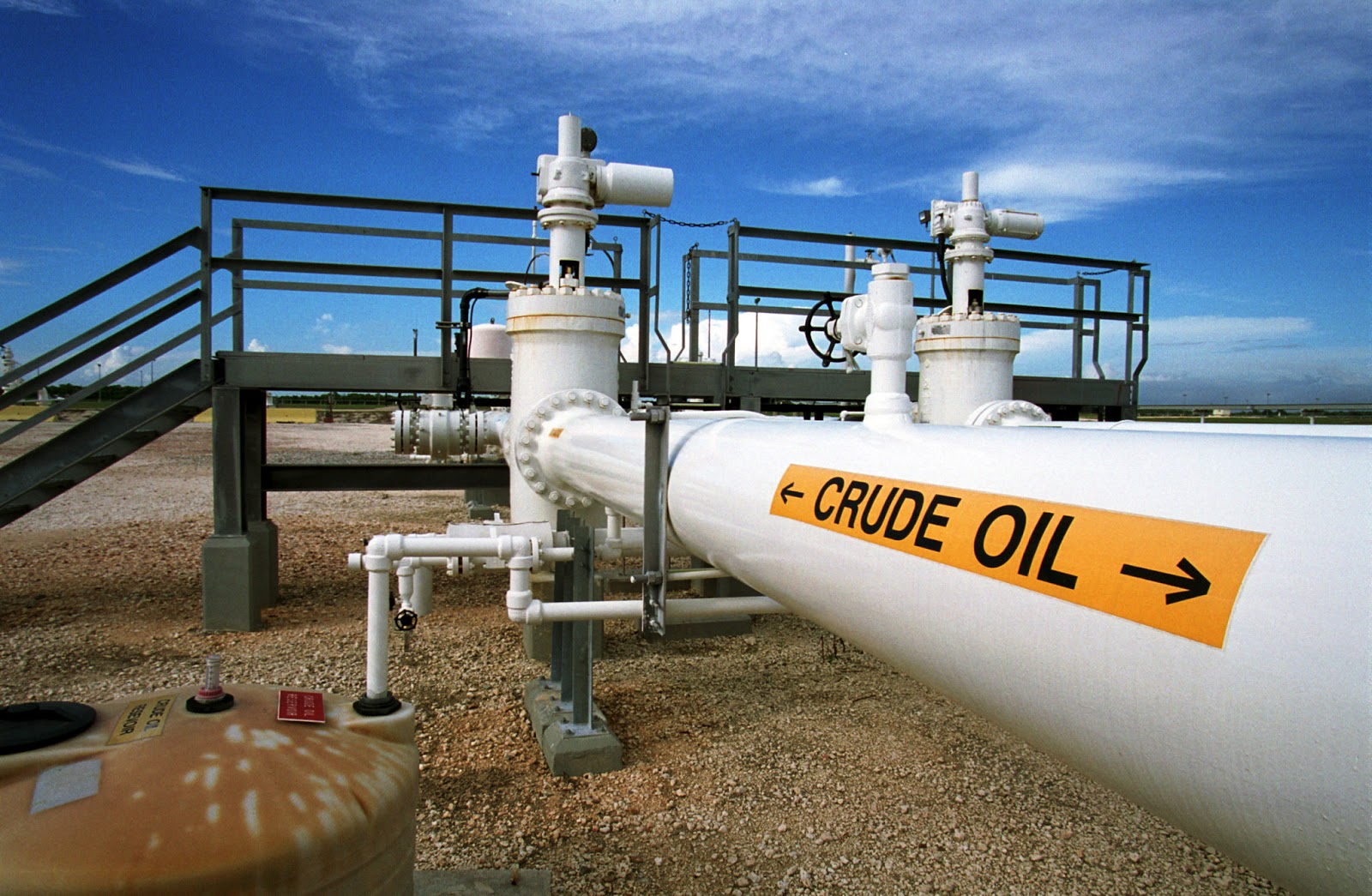
Crude Oil Prices Fall Amid Higher US Inventory Build

By Adedapo Adesanya
Crude oil prices fell on Wednesday after the United States Energy Information Administration (EIA) reported an inventory build of 16.3 million barrels for the week to February 10 compared with a build of 2.4 million barrels for the previous week, extending a string of weekly builds, some of them quite sizeable, which have pushed inventories above the five-year seasonal average.
Consequently, Brent futures slid 20 cents or 0.2 per cent to $85.38 a barrel, while US West Texas Intermediate (WTI) crude fell 47 cents or 0.6 per cent to $78.59 per barrel.
A day before the EIA reported its weekly inventory estimates, oil prices dropped following the American Petroleum Institute’s inventory estimate, which saw a sizeable build of more than 10 million barrels.
After the API report, the administration’s figures came as no surprise, although the size of the estimated build was the largest in more than a month.
Pressure also came on the black gold as the US Dollar strengthened, signalling that the US central bank could keep monetary policy tight. A stronger Dollar can cut oil demand, making crude more expensive for holders of other currencies.
Federal Reserve officials said the U.S. central bank must maintain gradual interest rate increases to fight inflation. Investors worry higher rates could slow the economy.
The drop could have been constrained by the federal government’s announcement of a sale from the strategic petroleum reserve, which is already at a 40-year low.
Another limiting factor was the latest CPI report from the US Bureau of Labor Statistics, which showed the rise in prices had slowed down, quenching fears of continued rate hike aggressiveness from the Federal Reserve.
On Tuesday, it was reported that the CPI increased by 6.4 per cent. That was the smallest gain since October 2021 and followed the annual peak at 9.1 per cent in June, which was the biggest increase since November 1981.
Also, the International Energy Agency (IEA) sees oil demand rising by 2 million barrels per day in 2023, with China making up 900,000 barrels per day. That is up 100,000 barrels per day from last month’s forecast to a record 101.9 million barrels per day.
It warned that the Organisation of the Petroleum Exporting Countries and its allies, OPEC+ production could mean a supply deficit in the second half.
“Supply from OPEC+ is projected to contract with Russia pressured by sanctions,” the Paris-based agency said in its monthly oil report.






By Adedapo Adesanya
The Minister of State for Industry, Mr John Enoh, has tasked the Dangote Sugar Refinery to reach a production capacity of 600,000 metric tonnes (MT) per annum by 2030.
Speaking during a recent visit to the company’s complex in Numan, Adamawa State, Mr Enoh, who was accompanied by the Executive Secretary of the National Sugar Development Council, (NSDC), Mr Kamar Bakrinv, said he was at the sugar refiner as part of ongoing inspections of sugar projects nationwide, in line with President Bola Tinubu’s directive to accelerate Nigeria’s attainment of self-sufficiency in sugar production.
He said the country’s annual sugar consumption stood at about 1.8 million metric tonnes, far above current local production levels, noting that as a leading operator in the sector, Dangote Sugar must contribute significantly to bridging the supply gap.
“DSR is a very big player in the industry. Our circumstances in this sector will continue to depend on what DSR does.
“The company must deliver at least 600,000 metric tonnes annually by 2030 and sustain the output thereafter,” he said.
He commended the council for its role in driving the implementation of the Nigeria Sugar Master Plan, noting that collaboration among stakeholders remained critical.
“I have lost count of the number of times Mr President has spoken about the development of the sugar industry at Federal Executive Council (FEC) meetings,” he said.
The Minister described the infrastructure and level of investment at the Numan facility as evidence of commitment to the Backward Integration Programme.
He, however, stressed the need to accelerate efforts to meet national targets, assuring that the government will support operators to overcome existing challenges.
“We are aware that there are issues, including access to affordable long-term finance. Government is ready to work with stakeholders to address them,” he said.
Mr Enoh added that scaling up production was essential to meeting national expectations and reducing dependence on imports.
He said the programme had created employment opportunities and added value through local processing of sugarcane.
On his part, the Vice President of the Dangote Group, Mr Olakunle Alake, assured the minister of the company’s commitment to expand production capacity.
He said the firm would invest more resources to meet the 600,000 metric tonnes target by 2030.
The minister and his team inspected the new 6,000 tonnes-per-day factory expansion site, as well as harvest fields, mills and processing facilities during the visit.
The inspection also covered haulage systems, boilers, turbines and sugar bagging operations at the warehouse.
The NSMP was launched to achieve self-sufficiency, reduce reliance on imported sugar, and bridge the massive gap between local production and the national consumption rate of approximately 1.8 million metric tonnes annually.

By Adedapo Adesanya
The Minister of State for Finance, Mr Taiwo Oyedele, has denied admitting errors in Nigeria’s new tax laws, describing the reports as “misleading” and a false misrepresentation.
In a Sunday statement, attributed to the Presidential Fiscal Policy and Tax Reforms Committee and posted on Mr Oyedele’s official X handle, the reports were described as an unhelpful twisted narrative that risks distorting public understanding and misleading the very people the reforms were designed to benefit.
“Our attention has been drawn to misleading media reports claiming that the Minister of State for Finance, Mr Taiwo Oyedele, has ‘finally admitted errors in the new tax laws.’
“These publications misrepresent the Minister’s statements, falsely alleging that he urged Nigerians to await the outcome of a legislative probe, a process that has long been concluded and the gazetted copies certified by the National Assembly [have been] published since early January 2026.
“This twisted narrative is unhelpful as it risks distorting public understanding and misleading the very people the reforms were designed to benefit,” the statement read.
The committee explained that the minister, while speaking at a fireside chat during the Nigerian Bar Association Section on Legal Practice conference in Lagos, highlighted early gains from the tax reforms.
According to the statement, the gains highlighted by the Minister included a significant increase in the number of informal businesses seeking registration with the Corporate Affairs Commission, as well as a rise in the number of registered taxpayers from about 10 million to over 100 million nationwide.
These impressive results stem from the robust design and progressive nature of the new laws, including an exemption of small companies from tax, increased exemption thresholds for low-income earners, tax exemptions on basic consumption items like food, education, healthcare, transportation, and rent, and the introduction of the Tax Ombud to protect taxpayer rights, it stated.
The statement added, “The Minister contrasted the transformative changes in the new laws with the regressive provisions in the old laws. He, however, emphasised that no law is perfect.
“Therefore, ongoing stakeholder engagement is essential to identify and address any errors or gaps for appropriate legislative updates through Finance Bills as part of a continuous improvement process.”
By Adedapo Adesanya
Lafarge Africa Plc will change its corporate name to HBM Nigeria Plc, reflecting new majority ownership by China’s Huaxin Cement Co., subject to approval by shareholders of the 67-year old cement maker.
The company will ask shareholders to approve the change of its corporate identity to HBM Nigeria Plc at its 67th Annual General Meeting scheduled for April 30, 2026, in Lagos.
The proposed name change is part of a broader AGM agenda that also includes financial reporting, dividend approval, and board restructuring.
The rebrand marks a new chapter following Holcim’s exit and signals Huaxin’s intent to deepen its footprint in Nigeria’s construction materials sector.
The company highlighted the proposed name change as a key special resolution requiring shareholder approval at the meeting. Management noted that the amendment will formally alter Clause 1 of its Memorandum of Association, redefining its legal identity.
Lafarge Africa Plc reported strong financial performance for the 2025 financial year, underscoring the backdrop to its proposed strategic shift. The company recorded significant growth across key financial metrics.
Revenue rose to N1.1 trillion in 2025, up 53 per cent from N696.8 billion in 2024. Profit after tax increased from N100.1 billion to N273 billion, representing a 173 per cent growth. Operating profit climbed from N193 billion to N392 billion, driven by cost optimisation and operational efficiency.
Earnings per share surged from N6.22 to N17, reflecting improved profitability. The company has proposed a final dividend of N6.00 per share, subject to shareholder approval and applicable withholding tax.
Huaxin Cement acquired a controlling 83.81 per cent stake in Lafarge Africa Plc from the Holcim Group for roughly $1 billion. The deal, finalised in late 2025, marks Holcim’s complete exit from Nigeria to focus on other markets, with Huaxin aimed at expanding its footprint in Africa.
The chairman of Lafarge Africa, Mr Gbenga Oyebode, said Nigeria’s market holds vast potential with its positive growth indices, increasing urbanisation, and infrastructure demand.
“This development will further solidify Lafarge Africa’s position as a leading contributor to Nigeria’s infrastructure and economic growth. Nigeria’s market holds vast potential with its positive growth indices, increasing urbanisation, and infrastructure demand. We remain committed to leveraging these opportunities while maintaining our focus on sustainability and innovation.”
Lafarge expanded into Nigeria in 2001 through the acquisition of Blue Circle, thereby taking over its stake in West African Portland Cement Company (WAPCO), later rebranding it as Lafarge Cement WAPCO Plc and significantly increasing production capacity with new plants and infrastructure in Ogun State.
-
 Feature/OPED6 years ago
Davos was Different this year
-
Travel/Tourism10 years ago
Lagos Seals Western Lodge Hotel In Ikorodu
-

 Showbiz3 years ago
Estranged Lover Releases Videos of Empress Njamah Bathing
-
 Banking8 years ago
Sort Codes of GTBank Branches in Nigeria
-

 Economy3 years ago
Subsidy Removal: CNG at N130 Per Litre Cheaper Than Petrol—IPMAN
-

 Banking3 years ago
Sort Codes of UBA Branches in Nigeria
-

 Banking3 years ago
First Bank Announces Planned Downtime
-

 Sports3 years ago
Highest Paid Nigerian Footballer – How Much Do Nigerian Footballers Earn