
Economy
Enugu Empowers Traders with N60m


By Modupe Gbadeyanka
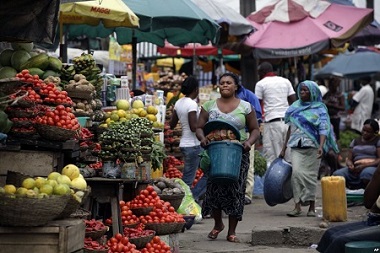
Enugu State Government has instituted a N60million annual traders’ empowerment scheme aimed at encouraging traders in the state.
Commissioner for Information, Dr Godwin Udeuhele, who addressed newsmen on Saturday in Enugu on the outcome of the State Executive Council Meeting, held on Friday night, said participation in the scheme was free.
Udeuhele said under the scheme, N5 million would be won monthly by registered traders, with each beneficiary going home with N50,000.
“The Enugu State Traders’ Empowerment Scheme is a wonderful programme that tends to empower traders in the state free of charge.
“The annual amount to be won is N60 million. The sum of N5 million will be won every month with a winner going home with N50, 000,” he said.
The Commissioner said that draws for the scheme would be conducted among members of the 37 identified market associations in the state on a rotational basis in major markets within the three senatorial districts.
“The commissioner for commerce has gone round all the markets in the state to identify 37 associations and got them registered. We have names of the registered traders.
“It is from the list we have that draws will be made. You cannot win it twice and nobody will get more than N50, 000,” he said.
Mr Udeuhele said that the draws would be done by the National Lottery Commission, adding that the purpose was to encourage traders contribute more to the economy of the state.
He said that approval was also given for the re-construction of the Holy Ghost Cathedral/Mgbemene Link Road in Enugu to ease traffic congestion along Ogbette Main Market Road.
“It will also provide quick and easy access into the cathedral compound. The road was earlier awarded but was not done due to the high cost and government has decided to do it through direct labour.
“Approval was given for the release of N226.684 million for the construction of Ebonyi River Bridge, along Ugwuogo Nike road to create a major link into one of the largest food producing communities in the state,” he said.
The Commissioner said that when completed, the project would enhance the standard of living in the affected areas and make food affordable in the state.




By Adedapo Adesanya
The Presidential Enabling Business Environment Council (PEBEC) has directed Ministries, Departments, and Agencies (MDAs) to suspend the introduction of new policies and regulatory changes to prevent disruptions to businesses.
The directive was issued in a statement by PEBEC director-general, Mrs Zahrah Mustapha-Audu, on Monday in Abuja, noting that the move is part of the Federal Government’s broader effort to improve regulatory quality, ensure policy consistency, and strengthen Nigeria’s ease of doing business environment.
The council emphasised that the suspension will remain in place until all MDAs fully comply with the Regulatory Impact Analysis (RIA) Framework, which governs evidence-based policymaking across government institutions.
The council said the directive is aimed at ensuring that all government policies are backed by verifiable data and do not negatively impact businesses or investors.
“It is imperative to emphasise that no new reform or policy will be permitted to proceed without being grounded in clear, verifiable evidence,” said Mrs Mustapha-Audu.
“The framework provides the structured mechanism through which such evidence-based decisions can be rigorously developed, assessed, and validated.
“This directive is necessary to prevent policy shocks that may adversely affect businesses, investors, and citizens, as well as to eliminate policy inconsistencies and frequent reversals.”
She added that the government remains committed to working collaboratively with regulators and does not intend to embarrass any institution.
The Regulatory Impact Analysis (RIA) Framework, introduced in January 2025, is designed to improve transparency and ensure that policies undergo proper evaluation before implementation.
All MDAs are required to align new policies and amendments with the RIA framework before approval and rollout.
The framework has been circulated by the Office of the Secretary to the Government of the Federation (SGF) and is available on the PEBEC website.
MDAs are encouraged to seek technical support from the PEBEC Secretariat to ensure proper implementation.
Exceptions to the directive will only be granted in cases of urgent national interest, subject to appropriate approvals.
PEBEC noted that the framework will help institutionalise evidence-based policymaking, enhance transparency, and improve stakeholder confidence in government decisions.

By Aduragbemi Omiyale
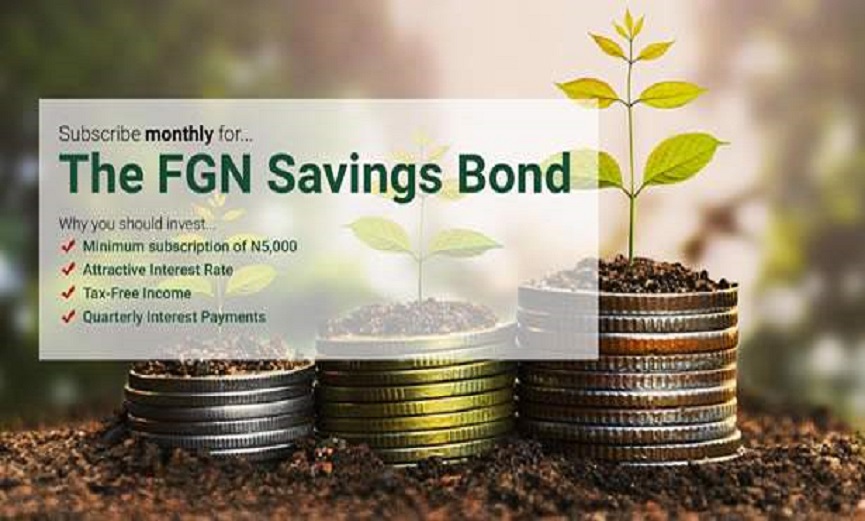
Subscription for the Federal Government of Nigeria (FGN) savings bonds for April 2026 has opened, a circular from the Debt Management Office (DMO) on Tuesday, April 7, 2026, confirmed.
The debt office is selling the retail debt instrument for this month in two tenors of two years and three years.
Offer for the savings bonds opened today and will close on Friday, April 10, 2026, a part of the disclosure stated.
The 2-year FGN savings bond due April 15, 2028, is being sold at a coupon rate of 13.082 per cent per annum, while the 3-year FGN savings bond due April 15, 2029, is being sold at a coupon rate of 14.082 per cent per annum.
The interests are paid every quarter, and the bullet repayment to subscribers on the maturity date.
The bonds are sold at N1,000 per unit, subject to a minimum subscription of N5,000 and in multiples of N1,000 thereafter, subject to a maximum subscription of N50 million.
Interested investors are required to reach out to the stockbroking firms appointed as distribution agents by the DMO via the agency’s website.
An FGN savings bond qualifies as securities in which trustees can invest under the Trustee Investment Act. It also qualifies as government securities within the meaning of the Company Income Tax Act (CITA) and the Personal Income Tax Act (PITA) for tax exemption for pension funds, amongst other investors, meaning it is tax-free.
It can be used as a liquid asset for liquidity ratio calculation for banks, and is listed on the Nigerian Exchange (NGX) Limited to allow for easy exit (liquidation) before maturity by selling at the secondary market.
By Adedapo Adesanya
Oil prices climbed on Monday’s short trade as the United States and Iran threatened more attacks, as the two countries are engaging in indirect talks that could lead to the de-escalation of hostilities.
Brent crude futures settled at $109.77 a barrel after chalking up 74 cents or 0.68 per cent, while the US West Texas Intermediate (WTI) crude futures traded at $112.40 after growing by 87 cents or 0.78 per cent.
The US and Iran received a framework from Pakistan to end hostilities, but this was rejected by Iran, especially the idea of immediately reopening the strait after President Donald Trump threatened to rain “hell” on the nation if it did not make a deal by the end of Tuesday.
Iran said it had formulated its positions and demands in response to recent ceasefire proposals conveyed via intermediaries.
The US is eyeing an agreement to open the crucial Strait of Hormuz, the shipping artery used by one-fifth of the world’s oil and gas supply, but the strait, which carries oil and petroleum products from Iraq, Saudi Arabia, Qatar, Kuwait and the United Arab Emirates, remains largely closed due to Iranian attacks on shipping after the U.S.-Israel attacks began on February 28.
Some vessels, however, including an Omani-operated tanker, a French-owned container ship and a Japanese-owned gas carrier, have passed through the strait since Thursday.
Meanwhile, major oil consumers, particularly in Asia, are conserving barrels or cutting consumption in response to the closure of the strait.
The Middle East supply disruptions have led refiners to seek alternative sources for crude, particularly for physical cargoes in the US and Britain’s North Sea.
Indian refiners have also postponed maintenance shutdowns of their units to meet local fuel demand.
On Sunday, the Organisation of the Petroleum Exporting Countries and its allies (OPEC+) agreed to a modest rise of 206,000 barrels per day for May. However, this will only appear on paper as the disruption is limiting the ability of the top producers to add the needed output.
OPEC’s combined oil output losses for March were estimated at 7.2 million barrels daily. The biggest production cuts were made by Kuwait, Iraq, the United Arab Emirates, and Saudi Arabia, for a total OPEC output of 21.57 million barrels daily for March. This is the lowest OPEC production rate since June 2020.
-
 Feature/OPED6 years ago
Davos was Different this year
-
Travel/Tourism10 years ago
Lagos Seals Western Lodge Hotel In Ikorodu
-

 Showbiz3 years ago
Estranged Lover Releases Videos of Empress Njamah Bathing
-
 Banking8 years ago
Sort Codes of GTBank Branches in Nigeria
-

 Economy3 years ago
Subsidy Removal: CNG at N130 Per Litre Cheaper Than Petrol—IPMAN
-

 Banking3 years ago
Sort Codes of UBA Branches in Nigeria
-

 Banking3 years ago
First Bank Announces Planned Downtime
-

 Sports3 years ago
Highest Paid Nigerian Footballer – How Much Do Nigerian Footballers Earn