
Economy
Fed Announcement in Focus on Wall Street

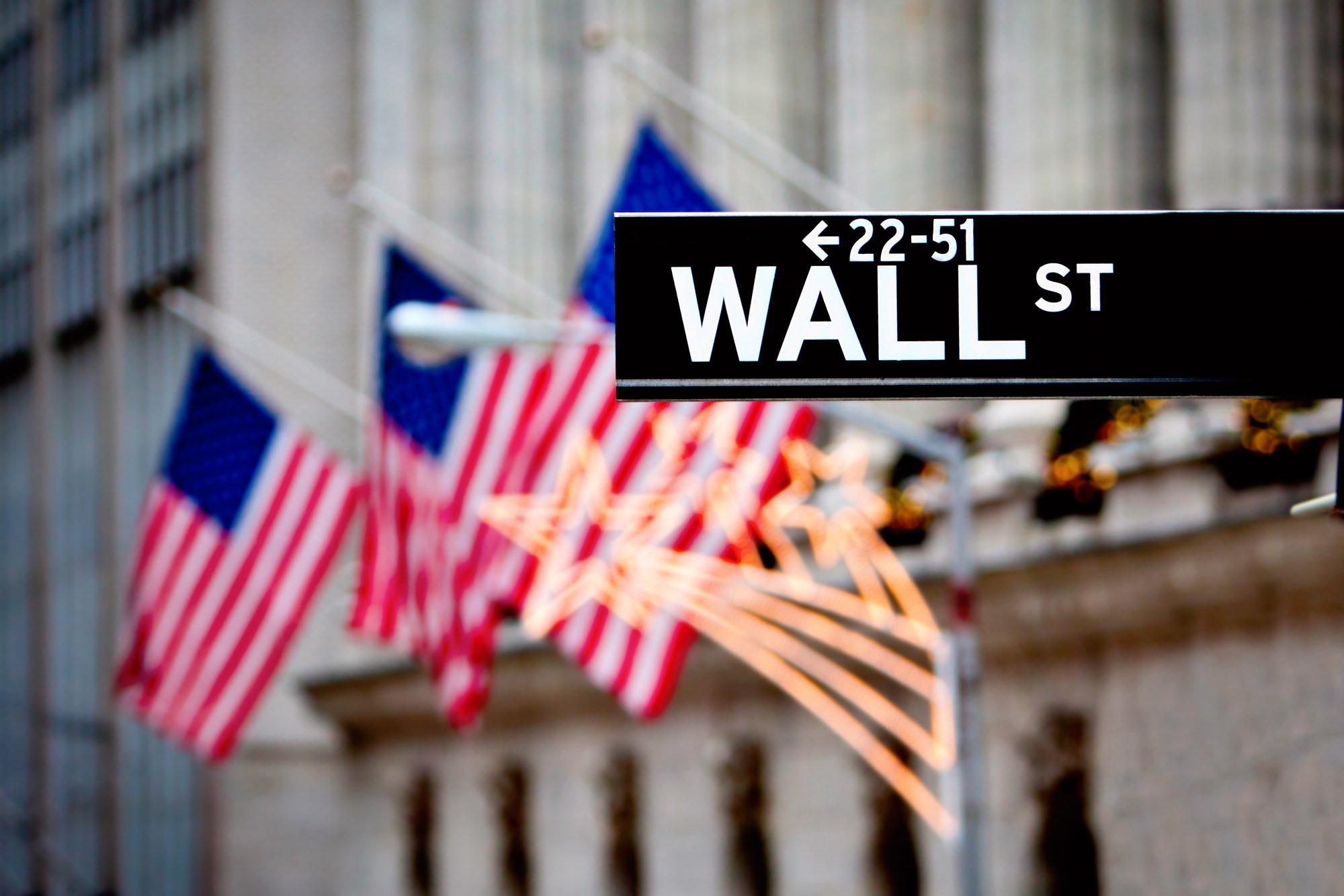
The major U.S. index futures are pointing to a roughly flat opening on Monday following the mixed performance seen last week.
Traders may be reluctant to make significant moves ahead of the Federal Reserve’s monetary policy announcement on Wednesday.
While the Fed is widely expected to leave interest rates unchanged, traders will pay close attention to the accompanying statement.
Following the lackluster performance seen on Thursday, stocks saw modest weakness during trading on Friday. Selling pressure was somewhat subdued, however, limiting the downside for the major averages.
The major averages ended the day slightly lower but well off their worst levels. The Dow dipped 31.71 points or 0.2 percent to 21,580.07, the Nasdaq slipped 2.25 points or less than a tenth of a percent to 6,387.75 and the S&P 500 edged down 0.91 points or less than a tenth of a percent to 2,472.54.
For the week, the major averages turned in a mixed performance. The Dow fell by 0.3 percent, while the Nasdaq surged up by 1.2 percent and the S&P 500 climbed by 0.5 percent.
A negative reaction to earnings news from some big-name companies weighed on Wall Street, with shares of General Electric (GE) showing a notable decline.
GE slumped by 2.9 percent after the conglomerate reported better than expected second quarter earnings but warned of full-year profits at the low end of its forecasts.
Shares of Microsoft (MSFT) also moved lower on the day even though the software giant reported fiscal fourth quarter results that exceeded forecasts.
On the other hand, credit card giant Visa (V) posted a strong gain after reporting fiscal third quarter results that beat estimates on both the top and bottom lines.
Shares of Capital One (COF) moved sharply higher after the lender and credit card issuer reported better than expected second quarter results.
Overall trading activity was somewhat subdued, however, with a lack of major U.S. economic data keeping some traders on the sidelines.
Uncertainty about the near-term outlook for the markets also contributed to the choppy trading following the recent move to record highs by the major averages.
Most of the major sectors showed only modest moves on the day, although considerable weakness was visible among oil service stocks.
Reflecting the weakness in the sector, the Philadelphia Oil Service Index tumbled by 2.3 percent. The slump by oil service stocks came amid a steep drop by the price of crude oil.
Steel stocks also saw significant weakness, resulting in a 1.3 percent drop by the NYSE Arca Steel Index. The index pulled back further off the four-month closing high set on Wednesday.
Electronic storage, semiconductor, and banking stocks also moved to the downside on the day, while some strength was visible among housing, utilities, and gold stocks.




By Adedapo Adesanya
The oil market was down $100 per barrel on Wednesday after US President Donald Trump said he had agreed to a two-week ceasefire with Iran, subject to the immediate and safe reopening of the Strait of Hormuz.
Brent futures lost $14.51 or 13.3 per cent to sell for $94.76 a barrel, while the US West Texas Intermediate (WTI) futures fell by $17.16 or 15.2 per cent to $95.79 a barrel.
WTI has maintained its price premium over Brent in a reversal of typical price patterns due to its delivery contract being for May while Brent is for June, reflecting that barrels with an earlier delivery date are commanding a higher price.
President Trump’s turnaround came shortly before his deadline for Iran to open the Strait of Hormuz, where 20 per cent of the world’s oil transits, or face widespread attacks on its civilian infrastructure.
“This will be a double-sided CEASEFIRE!” he wrote on social media, after posting earlier on Tuesday that “a whole civilisation will die tonight” if his demands were not met.
President Trump indicated that negotiations may be progressing toward a more durable agreement, citing a 10-point proposal from Iran that he described as a “workable basis” for long-term peace.
Iran said it would halt its attacks if attacks against it stopped and that safe transit through the Strait of Hormuz would be possible for two weeks in coordination with Iranian armed forces.
Despite the breakthrough, tensions remain elevated across the region, with several Gulf states reporting missile launches, drone activity, or issuing civil defence warnings.
The single most important factor to watch will be how many tankers cross the Strait of Hormuz with this new agreement in place. Already, another tanker operated by Malaysia’s Petronas and carrying Iraqi crude was allowed passage in the latest sign of a modest restoration of oil flows via the chokepoint.
Earlier in the week, two tankers carrying LPG for India were also allowed to pass the strait after Iran began making individual passage deals with foreign governments. The past few days have also seen three Oman-operated vessels clear the chokepoint, as well as a French container ship and a Japanese gas carrier. China, Russia, Turkey, and Pakistan are also among the countries that Iran is allowing to send ships via the waterway.
The US-Israeli war with Iran saw the steepest monthly oil price rise in history in March of more than 50 per cent.
By Adedapo Adesanya
Vert, a global cross-border payments platform, has announced a new solution under Verto Business Accounts that enables US-registered businesses to move money seamlessly between the United States and Africa.
With the ability to open a US Dollar account in their business name and have access to trusted emerging market payment rails, companies can now receive, hold, and transfer funds faster, more cost-effectively, and with greater control.
US-registered businesses with operations in Africa often encounter significant banking limitations, with US banks frequently delaying or blocking transactions to or from African markets, imposing high or hidden FX costs, and offering limited access to Emerging Market payment corridors. Businesses without a US bank account registered in their own name must rely on fragmented tools or intermediaries to move funds to Africa, creating operational inefficiencies and slowing growth.
Verto’s new solution directly addresses these challenges by giving US-domiciled businesses access to named USD accounts and a robust cross-border payment infrastructure, enabling them to move funds and settle transactions in local currencies with speed and efficiency.
Built for venture-backed startups, import-export SMEs, and investors funding emerging market innovation, this solution will enable clients to receive funds directly into a named USD business account from US based customers or investors, convert and settle between USD and local currencies such as NGN and KES quickly and at lower cost, as well as hold, receive, and pay in 48 currencies from a single dashboard.
The solution will also allow users to pay contractors, suppliers, and offshore teams instantly via local payment rails. It also equips teams with virtual cards to spend in 11 currencies without fees and leverage specialised onboarding and monitoring that navigates both US and African regulatory requirements
By combining US and African compliance expertise, Verto’s Business Accounts empowers companies to maintain a US domestic presence for investors, customers, and suppliers while using deep-liquidity rails to pay global contractors and settle trades in local currencies efficiently, ensuring uninterrupted trade, payroll, and investment flows, without the risk of blocked or delayed transactions.
“We believe founders building across borders should not be constrained by the limitations of traditional banking,” said Ola Oyetayo, CEO of Verto. “Providing named accounts in the US empowers businesses with the funds they need to operate globally, connecting the US and Africa more efficiently without friction.”
With over 8 years of experience and $25 billion in annual global cross-border transaction volume, Verto continues to provide the infrastructure, expertise, and trusted payment rails businesses need to operate confidently across borders and scale globally.

By Adedapo Adesanya
The Presidential Enabling Business Environment Council (PEBEC) has directed Ministries, Departments, and Agencies (MDAs) to suspend the introduction of new policies and regulatory changes to prevent disruptions to businesses.
The directive was issued in a statement by PEBEC director-general, Mrs Zahrah Mustapha-Audu, on Monday in Abuja, noting that the move is part of the Federal Government’s broader effort to improve regulatory quality, ensure policy consistency, and strengthen Nigeria’s ease of doing business environment.
The council emphasised that the suspension will remain in place until all MDAs fully comply with the Regulatory Impact Analysis (RIA) Framework, which governs evidence-based policymaking across government institutions.
The council said the directive is aimed at ensuring that all government policies are backed by verifiable data and do not negatively impact businesses or investors.
“It is imperative to emphasise that no new reform or policy will be permitted to proceed without being grounded in clear, verifiable evidence,” said Mrs Mustapha-Audu.
“The framework provides the structured mechanism through which such evidence-based decisions can be rigorously developed, assessed, and validated.
“This directive is necessary to prevent policy shocks that may adversely affect businesses, investors, and citizens, as well as to eliminate policy inconsistencies and frequent reversals.”
She added that the government remains committed to working collaboratively with regulators and does not intend to embarrass any institution.
The Regulatory Impact Analysis (RIA) Framework, introduced in January 2025, is designed to improve transparency and ensure that policies undergo proper evaluation before implementation.
All MDAs are required to align new policies and amendments with the RIA framework before approval and rollout.
The framework has been circulated by the Office of the Secretary to the Government of the Federation (SGF) and is available on the PEBEC website.
MDAs are encouraged to seek technical support from the PEBEC Secretariat to ensure proper implementation.
Exceptions to the directive will only be granted in cases of urgent national interest, subject to appropriate approvals.
PEBEC noted that the framework will help institutionalise evidence-based policymaking, enhance transparency, and improve stakeholder confidence in government decisions.
-
 Feature/OPED6 years ago
Davos was Different this year
-
Travel/Tourism10 years ago
Lagos Seals Western Lodge Hotel In Ikorodu
-

 Showbiz3 years ago
Estranged Lover Releases Videos of Empress Njamah Bathing
-
 Banking8 years ago
Sort Codes of GTBank Branches in Nigeria
-

 Economy3 years ago
Subsidy Removal: CNG at N130 Per Litre Cheaper Than Petrol—IPMAN
-

 Banking3 years ago
Sort Codes of UBA Branches in Nigeria
-

 Banking3 years ago
First Bank Announces Planned Downtime
-

 Sports3 years ago
Highest Paid Nigerian Footballer – How Much Do Nigerian Footballers Earn