
Economy
FSDH, Proshare, Mouka Ltd, 357 Other Firms to Inspire Africa in 2019

By Dipo Olowookere
The London Stock Exchange (NSE) on Wednesday said a total of 360 companies operating in 32 countries in Africa under seven major sectors have been identified to be the continent’s hotcakes in 2019.
In the report titled ‘Companies to Inspire Africa 2019’, it was said that Nigeria led with 97 companies, while Kenya followed with 66 organisations.
According to the report, 23 percent of the companies are led by women, almost double the proportion in the 2017 report, with standout sectors having senior female executives in Healthcare & Education and Financial Services.
The report pointed out that the fastest growing sectors are Financial Services and Renewable Energy with revenue growth rates of 70 percent and 66 percent respectively.
In addition, Consumer Services was the most represented sector with 79 companies from 20 countries this year, reflecting the growth of sub-sectors such as Consumer Goods, Food & Beverages, Leisure & Tourism, Media and Retail, and the growing middle class in Africa.
However, Agriculture remained an important sector for the continent with 53 companies, almost 15 percent of those featured.
The report identified that Nigeria further built on its leading position established in the 2017 Report with strong representation from the Industry and Technology & Telecom sectors, while the East-West African axis dominated this year’s report with 130 companies from Western Africa and 147 from Eastern Africa.
The report noted that the companies in this year’s report were creating significant employment opportunities across Africa with each company employing an average of 363 people.
Some of the companies from Nigeria listed were Afriland Properties Plc, ARM Life Plc, BudgIT Foundation, Co-Creation Hub Ltd, Eat ‘N’ Go Ltd, Ensure Insurance Plc, Farmcrowdy Ltd, FSDH Merchant Bank Ltd, Interswitch Ltd, Jumia, Lagoon Hospitals Group and Leadway Assurance Company Ltd.
Others were MainOne Cable Company Nigeria Ltd, Mouka Ltd, Niger Delta Exploration and Production Plc, Olori Cosmetics, Proshare Nigeria Ltd, PZ Cussons Nigeria Plc, RenMoney MFB Ltd, Seven-Up Bottling Company Plc, St. Nicholas Hospital Ltd, Swift Networks Ltd, SystemSpecs Ltd, Terragon Ltd, Wakanow.com Ltd and Whogohost Ltd.
Commenting, the CEO of the LSE, Mr David Schwimmer, explained that, “London Stock Exchange Group’s ‘Companies to Inspire Africa’ report showcases inspirational and entrepreneurial businesses from across the African continent, representing a wide variety of industries and countries.”
He added that, “It is particularly encouraging to see the increasing influence of women in leadership roles in these fast-growing companies, playing a pivotal role in shaping the future of African business.
“These high growth companies have the potential to transform the African economy and become tomorrow’s job creators. At LSEG, we are committed to helping companies realise that potential and we are pleased to highlight and celebrate the company success stories behind one of the world’s fastest growing markets.”
For Pierre Guislain, Vice President, Private Sector, Infrastructure and Industrialization, African Development Bank Group, “Through this partnership around Companies to Inspire Africa, we are joining efforts to build an information base to showcase African growth SMEs to a global investor audience. We also hope to encourage African enterprises to trade and invest with one another, create stronger value chains and expand into new markets. On behalf of the African Development Bank, I extend my congratulations to all the companies featured in this edition, along with our thanks to London Stock Exchange Group for the excellent collaboration on this important initiative.”
Rob Withagen, CEO and Co-Founder Asoko Insight, added that, “Access to Africa’s growth markets is increasingly a strategic priority for investors, multinationals and governments. However, aligning available investor capital to Africa’s private sector – particularly the wider middle market of growth companies – remains a challenge.
“The ‘Companies to Inspire Africa’ report makes an essential contribution to closing this ‘middle market’ gap. As a partner in the initiative, we have witnessed the enthusiasm among thousands of local corporates to set aside their reservations and share detailed insights into their promising businesses. Their participation sets the benchmark for transparency and performance in Africa’s corporate ecosystem, and will undoubtedly support accelerated investment into these exciting markets.”
Also, Nick O’Donohoe, Chief Executive Officer, CDC Group, said, “CDC Group has more than 70 years’ experience investing for growth in Africa so it’s a privilege to champion more than 360 high performing businesses recognised in today’s publication. These companies are led by some of the continent’s most dynamic management teams who are shaping the future of their industries.
“CDC plays a large role in backing Africa’s most ambitious businesses. We were proud to invest $180 million in the continent’s largest independent fibre and cloud provider, Liquid Telecom, who will deliver broadband connectivity to support SMEs from Cairo to Cape Town.
“With a further £3.5 billion to invest across Africa over the next three years, we plan to partner with many more strong management teams to help drive growth and prosperity through socially responsible business. We are thrilled to support the London Stock Exchange Group in highlighting the breadth of commercial talent and tenacity from Africa’s thriving business community.”
David Simonson, Managing Partner, Instinctif Partners, said, “Working with the Companies to Inspire Africa 2019 is truly inspiring – they reflect the entrepreneurial energy and skills present across the African continent and across all sectors. Instinctif is proud of its long-standing role in advising African businesses on their positioning and communications with stakeholders in their home markets and internationally, and we are looking forward to supporting this year’s cohort of companies in CTIA 2019 as they build on their business success.”
Uyi Akpata, West Africa Regional Senior Partner, PwC, said, “We are extremely honored to partner again with London Stock Exchange Group for the second ‘Companies to Inspire Africa’ report. At PwC, we view private businesses as a critical catalyst to job creation, economic growth, and innovation. Initiatives such as this help expose these companies to a global audience, and we hope will lead to further collaboration across border with London-based investors and strategic partners. It is also great to see the public sector represented here. It is an important testament to their commitment to supporting the private sector and continuing to drive improvements in ease of doing business.
“We are also looking forward to hosting the Lagos launch, especially given Nigeria has the single largest representation with 97 of the 360 companies. We at PwC are committed to supporting private businesses, and applaud London Stock Exchange Group for this initiative.” Tony Edwards, Partner and Head of Africa, Stephenson Harwood, said, “The quality and diversity of the companies identified in this excellent report is striking and gives a great snapshot of the evolution of African business. As a leading international law firm, with a wealth of experience advising companies, entrepreneurs, banks and Governments in Africa and international businesses investing there, we are incredibly pleased to be a part of this initiative. It provides an opportunity both to recognise the achievements of African companies and entrepreneurs and to help them and others on the next stage of their journey.”




By Adedapo Adesanya
The NASD Over-the-Counter (OTC) Securities Exchange extended its stay in the south territory with a decline of 0.56 per cent on Wednesday, April 2.
This brought down the market capitalisation by N13 billion to N2.417 trillion from N2.430 trillion, and downed the NASD Unlisted Security Index (NSI) by 22.57 points to 4,062.87 points from the previous session’s 4,062.87 points.
It was observed that the NASD exchange ended with three price gainers and three price losers during the trading day.
MRS Oil Plc depreciated by N19.00 to close at N171.00 per unit compared with the previous price of N190.00 per unit, NASD Plc lost N4.14 to trade at N37.36 per share compared with Wednesday’s N41.50 per share, and Central Securities Clearing System (CSCS) Plc gave up N2.00 to sell at N78.00 per unit versus N80.00 per unit.
On the flip side, FrieslandCampina Wamco Nigeria Plc appreciated by 19 Kobo to N93.00 per share from N92.81 per share, Food Concepts Plc expanded by 15 Kobo to N2.87 per unit from N2.72 per unit, and Great Nigeria Insurance (GNI) Plc improved by 2 Kobo to 52 Kobo per share from 50 Kobo per share.
Yesterday, the volume of securities dipped by 91.8 per cent to 260.2 million units from 3.2 billion units, the value of securities went down by 98.1 per cent to N154.2 million from N8.3 billion, while the number of deals soared by 53.3 per cent to 46 deals from 30 deals.
GNI Plc was the most active stock by value on a year-to-date basis with 3.4 billion units worth N8.4 billion, followed by CSCS Plc with 56.9 million units valued at N3.9 billion, and Okitipupa Plc with 27.5 million units traded for N1.8 billion.
The most traded stock by volume on a year-to-date basis was also GNI Plc with 3.4 billion units sold for N8.2 billion, trailed by Resourcery Plc with 1.1 billion units exchanged for N415.7 million, and Infrastructure Guarantee Credit Plc with 400 million units transacted for N1.2 billion.
By Adedapo Adesanya
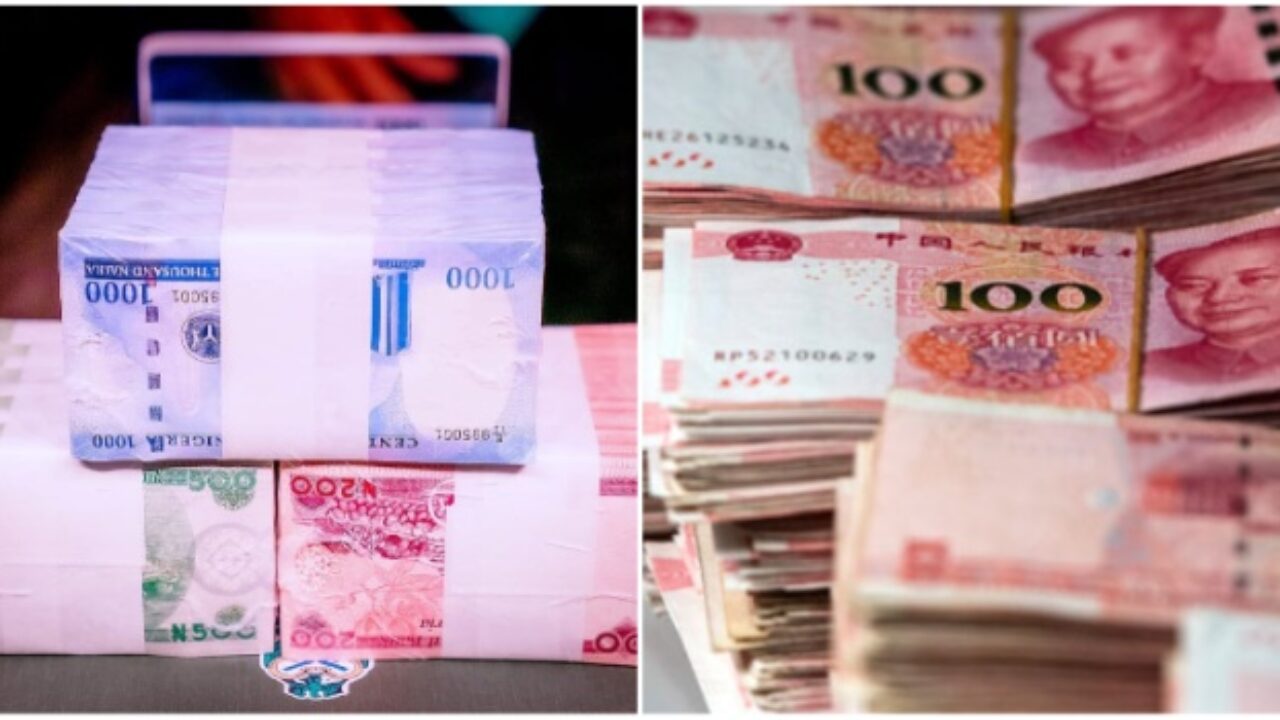
The Naira dropped N2.09 or 0.15 per cent against the United States Dollar in the Nigerian Autonomous Foreign Exchange Market (NAFEX) on Thursday, April 2, to trade at N1,380.79/$1 compared with Wednesday’s rate of N1,378.70/$1.
However, it appreciated against the Pound Sterling in the official market by N2.77 to quote at N1,824.86/£1 versus the N1,836.57/£1 it was traded at midweek, and improved its value against the Euro by N10.54 to N1,591.92/€1 from N1,602.46/€1.
Yesterday was the last trading session of the week for the local currency in the spot market, as the market will be closed on Friday and Monday for the Easter Holiday.
At the black market, the Nigerian Naira maintained stability against the greenback yesterday at N1,405/$1, but gained N8 at the GTBank FX counter to settle at N1,388/$1, in contrast to the previous session’s N1,396/$1.
Pressure eased on the domestic currency as strong policy indicators have helped calm the majority of worries within the financial systems. Particularly in the remittance segment, the apex bank has directed all International Money Transfer Operators (IMTOs) to route remittance transactions through designated Naira settlement accounts in banks, a move aimed at boosting transparency and channelling more foreign exchange into the formal market.
This helps take off pressure from the foreign reserves, which have fallen below the $50 billion mark as they are gradually decreasing rather than falling sharply.
Meanwhile, the cryptocurrency market was bullish on Thursday, as macro sentiment shifted against recent optimism after reports that Iran is drafting a protocol with Oman to manage traffic through the Strait of Hormuz, easing concerns about disruptions to a key global oil route.
The remarks came after U.S. President Trump on Wednesday night vowed to hit Iran “extremely hard” in the coming weeks and that the Strait of Hormuz would “open naturally” once the war ends.
Cardano (ADA) chalked up 1.9 per cent to trade at $0.2435, Dogecoin (DOGE) grew by 1.2 per cent to $0.0912, Ethereum (ETH) appreciated by 0.8 per cent to $2,066.37, Bitcoin (BTC) added 0.5 per cent to sell at $67,080.53, Solana (SOL) increased by 0.5 per cent to $79.91, and Ripple (XRP) jumped 0.2 per cent to $1.31.
Conversely, Binance Coin (BNB) dipped 0.7 per cent to $586.90, and TRON (TRX) depreciated by 0.3 per cent to $0.3147, while the US Dollar Tether (USDT) and the US Dollar Coin (USDC) closed flat at $1.00 each.
By Dipo Olowookere
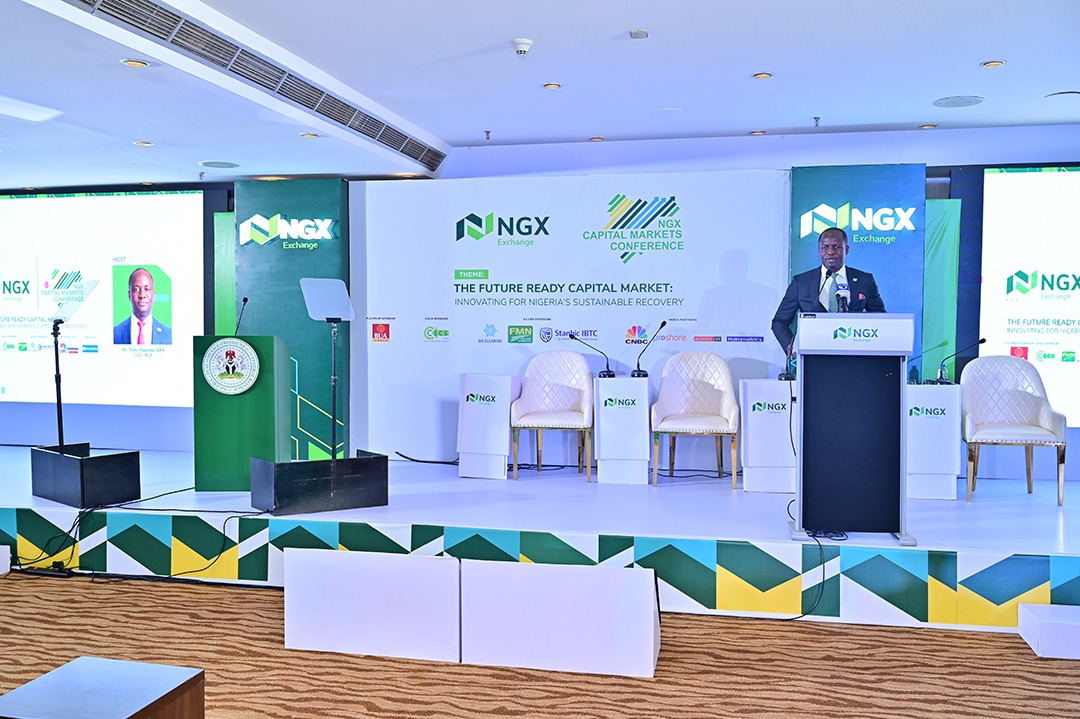
The local stock market was relatively flat on Friday, as the bears and the bulls shared the spoils of war, though investor sentiment turned bullish compared with the preceding session’s bearish posture.
Data from the Nigerian Exchange (NGX) Limited showed that the All-Share Index (ASI) was marginally down by 4.66 points as it ended at 201,698.89 points versus Wednesday’s 201,703.55 points, and the market capitalisation slightly contracted by N3 billion to N129.806 trillion from N129.809 trillion.
Customs Street was shut on Friday because of the public holidays declared by the federal government today and next Monday.
Business Post reports that John Holt declined by 9.91 per cent to N15.45, Abbey Mortgage Bank shed 9.60 per cent to trade at N8.95, International Energy Insurance slipped by 6.48 per cent to N3.32, Chams shrank by 5.30 per cent to N3.75, and Tantalizers depreciated by 5.18 per cent to N4.03.
On the flip side, Unilever Nigeria improved by 10.00 per cent to N103.40, Fortis Global Insurance gained 9.82 per cent to trade at N1.23, Multiverse appreciated 9.81 per cent to N20.15, Legend Internet advanced by 9.38 per cent to N6.30, and Zichis grew by 9.02 per cent to N14.14.
The market breadth index was positive during the trading session, as there were 35 appreciating stocks and 24 depreciating stocks.
Yesterday, investors traded 560.0 million equities valued at N19.3 billion in 49,676 deals, in contrast to the 815.5 million equities worth N33.3 billion transacted in 52,641 deals in the preceding day, representing a drop in the trading volume, value, and number of deals by 31.33 per cent, 42.04 per cent, and 5.63 per cent, respectively.
Secure Electronic Technology dominated the activity log with 59.7 million shares valued at N61.1 million, Wema Bank exchanged 52.0 million equities worth N1.4 billion, VFD Group transacted 36.0 million stocks for N410.5 million, Access Holdings sold 35.3 million shares valued at N914.8 million, and Chams traded 31.0 million equities worth N115.0 million.
-
 Feature/OPED6 years ago
Davos was Different this year
-
Travel/Tourism10 years ago
Lagos Seals Western Lodge Hotel In Ikorodu
-

 Showbiz3 years ago
Estranged Lover Releases Videos of Empress Njamah Bathing
-
 Banking8 years ago
Sort Codes of GTBank Branches in Nigeria
-

 Economy3 years ago
Subsidy Removal: CNG at N130 Per Litre Cheaper Than Petrol—IPMAN
-

 Banking3 years ago
Sort Codes of UBA Branches in Nigeria
-

 Banking3 years ago
First Bank Announces Planned Downtime
-

 Sports3 years ago
Highest Paid Nigerian Footballer – How Much Do Nigerian Footballers Earn