
Economy
Future Energy Nigeria Holds November in Lagos

By Modupe Gbadeyanka
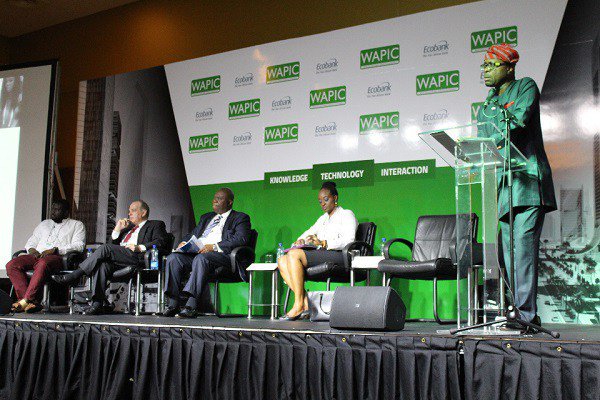
The rebranded Future Energy Nigeria will return to Lagos in November, precisely on 7-8, 2017 at the Eko Hotel & Suite Convention Centre in Lagos.
It will focus on the bold turnaround plan of the Nigerian government, known as the Power Sector Recovery Program, which is earmarked to restore investor confidence in the sector following reported problems in the country’s electricity market.
Already, $7.6 billion has been earmarked for this recovery process that the government developed in partnership with the World Bank.
“The Nigerian government is serious about restoring investor confidence and providing an enabling environment to grow private investments in the electricity sector,” says Claire O’Connell, event director of Future Energy Nigeria. She adds: “there are huge opportunities in the Nigerian electricity supply industry for local and international investors. There are also very advantageous incentives in place for investors such as cost reflective tariffs for electricity, 0% duty on power generation equipment and 20% capital allowance for five years.”
According to Future Energy Nigeria’s Claire O’Connell the extensive opportunities in Nigeria for technology and service providers to the industry include expansion of existing facilities in generation, transmission and distribution; manufacturing of wires, cables, transformers and other auxiliary equipment; building new integrated power plants (IPPs); expansion of existing transmission lines; production and distribution of metering devices; and provision of operations and maintenance services.
Some conference speakers include Onyeche Tifashe, CEO, Siemens, Nigeria; Akinwole Omoboriowo, CEO, Genesis Energy, Nigeria; Patrick O. Okigbo III, Principal Partner, Nextier, Nigeria; Sunkanmi Olowo, Head SME Banking, Ecobank, Nigeria; Bart Nnaji, CEO, Geometric Power, Nigeria; Joy Ogaji, Executive Secretary, Association of Power Generation Companies, Nigeria; and Joel Abrams, Managing Director, Nigeria Solar Capital Partners, Nigeria.
Others are Olumide Noah Obademi, CEO, Afam Power PLC, Nigeria; Nicholas Okafor, Partner, Udo Udoma & Belo-Osagie, Nigeria; Olubunmi Peters, Executive Vice Chairman, North South Power Shiroro, Nigeria; Segun Adaju, President, Renewable Energy Association of Nigeria; and Engr. Faruk Yabo, Director Renewable Energy & Energy Efficiency, FMoPWH.
Future Energy Nigeria (formerly known as the West African Power Industry Convention – WAPIC), is recognised as being a distinctive gathering of stakeholders within the power value chain which includes governments, power generation companies, transmission and distribution companies, off takers, developers, Investors, Equipment manufacturers and providers, technology providers, EPCs, legal and consulting firms all with a shared goal of supporting the on-going implementation of finding lasting solutions to Nigeria’s energy challenges. Co-located to the event is the Oil & Gas Council’s Nigeria Assembly.
It is organised by Spintelligent, a multi-award-winning Cape Town-based exhibition and conference producer across the continent in the infrastructure, real estate, energy, mining, agriculture and education sectors.
Other well-known events by Spintelligent include African Utility Week, Future Energy East Africa (formerly EAPIC), Future Energy Central Africa (formerly iPAD Cameroon), Future Energy Uganda, Agritech Expo Zambia, Kenya Mining Forum, Nigeria Mining Week and DRC Mining Week. Spintelligent is part of the UK-based Clarion Events Group.





By Adedap0 Adesanya
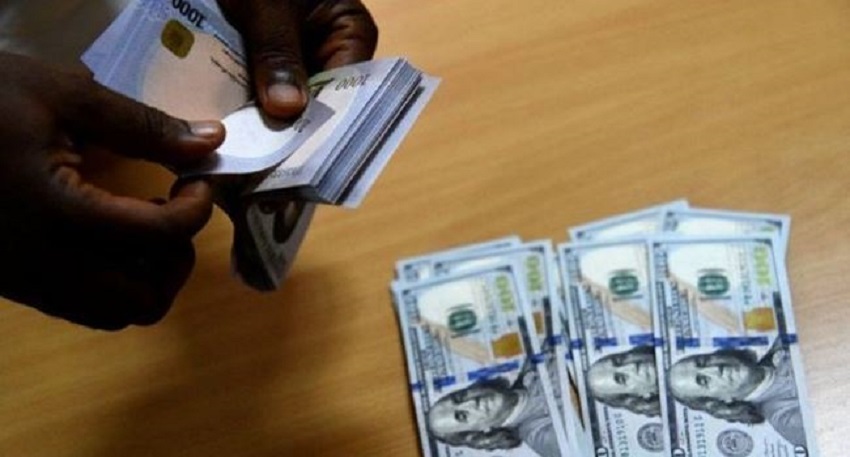
The value of the Naira fell against the Dollar in the Nigerian Autonomous Foreign Exchange Market (NAFEX) on Wednesday, March 25, by N4.07 or 0.29 to N1,386.70/$1 compared with Tuesday’s closing price of N1,382.63/$1.
This was due to forex demand pressure without substantial supply from the Central Bank of Nigeria (CBN) and other sources. Lately, the central bank has not conducted any FX sales to eligible financial institutions, where Bureaux de Change (BDC) operators are allowed to access $150,000 weekly.
Also, in the official market, the Nigerian Naira depreciated against the Pound Sterling at midweek by N7.52 to close at N1,856.38/£1 versus the previous day’s N1,848.86/£1, and retreated against the Euro by N5.82 to trade at N1,605.80/€1 versus N1,599.98/€1.
The domestic currency further lost N3 against the greenback at the GTBank FX desk yesterday to sell for N1,391/$1, in contrast to the preceding session’s N1,388/$1, and at the black market, it depreciated by N5 to quote at N1,405/$1 compared with the N1,400/$1 it was exchanged a day earlier.
The prolonged conflict in the Middle East continues to heighten risk aversion, reducing appetite for emerging-market assets despite Nigeria’s attractive yield environment, which could help sustain offshore inflows and support the local currency in the near term, though structural challenges remain.
The country is making efforts that could help shield it further, including reviewing timelines for approval of resuscitation of moribund oil wells and boosting production, which accounts for over 60 per cent of FX earnings.
As for the cryptocurrency market, it was under pressure on Wednesday, as implied volatility and weakening suggest geopolitical risk concerns remain as macro headlines remain in focus.
Dogecoin (DOGE) depleted by 3.8 per cent to $0.0937, Solana (SOL) depreciated by 3.5 per cent to $89.10, Cardano (ADA) dipped 2.4 per cent to $0.2621, Ethereum (ETH) went down by 2.2 per cent to $2,117.47, Ripple (XRP) slumped 1.9 per cent to $1.38, Bitcoin shrank by 1.5 per cent to $70,012.58, and Binance Coin (BNB) dropped 1.4 per cent to sell for $634.82.
However, TRON (TRX) appreciated by 2.3 per cent to $0.3144, while the US Dollar Tether (USDT) and the US Dollar Coin (USDC) traded flat at $1.00 apiece.
By Adedapo Adesanya
The oil market slid about 2 per cent on Wednesday after paring deeper losses earlier in the trading session, as Iran reviewed a proposal by the United States to end the war that has disrupted global energy flows.
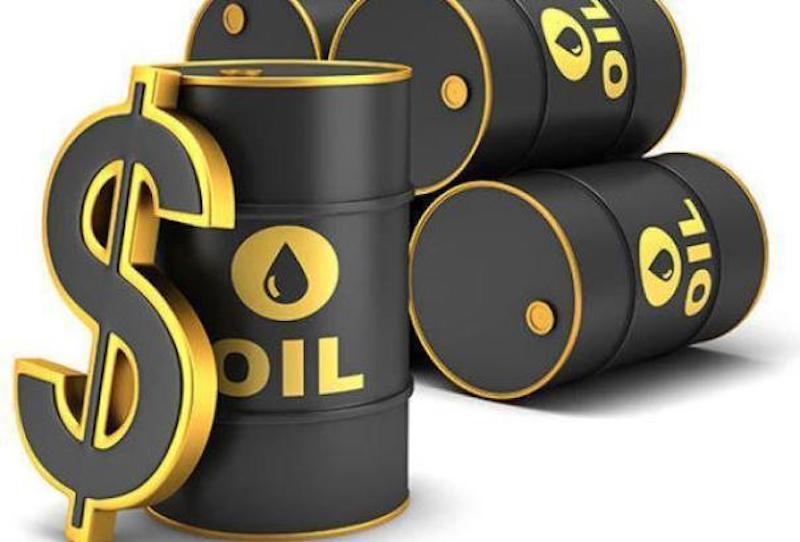
Brent futures fell $2.27 or 2.2 per cent to settle at $102.22 a barrel, while the US West Texas Intermediate (WTI) crude futures lost $2.03 or 2.2 per cent to trade at $90.32 per barrel.
It was reported that Iran was still reviewing a US proposal to end the war in the Gulf, despite an initial response that was negative, indicating that it had so far stopped short of rejecting it outright.
Pakistan delivered the 15-point proposal on behalf of the US government, and the consideration appeared to signal that at least some figures in Iran may be considering it.
Meanwhile, the White House Press Secretary, Mrs Karoline Leavitt, said President Donald Trump would hit Iran harder if it fails to accept that the Middle East country has been “defeated militarily”.
Currently, the market is facing the biggest-ever oil supply disruption as the US-Israel war has halted shipments of oil and liquefied natural gas through the Strait of Hormuz, which typically carries about 20 per cent of the world’s LNG and crude supply.
Market analysts noted that this has resulted in around 20 million barrels of crude losses daily, or some 500 million barrels, or five full days of global supply, since the war began on February 28. Countries have started rationing fuel use.
India, one of the world’s largest oil consumers, has bought its first cargo of Iranian liquefied petroleum gas in years after the US temporarily removed sanctions.
Meanwhile, Japan has called on the International Energy Agency (IEA) for an additional coordinated release of oil stockpiles, as it seeks to shield consumers from higher energy prices.
In Venezuela, oil production, including condensate and gas liquids, reached 1.1 million barrels per day in March.
Amid these developments, Russia’s major export terminals suspended crude oil and oil products loadings after massive Ukrainian drone attacks sparked blazes. At least 40 per cent of Russia’s oil export capacity has been halted following Ukrainian drone attacks on its energy infrastructure.
The US Energy Information Administration (EIA) said energy firms added 6.9 million barrels of crude into stockpiles during the week ended March 20.
That was higher than the build of 2.4 million barrels reported by the American Petroleum Institute (API) on Tuesday.


By Dipo Olowookere
The Nigerian Exchange (NGX) Limited remained in the green territory on Wednesday after further appreciating by 0.11 per cent, driven by gains in bellwethers like MTN Nigeria, GTCO, and others.
Data from Customs Street showed that the insurance and the consumer goods sectors went up by 0.76 per cent and 0.42 per cent apiece, offsetting the 0.98 per cent loss posted by the banking index and the 0.11 per cent decline suffered by the industrial goods counter. The energy sector closed flat at the close of transactions.
When the closing gong was beaten at midweek, the All-Share Index (ASI) increased by 219.87 points to 200,925.75 points from 200,705.88 points, and the market capitalisation went up by N141 billion to N128.977 trillion from N128.836 trillion.
Investor sentiment remained strong yesterday after the bourse recorded 36 price gainers and 33 price losers, representing a positive market breadth index.
Legend Internet grew by 10.00 per cent to N7.26, Zichis gained 9.93 per cent to settle at N11.40, Premier Paints expanded by 9.93 per cent to N31.00, John Holt improved by 9.79 per cent to N15.70, and Consolidated Hallmark advanced by 6.26 per cent to N5.26.
On the flip side, Fidson declined by 9.97 per cent to N94.85, Austin Laz lost 9.89 per cent to quote at N4.01, Living Trust Mortgage Bank shrank by 7.08 per cent to N4.46, Secure Electronic Technology slumped by 7.04 per cent to N1.32, and Sterling Holdco depreciated by 5.56 per cent to N7.65.
The busiest equity for the day was Wema Bank, which transacted 104.3 million units worth N2.8 billion. Access Holdings traded 42.8 million units valued at N1.1 billion, Zenith Bank exchanged 33.9 million units for N3.6 billion, Zichis sold 26.6 million units worth N221.2 million, and GTCO recorded a turnover of 25.6 million units valued at N2.9 billion.
In all, investors bought and sold 538.0 million units for N25.4 billion in 45,641 deals on Wednesday compared with the 1.3 billion units worth N65.3 billion traded in 89,949 deals on Tuesday, implying a decrease in the trading volume, value, and number of deals by 58.62 per cent, 61.10 per cent, and 49.26 per cent apiece.












-
 Feature/OPED6 years ago
Davos was Different this year
-
Travel/Tourism10 years ago
Lagos Seals Western Lodge Hotel In Ikorodu
-

 Showbiz3 years ago
Estranged Lover Releases Videos of Empress Njamah Bathing
-
 Banking8 years ago
Sort Codes of GTBank Branches in Nigeria
-

 Economy3 years ago
Subsidy Removal: CNG at N130 Per Litre Cheaper Than Petrol—IPMAN
-

 Banking3 years ago
Sort Codes of UBA Branches in Nigeria
-

 Banking3 years ago
First Bank Announces Planned Downtime
-

 Sports3 years ago
Highest Paid Nigerian Footballer – How Much Do Nigerian Footballers Earn