
Economy
GCR Revises Nigerian Breweries’ Outlook to Stable on Return to Profitability

By Aduragbemi Omiyale
For returning to profitability, a leading ratings agency, GCR Ratings, has revised the outlook of Nigerian Breweries Plc to stable from evolving.
Similarly, the national scale long-term and short-term issuer ratings of AA(NG) and A1+(NG) accorded to the brewery giant have been affirmed by GCR.
In a statement obtained by Business Post, it was explained that the stable outlook reflects expectations that the firm’s strong market position will continue to drive solid growth and sustain the recent earnings recovery; to the extent that this translates into higher internal cash flows, there would be less recourse to debt.
GCR said it also expects “ongoing financial and technical support from Heineken to continue if improvements do not materialise.”
Heineken group’s entities have a track record of providing technical support to Nigerian Breweries and have been instrumental in input sourcing.
The brewer is 73 per cent owned by Heineken and the two businesses share some branding, though its financial contribution to the ultimate group remains modest, accounting for approximately 2 per cent of its assets and revenue as of 2024.
Nigerian Breweries returned to profitability after two consecutive years of net losses. Following the successful rights issue of N548.9 billion, the organisation has evidenced much lower debt, underpinning an improvement in leverage metrics.
The company’s competitive assessment remains a key rating support, driven by its well-entrenched position as Nigeria’s leading beer producer, with over 50 per cent market share and substantial production capacity.
Its business profile is further strengthened by a robust customer base, wide distribution network, and strategic support from its parent company, Heineken.
The brand portfolio spans various value tiers within the alcoholic and non-alcoholic segments, whilst its expansion beyond beer, marked by the recent acquisition of Distell Wines and Spirits Nigeria Limited, has increased its product offerings to about 30 brands from 20.
To reduce the high reliance on imported inputs and mitigate the effect of currency risk on profitability, the brewery firm has renewed its focus on local sourcing initiatives and strengthened partnerships with local farmers and suppliers of sorghum as a key raw material.










By Dipo Olowookere
The bears took control of Customs Street on Tuesday after equity investors embarked on profit-taking, resulting in the market closing lower by 0.57 per cent.
Sell-offs were witnessed in almost all the key sectors of the Nigerian Exchange (NGX) Limited yesterday, as the only riser was the insurance index, which gained 0.04 per cent.
The industrial goods space shrank by 0.71 per cent, the banking counter depreciated by 0.48 per cent, the energy counter fell by 0.29 per cent, and the consumer goods sector also slipped by 0.29 per cent.
Consequently, the All-Share Index (ASI) moderated by 1,130.86 points to 196,066.11 points from 197,196.97 points, and the market capitalisation contracted by N726 billion to N125.858 trillion from N126.584 trillion.
Mutual Benefits lost 10.00 per cent to trade at N4.59, NASCON also gave up 10.00 per cent to sell for N147.60, Red Star Express dropped 9.94 per cent to N28.55, Austin Laz slumped 9.88 per cent to N3.74, and SCOA Nigeria depreciated by 9.85 per cent to N27.90.
On the flip side, Premier Paints gained 9.97 per cent to close at N17.65, Sunu Assurances appreciated by 9.95 per cent to N4.75, Conoil improved by 9.95 per cent to N204.40, DAAR Communications expanded by 9.84 per cent to N2.01, and Eterna grew by 9.56 per cent to N51.00.
Business Post observed that there was a stronger selling pressure yesterday after a fall in the global crude oil market. The bourse ended with 26 price gainers and 44 price losers, reflecting a negative market breadth index and weak investor sentiment.
A total of 746.9 million equities valued at N27.9 billion exchanged hands in 65,275 deals during the session versus the 762.5 million equities worth N31.2 billion traded in 86,488 deals in the preceding day, showing a decline in the trading volume, value and number of deals by 2.05 per cent, 10.58 per cent, and 24.53 per cent, respectively.
Leading the activity chart for the session was Access Holdings with 80.3 million shares valued at N2.0 billion, Mutual Benefits sold 52.7 million stocks worth N254.7 million, Fortis Global Insurance transacted 41.4 million equities for N57.7 million, Zenith Bank traded 35.4 million shares worth N3.3 billion, and Jaiz Bank exchanged 31.5 million stocks valued at N343.4 million.

By Adedapo Adesanya
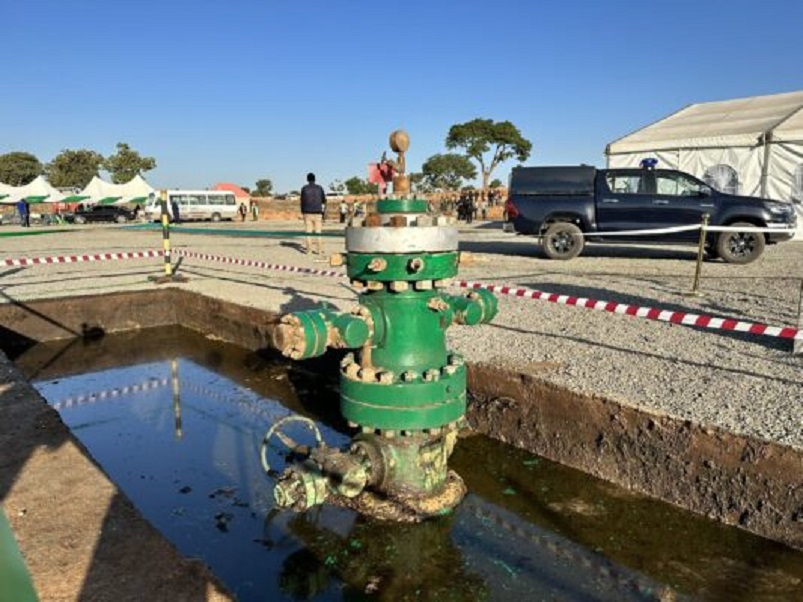
Oil plunged by more than 11 per cent on Tuesday after the market held onto comments by US President Donald Trump about a quick end to the war with Iran that has disrupted global crude flows.
Brent futures fell $11.16 or 11 per cent to $87.80 a barrel, and the US West Texas Intermediate (WTI) crude settled at $83.45 a barrel, down $11.32 or 11.9 per cent. This was the steepest percentage drop of any session since 2022.
The American president, in an interview on Monday, said he thought the war against Iran was “very complete” and the US was “very far ahead” of his initial four- to five-week estimated time frame.
The market also followed US Energy Secretary Chris Wright, who wrote on X that the American military had facilitated a shipment of oil out of the Strait of Hormuz.
However, it was reported later that Iran has begun laying naval mines in the strategically vital strait, through which 20 per cent of crude flows pass.
Iran’s Islamic Revolutionary Guard Corps (IRGC), now sharing control of the strait with the regular navy, has a range of asymmetric capabilities, including scattered mine-laying craft, explosive-laden boats and shore-based missile batteries, giving it the ability to create a complex array of threats to passing vessels.
Disruptions in Hormuz have already had significant ripple effects as tanker traffic through the strait has plummeted with shipping companies avoiding the area and insurers hiking premiums amid risk, and analysts warn that prolonged disruption could trigger one of the largest energy shocks in decades.
It was also reported that President Trump was considering easing oil sanctions on Russia related to its war in Ukraine, and releasing emergency crude stockpiles to help curb spiking prices.
Market analysts noted that nearly 1.9 million barrels per day of crude refining capacity in the Gulf has been shut in due to the US-Israeli war on Iran.
Seeking to calm down soaring oil prices, G7 finance ministers have discussed a possible joint release of strategic petroleum reserves, up to potentially 400 million barrels. This will be facilitated by the International Energy Agency (IEA).
The American Petroleum Institute (API) estimated that crude oil inventories in the United States fell by 1.7 million barrels in the week ending March 6, after adding 5.6 million barrels in the week prior. Official data from the US Energy Information Administration (EIA) will be released later on Wednesday.


By Modupe Gbadeyanka
A targeted fiscal incentive designed to unlock the long-awaited Final Investment Decision (FID) on the Bonga Southwest Aparo (BSWA) deepwater project has been approved by President Bola Tinubu.
The approval followed months of intensive technical and commercial negotiations involving the Nigerian National Petroleum Company (NNPC) Limited as the concessionaire, the Nigeria Revenue Service (NRS), the Special Adviser to the President on Energy, Olu Verheijen, and the chief executive of Shell, Mr Wael Sawan.
In a statement signed on Tuesday by the Chief Corporate Communications Officer of NNPC, Mr Andy Odeh, it was disclosed that the project is estimated to attract about $20 billion in Foreign Direct Investment and position Nigeria for a new era of deepwater production.
It was said that it has the potential to attract strategic investments and accelerate sustainable economic growth, adding that it signals renewed confidence in Nigeria’s policy direction and its resolve to translate reform momentum into tangible investment outcomes.
The chief executive of NNPC, Mr Bashir Bayo Ojulari, said, “This approval is a testament to the President’s leadership, NNPC’s disciplined execution and our ability to structure complex, bankable transactions that deliver value for Nigeria.
“For nearly two decades, the Bonga Southwest project remained stalled. Today, under President Tinubu’s reform-driven leadership and through NNPC’s sustained advocacy, we have broken that logjam. This is what partnership, persistence, and policy clarity can achieve.”
“This milestone further affirms NNPC’s commitment, under the President’s leadership, to unlocking Nigeria’s vast energy potential through partnerships, disciplined innovation and execution excellence,” he further stated.
The Bonga Southwest project will be the first FID on a Nigeria deepwater Production Sharing Contract asset since 2008, re-establishing Nigeria as a premier deepwater investment destination.
The fiscal package approved by President Tinubu includes an enhanced Production Tax Credit and resolution of the 2021 dispute settlement agreement, creating a competitive framework that balances national value with investor returns.
The Bonga Southwest Aparo project, operated by Shell with all IOCs in Nigeria as partners, will create over 5,000 direct and indirect jobs, and deliver 150,000 barrels per day of crude oil and 140 million standard cubic feet per day of gas upon completion.
NNPC Limited, as concessionaire, worked closely with SNEPCo and the broader contractor party to develop alternative fiscal solutions that address structural constraints while protecting Nigeria’s long-term interests.







-
 Feature/OPED6 years ago
Davos was Different this year
-
Travel/Tourism10 years ago
Lagos Seals Western Lodge Hotel In Ikorodu
-

 Showbiz3 years ago
Estranged Lover Releases Videos of Empress Njamah Bathing
-
 Banking8 years ago
Sort Codes of GTBank Branches in Nigeria
-

 Economy3 years ago
Subsidy Removal: CNG at N130 Per Litre Cheaper Than Petrol—IPMAN
-

 Banking3 years ago
Sort Codes of UBA Branches in Nigeria
-

 Banking3 years ago
First Bank Announces Planned Downtime
-

 Sports3 years ago
Highest Paid Nigerian Footballer – How Much Do Nigerian Footballers Earn