
Economy
Heritage Bank Reaffirms Commitment to Nigeria’s Showbiz Industry


By Dipo Olowookere
Mid-tier financial institution, Heritage Bank Plc, has reaffirmed its support for the development and growth of the Nigeria’s creative industry.
Chief executive of the lender, Mr Ifie Sekibo, gave this assurance in a statement issued at the weekend by Heritage Bank’s Divisional Head of Corporate Communications, Mr Fela Ibidapo.
He said the bank was committed to the development and growth of the entertainment industry because one of the easiest ways to solve the unemployment issue in the country is to get as many people as possible involved in the entertainment industry, because manufacturing, banking and other sectors cannot do it alone.
Mr Sekibo said the music industry has done so much for Nigeria in terms of employment and foreign exchange earnings and if more resources could be put into it, the country would be better for it.
Besides supporting individual artistes in the industry, the bank has also partnered with some organisers to perform and produce some entertainment shows.
Some of these include partnership with Yibo Koko in association with Bolanle Peters to produce and perform Seki, a dance drama.
The event which held at the popular Terra Kulture Arena was graced by members of the diplomatic corps, bank officials and lovers of arts and it featured notable celebrities like Hilda Dokubo, Monalisa Chinda Coker, Ibinabo Fiberisima, Julius Agwu, Ovunda Ihunwo, Peace Christian, Deborah Job, Opereke Jamabo Foh and Mercy Albert among others as casts.
The bank has also partnered with MultiChoice Nigeria Limited, owners of the DSTV and GOTV brands to bring the third season of the Big Brother Naija to viewers across Africa and beyond.
The Big Brother Naija 2018 was recently unveiled with Ebuka Obi-Uchendu as the host with 20 house mates battling for the winning prize of N45 million which include a cash gift of N25 million and SUV Jeep among others. The theme of this year’s edition is ‘Double Wahala.’
Also, Heritage Bank has partnered with Seagull Band, one of the five bands that participated in the 2017 edition of the Calabar Festival with the theme migration and climate change.
The statement said the theme of the carnival this year is migration and climate change and heritage has to do with green, green- house effect and sustainability, protection and human development.
“As far as this is concerned, the bank will continue to support initiatives that have to do with sustainability,” adding that migration is a depletion of human resources, depletion of values and depletion of human capital.
“We are there as an institution to help to facilitate and to create awareness that the grass is not greener on the other side, we can develop ourselves, we can build our nation, we can build our continent and sustain it if we do the right things like planting trees, keeping our environment clean, disposing our wastes properly, we will live a very good life,” the bank said in the statement.
Also, as part of its commitment to the growth and development of Nigeria’s creative industry, Heritage Bank Limited has partnered with the organisers of the International Festival of Contemporary Dance (IFCOD) to host the second edition of One Language, a musical production of intrigue, dance and drama hosted by Mrs Elo Inyeinengi-Etomi, the convener.
Owing to its huge support for the creative industry, the Federal Government recently commended the bank for its sustained commitment to the development and growth of the creative industry.
The Minister of Information and Culture, Mr Lai Mohammed gave the commendation at a two-day Creative Nigeria Summit held in Lagos recently with the theme: Financing the Film, Television and Music Industries; which was co-sponsored by the bank.






By Adedapo Adesanya
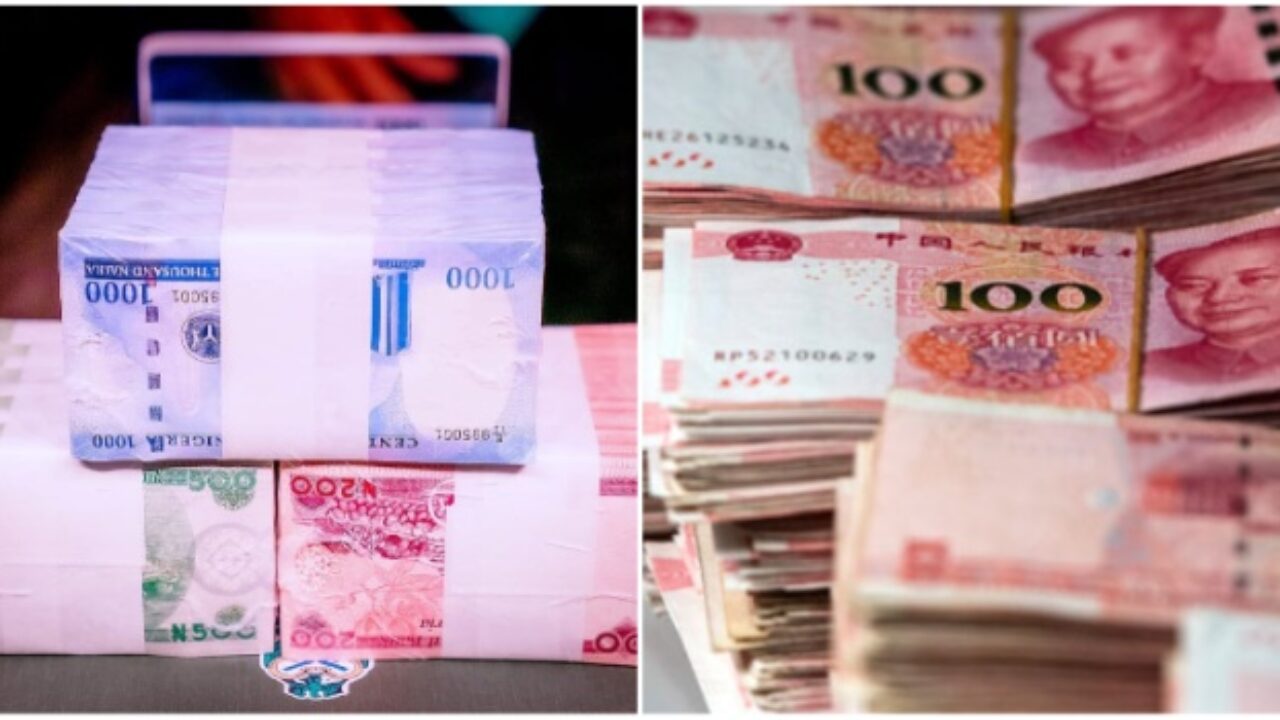
The Naira extended its gain on the Dollar in the Nigerian Autonomous Foreign Exchange Market (NAFEX) on Friday, April 10, by 0.18 per cent or N2.43 to trade at N1,356.89/$1 compared with the previous day’s N1,359.32/$1.
It also improved its value against the Pound Sterling in the same market window by N16.01 to close at N1,828.82/£1 versus N1,844.83/£1, but lost N3.40 against the Euro to sell at N1,592.58/€1 versus N1,589.18/€1.
In the parallel market, the Nigerian Naira further appreciated against the Dollar during the session by N5 to settle at N1,385/$1 compared with the previous day’s rate of N1,390/$1.
With the FX market operating with greater liquidity and efficiency, market participants now transact without extraordinary interventions from the Central Bank of Nigeria (CBN).
However, external reserves fell for 16 straight days through April 8, the longest declining run since July 2025. The central bank’s foreign exchange holdings declined by $1.1 billion in the period to $48.94 billion, the lowest level since February 19, the lender’s data show.
After initially weakening, as the Iran war broke out, the Nigerian currency has recovered losses and is one of only four of 23 African currencies still standing in the period.
The CBN had pledged to stabilise the Naira and has boosted sales of high-yield short-term debt to attract inflows of Dollars.
As for the cryptocurrency market, Bitcoin (BTC) and other major cryptocurrencies fell after US Vice President J.D. Vance announced that the country and Iranian negotiators had failed to agree to an extended ceasefire. BTC lost 1.9 per cent to sell at $71,549.08.
The parties met in Pakistan on Saturday to negotiate an agreement after the US’s nearly six-week-long campaign against Iran. VP Vance said at a press conference afterwards that the US had “not reached an agreement.”
Cardano (ADA) fell 4.3 per cent to $0.2398, Solana (SOL) depreciated by 2.7 per cent to $82.22, Binance Coin (BNB) slumped 2.2 per cent to $593.61, Dogecoin (DOGE) went down by 1.9 per cent to $0.0912, Ethereum (ETH) weakened by 1.4 per cent to $2,214.56, and Ripple (XRP) crashed by 1.3 per cent to $1.33.
However, TRON (TRX) appreciated by 0.9 per cent to $0.3217, while the US Dollar Tether (USDT) and the US Dollar Coin (USDC) closed flat at $1.00 each.

By Modupe Gbadeyanka
The deadline for filing individual annual income tax returns for residents of Lagos State has again been extended to April 21, 2026.
This information was revealed via a statement signed by the Head of Corporate Communications of the Lagos State Internal Revenue Service (LIRS), Mrs Monsurat Amasa-Oyelude, on Saturday.
The agency thanked some taxpayers for their continued compliance and commitment to the filing of their individual annual income tax returns, but charged those who have yet to file theirs to do so before the new deadline.
LIRS had earlier moved the deadline from its statutory period of March 31, 2026, to April 14, 2026, but due to “the overwhelming response and to enhance taxpayer convenience, while maintaining the integrity and accuracy of submissions,” the date was moved forward to April 26.
The tax-collecting organisation said it “observed a significant increase in traffic on its eTax platform as more taxpayers endeavour to meet the filing deadline.”
“In view of this development, and to ensure that all taxpayers are provided with adequate opportunity to successfully complete their filings, LIRS hereby announces a further extension of the deadline, now set for April 21, 2026,” it stated.
The agency reiterated that all filings must be completed electronically via the LIRS eTax platform: https://etax.lirs.net, which remains the only approved channel for submission.
Taxpayers were reminded that the filing of annual income tax returns remains a statutory obligation and were encouraged to take advantage of this final extension to fulfil their civic responsibility.
By Dipo Olowookere
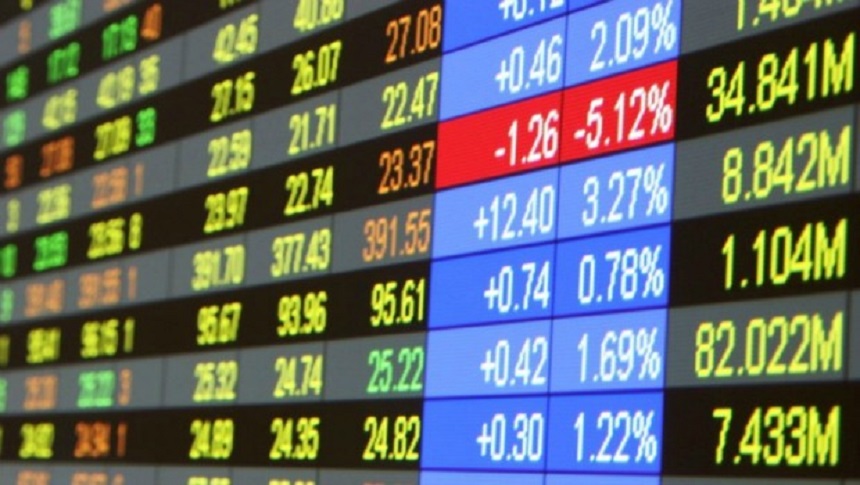
The Nigerian Exchange (NGX) Limited was in green on Friday after it closed higher by 0.30 per cent as a result of sustained bargain hunting.
Customs Street was up yesterday after three of the five major sectors came under buying pressure, with the consumer goods index up by 1.64 per cent, the industrial goods space up by 1.12 per cent, and the banking counter up by 0.64 per cent.
Business Post observed that profit-taking brought down the insurance by 2.61 per cent, and weakened the energy sector by 0.01 per cent.
At the close of business, the market capitalisation increased by N707 billion to N131.166 trillion from N130.459 trillion, and the All-Share Index (ASI) expanded by 1,097.86 points to 203,770.42 from 202,672.56 points.
Transactions by Nigerian stock investors shrank during the session, as 548.6 million shares worth N31.5 billion exchanged hands in 48,538 deals compared with the 652.9 million shares valued at N39.8 billion transacted in 51,101 deals a day earlier.
This implied that the trading volume went down by 15.98 per cent, the trading value depreciated by 20.85 per cent, and the number of deals crashed by 5.02 per cent.
Access Holdings finished the day as the busiest equity after selling 52.7 million units valued at N1.4 billion, Zenith Bank exchanged 47.8 million units worth N5.4 billion, UBA traded 38.9 million units for N1.8 billion, Secure Electronic Technology transacted 36.7 million units worth N35.5 million, and GTCO sold 34.9 million units valued at N4.6 billion.
The market breadth index was negative during the session with 20 price gainers and 38 price losers, indicating weak investor sentiment.
Trans Nationwide Express appreciated by 9.91 per cent to N3.77, International Breweries grew by 9.88 per cent to N13.35, Chams rose by 9.84 per cent to N3.35, Guinea Insurance improved by 9.38 per cent to N462.90, and Lafarge Africa gained 8.52 per cent to close at N233.20.
On the flip side, Omatek lost 10.00 per cent to trade at N2.07, Austin Laz declined by 9.93 per cent to N3.99, Coronation Insurance dipped by 9.88 per cent to N2.92, Zichis crashed by 9.58 per cent to N12.55, and Cornerstone Insurance retreated by 8.77 per cent to N5.20.
-
 Feature/OPED6 years ago
Davos was Different this year
-
Travel/Tourism10 years ago
Lagos Seals Western Lodge Hotel In Ikorodu
-

 Showbiz3 years ago
Estranged Lover Releases Videos of Empress Njamah Bathing
-
 Banking8 years ago
Sort Codes of GTBank Branches in Nigeria
-

 Economy3 years ago
Subsidy Removal: CNG at N130 Per Litre Cheaper Than Petrol—IPMAN
-

 Banking3 years ago
Sort Codes of UBA Branches in Nigeria
-

 Banking3 years ago
First Bank Announces Planned Downtime
-

 Sports3 years ago
Highest Paid Nigerian Footballer – How Much Do Nigerian Footballers Earn