
Economy
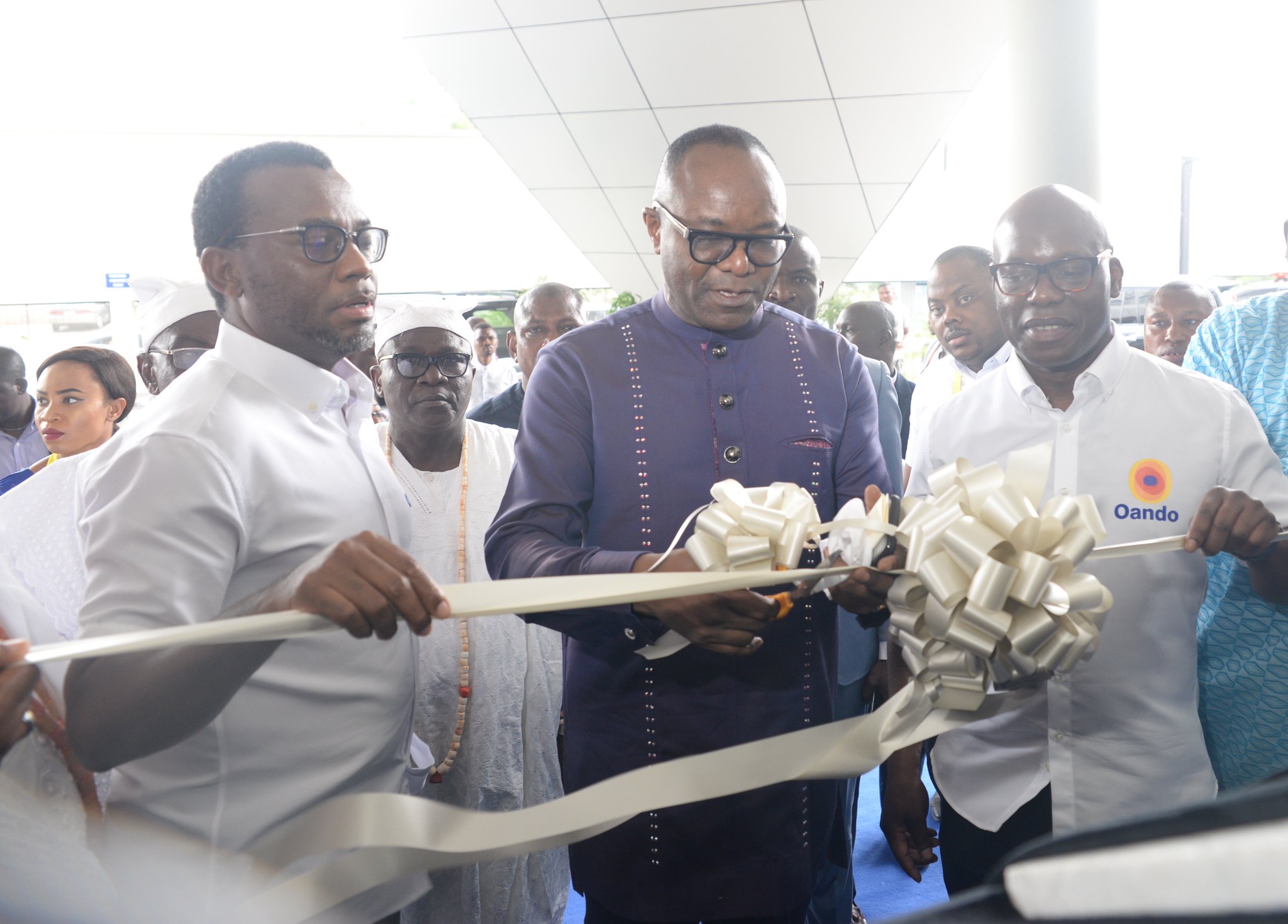
Kachikwu Commissions New Oando Wings Office Complex in Lagos

By Dipo Olowookere
Minister of State for Petroleum Resources, Mr Ibe Kachikwu, on Tuesday commissioned the new office building, the ‘Wings Office Complex’ of Oando Plc, Nigeria’s leading indigenous energy group listed on both the Nigerian and Johannesburg Stock Exchange.
The event took place at the new office located at 17a, Ozumba Mbadiwe Avenue, Victoria Island, Lagos.
Present on the occasion were top members of the oil firm as well as stakeholders in the oil and gas sector in the country.
The Wings Office Complex consists of two 12-story buildings – 27,000m2 of lettable office space, an in-built 3-floor car park, 4 high-speed 12 person passenger lifts per tower, retail space and a waterfront.
The property was constructed by Cappa D’Alberto, one of the oldest building and civil engineering firms in Nigeria and the name behind notable buildings such as The Civic Centre, GT Bank Head Office, Mobil House and Citibank Head Office.
The edifice offers a world-class indoor event space, a one-of-a-kind space that can hold up to 300 people, with floor to ceiling windows which provide a scenic view of the waterfront and allows maximum natural daylight. Wings also has an outdoor waterfront area with a hosting capacity of 200 people and overlooks Lagos State’s waterway.
In his short address, Mr Kachickwu commended the management of Oando for erecting the structure, pointing out that the company has shown “uniqueness as a Nigerian oil company showing support to the government and the Nigerian populace.”
He explained that, “The building has been developed using water, sand, cement, bricks, steel, concrete, wood and glass, all are elements attributable to transparency and strength.
“The future is very demanding, I urge you to continue to inspire and be creative in the solutions that you proffer in your sector and for the nation.”
On his part, Group Chief Executive of Oando Plc, Mr Wale Tinubu, stated that, “At Oando, passion is not only one of our core values, it drives our ambitions. The idea for the Wings Office Complex was conceived in 2009 and the build kick – started in 2013.
“At the time it seemed a lofty dream; both in terms of size and the type of structure we envisaged. We commenced the construction of Wings at a time when the price of oil was around $100; despite the 2014 crash in oil prices to $23 per barrel, the 60 percent devaluation of the naira and a 13 month long economic recession, we pushed on.
“Today, the two towers stand tall as a testament to indigenous companies like ourselves who continue to lead and set the standard for excellence.
“The project signifies the end to a series of capital projects that we have pioneered, invested in and built.”
For Funso Akere, CEO, Stanbic IBTC Capital representing the CEO for Stanbic IBTC, “Stanbic IBTC Bank Plc together with Standard Bank of South Africa is proud to have supported the completion of this landmark real estate project in Nigeria, which would catalyse the development of similar ground-breaking real estate projects and serve as a benchmark for investment grade office buildings in Nigeria.
“It will also enhance the economic landscape and support the creation of the creation of world class business infrastructural development drive of the Lagos State government.
“We take this opportunity to commend the management and staff of Oando and the entire project team who worked tirelessly in driving the successful completion of the project. We look forward to additional opportunities to partner with the sponsors in developing other iconic projects.”
The company followed the international and more progressive model for office buildings by incorporating space for amenities such as restaurants and retail outlets. It is also one of a few prime locations in Lagos with waterway accessibility giving its inhabitants and guests a fuller experience during their time on the premises. The Wings is a smart and energy efficient building that regulates its internal temperate to acclimatize with the outdoor temperature.
It also uses energy efficient and smart lighting systems with occupancy and daylight sensors to make sure office lights are only on as they are needed; specifically when occupants are in a room and sunlight is diminishing. The deliberate use of floor to ceiling windows in the 4 corners of the building ensures that 100% of occupants are always within 12 meters of natural light.
Other building features include: filtered fresh air supply at a minimum rate of 8 litres per person/second, 24 hour power, external cladding designed to limit direct solar gain, noise minimizing building acoustics, central cooling, panoramic views of Lagos from every floor .
In addition to being office space to leading brands such as Ericsson and RMB Bank, the Wings Office Complex is now home to Oando employees. It was built with the intention of accommodating all the company’s Lagos based staff and act as our new Head Office, enabling us finally relinquish leased space in Lagos.



By Adedapo Adesanya
Vert, a global cross-border payments platform, has announced a new solution under Verto Business Accounts that enables US-registered businesses to move money seamlessly between the United States and Africa.
With the ability to open a US Dollar account in their business name and have access to trusted emerging market payment rails, companies can now receive, hold, and transfer funds faster, more cost-effectively, and with greater control.
US-registered businesses with operations in Africa often encounter significant banking limitations, with US banks frequently delaying or blocking transactions to or from African markets, imposing high or hidden FX costs, and offering limited access to Emerging Market payment corridors. Businesses without a US bank account registered in their own name must rely on fragmented tools or intermediaries to move funds to Africa, creating operational inefficiencies and slowing growth.
Verto’s new solution directly addresses these challenges by giving US-domiciled businesses access to named USD accounts and a robust cross-border payment infrastructure, enabling them to move funds and settle transactions in local currencies with speed and efficiency.
Built for venture-backed startups, import-export SMEs, and investors funding emerging market innovation, this solution will enable clients to receive funds directly into a named USD business account from US based customers or investors, convert and settle between USD and local currencies such as NGN and KES quickly and at lower cost, as well as hold, receive, and pay in 48 currencies from a single dashboard.
The solution will also allow users to pay contractors, suppliers, and offshore teams instantly via local payment rails. It also equips teams with virtual cards to spend in 11 currencies without fees and leverage specialised onboarding and monitoring that navigates both US and African regulatory requirements
By combining US and African compliance expertise, Verto’s Business Accounts empowers companies to maintain a US domestic presence for investors, customers, and suppliers while using deep-liquidity rails to pay global contractors and settle trades in local currencies efficiently, ensuring uninterrupted trade, payroll, and investment flows, without the risk of blocked or delayed transactions.
“We believe founders building across borders should not be constrained by the limitations of traditional banking,” said Ola Oyetayo, CEO of Verto. “Providing named accounts in the US empowers businesses with the funds they need to operate globally, connecting the US and Africa more efficiently without friction.”
With over 8 years of experience and $25 billion in annual global cross-border transaction volume, Verto continues to provide the infrastructure, expertise, and trusted payment rails businesses need to operate confidently across borders and scale globally.
By Adedapo Adesanya
The Presidential Enabling Business Environment Council (PEBEC) has directed Ministries, Departments, and Agencies (MDAs) to suspend the introduction of new policies and regulatory changes to prevent disruptions to businesses.
The directive was issued in a statement by PEBEC director-general, Mrs Zahrah Mustapha-Audu, on Monday in Abuja, noting that the move is part of the Federal Government’s broader effort to improve regulatory quality, ensure policy consistency, and strengthen Nigeria’s ease of doing business environment.
The council emphasised that the suspension will remain in place until all MDAs fully comply with the Regulatory Impact Analysis (RIA) Framework, which governs evidence-based policymaking across government institutions.
The council said the directive is aimed at ensuring that all government policies are backed by verifiable data and do not negatively impact businesses or investors.
“It is imperative to emphasise that no new reform or policy will be permitted to proceed without being grounded in clear, verifiable evidence,” said Mrs Mustapha-Audu.
“The framework provides the structured mechanism through which such evidence-based decisions can be rigorously developed, assessed, and validated.
“This directive is necessary to prevent policy shocks that may adversely affect businesses, investors, and citizens, as well as to eliminate policy inconsistencies and frequent reversals.”
She added that the government remains committed to working collaboratively with regulators and does not intend to embarrass any institution.
The Regulatory Impact Analysis (RIA) Framework, introduced in January 2025, is designed to improve transparency and ensure that policies undergo proper evaluation before implementation.
All MDAs are required to align new policies and amendments with the RIA framework before approval and rollout.
The framework has been circulated by the Office of the Secretary to the Government of the Federation (SGF) and is available on the PEBEC website.
MDAs are encouraged to seek technical support from the PEBEC Secretariat to ensure proper implementation.
Exceptions to the directive will only be granted in cases of urgent national interest, subject to appropriate approvals.
PEBEC noted that the framework will help institutionalise evidence-based policymaking, enhance transparency, and improve stakeholder confidence in government decisions.

By Aduragbemi Omiyale
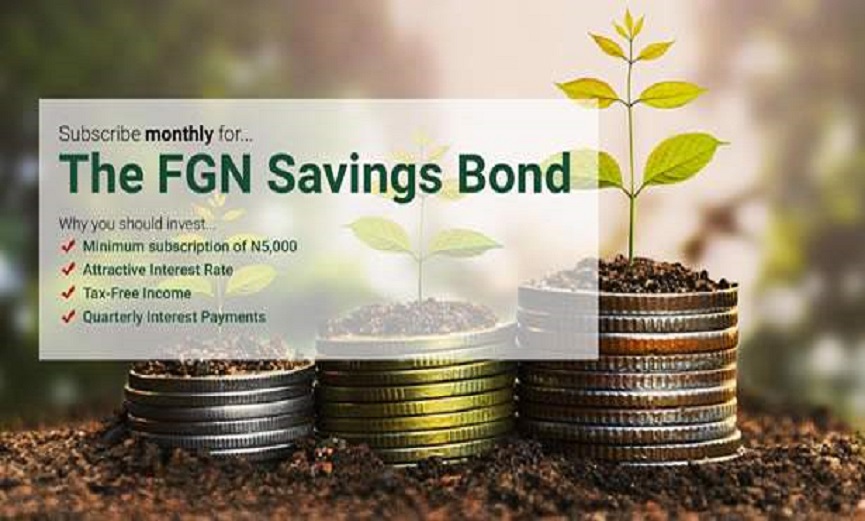
Subscription for the Federal Government of Nigeria (FGN) savings bonds for April 2026 has opened, a circular from the Debt Management Office (DMO) on Tuesday, April 7, 2026, confirmed.
The debt office is selling the retail debt instrument for this month in two tenors of two years and three years.
Offer for the savings bonds opened today and will close on Friday, April 10, 2026, a part of the disclosure stated.
The 2-year FGN savings bond due April 15, 2028, is being sold at a coupon rate of 13.082 per cent per annum, while the 3-year FGN savings bond due April 15, 2029, is being sold at a coupon rate of 14.082 per cent per annum.
The interests are paid every quarter, and the bullet repayment to subscribers on the maturity date.
The bonds are sold at N1,000 per unit, subject to a minimum subscription of N5,000 and in multiples of N1,000 thereafter, subject to a maximum subscription of N50 million.
Interested investors are required to reach out to the stockbroking firms appointed as distribution agents by the DMO via the agency’s website.
An FGN savings bond qualifies as securities in which trustees can invest under the Trustee Investment Act. It also qualifies as government securities within the meaning of the Company Income Tax Act (CITA) and the Personal Income Tax Act (PITA) for tax exemption for pension funds, amongst other investors, meaning it is tax-free.
It can be used as a liquid asset for liquidity ratio calculation for banks, and is listed on the Nigerian Exchange (NGX) Limited to allow for easy exit (liquidation) before maturity by selling at the secondary market.
-
 Feature/OPED6 years ago
Davos was Different this year
-
Travel/Tourism10 years ago
Lagos Seals Western Lodge Hotel In Ikorodu
-

 Showbiz3 years ago
Estranged Lover Releases Videos of Empress Njamah Bathing
-
 Banking8 years ago
Sort Codes of GTBank Branches in Nigeria
-

 Economy3 years ago
Subsidy Removal: CNG at N130 Per Litre Cheaper Than Petrol—IPMAN
-

 Banking3 years ago
Sort Codes of UBA Branches in Nigeria
-

 Banking3 years ago
First Bank Announces Planned Downtime
-

 Sports3 years ago
Highest Paid Nigerian Footballer – How Much Do Nigerian Footballers Earn