
Economy
Naira Loses Value Against Dollar at BDC Segment

By Adedapo Adesanya
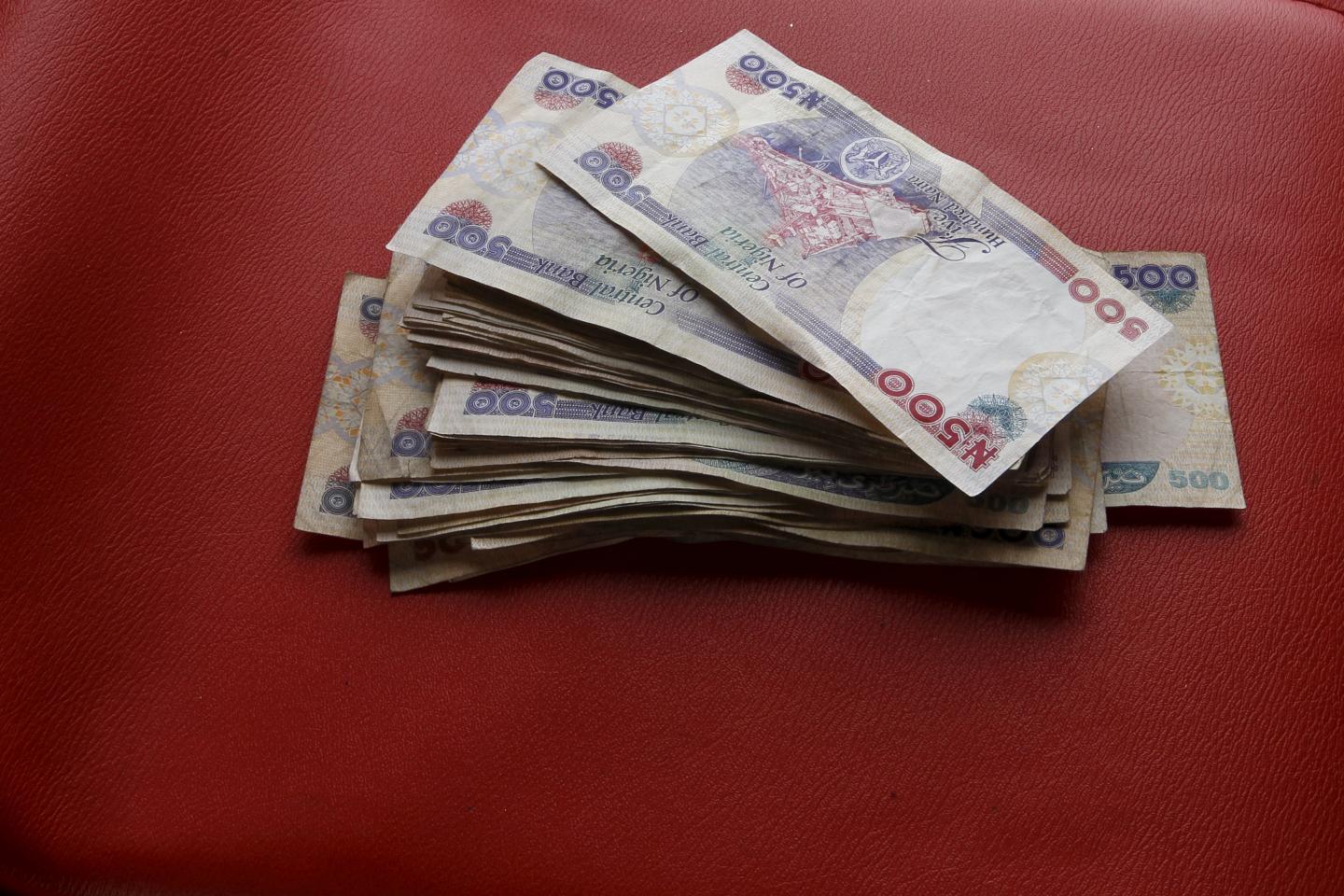
The Naira depreciated against the American Dollar across all the major locations in the country at the Bureau De Change (BDCs) segment of the foreign exchange market on Tuesday, March 31, 2020.
According to data collated by Business Post from the Association of Bureaux De Change Operators of Nigeria (ABCON), the domestic currency lost 50 kobo against the greenback at the Lagos BDC market to close on Tuesday at N413.50/$1 in contrast to N413/$1 it traded on Monday. But against the British Pound and the Euro, it traded flat at N500/£1 at N420/€1 respectively.
At the Abuja BDC market, the local currency slipped against the US Dollar by N4 to N411/$1 from N407/$1 and lost N20 against the Pound to sell at N500/£1 compared with the previous N480/£1 rate and fell by N4 against the Euro to N413/€1 from N417/€1.
In Kano, the Nigerian currency was weakened by N5 against its American counterpart to N410/$1 from N405/$1, while it remained unchanged against the Pound Sterling at N495/£1 and against the Euro at N417/€1.
Due to the N6 depreciation it suffered yesterday against the Dollar, BDC operators in Port Harcourt exchanged the Naira at N409/$1 compared with N403/$1 it was traded on Monday. However, they maintained the previous exchange rate for the Naira/Pound at 495/£1, while the Naira/Euro exchange rate was N413/€1 compared with Monday’s 414/€1.
At the Investors and Exporters (I&E) segment of the forex market, the Naira was strengthened against the Dollar by N6.63 or 1.69 percent on Tuesday, spurred by relatively low demand for the forex amid travel restrictions in two major cities of the country, Lagos and Abuja.
After depreciating to N392.18/$1 at the segment on Monday, the local currency appreciated to N385.55/$1.
According to data sourced by Business Post from FMDQ Securities Exchange, transactions worth $79.9 million were carried at the session, though higher than the previous day’s $34.4 million. This showed a 132 percent or $45.5 million spike in the total turnover for the day at the I&E window.
At the interbank segment of the market, which is the official exchange rate window for government transactions, the local currency traded flat against the United States currency at N361/$1.
At the parallel market yesterday, the domestic currency recorded no movement against the US Dollar, Pound and the Euro as it maintained the previous rates of N415/$1, N490/£1 and N420/€1 respectively.



By Adedapo Adesanya
African Export-Import Bank (Afreximbank) will support Dangote Group, as it seeks to expand its operations and grow its turnover to $100 billion by 2030, with new venture interests, including ports, pipelines, data centres, and mining.
The lender, in its long-term growth strategy Vision 2030: Supercharging Dangote Group for Long Term Success, outlines a two‑phase expansion programme spanning 2025–2028 and 2028–2030.
Key initiatives include increasing the capacity of the Dangote Petroleum Refinery from 650,000 barrels per day to 1.4 million barrels per day. Also, it will back plans to boost its fertiliser production from 3 million tonnes per annum to 12 million tonnes per annum, a move that would position the group as the world’s largest producer of urea fertiliser.
The expansion strategy encompasses rapid growth across other business lines, including cement, rice, and broader food production. Beyond its current portfolio, Dangote identified new investment opportunities in infrastructure, including ports and pipelines, as well as gas, mining (as a gateway for semi‑processed and value‑added mineral exports), data centres to support Africa’s digital transformation and enterprise resilience, and power, described as the engine of Africa’s industrial transformation.
To drive the growth over the five years, the Dangote Group predicts that it will require at least $40 billion in new investments to realise its continental ambitions.
Speaking on this, the chief executive of Dangote Industries Limited, Mr Aliko Dangote, said, “Our partnership with Afreximbank is more than financial support; it is about a shared dream for the continent. When we set out to build a 650,000 barrel-per-day refinery—the largest of its kind in Africa—the Bank believed in our vision when others were sceptical.
“Without their leadership and trust, the development of the African continent would not be where it is today. We are joined at the hip with the bank because we share the same mission: to drive local capacity, eliminate our dependence on imports, and ensure Africa’s industrial growth is led by Africans.”
On his part, the chairman of the Board of Afreximbank, Mr George Elombi, noted that the engagements demonstrated a strong convergence of purpose to free Africa from dependency and to ensure the continent’s resources are used to the benefit of its people.
He expressed confidence that the collaboration would lead to “a formidable bond of partnership to make large-scale investments that will accelerate the changes we desire,” changes that have gained urgency amid increasing global fragmentation and protectionism.
Mr Elombi recalled that at the onset of the COVID-19 pandemic in 2020, Africa struggled to secure even the basic protective materials due to limited production capacity, adding that “even when financing was available, we could not access these essential items.”
He further pledged the readiness of Afreximbank and its Board of Directors to support the realisation of Dangote Group’s aspirations. “This is the very purpose for which our institution was created. As is deeply rooted in our DNA, we do not only listen—we execute and convert aspiration into action.”


By Dipo Olowookere
The series 1 and 2 commercial papers sold to investors in July 2025 by Champion Breweries Plc have been fully repaid on maturity.
The brewery firm issued the short-term debt instruments to the tune of N15 billion about four months ago to fund its working capital.
It was the inaugural commercial paper issuance of the organisation, which recently completed the acquisition of the iconic Bullet energy drink brand. The CP sale was oversubscribed, reinforcing investor confidence.
The Series 1 and 2 issuances attracted diverse participation from institutional investors, signalling strong confidence in Champion Breweries’ financial position, strategy, and growth outlook.
The Series 1 was valued at N4.22 billion and matured in December 2025, while the Series 2 was worth N10.78 billion and matured on April 1, 2026.
The repayment reflects the company’s strong liquidity position and its consistent track record of meeting investor commitments.
According to the chairman of Champion Breweries, Mr Imo-Abasi Jacob, the successful repayment of the debt reflects the brewer’s disciplined approach to financial management and long-term strategy.
“The successful redemption of our series 1 and 2 commercial paper issuance reflects the strength of our financial position and the confidence investors have in our business. It demonstrates the strength of our governance and the resilience of our business,” he stated.
“As we look ahead, we remain focused on executing our growth strategy, driven by a consumer-led approach and responsible innovation, while continuing to deliver sustainable value to all stakeholders,” he added.
Since the establishment of the programme, Champion Breweries has demonstrated its ability to engage the debt capital markets with credibility, reinforcing its reputation as a reliable issuer and a company well-positioned to leverage future funding opportunities.
By Adedapo Adesanya
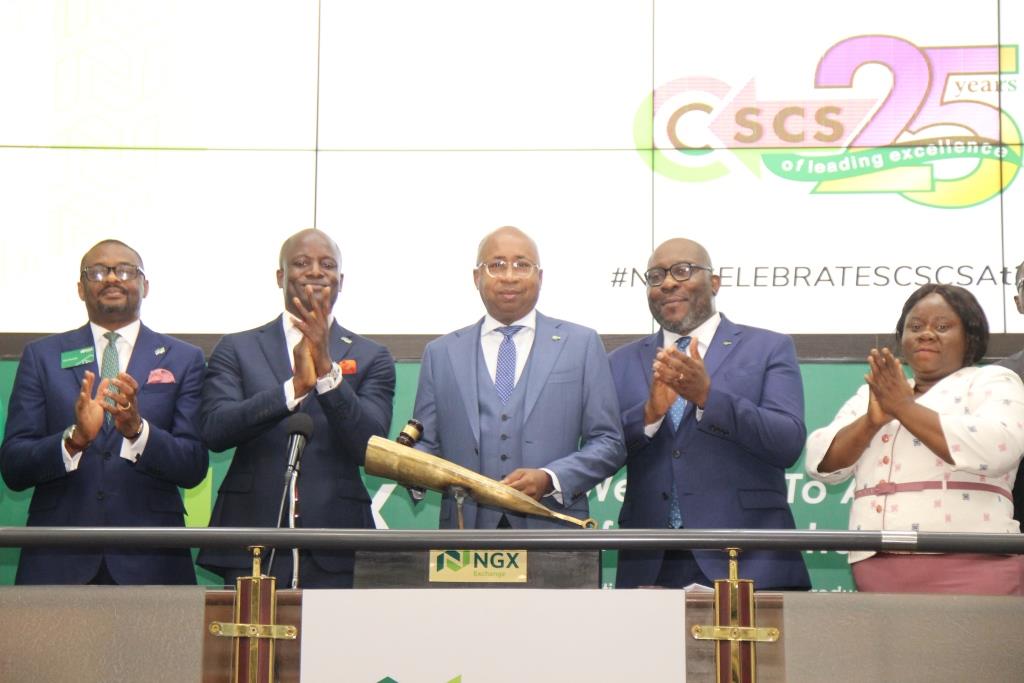
Nigerian security depository company, Central Securities Clearing System (CSCS) Plc, has disclosed plans to pay N1.78 in dividends to shareholders for the 2025 financial year.
This was disclosed by the company in a notice to the NASD Over-the-Counter (OTC) Securities Exchange, where it trades its securities.
The notice indicated that the proposed dividend would be paid to those who hold the stocks of the company as of the qualification date for the dividend, which is today, Thursday, April 9. This means only those who hold the company’s shares as of the closing session will be eligible to receive the stipulated dividend payment.
The payment will be subject to the approval of shareholders at the Annual General Meeting (AGM) of the company scheduled for Thursday, April 23, 2026.
According to the notice, the AGM will be held at the Civic Centre, located at Ozumba Mbadiwe Road, Victoria Island, Lagos, at 10:00 a.m.
If the dividend payment is approved at the meeting, shareholders of the company will be credited on the same day as the annual general meeting.
The notice noted that the closure of the company’s register will be on Friday, April 10, through Tuesday, April 14, 2023, all days inclusive.
-
 Feature/OPED6 years ago
Davos was Different this year
-
Travel/Tourism10 years ago
Lagos Seals Western Lodge Hotel In Ikorodu
-

 Showbiz3 years ago
Estranged Lover Releases Videos of Empress Njamah Bathing
-
 Banking8 years ago
Sort Codes of GTBank Branches in Nigeria
-

 Economy3 years ago
Subsidy Removal: CNG at N130 Per Litre Cheaper Than Petrol—IPMAN
-

 Banking3 years ago
Sort Codes of UBA Branches in Nigeria
-

 Banking3 years ago
First Bank Announces Planned Downtime
-

 Sports3 years ago
Highest Paid Nigerian Footballer – How Much Do Nigerian Footballers Earn