
Economy
New Insurance Act Will Help Unlock $1trn Economy Goal—Presidency


By Adedapo Adesanya
The presidency has said the newly assented insurance reform act would be instrumental to achieving Nigeria’s $1 trillion economy goal.
Recall that earlier this week, President Bola Tinubu signed into law the Nigerian Insurance Industry Reform Bill 2025, a move that has welcomed by insurance stakeholders across the country.
According to a statement by Mr Tinubu’s spokesman, Mr Bayo Onanuga, the legislation now known as the Nigerian Insurance Industry Reform Act (NIIRA) 2025, will strengthen Nigeria’s financial sector and accelerate the nation’s march toward a $1 trillion economy.
The presidency said the Act repealed and consolidated several outdated insurance laws into a single, modern legal framework.
“The new Act provides for comprehensive regulation and supervision of all insurance and reinsurance businesses operating within Nigeria,” Mr Onanuga said.
“The NIIRA Act 2025 ushers in a new era of transparency, innovation, and global competitiveness for the insurance industry. It aligns with the Federal Government’s vision of achieving a $1 trillion economy,” he added.
The presidential spokesman said the new law introduced measures such as: Stringent capital requirements to ensure the financial soundness of operators; Enforcement of compulsory insurance policies to enhance consumer protection; Digitisation of the insurance market to improve access and efficiency; Zero tolerance for delays in claims settlement; Creation of dedicated policyholder protection funds, especially in cases of insolvency; and Expanded participation in regional insurance schemes, including the ECOWAS Brown Card System.
Mr Onanuga said the National Insurance Commission (NAICOM) has been mandated to administer and implement the provisions of the NIIRA 2025 to unlock the industry’s full potential and significantly improve insurance penetration across the country.
The reform introduced by the new law is expected to catalyse new investments, boost consumer confidence, and position Nigeria as a leading insurance hub in Africa, the presidency stated.
Nigeria has set its sight to become a $1 trillion economy by 2030. This goal, unveiled by the administration of President Tinubu, will see coordinating financial and economic bodies consolidate on efforts. For instance, the Central Bank of Nigeria (CBN) with its ongoing recapitalisation programme for banks is playing its part.
Analysts, however, noted that the recent rebasing of the country’s gross domestic product (GDP) which puts the economy at less than $400 billion, may impact the goal.













By Adedapo Adesanya
The NASD Over-the-Counter (OTC) Securities Exchange recorded a 3.8 per cent week-on-week decline in the 14th trading week of 2026, which had only four trading sessions.
This happened because of the public holiday observed on Friday for Easter celebrations in Nigeria and across the globe.
Last week, the market capitalisation of the bourse went down by N95.36 billion to N2.417 trillion from N2.512 trillion in Week 13, while the NASD Unlisted Securities Index (NSI) shrank by 159.39 points to 4,040.30 points from 4,199.69 points in the previous week.
In the week, there were five price losers and eight price losers led by 11 Plc, which crumbled by N94.57 to N256.60 per unit from N351.17 per unit.
MRS Oil Plc lost N39.00 to close at N171.00 per share from N210.00 per share, FrieslandCampina Wamco Nigeria Plc depreciated by N17 to N93.00 per unit from N110.00 per unit, and Central Securities Clearing System (CSCS) Plc shed N2.10 to close at N78.00 per share versus N80.10 per share.
Further, NASD Plc dropped N4.14 to end at N37.36 per unit versus N41.50 per unit, UBN Property Plc crashed by 22 Kobo to N1.98 per share from N2.20 per share, Food Concepts Plc slid by 13 Kobo to N2.87 per unit from N3.00 per unit, and Capital Bancorp Plc contracted by 10 Kobo to N1.90 per share from N2.00 per share.
On the flip side, IPWA Plc gained 55 Kobo to sell at N6.06 per unit versus N5.51 per unit, Geo-Fluids Plc appreciated by 7 Kobo to N3.25 per share from N3.18 per share, Industrial and General Insurance (IGI) Plc improved by 5 Kobo to 57 Kobo per unit from 52 Kobo per unit, Great Nigeria Insurance (GNI) Plc grew by 2 Kobo to 52 Kobo per share from 50 Kobo per share, and Acorn Petroleum Plc moved up by 1 Kobo to N1.34 per unit from N1.33 per unit.
The volume of transactions witnessed a 5,490.9 per cent surge last week to 3.5 billion units from 62.7 million units, and the value of transactions soared by 437.7 per cent to N9.7 billion from N1.7 billion. These trades were completed in 163 deals and involved 20 stocks.
The most traded stock by value was GNI Plc with N8.4 billion, followed by Okitipupa Plc with N630.5 million, Geo-Fluids Plc with N162.7 million, CSCS Plc with N57.5 million, and Friesland Campina Wamco Nigeria Plc with N37.1 million.
The most trased stock by volume was also GNI Plc with 3.4 billion units, Geo-Fluids Plc traded 50.1 million units, Okitipupa Plc transacted 21.0 million units, UBN Property Plc quoted 2.5 million units, and CSCS Plc sold 0.73 million units.

By Adedapo Adesanya
The NASD Over-the-Counter (OTC) Securities Exchange extended its stay in the south territory with a decline of 0.56 per cent on Wednesday, April 2.
This brought down the market capitalisation by N13 billion to N2.417 trillion from N2.430 trillion, and downed the NASD Unlisted Security Index (NSI) by 22.57 points to 4,062.87 points from the previous session’s 4,062.87 points.
It was observed that the NASD exchange ended with three price gainers and three price losers during the trading day.
MRS Oil Plc depreciated by N19.00 to close at N171.00 per unit compared with the previous price of N190.00 per unit, NASD Plc lost N4.14 to trade at N37.36 per share compared with Wednesday’s N41.50 per share, and Central Securities Clearing System (CSCS) Plc gave up N2.00 to sell at N78.00 per unit versus N80.00 per unit.
On the flip side, FrieslandCampina Wamco Nigeria Plc appreciated by 19 Kobo to N93.00 per share from N92.81 per share, Food Concepts Plc expanded by 15 Kobo to N2.87 per unit from N2.72 per unit, and Great Nigeria Insurance (GNI) Plc improved by 2 Kobo to 52 Kobo per share from 50 Kobo per share.
Yesterday, the volume of securities dipped by 91.8 per cent to 260.2 million units from 3.2 billion units, the value of securities went down by 98.1 per cent to N154.2 million from N8.3 billion, while the number of deals soared by 53.3 per cent to 46 deals from 30 deals.
GNI Plc was the most active stock by value on a year-to-date basis with 3.4 billion units worth N8.4 billion, followed by CSCS Plc with 56.9 million units valued at N3.9 billion, and Okitipupa Plc with 27.5 million units traded for N1.8 billion.
The most traded stock by volume on a year-to-date basis was also GNI Plc with 3.4 billion units sold for N8.2 billion, trailed by Resourcery Plc with 1.1 billion units exchanged for N415.7 million, and Infrastructure Guarantee Credit Plc with 400 million units transacted for N1.2 billion.
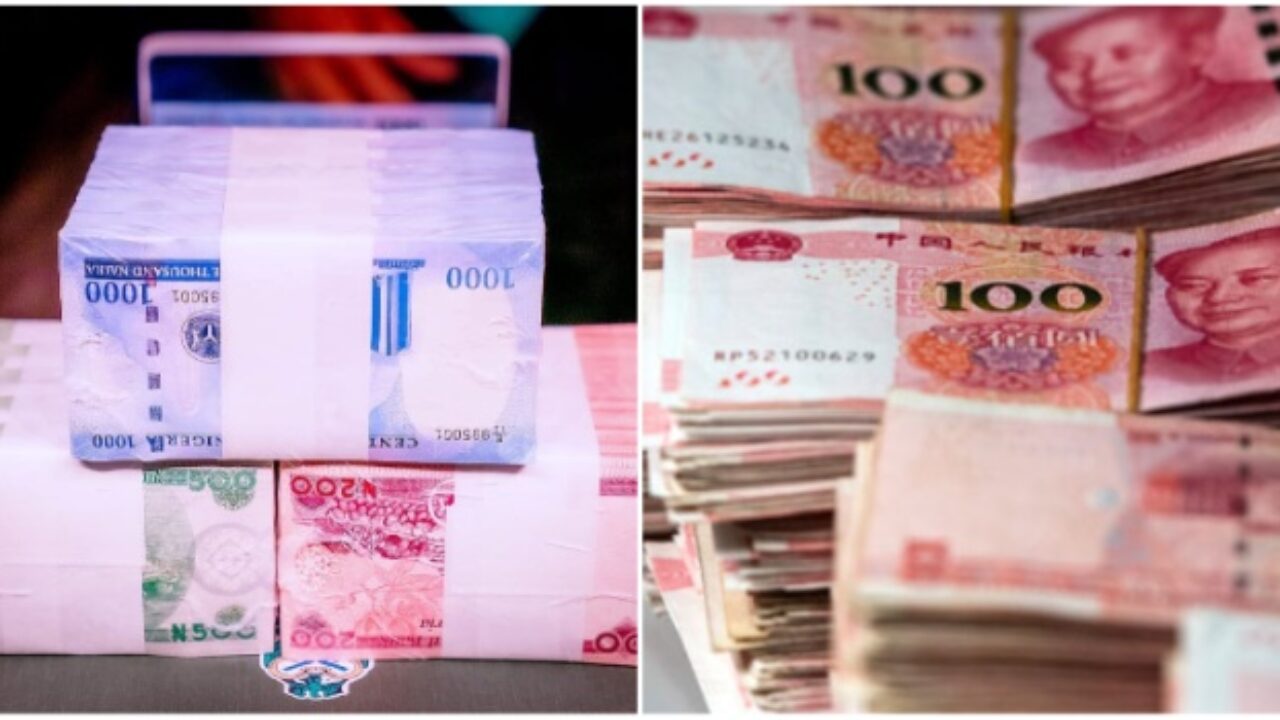
By Adedapo Adesanya
The Naira dropped N2.09 or 0.15 per cent against the United States Dollar in the Nigerian Autonomous Foreign Exchange Market (NAFEX) on Thursday, April 2, to trade at N1,380.79/$1 compared with Wednesday’s rate of N1,378.70/$1.
However, it appreciated against the Pound Sterling in the official market by N2.77 to quote at N1,824.86/£1 versus the N1,836.57/£1 it was traded at midweek, and improved its value against the Euro by N10.54 to N1,591.92/€1 from N1,602.46/€1.
Yesterday was the last trading session of the week for the local currency in the spot market, as the market will be closed on Friday and Monday for the Easter Holiday.
At the black market, the Nigerian Naira maintained stability against the greenback yesterday at N1,405/$1, but gained N8 at the GTBank FX counter to settle at N1,388/$1, in contrast to the previous session’s N1,396/$1.
Pressure eased on the domestic currency as strong policy indicators have helped calm the majority of worries within the financial systems. Particularly in the remittance segment, the apex bank has directed all International Money Transfer Operators (IMTOs) to route remittance transactions through designated Naira settlement accounts in banks, a move aimed at boosting transparency and channelling more foreign exchange into the formal market.
This helps take off pressure from the foreign reserves, which have fallen below the $50 billion mark as they are gradually decreasing rather than falling sharply.
Meanwhile, the cryptocurrency market was bullish on Thursday, as macro sentiment shifted against recent optimism after reports that Iran is drafting a protocol with Oman to manage traffic through the Strait of Hormuz, easing concerns about disruptions to a key global oil route.
The remarks came after U.S. President Trump on Wednesday night vowed to hit Iran “extremely hard” in the coming weeks and that the Strait of Hormuz would “open naturally” once the war ends.
Cardano (ADA) chalked up 1.9 per cent to trade at $0.2435, Dogecoin (DOGE) grew by 1.2 per cent to $0.0912, Ethereum (ETH) appreciated by 0.8 per cent to $2,066.37, Bitcoin (BTC) added 0.5 per cent to sell at $67,080.53, Solana (SOL) increased by 0.5 per cent to $79.91, and Ripple (XRP) jumped 0.2 per cent to $1.31.
Conversely, Binance Coin (BNB) dipped 0.7 per cent to $586.90, and TRON (TRX) depreciated by 0.3 per cent to $0.3147, while the US Dollar Tether (USDT) and the US Dollar Coin (USDC) closed flat at $1.00 each.
-
 Feature/OPED6 years ago
Davos was Different this year
-
Travel/Tourism10 years ago
Lagos Seals Western Lodge Hotel In Ikorodu
-

 Showbiz3 years ago
Estranged Lover Releases Videos of Empress Njamah Bathing
-
 Banking8 years ago
Sort Codes of GTBank Branches in Nigeria
-

 Economy3 years ago
Subsidy Removal: CNG at N130 Per Litre Cheaper Than Petrol—IPMAN
-

 Banking3 years ago
Sort Codes of UBA Branches in Nigeria
-

 Banking3 years ago
First Bank Announces Planned Downtime
-

 Sports3 years ago
Highest Paid Nigerian Footballer – How Much Do Nigerian Footballers Earn