
Economy
NEZA Seeks Constructive Dialogue on Impact of Tax Reforms on Nigeria’s Free Zones


By Modupe Gbadeyanka
The need for critical stakeholders to have a constructive dialogue on the impact of the tax reforms on the free zones in the country has been emphasised by the Nigeria Economic Zones Association (NEZA).
In a statement signed by the executive secretary of NEZA, Toyin Elegbede, it was pointed out that certain provisions of the Nigeria Tax Act 2025 and the Nigeria Tax Administration Act 2025 affect Special Economic Zones (SEZs) and Free Trade Zones (FTZs), posing significant risks to Nigeria’s investment climate.
It was noted that without careful engagement and strategic interventions, these reforms risk eroding investor confidence, jeopardising over 100,000 jobs, triggering capital flight to competing African countries, and increasing costs for Nigerian consumers.
At a time when Nigeria should be consolidating its leadership under the African Continental Free Trade Area (AfCFTA), policies that weaken the free zone scheme could inadvertently shift competitive advantage to neighbouring economies.
The new tax provisions affecting SEZ and FTZ operators have created deep uncertainty among investors and for the first time, have created a situation where even companies that export 100 per cent of their products from the free zone can be subject to taxation, completely undermining the free zone scheme and making Nigeria’s free zones one of the least attractive and competitive on the continent, a part of the note made available to Business Post stated.
NEZA said investors may choose to relocate to other African countries with more favourable free zone regimes, while still benefitting from duty-free access to the Nigerian market under AfCFTA rules, depriving Nigeria of the very investments, skills transfer, and employment opportunities the zones were designed to secure.
It stressed that by taxing domestic sales from the zones, the reforms risk raising the cost of goods in the customs territory, undermining competitiveness for Nigerian businesses and places additional burdens on consumers.
“The perception that the FTZs operating with 100 per cent export orientation or complying with the 75 per cent export outside the custom territory would be exempt has been nullified by Section 57 of the Nigeria Tax Law, 2025 which stipulates that every company meeting these conditions will still be subject to taxation. It is concerning especially as FTZs have been beneficiaries of Foreign Direct Investment (FDI) and thereby including more entities irrespective of the exemptions stated in the second schedule.
“The unprecedented minimum effective tax rules that will apply to multinationals or companies generating above a certain revenue threshold within the free zones significantly harm these companies by effectively stripping them of their key tax incentives, even for those who do not sell into Nigeria.
“Although aimed at increasing tax collection, the reforms could shrink Nigeria’s overall revenue base if zones collapse or investors shift operations to more favourable environments, resulting in long-term losses that outweigh short-term gains,” it stated.
The group stated that these risks are not hypothetical; current and prospective investors are already expressing concerns and actively reassessing Nigeria’s competitiveness relative to other countries in the region.
“Contrary to the pronouncements of the Presidential Fiscal Policy and Tax Reforms Committee, the Nigeria Tax Law, 2025 made fundamental and adverse changes to the Enabling Acts of the Free Zones Regulatory Authorities (NEPZA & OGFZA). Despite repeated assurances, the Nigeria Tax Law provisions are not consistent with the Enabling Acts; instead for the first time, free zone enterprises who do not sell into Nigeria custom territory will be subject to taxation in an unparalleled and aggressive encroachment into Nigeria’s free zones.
“Again, contrary to perceptions that Free Zones deprive government of revenue, the reality is that zones already make substantial contributions to Nigeria’s economy and fiscal system. Under the supervision of the Regulatory Authorities, free zone operators pay an average of $100,000 per zone (25 fully operational zones under NEPZA and 8 under OGFZA) annually in Operating Licence (OPL) renewal fees excluding additional renewals by FZEs, and pay an additional $100,000 per zone annually in container examination charges.
“In 2024 alone, free zones contributed over N100 billion in customs duties and remitted over N2 billion in PAYE taxes on behalf of employees. They also meet numerous other obligations, including immigration fees, authority administrative fees, and levies.
“These figures do not even begin to capture the broader economic impact of Nigeria’s free zones including infrastructure investments, deepening supply chain linkages, skills development of local talent, and the creation of over 100,000 direct jobs. Beyond fiscal contributions, world-class infrastructure is the backbone of any successful free zone programme. A compelling example is Morocco’s Tanger Med Free Zone, a state-led public-private partnership (PPP)-driven complex where total investment reached about $11.2 billion by 2022 ($ 4.3 billion from public sources and $ 6.9 billion from private investors).
“In 2023, the port handled 8.61 million TEU, with its industrial zones hosting about 1,200 companies, generating 110,000 jobs and $15 billion in exports. It is now on track to exceed its nominal capacity of 9 million TEU. This is what strategic, coordinated investment combined with policy stability can deliver. Nigeria has the potential to replicate and even surpass such success, but only if the free zone framework is protected and strengthened, not undermined,” it stated.
NEZA warned that if Nigeria weakens its Free Zone scheme, investors may simply relocate to these competitor economies, produce there, and still export duty-free into Nigeria under AfCFTA. This would not only erode Nigeria’s investment attractiveness but also expose domestic manufacturers to greater external competition, the very concern MAN has raised.
The solution, therefore, is not to stifle or weaken the free zone scheme but to establish fair and transparent rules that balance the interests of manufacturers in the customs territory with the export-driven mandate of FZEs. With proper consultation and policy design, both can thrive creating a more diversified, competitive Nigerian economy.
It posited that the recent tax reforms were introduced with insufficient engagement with key zone stakeholders, limiting the depth required for a holistic, workable and balanced outcome. This lack of structured dialogue risks creating policy misalignment, where the reforms may inadvertently erode the very industrialisation, job creation, and export diversification objectives that government seeks to achieve.
NEZA reaffirmed its unwavering commitment to supporting operators across Nigeria’s SEZs and FTZs. We remain dedicated to working collaboratively with the government to ensure that the reforms achieve their goals of transparency, fairness, and revenue assurance without destabilising a scheme that has generated billions in revenue, created thousands of jobs, and helped positioned Nigeria as an investment destination.
It called on President Bola Tinubu, the Federal Inland Revenue Service, NEPZA, OGFZA, and other key stakeholders to engage in a structured and inclusive dialogue with operators.
NEZA urged the government to consider a moratorium on the implementation of the new tax provisions for FZEs. A phased approach, whether through a transition period, a temporary extension of existing incentives, or the “grandfathering” of enterprises already operating under earlier frameworks, will provide investors the certainty needed to protect jobs, honour financing commitments, and complete long-term projects. This will also give government the necessary space to conduct impact assessments and design an orderly framework that balances revenue objectives with Nigeria’s trade and economic competitiveness.








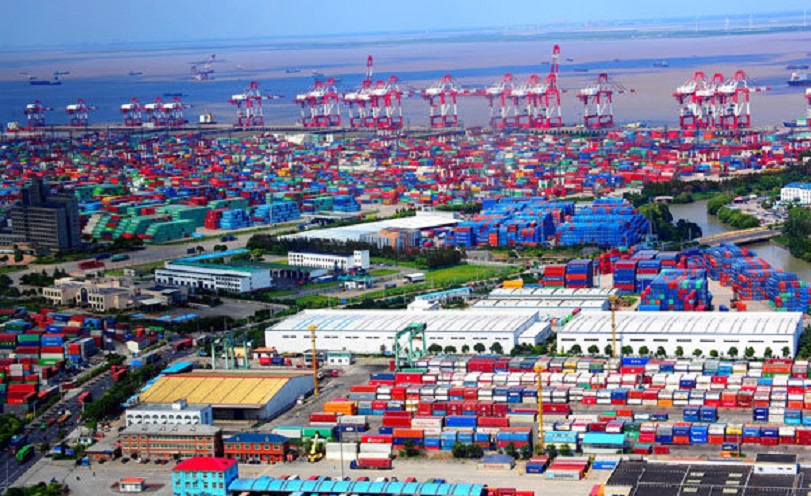


By Adedapo Adesanya
The NASD Over-the-Counter (OTC) Securities Exchange extended its stay in the south territory with a decline of 0.56 per cent on Wednesday, April 2.
This brought down the market capitalisation by N13 billion to N2.417 trillion from N2.430 trillion, and downed the NASD Unlisted Security Index (NSI) by 22.57 points to 4,062.87 points from the previous session’s 4,062.87 points.
It was observed that the NASD exchange ended with three price gainers and three price losers during the trading day.
MRS Oil Plc depreciated by N19.00 to close at N171.00 per unit compared with the previous price of N190.00 per unit, NASD Plc lost N4.14 to trade at N37.36 per share compared with Wednesday’s N41.50 per share, and Central Securities Clearing System (CSCS) Plc gave up N2.00 to sell at N78.00 per unit versus N80.00 per unit.
On the flip side, FrieslandCampina Wamco Nigeria Plc appreciated by 19 Kobo to N93.00 per share from N92.81 per share, Food Concepts Plc expanded by 15 Kobo to N2.87 per unit from N2.72 per unit, and Great Nigeria Insurance (GNI) Plc improved by 2 Kobo to 52 Kobo per share from 50 Kobo per share.
Yesterday, the volume of securities dipped by 91.8 per cent to 260.2 million units from 3.2 billion units, the value of securities went down by 98.1 per cent to N154.2 million from N8.3 billion, while the number of deals soared by 53.3 per cent to 46 deals from 30 deals.
GNI Plc was the most active stock by value on a year-to-date basis with 3.4 billion units worth N8.4 billion, followed by CSCS Plc with 56.9 million units valued at N3.9 billion, and Okitipupa Plc with 27.5 million units traded for N1.8 billion.
The most traded stock by volume on a year-to-date basis was also GNI Plc with 3.4 billion units sold for N8.2 billion, trailed by Resourcery Plc with 1.1 billion units exchanged for N415.7 million, and Infrastructure Guarantee Credit Plc with 400 million units transacted for N1.2 billion.

By Adedapo Adesanya
The Naira dropped N2.09 or 0.15 per cent against the United States Dollar in the Nigerian Autonomous Foreign Exchange Market (NAFEX) on Thursday, April 2, to trade at N1,380.79/$1 compared with Wednesday’s rate of N1,378.70/$1.
However, it appreciated against the Pound Sterling in the official market by N2.77 to quote at N1,824.86/£1 versus the N1,836.57/£1 it was traded at midweek, and improved its value against the Euro by N10.54 to N1,591.92/€1 from N1,602.46/€1.
Yesterday was the last trading session of the week for the local currency in the spot market, as the market will be closed on Friday and Monday for the Easter Holiday.
At the black market, the Nigerian Naira maintained stability against the greenback yesterday at N1,405/$1, but gained N8 at the GTBank FX counter to settle at N1,388/$1, in contrast to the previous session’s N1,396/$1.
Pressure eased on the domestic currency as strong policy indicators have helped calm the majority of worries within the financial systems. Particularly in the remittance segment, the apex bank has directed all International Money Transfer Operators (IMTOs) to route remittance transactions through designated Naira settlement accounts in banks, a move aimed at boosting transparency and channelling more foreign exchange into the formal market.
This helps take off pressure from the foreign reserves, which have fallen below the $50 billion mark as they are gradually decreasing rather than falling sharply.
Meanwhile, the cryptocurrency market was bullish on Thursday, as macro sentiment shifted against recent optimism after reports that Iran is drafting a protocol with Oman to manage traffic through the Strait of Hormuz, easing concerns about disruptions to a key global oil route.
The remarks came after U.S. President Trump on Wednesday night vowed to hit Iran “extremely hard” in the coming weeks and that the Strait of Hormuz would “open naturally” once the war ends.
Cardano (ADA) chalked up 1.9 per cent to trade at $0.2435, Dogecoin (DOGE) grew by 1.2 per cent to $0.0912, Ethereum (ETH) appreciated by 0.8 per cent to $2,066.37, Bitcoin (BTC) added 0.5 per cent to sell at $67,080.53, Solana (SOL) increased by 0.5 per cent to $79.91, and Ripple (XRP) jumped 0.2 per cent to $1.31.
Conversely, Binance Coin (BNB) dipped 0.7 per cent to $586.90, and TRON (TRX) depreciated by 0.3 per cent to $0.3147, while the US Dollar Tether (USDT) and the US Dollar Coin (USDC) closed flat at $1.00 each.

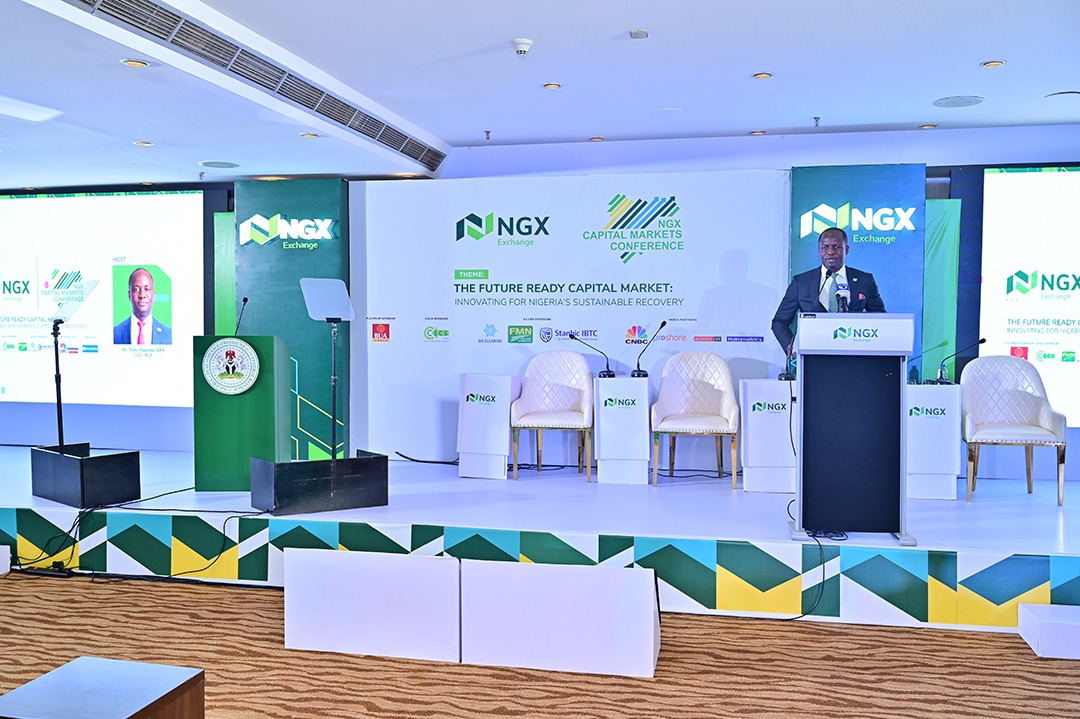
By Dipo Olowookere
The local stock market was relatively flat on Friday, as the bears and the bulls shared the spoils of war, though investor sentiment turned bullish compared with the preceding session’s bearish posture.
Data from the Nigerian Exchange (NGX) Limited showed that the All-Share Index (ASI) was marginally down by 4.66 points as it ended at 201,698.89 points versus Wednesday’s 201,703.55 points, and the market capitalisation slightly contracted by N3 billion to N129.806 trillion from N129.809 trillion.
Customs Street was shut on Friday because of the public holidays declared by the federal government today and next Monday.
Business Post reports that John Holt declined by 9.91 per cent to N15.45, Abbey Mortgage Bank shed 9.60 per cent to trade at N8.95, International Energy Insurance slipped by 6.48 per cent to N3.32, Chams shrank by 5.30 per cent to N3.75, and Tantalizers depreciated by 5.18 per cent to N4.03.
On the flip side, Unilever Nigeria improved by 10.00 per cent to N103.40, Fortis Global Insurance gained 9.82 per cent to trade at N1.23, Multiverse appreciated 9.81 per cent to N20.15, Legend Internet advanced by 9.38 per cent to N6.30, and Zichis grew by 9.02 per cent to N14.14.
The market breadth index was positive during the trading session, as there were 35 appreciating stocks and 24 depreciating stocks.
Yesterday, investors traded 560.0 million equities valued at N19.3 billion in 49,676 deals, in contrast to the 815.5 million equities worth N33.3 billion transacted in 52,641 deals in the preceding day, representing a drop in the trading volume, value, and number of deals by 31.33 per cent, 42.04 per cent, and 5.63 per cent, respectively.
Secure Electronic Technology dominated the activity log with 59.7 million shares valued at N61.1 million, Wema Bank exchanged 52.0 million equities worth N1.4 billion, VFD Group transacted 36.0 million stocks for N410.5 million, Access Holdings sold 35.3 million shares valued at N914.8 million, and Chams traded 31.0 million equities worth N115.0 million.
-
 Feature/OPED6 years ago
Davos was Different this year
-
Travel/Tourism10 years ago
Lagos Seals Western Lodge Hotel In Ikorodu
-

 Showbiz3 years ago
Estranged Lover Releases Videos of Empress Njamah Bathing
-
 Banking8 years ago
Sort Codes of GTBank Branches in Nigeria
-

 Economy3 years ago
Subsidy Removal: CNG at N130 Per Litre Cheaper Than Petrol—IPMAN
-

 Banking3 years ago
Sort Codes of UBA Branches in Nigeria
-

 Banking3 years ago
First Bank Announces Planned Downtime
-

 Sports3 years ago
Highest Paid Nigerian Footballer – How Much Do Nigerian Footballers Earn
Pingback: Parts of New Tax Laws Not Good for Nigeria’s Investment Climate—NEZA – PRIMA NEWS