
Economy
Nigeria’s VAT Collections for Q1 Rise 52.9% to N496.4bn

By Aduragbemi Omiyale
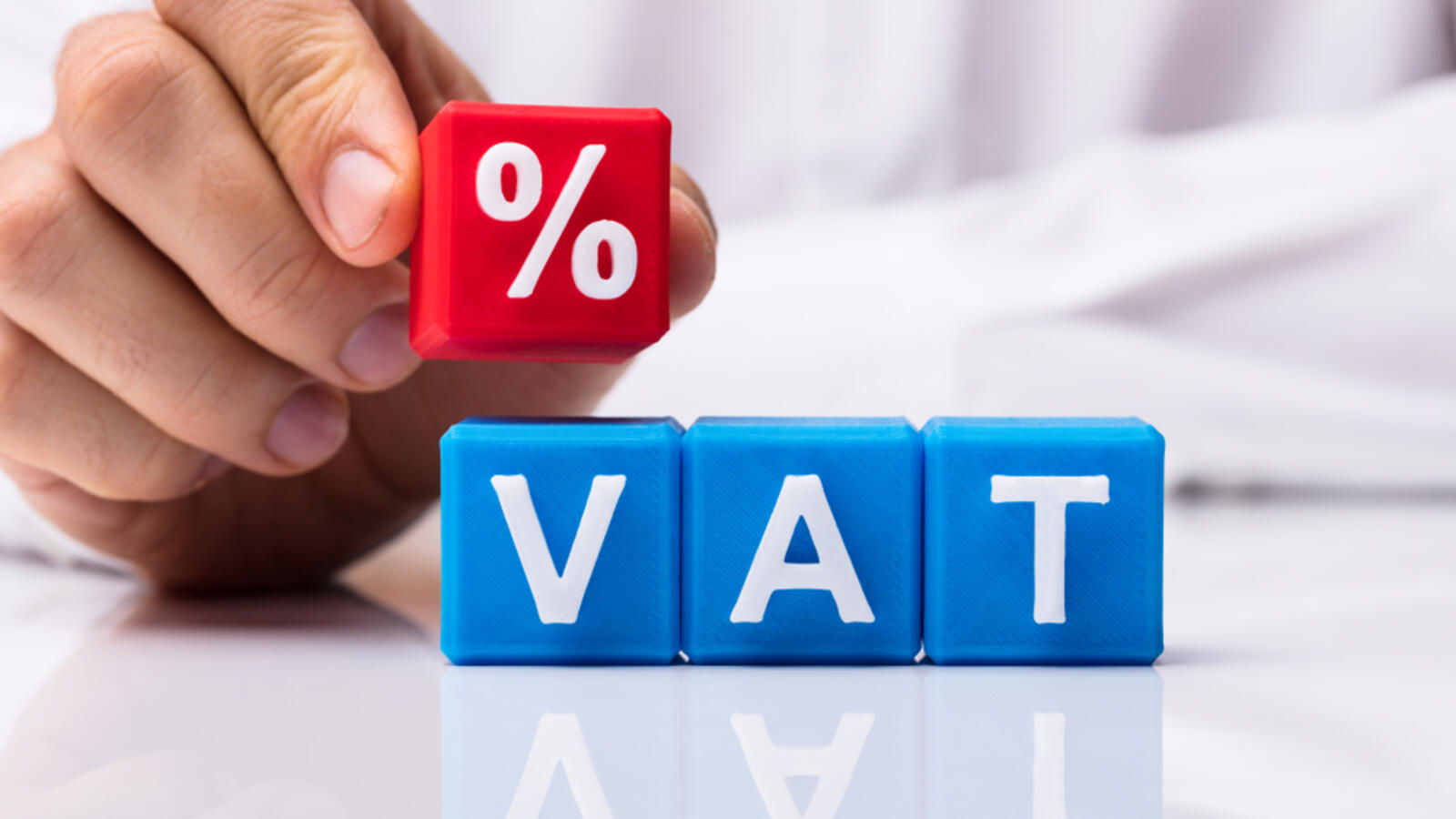
In the first quarter of 2021, the total value of Value-Added Tax (VAT) collected by the Nigerian government stood at N496.4 billion.
This information was revealed by the National Bureau of Statistics (NBS) in a report released over the weekend titled Sectoral Distribution Of Value Added Tax – Q1 2021.
The agency disclosed that N496.4 billion VAT collections for the period under review were 52.9 per cent higher than the N324.6 billion generated in the first quarter of 2020.
Also, the stats office disclosed in its report that the amount raked by the nation from VAT in the period under consideration was 9.2 per cent higher than the N454.7 billion achieved in the fourth quarter of last year.
The NBS disclosed that out of the total amount generated in Q1 2021, N224.9 billion was generated as non-import VAT locally while N171.7 billion was generated as non-import VAT for foreign, with the balance of N99.9 billion was generated as the Nigeria Customs Service (NCS)-import VAT.
By sector, the other manufacturing generated the highest amount of VAT with N49.4 billion and was closely followed by professional services with N42.5 billion, with state ministries and parastatals generating N27.0 billion.
Mining raked the least and closely followed by pioneering and textile and garment industry with N48.4 million, N77.0 million and N289.4 million respectively.
Business Post observed that the VAT generated from breweries, bottling and beverages, N11.9 billion, was down year-on-year by 17.3 per cent and dropped quarter-on-quarter by 37.9 per cent, while the N3.3 billion from banks and financial institutions was down by 39.5 per cent y-o-y and down 55.4 per cent q-o-q.
However, commercial and trading, with a VAT of 22.8 billion in Q1 2021, was 32.7 per cent higher on a year-on-year basis and 9.3 per cent lower than the amount raised in Q4 of 2020.
With business activities coming up gradually, especially in the hospitality sector, which was shut down last year to contain the spread of the COVID-19 pandemic, the VAT collection from hotels and catering rose by 13.3 per cent year-on-year and 25.7 per cent quarter-on-quarter to N2.9 billion.






By Adedapo Adesanya
The Nigerian Upstream Petroleum Regulatory Commission (NUPRC) has signed a Petroleum Exploration Licence (PEL) No. 5 agreement with SeaSeisGeophysical Limited, paving the way for a major offshore data acquisition project aimed at boosting oil and gas exploration.
The agreement, executed in Abuja, authorises SeaSeis, in partnership with global data firm TGS, to undertake the acquisition and processing of new 3D seismic and gravity data.
The PEL 5 project spans approximately 11,700 square kilometres offshore the Eastern Niger Delta, covering water depths ranging from 400 to 2,800 metres.
The initiative is expected to enhance subsurface understanding, improve prospectivity, and support more efficient development of Nigeria’s hydrocarbon resources, in line with provisions of the Petroleum Industry Act (PIA) 2021.
Speaking at the signing ceremony, the chief executive of NUPRC, Mrs Oritsemeyiwa Eyesan, said the licence underscores the commission’s commitment to data-driven exploration, transparency, and long-term value creation for the country’s oil and gas industry.
She noted that the project would provide critical geological data needed to attract investment and unlock new opportunities in Nigeria’s upstream sector.
In his remarks, the Managing Director of SeaSeisGeophysical Limited, Mr Goke Adeniyi, described the PEL 5 project as the company’s largest in Africa, highlighting the vast potential within Nigeria’s offshore energy landscape.
The partnership is expected to strengthen collaboration between regulators and industry players while advancing efforts to optimise resource development and sustain growth in the sector.
Recall that the upstream oil sector regulator is slashing the time it takes to approve applications to revive idle oil wells from weeks to hours as Nigeria, which is Africa’s top crude producer, seeks to take advantage of high energy prices triggered by the conflict in the Middle East.
The country is also fast-tracking approvals for evacuations and barges at production facilities and export terminals to let barrels get to buyers quickly, as buyers turn to suppliers such as Nigeria and Angola on the African continent.
By Adedapo Adesanya
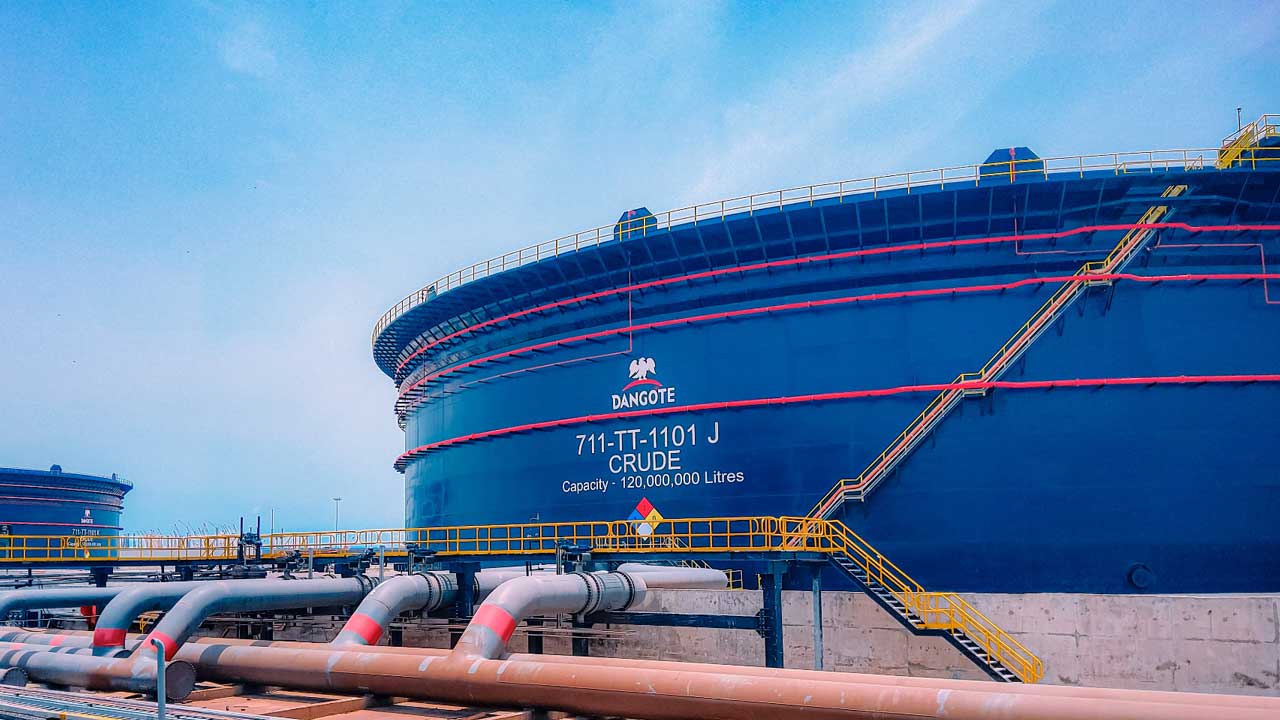
There are indications of a possible fuel shortage in Nigeria as the 650,000 barrels per day Dangote Refinery and Petrochemicals, which is responsible for over 60 per cent of domestic supply, is now getting only about 40 per cent of local feedstock.
According to the chief executive of Dangote Refinery and Petrochemicals, Mr David Bird, the refinery currently gets only about five cargoes of crude monthly, against an expected 13 to 15 cargoes.
He explained that this was below its agreed crude oil supply under the Federal Government’s crude-for-Naira arrangement.
According to him, the shortfall has affected the refinery’s ability to optimise local crude supply despite existing agreements being fully met.
“What we see under that agreement, we should be getting about 13 to 15 cargoes a month. And that’s what we could process to meet the domestic fuel requirements of Nigeria.
“Currently, we’re only getting five. So, that’s an underperformance against that pre-agreed volume contract.”
Mr Bird stated that the crude-for-Naira policy was designed to stabilise Nigeria’s foreign exchange market rather than provide financial advantages to the refinery, adding that the company still purchases crude at international benchmark prices.
He explained that the shortfall had caused the refinery to source preferred Nigerian crude grades from the international market at higher costs.
“And that value between the purchase price and the premium that we’re now seeing is money that Nigeria is leaking to the international trading community,” he said.
Last year alone, Dangote Petroleum Refinery imported a total of $3.74 billion worth of crude oil to make up for shortfalls
The Nigerian National Petroleum Company (NNPC), which is the refinery’s main trade partner and minority stakeholder, has been plagued by challenges that restrict optimal crude supply, so the Lagos-based company has to get feedstock from alternative supply links. This led to the importation of crude from Brazil, Equatorial Guinea, Angola, Algeria, and the US, among others.
For instance, in March 2025, the company said it now counts Brazil and Equatorial Guinea among its global oil suppliers, receiving up to 1 million barrels of the medium-sweet grade Tupi crude at the refinery on March 26 from Brazil’s Petrobras.
While Nigeria has so far been insulated from shortages that have plagued countries in South Asia and some parts of Europe, disruptions to trade triggered by the Middle East war may constrain flows, leading to higher prices, even for countries not directly affected.
By Adedapo Adesanya
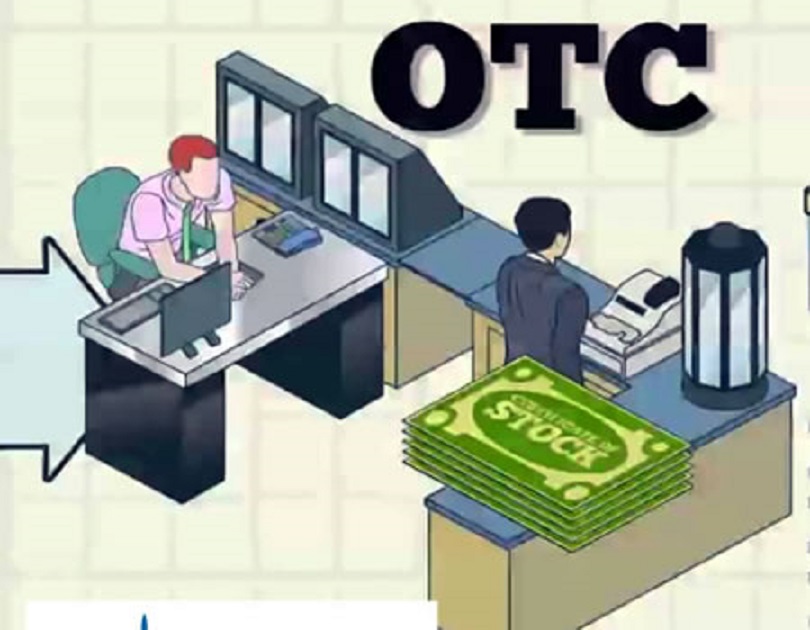
The NASD Over-the-Counter (OTC) Securities Exchange rallied by 1.41 per cent on Wednesday, March 25, with the market capitalisation adding N35.04 billion to close at N2.512 trillion versus the previous session’s N2.477 trillion, and the Unlisted Security Index (NSI) expanding by 58.55 points to 4,198.85 points from 4,140.30 points.
The growth came amid a weak investor sentiment, as the OTC securities exchange recorded two price gainers and three price losers.
The advancers were led by Okitipupa Plc, which chalked up N25 to sell at N275.00 per share compared with the previous day’s N250.00 per share, and Central Securities Clearing System (CSCS) Plc grew by N7.43 to N86.37 per unit from N78.94 per unit.
On the flip side, FrieslandCampina Wamco Nigeria Plc lost N7.04 to sell at N101.13 per share versus Tuesday’s closing price of N108.73 per share, Geo-Fluids Plc went down by 9 Kobo to N2.89 per unit from N2.98 per unit, and Industrial and General Insurance (IGI) Plc dipped 3 Kobo to 50 Kobo per share from 53 Kobo per share.
Yesterday, the volume of securities rose by 135.6 per cent to 2.2 million units from 933,125 units, the value of securities increased by 2.4 per cent to N46.7 million from N45.6 million, and the number of deals grew by 27.6 per cent to 37 deals from 29 deals.
The most active stock by value on a year-to-date basis was CSCS Plc with 39.1 million units exchanged for N2.4 billion, followed by Infrastructure Guarantee Credit Plc with 400 million units valued at N1.2 billion, and Okitipupa Plc with 6.5 million units traded for N1.2 billion.
The most traded stock by volume on a year-to-date basis was Resourcery Plc with 1.1 billion units worth N415.7 million, followed by Infrastructure Credit Plc with 400 million units sold for N1.2 billion, and Geo-Fluids Plc with 132.9 million units transacted for N510.7 million.











-
 Feature/OPED6 years ago
Davos was Different this year
-
Travel/Tourism10 years ago
Lagos Seals Western Lodge Hotel In Ikorodu
-

 Showbiz3 years ago
Estranged Lover Releases Videos of Empress Njamah Bathing
-
 Banking8 years ago
Sort Codes of GTBank Branches in Nigeria
-

 Economy3 years ago
Subsidy Removal: CNG at N130 Per Litre Cheaper Than Petrol—IPMAN
-

 Banking3 years ago
Sort Codes of UBA Branches in Nigeria
-

 Banking3 years ago
First Bank Announces Planned Downtime
-

 Sports3 years ago
Highest Paid Nigerian Footballer – How Much Do Nigerian Footballers Earn