
Economy
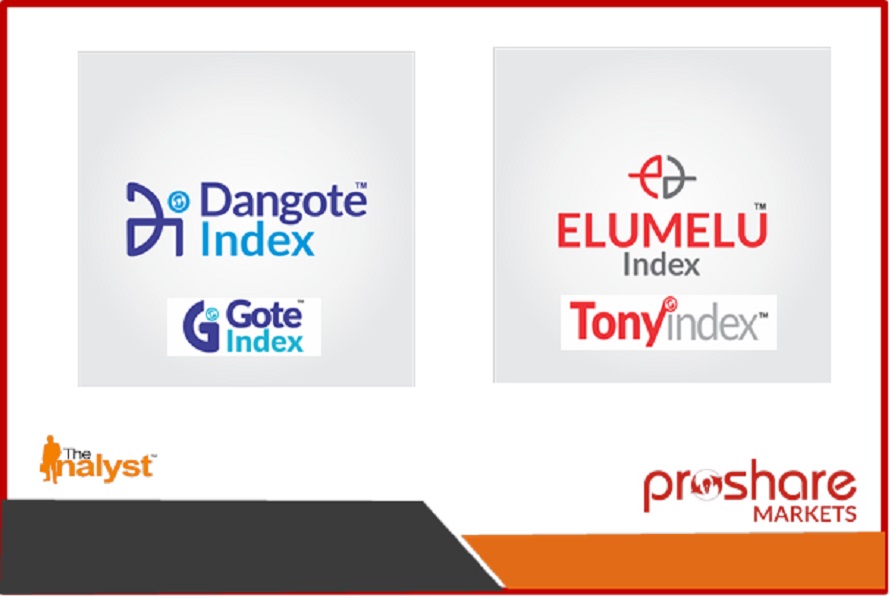
Proshare Introduces Dangote Index, Elumelu Index

By Modupe Gbadeyanka
One of the leading financial information service companies in Nigeria, Proshare, has announced the introduction of two new indices to track performance of publicly quoted firms led by two billionaire businessmen, Mr Aliko Dangote and Mr Tony Elumelu.
The two new indices created by the company are Dangote Index and the Elumelu Index or the Tony Index.
It was explained that the new indices “do not represent an attempt to provide either buy, sell or hold advice to equity investors but simply indicate large cap equity market guidance.
“The Indexes will be Value-weighted and adjusted for price changes daily. At times when the Indexes show emergent trends in contrast to overall mainboard movement, a technical brief would accompany the Index to explain market adjustments and provide perspective and context.
“The Indexes do not represent an official Index of any Exchange but are the product of Proshare research and markets groups,” the firm said.
Proshare stressed that the two new indices will “track major market action of stocks within a common core share ownership grouping.”
At the moment, four companies with Mr Dangote as the largest shareholder are trading on the Nigerian Stock Exchange (NSE).
The companies are Dangote Cement, Dangote Sugar, Dangote Flour, and NASCON are responsible for over 31 percent or a third of the N11.173 trillion market capitalisation of the ASI and influence the ASI’s broad market direction when significant changes happen to any of the stocks in the Dangote portfolio.
On the other hand, companies with Mr Elumelu as the highest shareholder are UBA, Transcorp, Transcorp Hilton, Africa Prudential and United Capital. They contribute 3.14 percent or N350.5 billion to the NSE’s market capitalisation of N11.173 trillion.
Proshare explained that since Mr Dangote’s listed companies collectively influence about a third of the equities market by capitalization news and information concerning the group should be a good predictor of potential market direction by volume and perhaps value.
It said for investors interested in Index-linked securities, a Dangote Index would give some indication of market direction and likely bullish and bearish turning points, noting that the value-weighted indices will be used to compare movements of the daily ASI and provide investors with signalling information to guide market action.
“In addition to the Dangote Index an “Tony Index” which is also a value-weighted equity Index will be calculated and monitored daily along the same lines as the Dangote Index,” it said.
Business Post reports that before the creation of these new indices by Proshare, the NSE operates 18 different indices and they are the All-Share Index, NSE 30 Index, NSE 50 Index, NSE Main-Board Index, NSE Premium Index, NSE Pension Index and NSE Corporate Governance Index.
Others are the NSE Banking Index, NSE Industrial Goods Index, NSE Insurance Index, NSE Oil and Gas Index, NSE Consumer Goods Index, Lotus Index, ASEM Index, Afrinvest Bank Value Index, Afrinvest Dividend Yield Index, Meristem Growth Index and Meristem Value Index.



By Dipo Olowookere
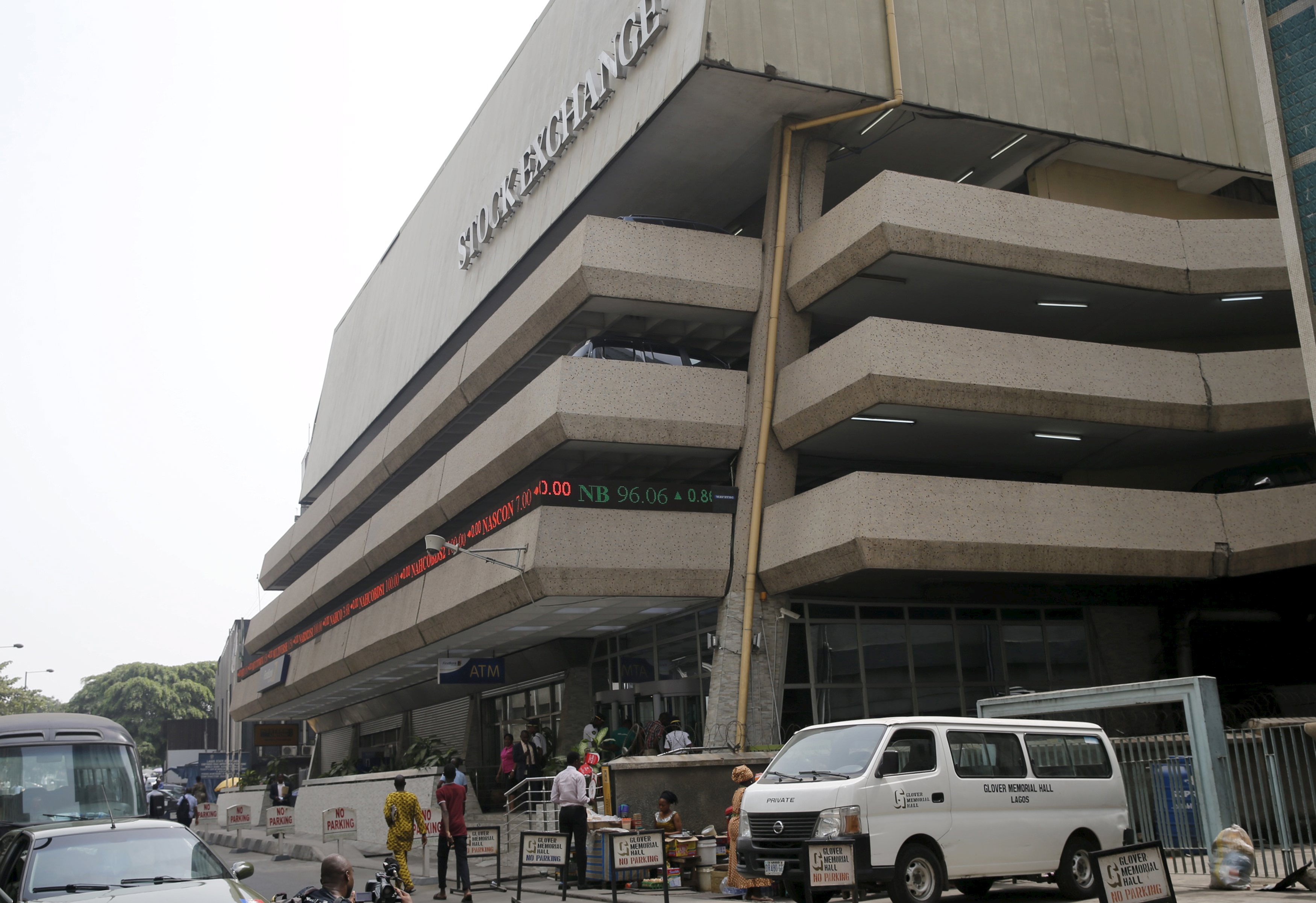
The Nigerian Exchange (NGX) Limited rallied by 0.28 per cent on Wednesday despite weak investor sentiment, as the bourse ended with 18 price gainers and 38 price losers, implying a negative market breadth index.
The growth recorded yesterday by Customs Street was influenced by the 2.11 per cent rise posted by the energy index, and the 1.79 per cent jump achieved by the banking sector.
The other sectors experienced profit-taking, with the consumer goods losing 1.07 per cent, the insurance counter down by 0.36 per cent, and the industrial goods space down by 0.19 per cent.
Universal Insurance chalked up 10.00 per cent to sell for N1.21, Omatek improved by 9.78 per cent to N2.47, VFD Group expanded by 9.71 per cent to N11.30, CWG appreciated by 9.64 per cent to N21.05, and Livestock Feeds gained 9.56 per cent to close at N7.45.
On the flip side, UPDC REIT lost 10.00 per cent to settle at N6.75, Fortis Global Insurance shed 9.92 per cent to quote at N1.18, Deap Capital depreciated by 9.85 per cent to N5.40, Chams went down by 9.47 per cent to N3.06, and Japaul declined by 8.82 per cent to N3.10.
Yesterday, the All-Share Index (ASI) went up by 562.43 points to 202,585.53 points from 202,023.10 points, and the market capitalisation advanced by N389 billion to N130.404 trillion from N130.015 trillion.
During the session, 1.0 billion stocks worth N40.6 billion exchanged hands in 52,723 deals compared with the 1.1 billion stocks valued at N40.3 billion executed in 78,006 deals a day earlier, indicating an uptick in the trading value by 0.74 per cent, and a shortfall in the trading volume and number of deals by 9.09 per cent and 32.41 per cent apiece.
The activity chart was led by Access Holdings, which sold 233.0 million units valued at N6.1 billion, Fidelity Bank exchanged 113.1 million units worth N2.2 billion, Wema Bank recorded a turnover of 103.3 million units valued at N2.7 billion, Zenith Bank transacted 60.6 million units for N6.5 billion, and Chams traded 47.5 million units worth N154.6 million.


By Adedapo Adesanya
Crude oil plummeted on Wednesday on hopes of the reopening of the Strait of Hormuz after US President Donald Trump agreed to a two-week ceasefire with Iran.
Brent crude futures moderated to $94.75 a barrel, while the US West Texas Intermediate (WTI) crude eased to $94.41 a barrel.
President Trump said on Wednesday that the US will work closely with Iran and will be talking about tariff and sanctions relief with Iran.
However, analysts cautioned that the ceasefire is a temporary two-week reprieve rather than a permanent resolution, and the global energy system remains fragile due to structural damage to regional infrastructure.
Reuters reported that Iran could open the strait in a limited and controlled way on Thursday or Friday ahead of a meeting between U.S. and Iranian officials in Pakistan.
Agence France-Presse (AFP) reported that two ships appeared to have transited the Strait of Hormuz since the US-Iran ceasefire deal. A Greek-owned bulk carrier and a Liberia-flagged vessel both transited the waterway early on Wednesday.
Meanwhile, Israel carried out its heaviest strikes on Lebanon since the conflict with Hezbollah broke out last month, even as the Iran-aligned group paused attacks on northern Israel and Israeli troops in Lebanon under the ceasefire.
Also, Saudi Arabia’s East-West Pipeline, a critical artery bypassing the Strait of Hormuz, was reportedly hit in an Iranian drone attack. Prior to the attack, the pipeline was pumping at its emergency capacity of 7 million barrels per day to bypass the shuttered strait.
The strikes occurred just hours after a US-Iran ceasefire announcement, which has so far failed to halt regional hostilities. Other facilities in the kingdom were also targeted in the wave of strikes, which the Islamic Revolutionary Guard Corps (IRGC) claimed included oil facilities owned by American companies in Yanbu.
US crude stocks rose by 3.1 million barrels to 464.7 million barrels during the week ended April 3, the Energy Information Administration (EIA) said.

By Adedapo Adesanya
The National Insurance Commission has issued new guidelines for the collection, management, and administration of the Insurance Policyholders’ Protection Fund.
In a circular issued to all insurance institutions on Tuesday, the regulator also set May 31, 2026, as the deadline for insurers to submit their assessment returns for the 2025 financial year.
Recall that on August 5, 2025, President Bola Tinubu signed into law the Nigerian Insurance Industry Reform Act ( NIIRA 2025).
This landmark legislation repeals the Insurance Act 2003, and consolidates related provisions, ushering in a modern regulatory framework. It lays a strong foundation for sustainable growth and increased investment in the country’s insurance sector.
The commission said the guidelines were issued in exercise of its powers under the 2025 Act and other existing insurance laws and regulations to provide regulatory clarity, improve guidance, and ensure ease of compliance across the industry.
According to NAICOM, the guidelines establish a comprehensive structure for the operation of the IPPF, which serves as a statutory safety net to protect insurance policyholders in the event of distress or insolvency of a licensed insurer or reinsurer. The framework also provides direction on the reimbursement of loans by insurers and reinsurers.
NAICOM stated, “The guidelines ensure regulatory clarity, guidance and ease of compliance, as it provides a comprehensive regulatory framework for the collection, management, and administration of the Fund, which serves as a statutory safety net designed to protect insurance policyholders against distress and insolvency of a licensed insurer or reinsurer, including guidance for the reimbursement of loans by an insurer or reinsurer.
“Please be informed that the IPPF Assessment Returns in respect of the year 2025 shall be submitted to the Commission not later than 31st May 2026, while subsequent submissions shall be in line with Section 4.3 of the Guideline on Insurance Policyholders Protection Fund.”
-
 Feature/OPED6 years ago
Davos was Different this year
-
Travel/Tourism10 years ago
Lagos Seals Western Lodge Hotel In Ikorodu
-

 Showbiz3 years ago
Estranged Lover Releases Videos of Empress Njamah Bathing
-
 Banking8 years ago
Sort Codes of GTBank Branches in Nigeria
-

 Economy3 years ago
Subsidy Removal: CNG at N130 Per Litre Cheaper Than Petrol—IPMAN
-

 Banking3 years ago
Sort Codes of UBA Branches in Nigeria
-

 Banking3 years ago
First Bank Announces Planned Downtime
-

 Sports3 years ago
Highest Paid Nigerian Footballer – How Much Do Nigerian Footballers Earn