
Economy
Reports of Petrol Price at N1,200 Per Litre Spark Outrage Online

By Adedapo Adesanya
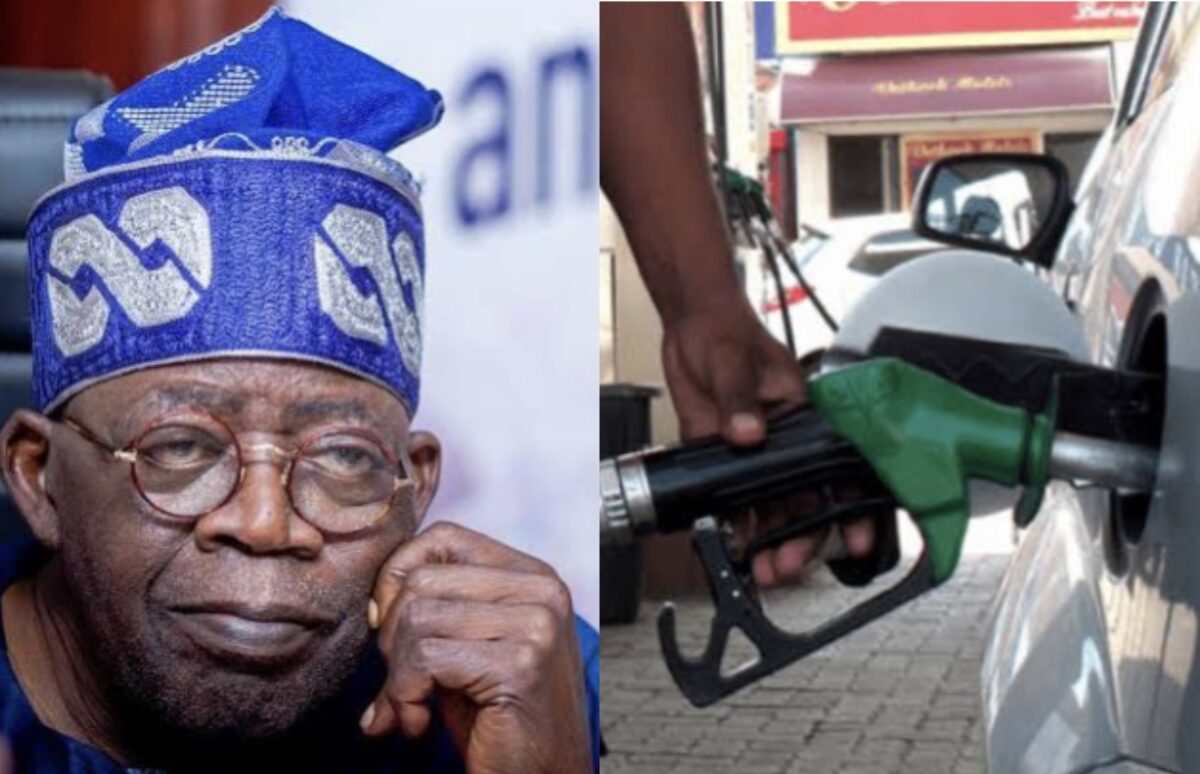
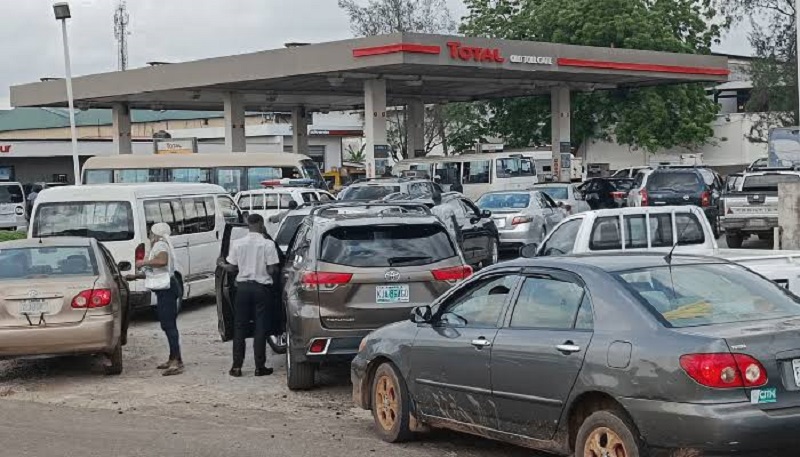
Some Nigerians are expressing their anger over reports that the price of premium motor spirit PMS), otherwise known as petrol, could sell for as high as N1,20o per litre following a worsening foreign exchange (FX) rate that is making it harder to sell at a lower price.
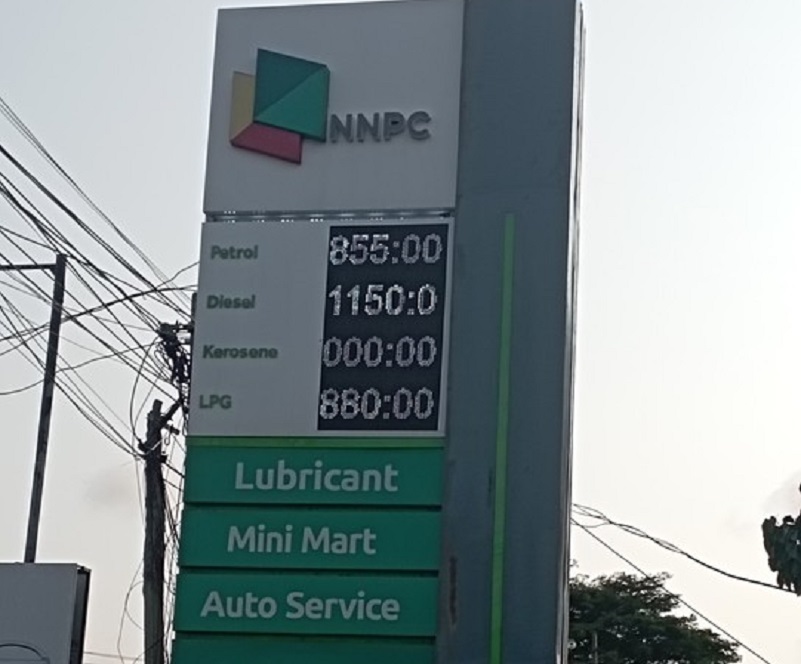
Petrol, which is solely imported into the country by the Nigerian National Petroleum Company (NNPC) Limited, currently sells between N568/litre and N660/litre, depending on the location and the retail station.
Oil marketers, who buy from the NNPC and distribute to retailers, said that the subsidy on petrol was increasing considering the crash of the Naira against the United States Dollar and the cost of crude oil, stressing that PMS should sell for N1,200/litre in a free market.
Recall that President Bola Tinubu when he assumed office announced an end to the subsidy regime, but stakeholders have over the last few months argued that subsidies had made a return, considering the price of petrol didn’t fluctuate following the changes in the international crude market.
Before the takeover, the pump price of petrol was below N190/litre, but it jumped to over N550/litre after the President’s statement and moved up again to over N600/litre a few weeks later.
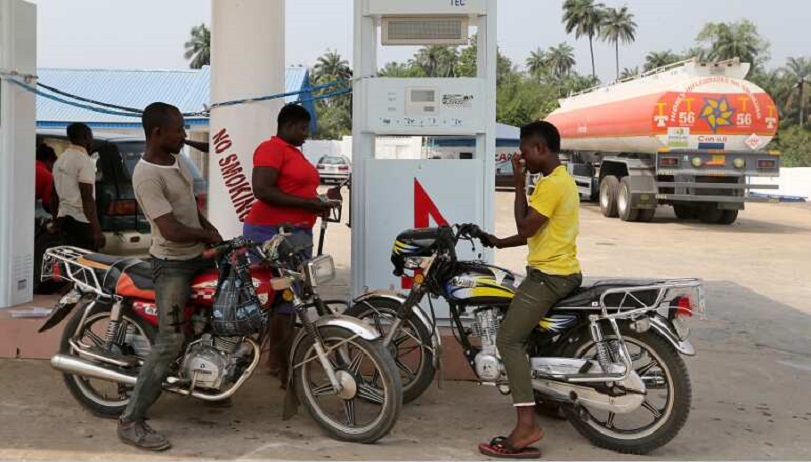
With the latest development, Nigerians have since lamented the possible effect that the 100 per cent increase in petrol would have on their pockets, ranging from transportation to food prices.
The National Public Relations Officer of the Independent Petroleum Marketers Association of Nigeria, Mr Ukadike Chinedu, stated that the subsidy on petrol was rising and that the cost of the commodity should be around N1,200/litre according to market laws.
“To be pragmatic in this analysis let’s consider the cost of petrol today in the United States. For premium petrol, it is $2.99, while super petrol sells for $3.15 or $3.10 depending on the part of the country where you are making the purchase.
“Now, $3 in Nigeria is over N3,000, because a Dollar in the parallel market is over N1,000. You can also see the cost of diesel, which is over N1,000/litre, and it is important to state that petrol is usually higher in price than diesel in a free market.
“So, if you consider the cost of diesel, dollar and other international factors, the price of petrol in Nigeria should be around N1,200/litre, but the government is subsidising it, which to an extent is understandable,” he said, according to ThePunch newspapers.
The Tinubu administration some months ago announced plans to alleviate the effect of the subsidy removal with some interventions, but so far, there has been little to no impact from the several measures announced by the president in July 2023.
This report that the product should be selling at over N1,000 per litre has generated reactions, topping the Trend list on X, formerly known as Twitter.




By Adedapo Adesanya
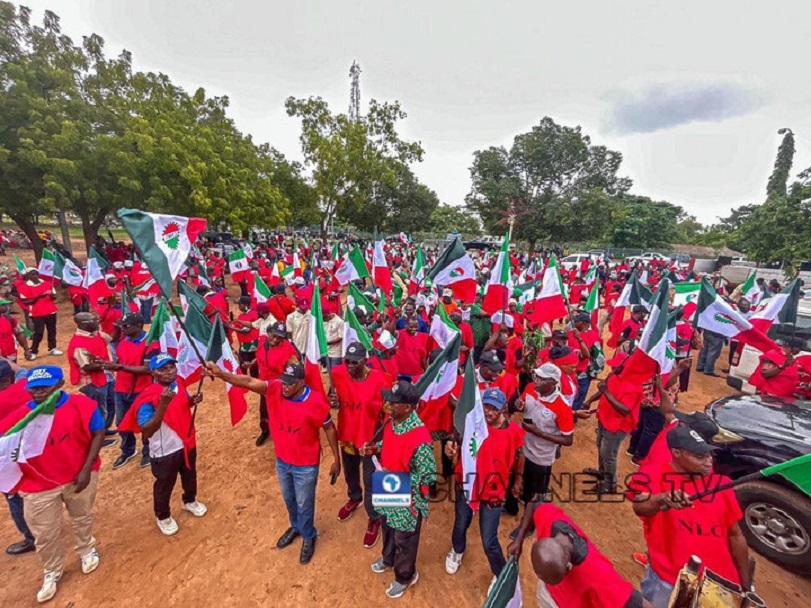
The Senate has authorised the executive arm of government to spend about N68.323 trillion for the 2026 fiscal year.
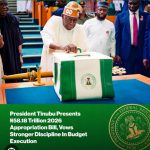
President Bola Tinubu had earlier presented an appropriation bill of N58.47 trillion to a joint session of the National Assembly.
On Tuesday, March 31, 2026, he asked the red chamber of the parliament to increase the budget by N9.09 trillion to accommodate legacy commitments, particularly in the transportation and health sectors, as well as additional provisions, including funding for the judiciary.
This request was granted, and the budget proposal was raised and passed at the plenary session presided over by the Senate President, Mr Godswill Akpabio.
The approval came after the Senate adopted the National Assembly’s joint report on the 2026 Appropriation Bill.
A breakdown of the revised budget showed that N4.799 trillion is allocated for statutory transfers, N15.809 trillion for debt servicing, N15.427 trillion for recurrent (non-debt) expenditure, and N32.287 trillion for capital projects.
Further details indicated that N5.71 trillion from the additional provisions is earmarked for the regularisation of outstanding capital obligations carried over from the 2025 budget, alongside ₦2 trillion for previously omitted projects nationwide.
Sectoral allocations include N482.758 billion for the health sector, N478.600 billion for the Ministry of Finance Incorporated (MoFI), and N268 billion for the judiciary, with N36 billion specifically for the Supreme Court and N98.513 million for the Court of Appeal.
Additionally, N8.960 billion was approved for feasibility studies on key road projects, including the Calabar–Maiduguri and Maiduguri–Sokoto corridors.
Meanwhile, the Senate also approved an extension of the capital component of the 2025 budget, shifting its implementation deadline from March 31 to June 30, 2026, to allow for the completion of ongoing projects.
The House of Representatives also approved N68.30 trillion for the 2026 appropriation bill.
The budget is anchored on conservative assumptions, including a crude oil benchmark of US$64.85 per barrel, daily oil production of 1.84 million barrels, and an exchange rate of N1,400 to the US dollar for the 2026 fiscal year.
President Tinubu said the assumptions reflect the administration’s commitment to realism, prudence, and fiscal sustainability.
The National Assembly also approved President Tinubu’s request for a $6.9 billion foreign loan facility, with a key provision mandating that 40 per cent of the funds be channelled towards capital projects in the 2025/2026 budgets.
The approval followed the consideration of a report by the Senate Committee on Local and Foreign Debt, which recommended the allocation to ensure the loan directly supports infrastructure and development projects.
The Senate moved swiftly to review and pass the request during plenary.
By Adedapo Adesanya
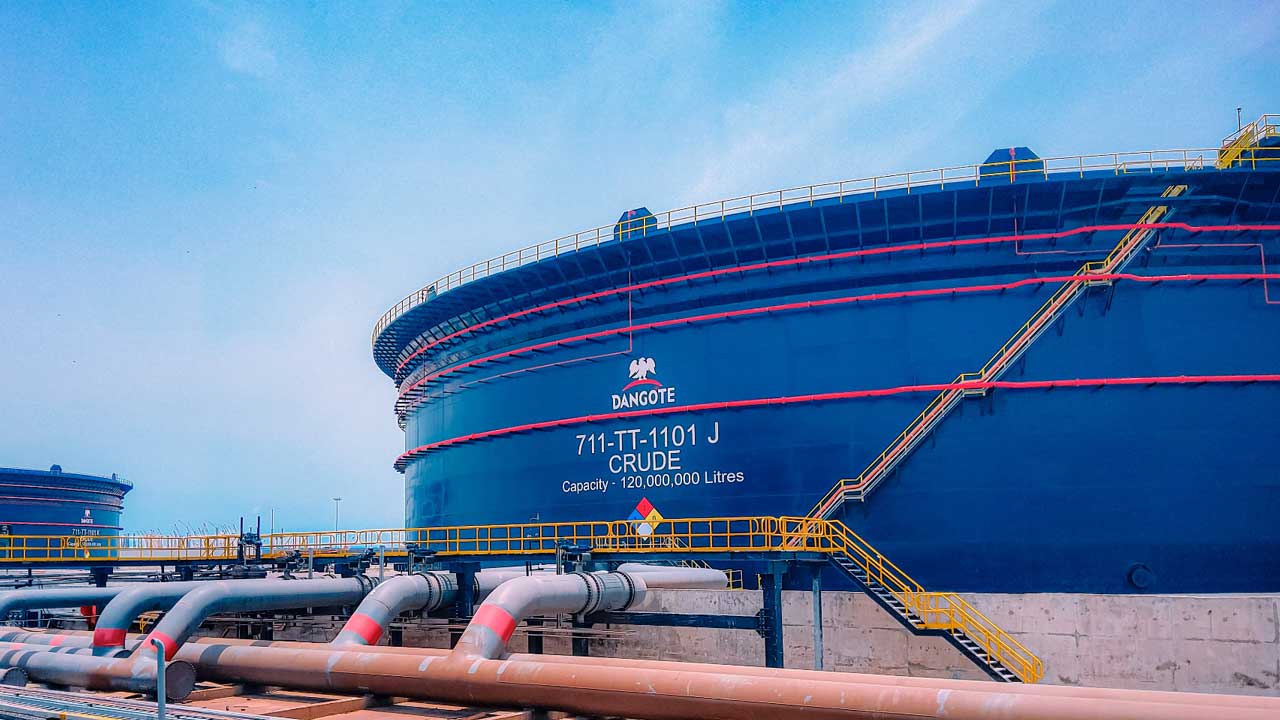
The African Export-Import Bank (Afreximbank) has underwritten $2.5 billion out of a $4 billion senior syndicated term loan for Dangote Petroleum Refinery and Petrochemicals.
In a statement issued on Tuesday, the African lender said the move was aimed at strengthening the refinery’s financial position and long-term growth.
“Afreximbank is pleased to announce that it has underwritten $2.5 billion in the $4-billion senior syndicated term loan in favour of Dangote Petroleum Refinery and Petrochemicals FZE (DPRP),” the statement said.
Afreximbank and Access Bank served as co-Mandated Lead Arrangers for the five-year facility, which is designed to consolidate existing debt, optimise the refinery’s capital structure, and align financing with its operational phase.
The transaction marks a significant milestone for the Dangote Refinery, Africa’s largest refinery and petrochemical complex, with a capacity of 650,000 barrels per day.
The facility is expected to improve balance sheet flexibility and reinforce the refinery’s role as a key supplier of refined petroleum products across Africa and global markets.
Afreximbank’s $2.5 billion contribution represents the largest share of the syndicate, the statement noted, underscoring its role in mobilising capital for Africa’s industrialisation, promoting intra-African trade, and supporting energy security.
Since the refinery began operations in February 2024, the bank said it has provided additional support, including a $1 billion working capital facility and advisory services on the Naira-for-Crude initiative, which enables crude purchases and product sales in local currency.
Speaking during a strategy session in Cairo, Egypt, Afreximbank President, Mr George Elombi, reaffirmed the bank’s commitment to African enterprises.
He said the bank takes immense pride in being the single largest provider of financing to the Dangote Group and that it does so primarily because Dangote is African.
“When we invest in ourselves, we do more than create jobs and wealth or expand government revenues; we build a secure and resilient future for our continent. This is why we are pleased to have invested about $15 billion in the Dangote Group since 2015,” he said.
He explained that “Afreximbank and its Board of Directors stand ready to support the realisation of Dangote Group’s aspirations because when we build our institutions and provide the requisite support to grow, we will no longer have to look elsewhere for benevolence or salvation in difficult times.”
In his remarks, the chief executive of Dangote Industries Limited, Mr Aliko Dangote, said the deal strengthens the refinery’s financial base.
“This financing marks an important step in strengthening the financial foundation of Dangote Petroleum Refinery & Petrochemicals and positions the business for the next phase of its growth,” Mr Dangote was quoted as saying.
He appreciated Afreximbank’s continued support and confidence in his vision to build world-class industrial capacity that serves Nigeria, Africa and global markets.

By Dipo Olowookere
The domestic stock market rebounded by 0.40 per cent on Tuesday following renewed bargain-hunting by investors.
The Nigerian Exchange (NGX) Limited returned to winning ways after three of the five key sectors of the bourse pointed north.
The consumer goods index appreciated by 0.24 per cent, the industrial goods counter advanced by 0.20 per cent, and the energy sector grew by 0.08 per cent, overpowering the 3.64 per cent loss posted by the insurance segment, and the 1.76 per cent decline suffered by the banking space.
One of the major drivers of the growth achieved by Customs Street yesterday was MTN Nigeria.
The All-Share Index (ASI) went up by 803.35 points to 201,287.78 points from 200,484.43 points, and the market capitalisation increased by N516 billion to N129.210 trillion from N128.694 trillion.
Multiverse topped the gainers’ chart after it chalked up 9.88 per cent to close at N18.35, International Energy Insurance improved by 9.49 per cent to N3.23, Chams surged by 8.40 per cent to N4.39, MTN Nigeria appreciated by 5.85 per cent to N760.00, and PZ Cussons soared by 4.59 per cent to N82.00.
On the flip side, NPF Microfinance Bank led the losers’ group after it gave up 10.00 per cent to sell for N6.30, SAHCO tumbled by 9.97 per cent to N143.10, Zichis lost 9.96 per cent to quote at N13.65, Mutual Benefits declined by 9.91 per cent to N4.09, and RT Briscoe slipped by 9.90 per cent to N9.65.
Business Post reports that the market breadth index remained negative after Customs Street ended with 22 price gainers and 47 price losers, indicating weak investor sentiment.
The busiest stock for the day was Wema Bank with a turnover of 184.1 million units valued at N4.8 billion, VFD Group sold 103.6 million units for N1.2 billion, Secure Electronic Technology traded 59.3 million units worth N63.8 million, Chams exchanged 38.6 million units for N152.0 million, and Access Holdings transacted 27.8 million units worth N720.1 million.
At the close of trades, market participants bought and sold 887.7 million equities valued at N35.6 billion in 53,436 deals versus the 593.3 million equities worth N25.7 billion traded in 60,311 deals on Monday.
This implied that the number of deals receded by 11.40 per cent, and a rise in the trading volume and value by 49.62 per cent and 38.52 per cent, respectively.





-
 Feature/OPED6 years ago
Davos was Different this year
-
Travel/Tourism10 years ago
Lagos Seals Western Lodge Hotel In Ikorodu
-

 Showbiz3 years ago
Estranged Lover Releases Videos of Empress Njamah Bathing
-
 Banking8 years ago
Sort Codes of GTBank Branches in Nigeria
-

 Economy3 years ago
Subsidy Removal: CNG at N130 Per Litre Cheaper Than Petrol—IPMAN
-

 Banking3 years ago
Sort Codes of UBA Branches in Nigeria
-

 Banking3 years ago
First Bank Announces Planned Downtime
-

 Sports3 years ago
Highest Paid Nigerian Footballer – How Much Do Nigerian Footballers Earn