
Economy
Should You Start with a Funded Trading Program?


If you’ve been exploring the world of trading—whether you’re just starting out or already have experience—you’ve probably come across the concept of funded trading programs. These programs are becoming increasingly popular, and for good reason. They offer traders a chance to prove their skills and trade with someone else’s capital, rather than risking their own money. But is it the right path for you? Let’s dive into why funded trading programs might be the smartest move for your trading journey.
What Is a Funded Trading Program?
A funded trading program is a type of partnership between a trader and a proprietary trading firm. The trader usually goes through an evaluation phase to prove their skills and discipline. Once they pass, they receive a funded trading account with a set amount of capital provided by the firm. The trader then earns a share of the profits they make, while the firm handles the losses.
Why Beginners Should Consider Funded Trading
One of the biggest hurdles for new traders is risk. When you’re still learning the ropes, it’s easy to blow through your personal savings trying to figure out what works. Funded programs allow beginners to develop and test their trading strategies with significantly less financial risk. Here are a few key benefits:
1. Learn Without Risking Your Own Capital
Most funded programs require you to pay a small fee to take an evaluation, but after that, you’re trading with the firm’s money. This can take a lot of the emotional stress out of trading and help beginners stay more focused and disciplined.
2. Structured Environment
Funded programs often have rules in place for things like drawdowns, daily losses, and risk management. For beginners, this structure is incredibly helpful in developing good habits from the start.
3. Faster Learning Curve
With real-time market exposure and feedback, new traders can learn more quickly. Instead of being stuck in demo accounts or risking too much too soon, they get a guided experience with real consequences and real rewards.
Why Experienced Traders Can Benefit Too
Even seasoned traders often face the challenge of limited capital. Funded programs offer an attractive way to scale their strategies without having to put more of their own money on the line. Here’s how:
1. Access to Larger Capital
Many traders have a winning system, but not enough capital to see meaningful returns. Funded programs can provide accounts ranging from $25,000 to $200,000 or more, giving traders the power to earn bigger profits.
2. No Need to Risk Personal Funds
Risk is always present in trading, but with a funded account, experienced traders can focus on execution without worrying about personal losses. This freedom can improve decision-making and reduce emotional trading.
3. Earn a Professional Income
With profit splits often ranging from 70% to 90%, consistent traders can earn a significant income. Many funded traders eventually turn it into a full-time career.
Things to Look for in a Funded Program
Before jumping into a funded trading program, it’s important to choose the right one. Look for:
- Transparent Rules: Make sure the program clearly outlines its rules, fees, and profit split.
- Reasonable Challenge Conditions: Some firms have evaluation phases that are too difficult or unrealistic. Find one that balances challenge with opportunity.
- Good Customer Support: A responsive support team is crucial when you need answers quickly.
- Fast Payouts: Check reviews or testimonials about how fast and consistently they pay traders.
Why TenTrade Is a Great Place to Start
If you’re looking for a trustworthy and beginner-friendly funded trading program, TenTrade is a fantastic choice. Their platform is easy to use, and their challenge structure is fair and accessible. TenTrade also offers fast payouts and excellent support, making them a favorite among new and seasoned traders alike.
Common Myths About Funded Trading
Let’s bust a few myths that might be holding you back:
- “Only pros can pass the challenge.” Not true. Many beginners have passed on their first or second try. If you have discipline and follow the rules, you’ve got a solid shot.
- “They never pay out.” Reputable programs like TenTrade have a long track record of timely and fair payouts.
- “It’s just a scam to collect fees.” While there are bad actors in any industry, funded trading as a whole is a legitimate and fast-growing field. Do your research and choose a trusted provider.
Final Thoughts
Funded trading programs offer a rare opportunity: trade with someone else’s money, keep most of the profits, and limit your personal risk. Whether you’re just getting started or looking to scale up, they can be a game-changer. With the right mindset, discipline, and a good platform like TenTrade, you can take your trading skills to the next level without taking on the financial stress that usually comes with it.
So, should you get started with funded trading? If you’re serious about becoming a better trader and want to accelerate your progress, the answer is a definite yes.






By Adedapo Adesanya
The NASD Over-the-Counter (OTC) Securities Exchange extended its stay in the south territory with a decline of 0.56 per cent on Wednesday, April 2.
This brought down the market capitalisation by N13 billion to N2.417 trillion from N2.430 trillion, and downed the NASD Unlisted Security Index (NSI) by 22.57 points to 4,062.87 points from the previous session’s 4,062.87 points.
It was observed that the NASD exchange ended with three price gainers and three price losers during the trading day.
MRS Oil Plc depreciated by N19.00 to close at N171.00 per unit compared with the previous price of N190.00 per unit, NASD Plc lost N4.14 to trade at N37.36 per share compared with Wednesday’s N41.50 per share, and Central Securities Clearing System (CSCS) Plc gave up N2.00 to sell at N78.00 per unit versus N80.00 per unit.
On the flip side, FrieslandCampina Wamco Nigeria Plc appreciated by 19 Kobo to N93.00 per share from N92.81 per share, Food Concepts Plc expanded by 15 Kobo to N2.87 per unit from N2.72 per unit, and Great Nigeria Insurance (GNI) Plc improved by 2 Kobo to 52 Kobo per share from 50 Kobo per share.
Yesterday, the volume of securities dipped by 91.8 per cent to 260.2 million units from 3.2 billion units, the value of securities went down by 98.1 per cent to N154.2 million from N8.3 billion, while the number of deals soared by 53.3 per cent to 46 deals from 30 deals.
GNI Plc was the most active stock by value on a year-to-date basis with 3.4 billion units worth N8.4 billion, followed by CSCS Plc with 56.9 million units valued at N3.9 billion, and Okitipupa Plc with 27.5 million units traded for N1.8 billion.
The most traded stock by volume on a year-to-date basis was also GNI Plc with 3.4 billion units sold for N8.2 billion, trailed by Resourcery Plc with 1.1 billion units exchanged for N415.7 million, and Infrastructure Guarantee Credit Plc with 400 million units transacted for N1.2 billion.

By Adedapo Adesanya
The Naira dropped N2.09 or 0.15 per cent against the United States Dollar in the Nigerian Autonomous Foreign Exchange Market (NAFEX) on Thursday, April 2, to trade at N1,380.79/$1 compared with Wednesday’s rate of N1,378.70/$1.
However, it appreciated against the Pound Sterling in the official market by N2.77 to quote at N1,824.86/£1 versus the N1,836.57/£1 it was traded at midweek, and improved its value against the Euro by N10.54 to N1,591.92/€1 from N1,602.46/€1.
Yesterday was the last trading session of the week for the local currency in the spot market, as the market will be closed on Friday and Monday for the Easter Holiday.
At the black market, the Nigerian Naira maintained stability against the greenback yesterday at N1,405/$1, but gained N8 at the GTBank FX counter to settle at N1,388/$1, in contrast to the previous session’s N1,396/$1.
Pressure eased on the domestic currency as strong policy indicators have helped calm the majority of worries within the financial systems. Particularly in the remittance segment, the apex bank has directed all International Money Transfer Operators (IMTOs) to route remittance transactions through designated Naira settlement accounts in banks, a move aimed at boosting transparency and channelling more foreign exchange into the formal market.
This helps take off pressure from the foreign reserves, which have fallen below the $50 billion mark as they are gradually decreasing rather than falling sharply.
Meanwhile, the cryptocurrency market was bullish on Thursday, as macro sentiment shifted against recent optimism after reports that Iran is drafting a protocol with Oman to manage traffic through the Strait of Hormuz, easing concerns about disruptions to a key global oil route.
The remarks came after U.S. President Trump on Wednesday night vowed to hit Iran “extremely hard” in the coming weeks and that the Strait of Hormuz would “open naturally” once the war ends.
Cardano (ADA) chalked up 1.9 per cent to trade at $0.2435, Dogecoin (DOGE) grew by 1.2 per cent to $0.0912, Ethereum (ETH) appreciated by 0.8 per cent to $2,066.37, Bitcoin (BTC) added 0.5 per cent to sell at $67,080.53, Solana (SOL) increased by 0.5 per cent to $79.91, and Ripple (XRP) jumped 0.2 per cent to $1.31.
Conversely, Binance Coin (BNB) dipped 0.7 per cent to $586.90, and TRON (TRX) depreciated by 0.3 per cent to $0.3147, while the US Dollar Tether (USDT) and the US Dollar Coin (USDC) closed flat at $1.00 each.
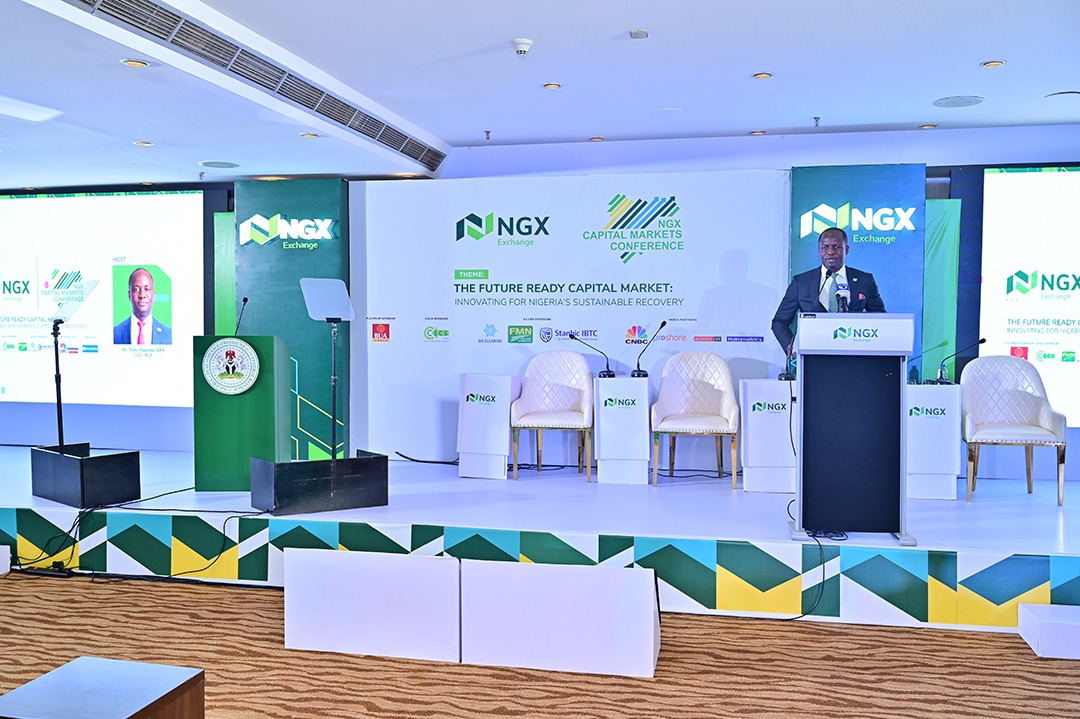
By Dipo Olowookere
The local stock market was relatively flat on Friday, as the bears and the bulls shared the spoils of war, though investor sentiment turned bullish compared with the preceding session’s bearish posture.
Data from the Nigerian Exchange (NGX) Limited showed that the All-Share Index (ASI) was marginally down by 4.66 points as it ended at 201,698.89 points versus Wednesday’s 201,703.55 points, and the market capitalisation slightly contracted by N3 billion to N129.806 trillion from N129.809 trillion.
Customs Street was shut on Friday because of the public holidays declared by the federal government today and next Monday.
Business Post reports that John Holt declined by 9.91 per cent to N15.45, Abbey Mortgage Bank shed 9.60 per cent to trade at N8.95, International Energy Insurance slipped by 6.48 per cent to N3.32, Chams shrank by 5.30 per cent to N3.75, and Tantalizers depreciated by 5.18 per cent to N4.03.
On the flip side, Unilever Nigeria improved by 10.00 per cent to N103.40, Fortis Global Insurance gained 9.82 per cent to trade at N1.23, Multiverse appreciated 9.81 per cent to N20.15, Legend Internet advanced by 9.38 per cent to N6.30, and Zichis grew by 9.02 per cent to N14.14.
The market breadth index was positive during the trading session, as there were 35 appreciating stocks and 24 depreciating stocks.
Yesterday, investors traded 560.0 million equities valued at N19.3 billion in 49,676 deals, in contrast to the 815.5 million equities worth N33.3 billion transacted in 52,641 deals in the preceding day, representing a drop in the trading volume, value, and number of deals by 31.33 per cent, 42.04 per cent, and 5.63 per cent, respectively.
Secure Electronic Technology dominated the activity log with 59.7 million shares valued at N61.1 million, Wema Bank exchanged 52.0 million equities worth N1.4 billion, VFD Group transacted 36.0 million stocks for N410.5 million, Access Holdings sold 35.3 million shares valued at N914.8 million, and Chams traded 31.0 million equities worth N115.0 million.
-
 Feature/OPED6 years ago
Davos was Different this year
-
Travel/Tourism10 years ago
Lagos Seals Western Lodge Hotel In Ikorodu
-

 Showbiz3 years ago
Estranged Lover Releases Videos of Empress Njamah Bathing
-
 Banking8 years ago
Sort Codes of GTBank Branches in Nigeria
-

 Economy3 years ago
Subsidy Removal: CNG at N130 Per Litre Cheaper Than Petrol—IPMAN
-

 Banking3 years ago
Sort Codes of UBA Branches in Nigeria
-

 Banking3 years ago
First Bank Announces Planned Downtime
-

 Sports3 years ago
Highest Paid Nigerian Footballer – How Much Do Nigerian Footballers Earn