
Economy
S&P Says Nigeria’s External Debt Moderate, Affirms Ratings

By Dipo Olowookere
Despite some local key stakeholders in the Nigerian economy raising alarm on the rate of the countrys foreign debts, a renowned global rating agency, Standard and Poors (S&P Global Ratings), has said there is no cause for alarm.
In a statement issued last Friday, S&P said though Nigeria’s economic performance remains weak, its external debt is moderate.
However, the agency said fiscal consolidation would be key in the period ahead as President Muhammadu Buhari remains in office for another four year, noting that this should give him administration another opportunity to strengthen economic policy framework and consolidate public finances.
Consequently, S&P announced that it is affirming its ‘B/B’ sovereign credit ratings and ‘ngA/ngA-1’ Nigeria national scale ratings on Nigeria, with a stable outlook. It also affirmed the long- and short-term Nigeria national scale ratings at ‘ngA/ngA-1’.
It was stressed that the stable outlook balances the risks associated with Nigeria’s still-weak economy against its moderate external debt and external buffers.
However, S&P said it may lower the ratings if Nigeria’s international reserves decline markedly, with the external debt rising much faster than currently expected.
“The ratings remain constrained, in our view, by the country’s low economic wealth, weak institutional capacity, and lower real GDP per capita trend growth rates than peers at similar development levels,” the statement obtained by Business Post said.
The rating firm said the Africa’s largest economy is growing more slowly than that of peers that have similar wealth levels, with a relative political stability, having experienced uninterrupted democratic transitions.
“However, we regard its institutions as weak and policy predictability as low. Fiscal budgets are frequently passed well after the year has begun, which impedes the government’s responsiveness to economic challenges,” it noted.
S&P pointed out the inability of the largely centralized federal government to redistribute wealth and spread power, to some extent, raising concerns on the security risks from Boko Haram in the northeast and the sporadic attacks on oil pipelines in the Niger Delta region of the country.
The rating agency noted that GDP per capita has been negative and debt-servicing costs absorb at least 30 percent of the country’s fiscal revenues, which constrains its fiscal flexibility.
Nigeria is a sizable producer of hydrocarbons. The oil sector’s direct share of nominal GDP is officially estimated at about 10%, but oil and gas account for over 90% of exports and at least half of fiscal revenues.
Economic data released by Nigeria’s National Bureau of Statistics show that Nigeria’s economy grew by 1.9% during 2018, based on improving performance in non-oil sectors as well as rising oil prices.
Agriculture, manufacturing, and services (which comprise the transport, information, communication, and technology sectors) have helped the economy grow faster in 2018 than the 1% it achieved in 2017.
“In our view, the increase in the availability of foreign currency and the flexible exchange rate have helped the non-oil sector grow.
“That said, average oil production is close to 2 million barrels per day and we forecast that oil prices will decline over 2019 and 2020.
“Low oil prices are likely to present fiscal pressures and limit growth, stimulating government expenditure.
“In the medium term, we expect improvements in the non-oil sector to support our forecast of economic growth rising to at least 2% in real terms.
“However, when we use 10-year weighted-average growth rates to estimate real per capita GDP growth, we calculate that the real economy is shrinking by 0.7% a year, well below the economic performance of peers that have similar wealth levels,” the statement said.
It was further disclosed that the nation’s net external debt is likely to increase over 2019-2022 if fiscal financing remains externally funded and external buffers stay at current levels, saying that after the elections, Nigeria could consolidate its fiscal position if it increases non-oil revenues while moderating capital spending.
Although oil revenues support the economy when prices are high, they expose Nigeria to significant volatility in terms of trade and government revenues.
Consequently, Nigeria’s trade balance is significantly affected by changes in the price of oil. Nigeria also consistently runs substantial deficits on the service and income balances, the rating company stated.
It stressed that the most consistently supportive feature of Nigeria’s current account is the surplus on net transfers, largely based on diaspora remittances by Nigerians living abroad.
In 2018, oil prices increased by close to 30%, boosting Nigeria’s export revenues. However, imports of goods and services surged at the same time.
“We estimate that the current account surplus in 2018 may be only 2% of GDP; in 2017, when oil prices were lower and imports were compressed, it reached 3% of GDP.
“Over 2019-2022, we assume that oil prices will decline, which will reduce export revenues. We also expect imports to moderate, albeit more slowly.
“Our overall forecast of the current account is a near balance, averaging -0.4% over 2019-2022. We now estimate gross external financing needs will average close to 100% of current account receipts (CARs) plus usable reserves during 2019-2022,” it said.
According to S&P, government is likely to cover its external financing needs through a combination of concessional credit lines and the international capital markets.
As part of exchanging expensive domestic debt for cheaper foreign currency debt and general external financing needs, the government last year issued Eurobonds worth about $6 billion. The impact of rising net external debt in 2018 was moderated by improving foreign exchange reserves at the Central Bank of Nigeria (CBN).
“In 2019, we expect Nigeria’s government to issue further Eurobonds before moderating issuance levels in 2020-2022. We assume central bank reserves will remain at the current levels. The government drew down some of its savings in 2018 from the excess crude account (ECA). It was above $2 billion at the start of 2018, and is now estimated to be close to $1 billion.
“We add government savings from the ECA plus the Nigeria sovereign wealth fund (which stands at about $2 billion in 2019) to calculate public sector liquid external assets. We expect a reduction in external assets, combined with rising external indebtedness, to weaken Nigeria’s net external position.
“Therefore, we estimate narrow net external debt (external debt minus liquid external assets) will likely rise from an average of about 30% of CARs in 2018 to 45% over 2019-2022,” it said.
Although Nigeria produces an international investment position (external asset and liability position), our analysis of Nigeria’s external accounts is hampered by discrepancies in the data that average 20% of CARs. The discrepancies occur between changes in the external stocks and changes in the balance of payments.
Higher oil prices in 2018 have helped increase government revenue, largely offsetting weak non-oil revenue growth. However, projects requiring capital expenditure have been implemented more quickly and deficits remain at the state and local government levels.
“As a result, we project the general government deficit (which combines deficits at the federal, state, and local government levels) will remain above 3% of GDP this year,” it said.
“Our forecast shows oil prices declining and capital expenditure moderating after the election cycle. At the same time, a pick-up in non-oil economic activity should help grow non-oil revenues. These factors should help Nigeria consolidate its fiscal position, as headline deficits decline closer to 2% of
GDP by 2022. We estimate the annual change in net general government debt will average 2.65% of GDP in 2019-2022.
“In projecting the overall general government deficit, we exclude the clearance of fiscal arrears to contractors, suppliers, and lower levels of government that have yet to be reconciled. Fiscal arrears are estimated at 2%-3% of GDP.
“A plan to clear them by issuing debt securities denominated in Nigerian Naira in 2019 has been proposed–if the national assembly approves the plan, our deficit and debt projections could increase by the same margin.
“Overall, we forecast that Nigeria’s gross general government debt stock (consolidating debt at the federal, state, and local government levels) will average 26% of GDP for 2019-2022, which compares favourably with peer countries’ ratios. We also anticipate that general government debt, net of liquid assets, will average close to 20% of GDP in 2019-2022,” the statement disclosed.
The government created the Asset Management Corporation of Nigeria (AMCON) to resolve the nonperforming loan assets of Nigerian banks.
“We include its debt, which comprised about 3% of GDP in 2019, in our calculations of gross and net debt. Over 70% of government debt is denominated in naira, which limits exchange rate risk,” it added.
Despite the relatively low amount of government debt, the cost of servicing it is relatively high, as a percentage of revenue, because of the high coupon on local currency treasury bills and bonds.
“In our view, the high debt-servicing costs–projected to remain over 40% of revenue at the central government level–limit fiscal flexibility.
“We project average debt-servicing costs for 2019-2022 of 30% of general government revenues. This represents a steep increase from just 10% in 2014. Not only are oil revenues lower than they were in 2014, borrowing costs in the domestic market have also risen. To reduce its borrowing costs, the government has borrowed externally to fund maturing short-term domestic debt obligations.
“We assess the exchange rate regime as a managed float. The CBN currently operates multiple exchange rate windows. The main exchange rate windows are the official CBN rate for government transactions, CBN window for banks and manufacturing companies, and the Nigerian Autonomous Foreign Exchange Fixing Mechanism (Nafex) window for all other autonomous transactions. Apart from the official rate, all other rates have converged to the Nafex window, averaging N362 to $1 in 2018. We do not expect any policy decision to merge the various exchange rate windows,” the statement stressed.
With the country’s inflation declining, although still high at an average of 12% in 2018, down from 16.5% in 2017, S%P anticipates that it will fall further to 10% in 2019, and average around 9% over the medium term.
It said good performance in agriculture has helped by increasing crop outputs and the food supply. Lower food prices, combined with lower oil prices and a stable exchange rate, has kept import costs stable and relatively low.
“The banking sector has been operating under difficult economic and regulatory circumstances. We still consider the Nigerian banking sector to be in a correction phase. It suffered high credit losses of 2.5%-3% over the past two years and we expect flat or negative credit growth in 2019-2020.
“That said, the banking sector has stabilized since the 2016 oil price shock–we think material change unlikely in the next 12-24 months. We also expect profitability at the top-tier banks to remain resilient to the credit cycle.
“In 2018, Nigerian banks implemented International Financial Reporting Standards (IFRS) 9 using their regulatory risk reserves, thus shielding their capital ratios from breaching the minimum capital requirements,” it noted.




By Adedapo Adesanya
The NASD Over-the-Counter (OTC) Securities Exchange extended its stay in the south territory with a decline of 0.56 per cent on Wednesday, April 2.
This brought down the market capitalisation by N13 billion to N2.417 trillion from N2.430 trillion, and downed the NASD Unlisted Security Index (NSI) by 22.57 points to 4,062.87 points from the previous session’s 4,062.87 points.
It was observed that the NASD exchange ended with three price gainers and three price losers during the trading day.
MRS Oil Plc depreciated by N19.00 to close at N171.00 per unit compared with the previous price of N190.00 per unit, NASD Plc lost N4.14 to trade at N37.36 per share compared with Wednesday’s N41.50 per share, and Central Securities Clearing System (CSCS) Plc gave up N2.00 to sell at N78.00 per unit versus N80.00 per unit.
On the flip side, FrieslandCampina Wamco Nigeria Plc appreciated by 19 Kobo to N93.00 per share from N92.81 per share, Food Concepts Plc expanded by 15 Kobo to N2.87 per unit from N2.72 per unit, and Great Nigeria Insurance (GNI) Plc improved by 2 Kobo to 52 Kobo per share from 50 Kobo per share.
Yesterday, the volume of securities dipped by 91.8 per cent to 260.2 million units from 3.2 billion units, the value of securities went down by 98.1 per cent to N154.2 million from N8.3 billion, while the number of deals soared by 53.3 per cent to 46 deals from 30 deals.
GNI Plc was the most active stock by value on a year-to-date basis with 3.4 billion units worth N8.4 billion, followed by CSCS Plc with 56.9 million units valued at N3.9 billion, and Okitipupa Plc with 27.5 million units traded for N1.8 billion.
The most traded stock by volume on a year-to-date basis was also GNI Plc with 3.4 billion units sold for N8.2 billion, trailed by Resourcery Plc with 1.1 billion units exchanged for N415.7 million, and Infrastructure Guarantee Credit Plc with 400 million units transacted for N1.2 billion.
By Adedapo Adesanya
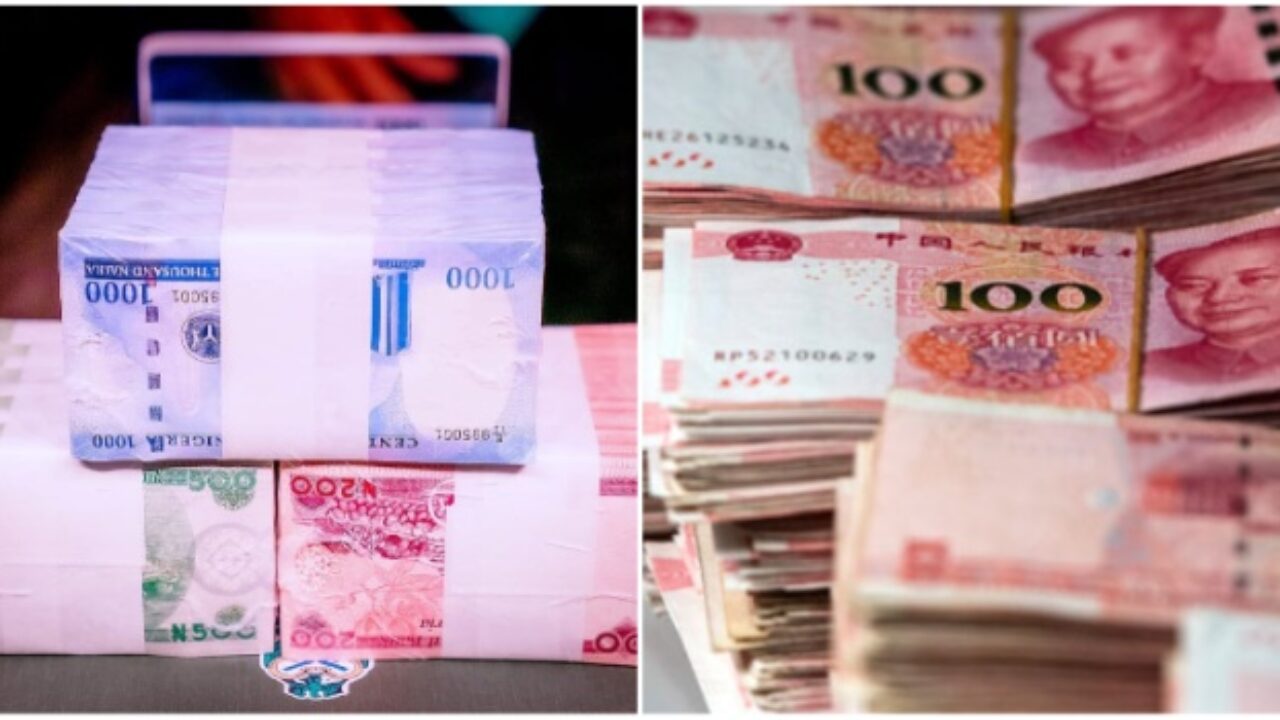
The Naira dropped N2.09 or 0.15 per cent against the United States Dollar in the Nigerian Autonomous Foreign Exchange Market (NAFEX) on Thursday, April 2, to trade at N1,380.79/$1 compared with Wednesday’s rate of N1,378.70/$1.
However, it appreciated against the Pound Sterling in the official market by N2.77 to quote at N1,824.86/£1 versus the N1,836.57/£1 it was traded at midweek, and improved its value against the Euro by N10.54 to N1,591.92/€1 from N1,602.46/€1.
Yesterday was the last trading session of the week for the local currency in the spot market, as the market will be closed on Friday and Monday for the Easter Holiday.
At the black market, the Nigerian Naira maintained stability against the greenback yesterday at N1,405/$1, but gained N8 at the GTBank FX counter to settle at N1,388/$1, in contrast to the previous session’s N1,396/$1.
Pressure eased on the domestic currency as strong policy indicators have helped calm the majority of worries within the financial systems. Particularly in the remittance segment, the apex bank has directed all International Money Transfer Operators (IMTOs) to route remittance transactions through designated Naira settlement accounts in banks, a move aimed at boosting transparency and channelling more foreign exchange into the formal market.
This helps take off pressure from the foreign reserves, which have fallen below the $50 billion mark as they are gradually decreasing rather than falling sharply.
Meanwhile, the cryptocurrency market was bullish on Thursday, as macro sentiment shifted against recent optimism after reports that Iran is drafting a protocol with Oman to manage traffic through the Strait of Hormuz, easing concerns about disruptions to a key global oil route.
The remarks came after U.S. President Trump on Wednesday night vowed to hit Iran “extremely hard” in the coming weeks and that the Strait of Hormuz would “open naturally” once the war ends.
Cardano (ADA) chalked up 1.9 per cent to trade at $0.2435, Dogecoin (DOGE) grew by 1.2 per cent to $0.0912, Ethereum (ETH) appreciated by 0.8 per cent to $2,066.37, Bitcoin (BTC) added 0.5 per cent to sell at $67,080.53, Solana (SOL) increased by 0.5 per cent to $79.91, and Ripple (XRP) jumped 0.2 per cent to $1.31.
Conversely, Binance Coin (BNB) dipped 0.7 per cent to $586.90, and TRON (TRX) depreciated by 0.3 per cent to $0.3147, while the US Dollar Tether (USDT) and the US Dollar Coin (USDC) closed flat at $1.00 each.
By Dipo Olowookere
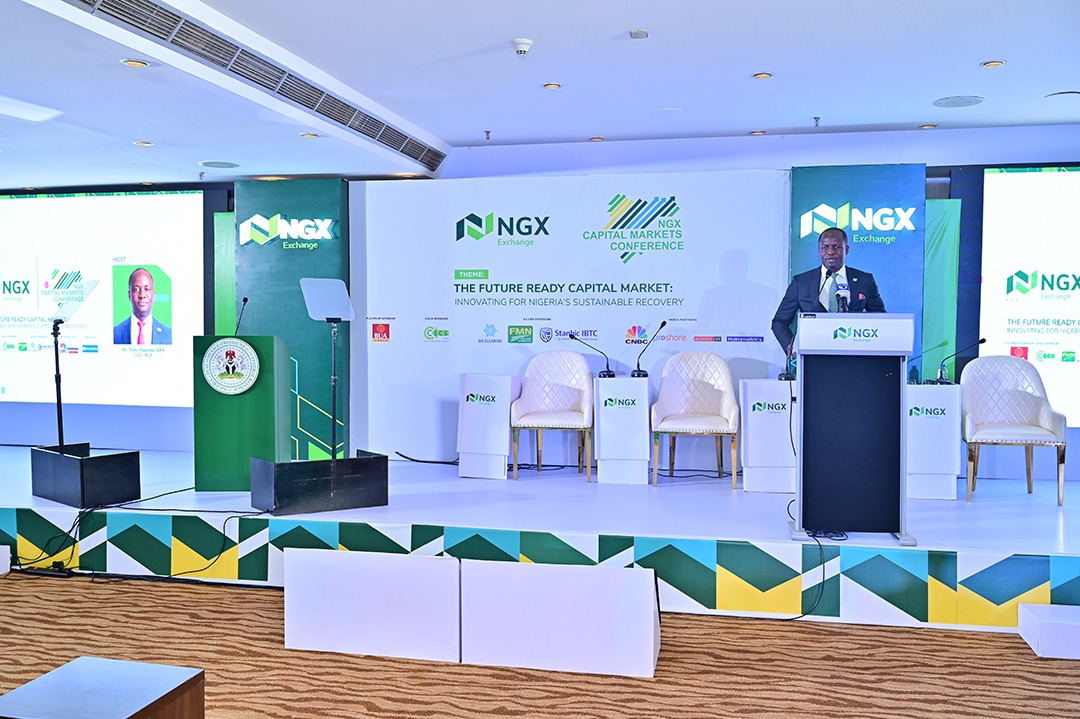
The local stock market was relatively flat on Friday, as the bears and the bulls shared the spoils of war, though investor sentiment turned bullish compared with the preceding session’s bearish posture.
Data from the Nigerian Exchange (NGX) Limited showed that the All-Share Index (ASI) was marginally down by 4.66 points as it ended at 201,698.89 points versus Wednesday’s 201,703.55 points, and the market capitalisation slightly contracted by N3 billion to N129.806 trillion from N129.809 trillion.
Customs Street was shut on Friday because of the public holidays declared by the federal government today and next Monday.
Business Post reports that John Holt declined by 9.91 per cent to N15.45, Abbey Mortgage Bank shed 9.60 per cent to trade at N8.95, International Energy Insurance slipped by 6.48 per cent to N3.32, Chams shrank by 5.30 per cent to N3.75, and Tantalizers depreciated by 5.18 per cent to N4.03.
On the flip side, Unilever Nigeria improved by 10.00 per cent to N103.40, Fortis Global Insurance gained 9.82 per cent to trade at N1.23, Multiverse appreciated 9.81 per cent to N20.15, Legend Internet advanced by 9.38 per cent to N6.30, and Zichis grew by 9.02 per cent to N14.14.
The market breadth index was positive during the trading session, as there were 35 appreciating stocks and 24 depreciating stocks.
Yesterday, investors traded 560.0 million equities valued at N19.3 billion in 49,676 deals, in contrast to the 815.5 million equities worth N33.3 billion transacted in 52,641 deals in the preceding day, representing a drop in the trading volume, value, and number of deals by 31.33 per cent, 42.04 per cent, and 5.63 per cent, respectively.
Secure Electronic Technology dominated the activity log with 59.7 million shares valued at N61.1 million, Wema Bank exchanged 52.0 million equities worth N1.4 billion, VFD Group transacted 36.0 million stocks for N410.5 million, Access Holdings sold 35.3 million shares valued at N914.8 million, and Chams traded 31.0 million equities worth N115.0 million.
-
 Feature/OPED6 years ago
Davos was Different this year
-
Travel/Tourism10 years ago
Lagos Seals Western Lodge Hotel In Ikorodu
-

 Showbiz3 years ago
Estranged Lover Releases Videos of Empress Njamah Bathing
-
 Banking8 years ago
Sort Codes of GTBank Branches in Nigeria
-

 Economy3 years ago
Subsidy Removal: CNG at N130 Per Litre Cheaper Than Petrol—IPMAN
-

 Banking3 years ago
Sort Codes of UBA Branches in Nigeria
-

 Banking3 years ago
First Bank Announces Planned Downtime
-

 Sports3 years ago
Highest Paid Nigerian Footballer – How Much Do Nigerian Footballers Earn