
Economy
Stock Market Loses N147b as Political Tension Heightens


By Modupe Gbadeyanka
The first trading day of the month of August 2018 started on bearish note with the political tension in the country gradually taking its toll on the stock market.
In the past few days, politicians in the ruling All Progressives Congress (APC) had been defecting to the opposition Peoples Democratic Party (PDP) with the Senate President, Mr Bukola Saraki, announcing his defection last night and the Governor of Sokoto State, Mr Aminu Tambuwal, announcing his today.
With this cross-carpeting heating up the polity ahead of the 2019 general elections, investors are trading cautiously so as not to be caught unawares.
Business Post reports that on the floor of the Nigerian Stock Exchange (NSE) on Wednesday, investors embarked on profit-taking, leaving the market pointing south at the close of business.
Our correspondent reports that the local stock market depreciated today by 1.09 percent with the Year-to-Date (YtD) returns closing at -4.26 percent.
In addition, while the All-Share Index (ASI) decreased on Wednesday by 404.95 points to close at 36,612.83 points, the market capitalization reduced by N147 billion to settle at N13.263 trillion.
Like in the previous session, the market breadth finished negative with 22 stocks appreciating in value as against the 24 equities, which depreciated at the close of transactions on Wednesday.
Nestle Nigeria led the price losers’ table today after shedding N40 to finish the day at N1560 per share.
It was followed by International Breweries, which fell by N3.60k to close at N33.40k per share, and CAP, which declined by N3.50k to end at N31.50k per share.
Dangote Cement depreciated by N3 to close at N231 per share, while Nigerian Breweries lost N2 to settle at N103 per share.
On the other side, it was a rewarding session for Total Nigeria as the stock appreciated by N7 to settle at N190 per share.
Okomu Oil gained N6.30k to end at N81 per share, while Beta Glass increased by N1.05k to move up to N78 per share.
Lafarge went up by 50 kobo to close at N28 per share, while Ecobank garnered 25 kobo to finish at N20.80k per share.
Business Post reports further that at the close of trading today, the volume of shares bought and sold by investors decreased by 1.94 percent, while the value increased by 10.91 percent.
A total of 240.2 million exchanged hands today in 3,494 deals worth N5 billion compared with the 245 million equities worth N4.5 billion transacted yesterday at the stock market.
Like it happened on Tuesday, financial stocks dominated the activity chart on Wednesday with 191.9 million shares sold for N2.8 billion, while stocks in the Consumer Goods space followed with 22.7 million units transacted for N1.8 billion.
A further breakdown showed that Zenith Bank shares emerged the most traded at the market today with a total of 94.9 million units traded for N2.2 billion.
It was followed by United Bank for Africa (UBA), which exchanged 28.7 million units valued at N271.9 million, and Nigerian Breweries, which traded 15.1 million units worth N1.6 billion.
Fidelity Bank sold 12.6 million shares for N23.6 million, while Sterling Bank transacted 8.2 million equities worth N11.7 million.
A look at the performances of the sectors in the market showed that while the NSEFBT10 lost 2.31 percent, the NSEBNK10 went down by 0.66 percent and the NSEIND declined by 0.42 percent.








By Dipo Olowookere
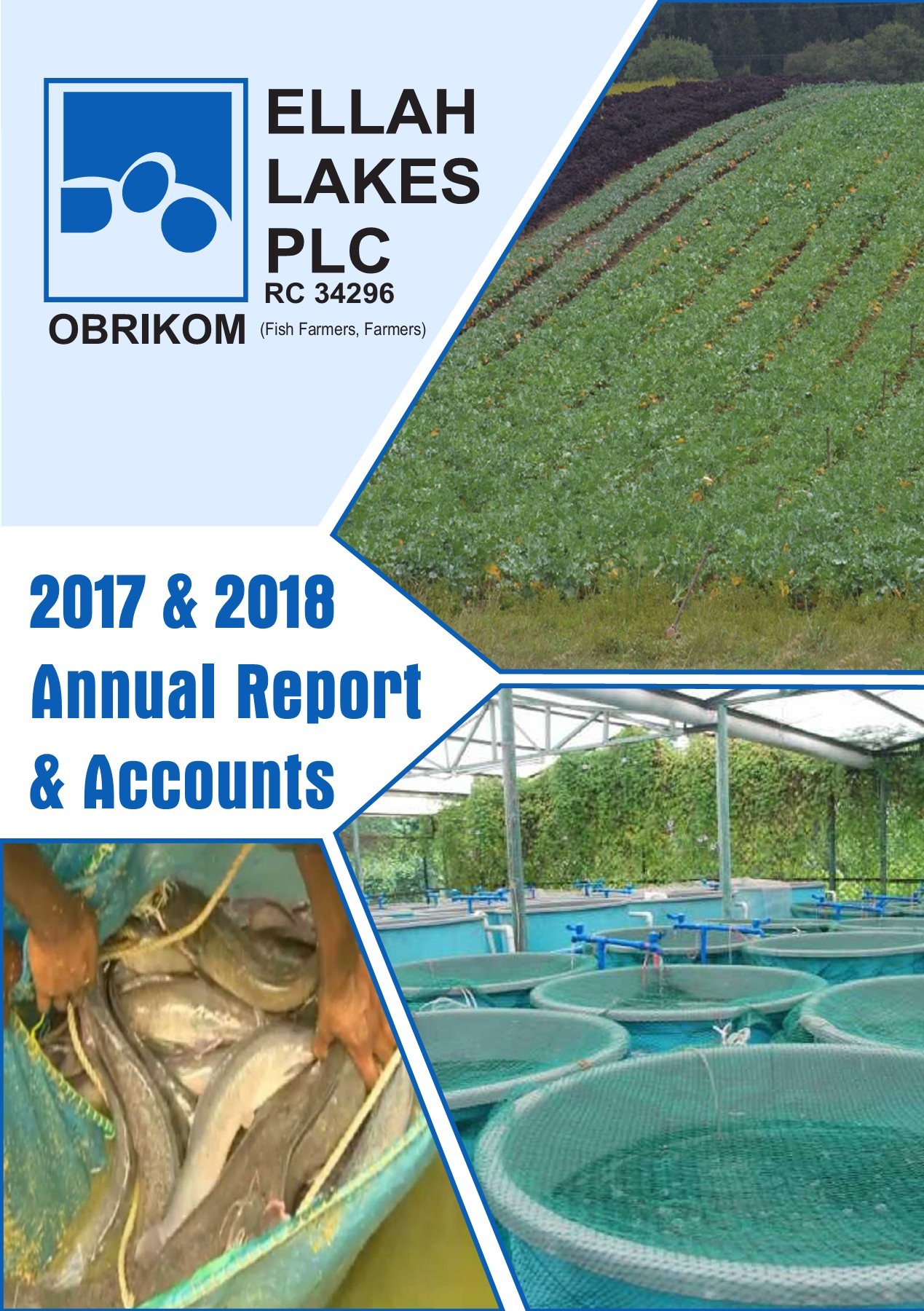
Efforts are being made to ensure the throughput of Ellah Lakes Plc is increased to deliver long-term value for shareholders, the chief executive of the organisation, Mr Chuka Mordi, has said.
Mr Mordi was reacting to the audited 17-month financial statements of the firm ended December 31, 2025, as it transitions to a December financial year-end to enhance comparability with industry peers.
This action is also to strengthen reporting discipline and align financial reporting with the agricultural operating cycle, from planting through harvest and processing, providing a more accurate reflection of the company’s operational performance.
In the period under review, Ellah Lakes recorded N146.66 million in revenue, driven by initial harvests and sales of Fresh Fruit Bunches (FFBs), with the cash flows supporting operational stability as larger assets continue to mature.
However, the company suffered an operating loss of N3.84 billion, as the earnings per share (EPS) closed with a N1 loss.
Between July 2024 and December 2025, the organisation achieved a key operational milestone, with the commissioning of its upgraded 5-tonnes-per-hour crude palm oil mill in July 2025, strengthening its ability to process output internally and capture more value across its palm oil value chain as plantation maturity improves.
Also, it planted 17,000 seedlings and maintained 47,000 seedlings in the nursery, as part of a broader planting programme, supporting Ellah Lakes’ medium-term production pipeline and providing a stronger foundation for future output as more hectares move into productive phases.
“The 17-month period marks an important transition for Ellah Lakes as we progress from asset development into early-stage commercial operations.
“During the period, we commissioned our upgraded crude palm oil mill, advanced plantation development, and commenced pig farming activities, marking the beginning of revenue generation across our core value chains.
“While our reported results reflect the cost of expansion, start-up activities and non-recurring transaction-related expenses, they also establish the operational foundation required to scale the business.
“Our focus now is on improving yields from maturing plantations, increasing processing throughput, and driving greater efficiency across our operations. We remain committed to disciplined execution and capital stewardship as we work towards translating our asset base into stronger operating performance and long-term value for shareholders,” Mr Mordi stated.


By Adedapo Adesanya
Nigeria’s Securities and Exchange Commission (SEC) has ordered an immediate asset freeze on 13 entities allegedly linked to terrorism financing across the capital market.
A directive titled Commission’s sweeping compliance directive issued to capital market operators noted that the move was after the 10 individuals and three entities were designated and blacklisted on the Nigeria Sanctions List by the Nigeria Sanctions Committee.
The commission anchored its directive on provisions of the Terrorism (Prevention and Prohibition) Act, 2022, which mandates the immediate freezing of all funds, assets, and economic resources linked to the named persons and organisations without prior notice.
The SEC stated that all Capital Market Operators (CMOs) and stakeholders have been notified that, pursuant to section 49 of the Terrorism (Prevention and Prohibition) Act, 2022, the Nigeria Sanctions Committee has approved the addition of entries and entities subject to asset freeze, travel ban, and arms embargo.
“The directive to free accounts and halt all transactions with the flagged entities is binding on all capital market operators and stakeholders, with strict reporting and compliance obligations, including: immediate identification and freezing of all assets linked to designated individuals and entities without prior notification. Mandatory reporting of frozen assets and attempted transactions to the Nigeria Sanctions Committee Secretariat.”
Details accompanying the designation reveal that several of the individuals were convicted by the Abu Dhabi Federal Court of Appeal in April 2019 for terrorism financing activities linked to Boko Haram.
The offences largely involved the alleged collection of funds in Dubai and transferring them to Nigeria to support terrorist operations. Sentences ranged from 10 years imprisonment to life sentences, underscoring the severity of the offences.
“This highlights a pattern where corporate vehicles are used as channels for financial flows, reinforcing the need for heightened scrutiny of business entities within the financial system.
“The SEC also emphasised that the asset-freezing mechanism is preventive rather than punitive, designed to disrupt financial support systems for terrorism before funds can be deployed.
“The implications for non-compliance are severe, including both civil and criminal liabilities, as well as reputational damage for institutions found wanting.
Additionally, the directive extends beyond traditional financial institutions to include Designated Non-Financial Businesses and Professions (DNFBPs), signalling a more comprehensive enforcement approach across Nigeria’s financial ecosystem.”
The latest alert, SEC noted, is in line with its zero-tolerance enforcement of anti-money laundering and counter-terrorism financing (AML/CFT) rules within Nigeria’s capital market, with emphasis on real-time compliance, detailed reporting, and continuous transaction monitoring.
“For market operators, the trading systems must be capable of rapid name screening, asset tracing, and reporting, while compliance teams are expected to act without delay or prior notice to affected clients.”
“It has to be noted that failure to comply not only exposes firms to regulatory sanctions but also risks damaging their credibility in both domestic and international markets,” the statement added.
By Dipo Olowookere
The trio of Access Holdings, Wema Bank, and Guaranty Trust Holding Company (GTCO) contributed 33.45 per cent and 32.54 per cent to the total trading volume and value, respectively, of the Nigerian Exchange (NGX) Limited last week, with the sale of 1.124 billion units worth N49.451 billion in 27,886 deals.
The market opened for four trading days in the week due to the public holiday observed last Monday for Easter.
The bourse recorded a turnover of 3.361 billion shares valued at N151.948 billion in 229,442 deals compared with the 2.856 billion shares worth N113.597 billion traded a week earlier in 215,287 deals.
Analysis showed that financial equities led the activity chart with 2.303 billion units sold for N90.467 billion in 98,175 deals, accounting for 68.54 per cent and 59.54 per cent of the total trading volume and value, respectively.
Services shares transacted 264.146 million units worth N1.977 billion in 12,638 deals, and ICT stocks traded 214.578 million units valued at N9.791 billion in 28,183 deals.
Business Post reports that 25 equities appreciated in the week versus 29 equities in the previous week, while 54 stocks depreciated versus 57 stocks of the preceding week, and 67 shares closed flat versus 62 stocks of the previous week.
Trans-Nationwide Express gained 32.75 per cent to close at N3.77, NGX Group appreciated by 13.94 per cent to N188.00, GTCO rose by 10.66 per cent to N135.00, NASCON expanded by 9.52 per cent to N161.00, and Guinness Nigeria grew by 9.38 per cent to N462.90.
On the flip side, DAAR Communications lost 21.47 per cent to finish at N1.50, RT Briscoe shrank by 20.00 per cent to N8.40, Deap Capital declined by 16.81 per cent to N5.00, Ellah Lakes went down by 16.67 per cent to N10.00, and Japaul crashed by 16.29 per cent to N2.93.
At the close of business for the week, the All-Share Index (ASI) was up on a week-on-week basis by 1.03 per cent to 203,770.43 points, and the market capitalisation soared by 1.05 per cent to N131.166 trillion.
Also, all other indices finished higher except the insurance and growth sectors, which fell by 3.64 per cent and 1.82 per cent apiece.
-
 Feature/OPED6 years ago
Davos was Different this year
-
Travel/Tourism10 years ago
Lagos Seals Western Lodge Hotel In Ikorodu
-

 Showbiz3 years ago
Estranged Lover Releases Videos of Empress Njamah Bathing
-
 Banking8 years ago
Sort Codes of GTBank Branches in Nigeria
-

 Economy3 years ago
Subsidy Removal: CNG at N130 Per Litre Cheaper Than Petrol—IPMAN
-

 Banking3 years ago
Sort Codes of UBA Branches in Nigeria
-

 Banking3 years ago
First Bank Announces Planned Downtime
-

 Sports3 years ago
Highest Paid Nigerian Footballer – How Much Do Nigerian Footballers Earn