
Economy
Subsidy Removal Denial: Nigeria Must Begin to Reject IMF Policies—NLC

By Modupe Gbadeyanka
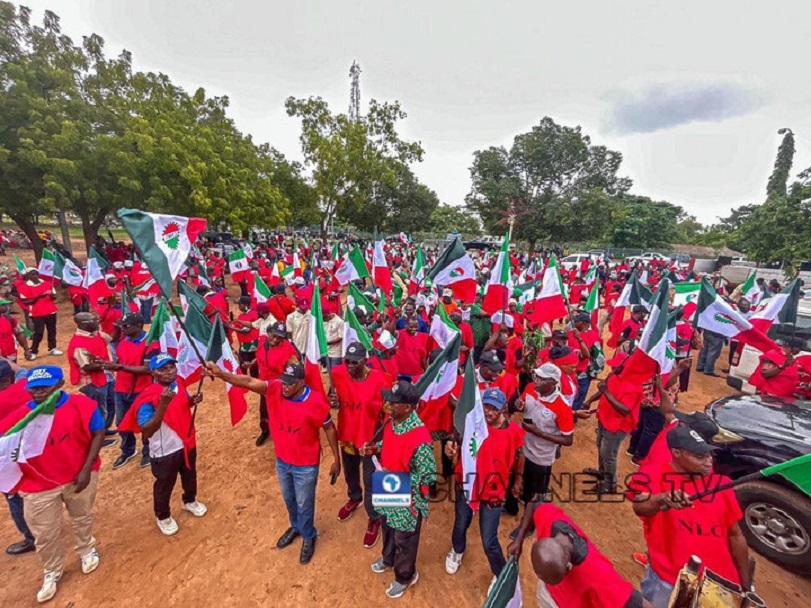
The Nigeria Labour Congress (NLC) has expressed its anger over claims by the International Monetary Fund (IMF) that it is not responsible for the removal of subsidy on premium motor spirit (PMS), otherwise known as petrol, in Nigeria, stressing that Nigeria must begin to reject the policies of the organisation.
Recall that last week, the IMF African Region Director, Mr Abebe Selassie, at a press conference at the IMF and World Bank Annual Meetings in Washington, DC, absolved itself from the subsidy removal despite piling pressure on the federal government to take it out.
In a statement on Sunday, the frontline labour union in the country took an exception to IMF denial, noting that it was unfortunate that the government heeded the global lender’s misguided advice.
“The IMF seems to be distancing itself from the future backlash of these policies, but Nigerians are not naive; we recognize the destructive effects of its harmful strategies on Nigeria and Africa,” a part of the statement said.
“The IMF’s recent statement shows evasion, claiming Nigeria’s subsidy removal was a domestic decision while ignoring its significant influence on policy-making in developing countries.
“Despite this denial, the IMF often advocates subsidy cuts as necessary for fiscal sustainability, making its disavowal seem hollow in a country that has frequently complied with such recommendations,” the NLC stated in the statement.
“It is disingenuous for the IMF to deny complicity, especially since we have warned the government about the consequences of adopting these policies,” it added.
The union advised Nigeria and other developing countries to reclaim their economic sovereignty and resist externally imposed policies that fail to consider local contexts and the needs of the masses, noting that the government must implement policies that address the genuine needs of its citizens by prioritizing economic strategies that promote growth, social welfare, and equity, rather than austerity measures that result in deeper economic difficulties and social unrest.
“The IMF’s denial of involvement in Nigeria’s subsidy removal seems insincere, given its history of recommending similar austerity measures. We hope our economic leaders recognize that when crises occur, the IMF and World Bank will distance themselves, leaving the government to bear the burden.
“We urge the World Bank and IMF to stop stifling our nation so we can breathe freely. They have become a significant challenge for us, and we may soon be compelled to demand their complete withdrawal from Nigeria, as their policies consistently undermine our economy and sabotage both the people and the nation,” it submitted.
The NLC, headed by Mr joe Ajaero, argued that the gap between IMF recommendations and the reality in Nigeria highlights a major oversight in the fund’s economic policy.




By Adedapo Adesanya
A loss recorded by market bellwether, Central Securities Clearing System (CSCS) Plc, outweighed the presence of three price gainers, weakening the NASD Over-the-Counter (OTC) Securities Exchange by 0.73 per cent on Friday, March 27.
The Nigerian securities depository firm lost N6.27 during the session to close at N80.10 per share compared with the previous day’s N86.37 per share.
As a result, the market capitalisation shrank by N18.41 billion to N2.512 trillion from the previous session’s N2.531 trillion, and the NASD Unlisted Security Index (NSI) declined by 30.77 points to 4,199.69 points from 4,230.46 points.
The green side of the price movement log showed 11 Plc appreciating by N31.92 to N351.17 per unit from N319.25 per unit, Nigeria Mortgage Refinance Company Plc (NMRC) rose by 55 Kobo to sell at N6.05 per share compared with Thursday’s closing price of N5.50 per share, and IPWA Plc recorded a 50 Kobo growth to end at N5.51per unit, in contrast to the preceding day’s N5.01 per unit.
When the bourse closed for the day, there was a 17,067.5 per cent surge in the voluime of transactions to 58.6 million units from 342,825 units, the value of trades increased by 6,895.4 per cent in the value of securities traded as it closed at N1.6 billion compared to N23.0 million, and the number of deals executed at the session rose 85.2 per cent to 50 deals compared to the preceding session’s 27 deals.
CSCS Plc remained the most active stock by value on a year-to-date basis with 56.2 million units exchanged for N3.8 billion, Infrastructure Guarantee Credit Plc followed with 400 million units valued at N1.2 billion, and Okitipupa Plc came next with 6.5 million units traded at N1.2 billion.
Resourcery Plc closed the trading session as the most traded stock by volume on a year-to-date basis with 1.1 billion units sold for N415.7 million, followed by Infrastructure Credit Plc with 400 million units sold for N1.2 billion, and Geo-Fluids Plc with 133.0 million units at N511.1 million.
By Adedapo Adesanya
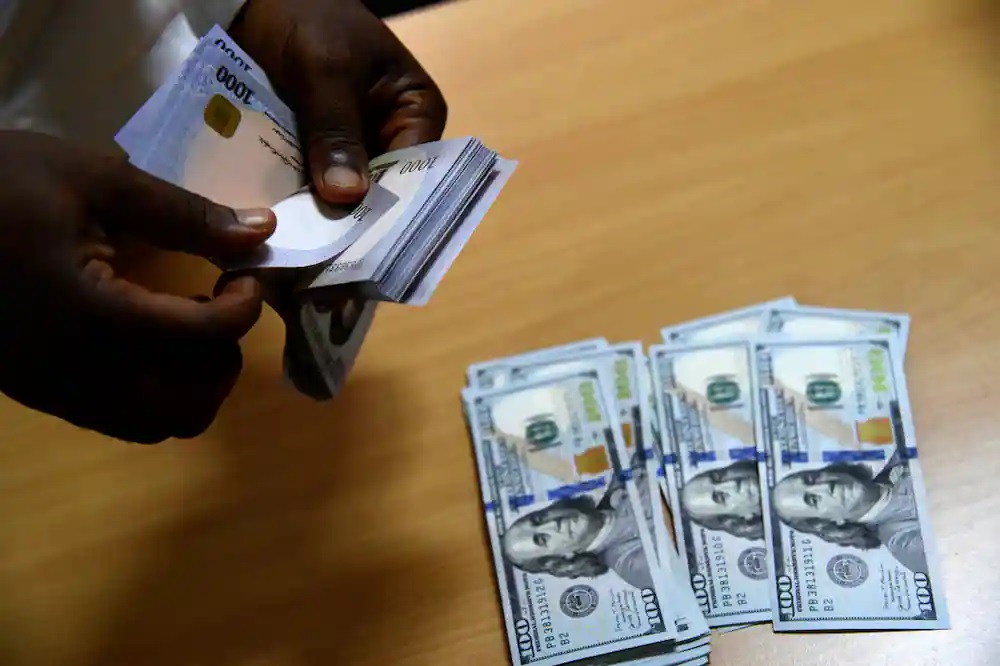
The Naira maintained stability against the United States Dollar in the black market segment of the foreign exchange (FX) market on Friday, March 27, data obtained by Business Post showed. It also remained unchanged at the GTBank FX counter at N1,401/$1.
However, it further appreciated in the Nigerian Autonomous Foreign Exchange Market (NAFEX) during the session by N3.30 or 0.2 per cent to N1,380.58/$1 from the previous day’s rate of N1,383.88/$1.
In the same vein, the domestic currency improved its value against the Pound Sterling in the spot market yesterday by N10.77 to trade at N1,836.99/$1 compared with the preceding session’s N1,847.76/£1, and gained N5.06 against the Euro to sell at N1,592.08/€1 versus N1,597.14/€1.
The Naira remains under pressure, but the current range indicates a form of stability as the Central Bank of Nigeria (CBN) reiterated its promise to anchor reforms around FX rate stability and stronger reserves to support financial markets.
Amid the currency pressures, the apex bank introduced a series of measures aimed at improving liquidity and strengthening the FX market. In a key move, the apex bank removed the cash pooling requirement for International Oil Companies (IOCs), allowing them full access to their repatriated export proceeds from the previous 50 per cent.
However, the country could see less short-term Dollar supply staying in the country and may invite pressure on the Naira if outflows exceed inflows.
The pressure on the currency comes amid a sustained decline in Nigeria’s external reserves, which provide the central bank with the buffer to support the naira. The reserves fell for the ninth consecutive day to $49.48 billion as of March 26, 2026, marking a decline of $540 million, or 1.08 per cent, from $50.02 billion recorded on March 11.
Meanwhile, the cryptocurrency market tumbled on Friday due to a broader sell-off in US equities, which recorded a $17 trillion loss. The Friday plunge fits into a pattern since the war in Iran broke out, with gains on Monday turning into losses by the end of the week.
Ethereum (ETH) depreciated by 3.2 per cent to $2,003.73, Bitcoin (BTC) fell by 3.1 per cent to $66,439.48, Solana (SOL) dropped by 2.9 per cent to $83.44, Cardano (ADA) crashed to $0.2474, Binance Coin (BNB) went down by 2.4 per cent to $613.17, TRON (TRX) dipped 1.5 per cent to $0.3113, Dogecoin (DOGE) declined by 1.4 per cent to $0.0908, and Ripple (XRP) slumped 1.4 per cent to sell at $1.33, while the US Dollar Tether (USDT) and the US Dollar Coin (USDC) closed flat at $1.00 each.

By Adedapo Adesanya
The price of Brent crude went up by $4.56 or 4.2 per cent to $112.57 per barrel on Friday, as traders remained sceptical about prospects for a ceasefire in the month-old Iran war.
Also, the US West Texas Intermediate (WTI) futures rose $5.16 or 5.5 per cent to settle at $99.64 per barrel, gaining over 1 per cent on a week-on-week basis, and surged 45 per cent since February 27, the day before the US and Israel launched strikes against Iran.
On its part, Brent chalked up 0.3 per cent in the week and gained 53 per cent since February 27.
Traders are cautious about President Donald Trump’s statements about the Iran talks, as the Iranian government claimed that the proposal by the US conveyed to Iran by Pakistan was one-sided.
The American President extended his deadline for Iran to reopen the Strait of Hormuz or face the destruction of its energy infrastructure.
Also, the US has sent thousands of troops to the Middle East, with President Trump weighing whether to use ground forces to seize Iran’s strategic oil hub of Kharg Island.
The International Energy Agency (IEA) said the Iran war has taken about 11 million barrels per day out of global oil supply, describing the crisis as worse than the two 1970s oil shocks combined.
Market analysts noted that every day flows through the Strait remain restricted, more than 10 million barrels of oil are missing, adding that prices will fall quickly if the war begins to wind down soon, but still remain above pre-conflict levels. However, prices could rise to $200 if the war drags on until the end of June.
Meanwhile, two container vessels owned by China Ocean Shipping Company tried to pass through the Strait but were turned back, according to the ship tracking firm MarineTraffic. China is an ally of Iran and the Islamic Republic has previously said friendly ships can pass through the Strait.
This was the first attempt by a major container carrier to cross the sea route since the war started, the firm said. COSCO is the world’s fourth-largest shipping line by capacity.
Russian oil producers have warned buyers that they could declare force majeure on supplies from major Baltic Sea ports after Ukrainian attacks on Russian energy infrastructure.











-
 Feature/OPED6 years ago
Davos was Different this year
-
Travel/Tourism10 years ago
Lagos Seals Western Lodge Hotel In Ikorodu
-

 Showbiz3 years ago
Estranged Lover Releases Videos of Empress Njamah Bathing
-
 Banking8 years ago
Sort Codes of GTBank Branches in Nigeria
-

 Economy3 years ago
Subsidy Removal: CNG at N130 Per Litre Cheaper Than Petrol—IPMAN
-

 Banking3 years ago
Sort Codes of UBA Branches in Nigeria
-

 Banking3 years ago
First Bank Announces Planned Downtime
-

 Sports3 years ago
Highest Paid Nigerian Footballer – How Much Do Nigerian Footballers Earn